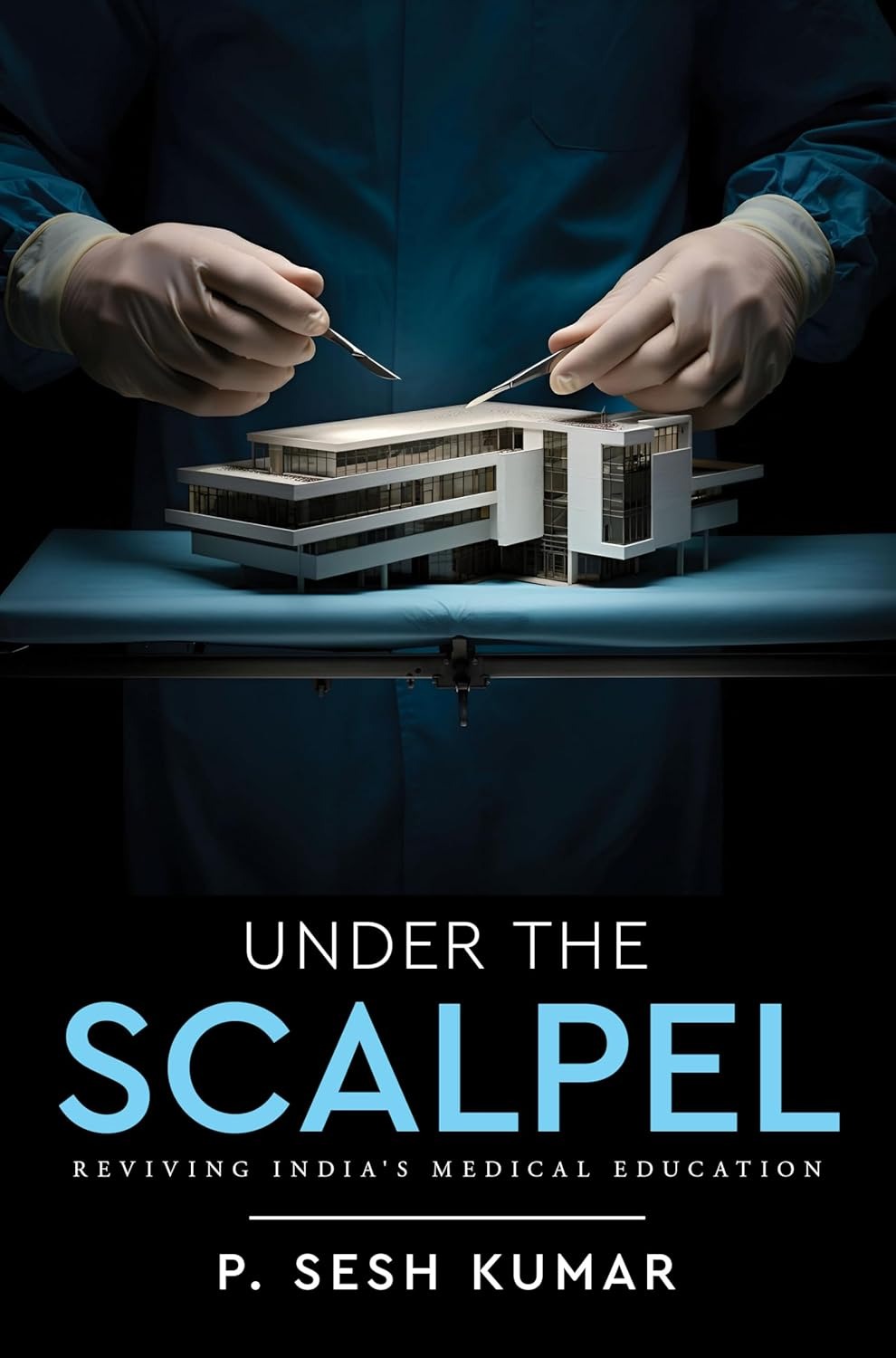
 This is an excerpt from P Sesh Kumar’s book “Under The Scalpel: Reviving India's Medical Education.”
Indonesia provides a cautionary yet ultimately encouraging tale of a country that experienced a rapid growth of medical schools followed by a concerted push to improve quality through reforms—a trajectory India is now following in its own way.
In the early 2000s, Indonesia liberalised higher education, and the number of medical faculties exploded from 5 public schools in the 1980s to over 75 schools by 2010. Like India, this was partly in response to high demand from students and doctor shortages across the archipelago. However, the surge raised alarm about quality: many new schools had scant faculty and poor clinical facilities, akin to the issues seen in India’s private sector expansion. Rather than let the situation spiral, Indonesian authorities (the Konsil Kedokteran Indonesia and Ministry of Education) introduced several key interventions.
First, in 2007 Indonesia implemented a National Medical Licensing Examination (called UKDI, now integrated into UKMPPD) as a mandatory step for all medical graduates. This computer-based and OSCE (practical) exam immediately revealed gaps—the initial pass rates were only around 70%, meaning 30% of graduates weren’t up to standard.
The shock forced schools to improve their teaching, and students who failed had to undergo further training and reattempt. Over time, the average pass rate has improved, but still not 100%— indicating the exam is doing its job of filtering.
Additionally, results are broken down by school, which embarrassed some institutions into pausing admissions or overhauling curriculum. Importantly, it gave con¬fidence that any doctor licensed in Indonesia had cleared a common bar, boosting public trust.
India’s introduction of NExT is exactly along these lines—and Indonesia’s positive experience (initial hiccups followed by overall quality rise) bodes well if India can administer it fairly.
Second, Indonesia enforced an accreditation system for medical schools through LAM-PTKes (the independent accreditation body for health higher ed). By early 2010s, every program had to go through assessment. Some were found so lacking that a landmark decision was made: a moratorium on new medical schools from 2010 to 2013, extended to 2015. During this period, no new med school licenses were granted, and some substandard ones were consolidated.
This cooling-off allowed the system to stabilize. India’s NMC in 2020-21 did something analogous by not approving many new colleges for a year while it revamped norms.
However, given political pressures, India might not sustain a moratorium, whereas Indonesia, also a democracy, managed to stick to it citing public interest. Indonesia also recognised that flooding the market with graduates is pointless if they remain in cities.
Like others, it historically had a compulsory service program (Pegawai Tidak Tetap, PTT) for doctors to serve in government health centres in remote areas for 1-3 years. That was started in the 1970s and actually allowed Indonesia to staff even remote islands somewhat—but by 2007, it was made voluntary (due to labour law changes considering forced service illegal).
Once it became voluntary, fewer doctors chose to go to difficult areas, exacerbating disparities. So the government pivoted to incentives: those who serve get priority in being hired as permanent civil servants (a coveted status), as well as extra pay for very remote postings. They also started contracting private doctors for rural areas under special schemes.
And in 2019, a new strategy emerged: opening up to foreign doctors. A 2023 law overhaul in Indonesia allows easier recruitment of foreign health professionals and simpli¬fies their licensing. This is meant to fill specialist gaps and bring in expertise while local capacity builds.
India has traditionally been closed to foreign doctors (reciprocity and tough exams are required), but perhaps in some ¬fields or areas, liberalising a bit could help—though domestic medical politics often resists this. Indonesia’s bold step shows its priority is patient care over professional protectionism.
One innovation from Indonesia that India might learn from is the concept of a standardised residency (specialist) training similar to China’s move. In Indonesia, specialisation is offered by universities in partnership with teaching hospitals, but historically numbers were limited.
As more graduates came, they expanded residency positions and even created a new cadre of “general doctors with specialisation in community medicine” to provide higher skills in primary care. Essentially, they tried to align PG training capacity with the larger number of graduates. India’s PG bottleneck could be relieved by similarly expanding Diplomate of National Board (DNB) programs (discussed in chapters 5 and 10) in private and smaller hospitals, or new MD/MS programs, though quality must be maintained.
Indonesia’s approach has been to allow more hospitals (even district ones) to become teaching sites for residency under supervision, thus decentralising specialist training. This approach could help India too, where many district hospitals are now being upgraded to teaching status for new colleges. Culturally, Indonesia handled the expansion by fostering cooperation between older and newer schools. Faculty from established universities mentored new ones, sometimes even joint degrees.
Plus, there was heavy emphasis on producing primary care doctors ready to serve universal healthcare (Indonesia rolled out Universal Health Coverage in 2014, increasing demand for physicians). It’s an example of aligning medical education with a health system reform. By 2020s, Indonesia had about 0.4 doctors per 1,000 population—still low, but double what it was in 2000.
And the gap between Java (the main island) and outer islands, while persistent, has narrowed as many new schools were on outer islands and bonded local graduates tend to stay. For instance, a new med school in Papua has started producing Papuan doctors who might remain in that remote province, rather than having only Javanese doctors who rarely settle there.
For India, Indonesia’s journey underscores a key point: rapid expansion must be followed by robust regulation to correct course. Indonesia nearly lost grip on quality but is trying to rein it in with licensing exams and accreditation.
India is now at that in direction point—with NMC and NExT aiming to play the role that KKI and UKMPPD did in Indonesia. The lesson is to stick to those reforms even if initial results are humbling. Indonesia’s initial 30% failure rate on the national exam upset many, but they persisted and now it’s an accepted benchmark that drove improvements. India should be prepared for possibly a similar scenario where not all graduates pass NExT at first; over time, that pressure will elevate teaching.