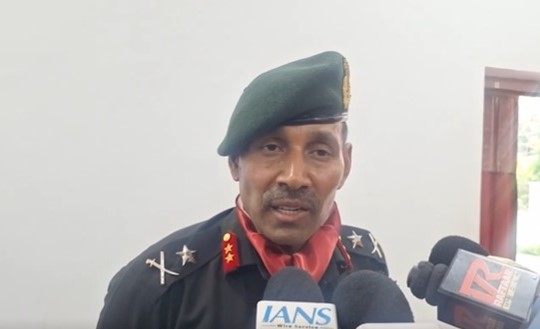
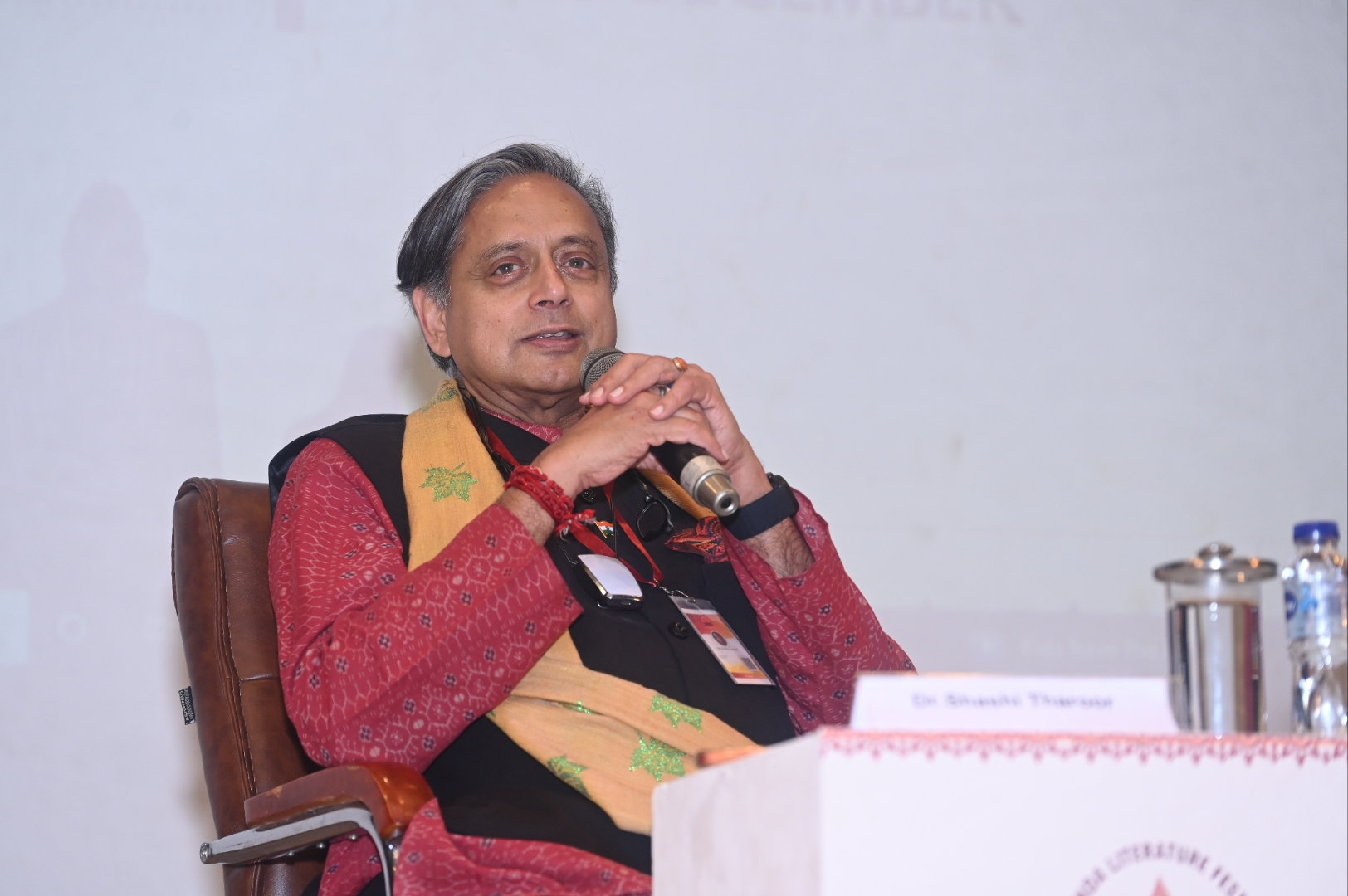
 Shashi Tharoor at Nalanda Literature Festival 2025 in Rajgir (Photo: NLF Team)
Nalanda: The second day of the Nalanda Literature Festival 2025 immersed participants in a rich tapestry of literature, languages, and culture, reaffirming Rajgir’s place as a hub of intellectual and artistic exchange.
The day opened with yoga and meditation sessions by the Bihar School of Yoga, Munger, setting a reflective start for delegates.
Literary luminaries including Sonal Mansingh, Shashi Tharoor, Adoor Gopalakrishnan, and Sachin Chaturvedi led interactive discussions, exploring the role of literature in contemporary society and India’s multicultural narrative.
Sessions on regional languages and dialects highlighted the preservation and revival of Bajjika, Magahi, Angika, Maithili, and Bhojpuri, while discussions on technology, cinema, and AI examined the evolving role of language in the digital era. Attendees engaged in sessions such as “Words to Screen”, “Algorithms to Accents”, and “From Folklore to Future: Evolving Voices”, offering a holistic view of India’s linguistic landscape.
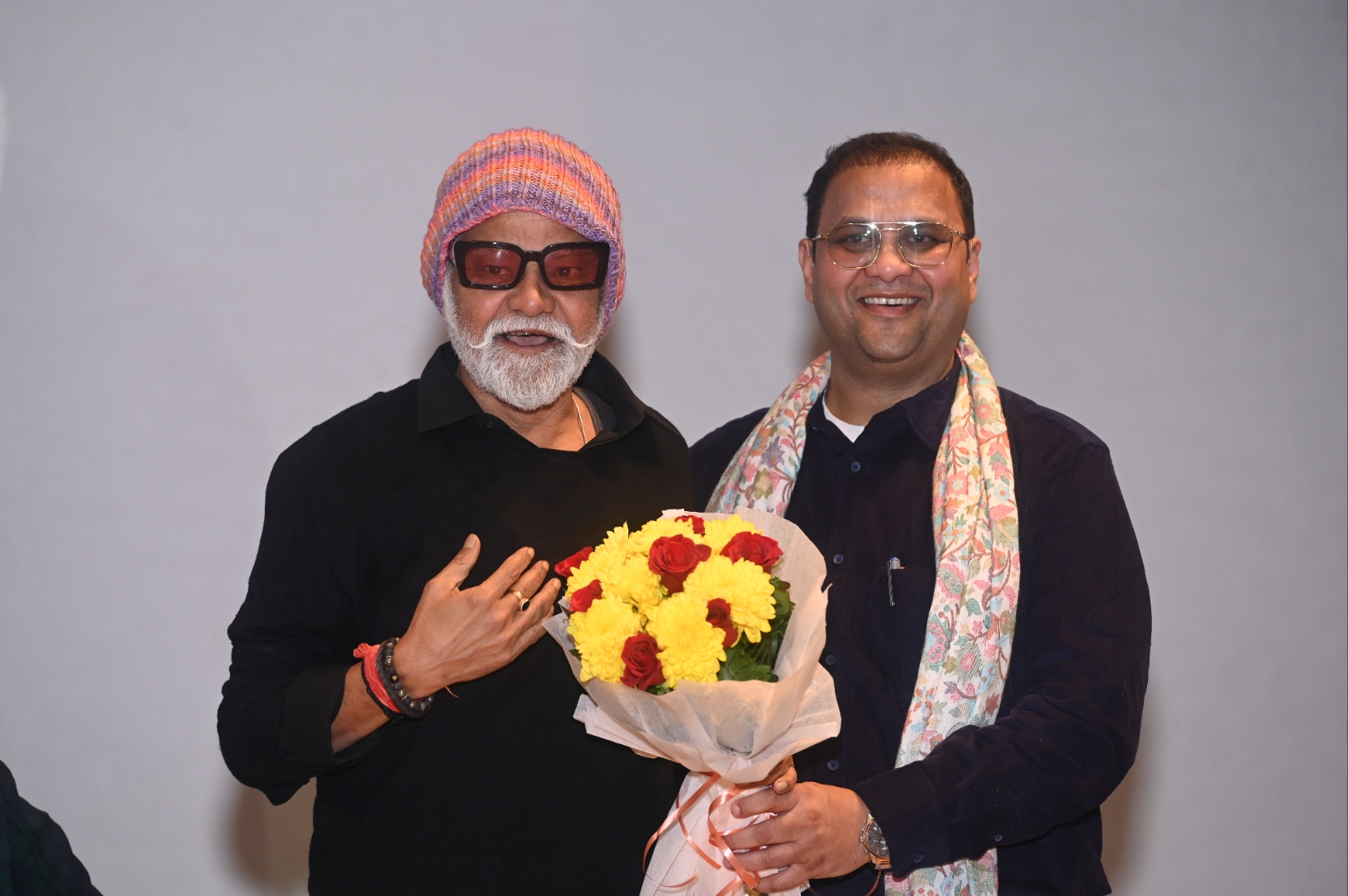 Actor Sanjay Mishra (L) and Ganga Kumar
The day opened with yoga and meditation sessions conducted by the Bihar School of Yoga, Munger, offering a reflective start for delegates.
One of the key sessions of the day featured Dr. Shashi Tharoor in conversation with Prof. Sachin Chaturvedi, where Dr. Tharoor reflected on Nalanda’s global academic legacy and candidly assessed the present challenges facing Indian higher education.
While acknowledging institutions such as the IITs, he cautioned against relying on isolated excellence and stressed the need to raise overall academic quality.
He highlighted the decline of international students, supported the National Education Policy as a consultative reform, and emphasised critical thinking, academia–industry collaboration, and adaptability as essential skills for an AI-driven future.
Read also: A step toward Bihar’s revival -- Nalanda Literature Festival 2025 kicks off in Rajgir
The session “Shabdon Ki Social Factory”, facilitated by Dr. Amit Kumar Pandey, examined the intersection of language, society, and artificial intelligence.
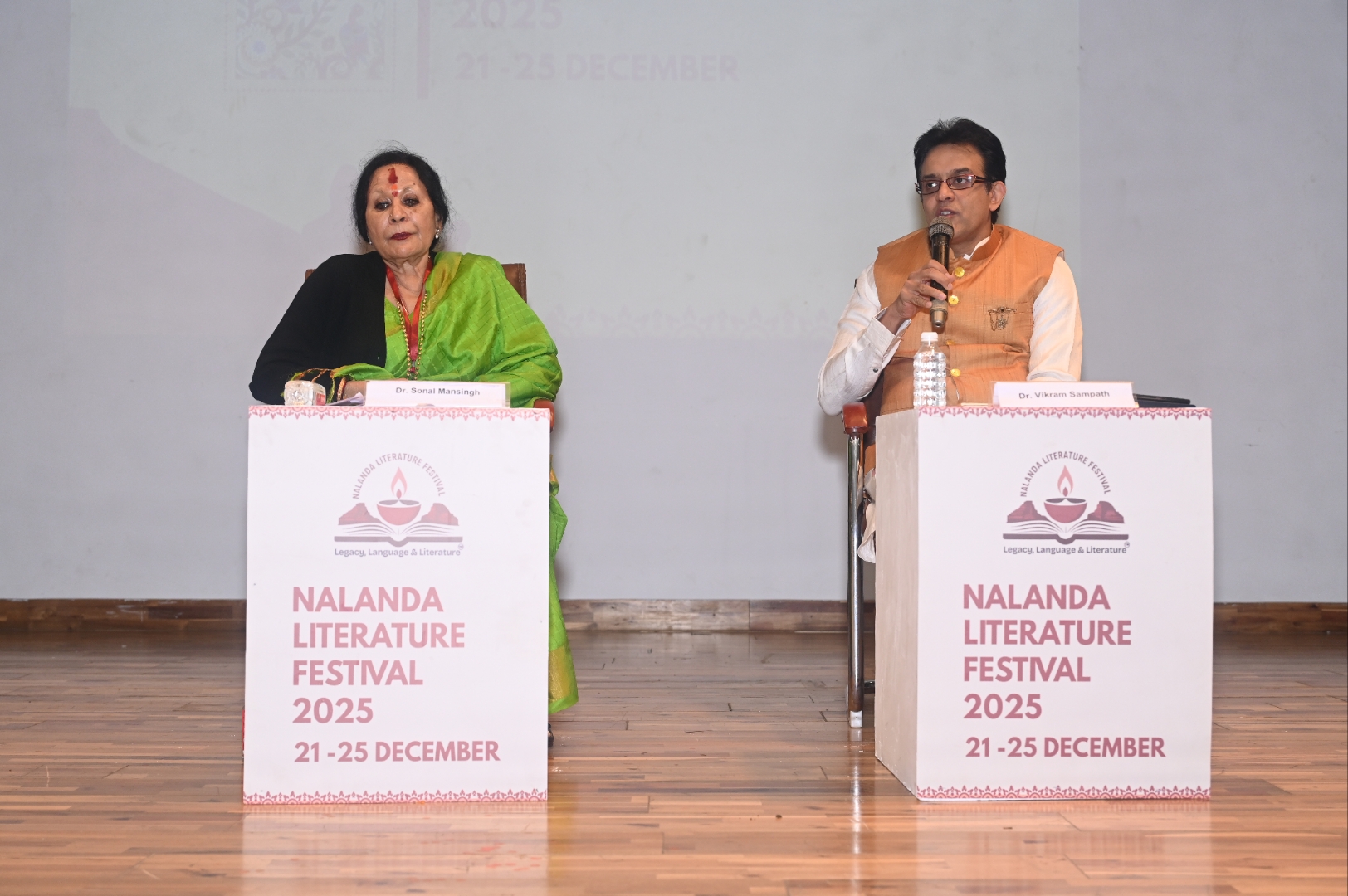 Sonal Mansingh (L) and Vikram Sampath
Speakers stressed that technology is not neutral and must be human-centric and culturally sensitive. While Prof. Lakshmidhare Behera cautioned against AI’s inability to capture lived human consciousness, Ms. Aditi Maheshwari highlighted risks to linguistic diversity in the digital age, and Dr. Ilaria Torre raised ethical concerns about human-like robots and misplaced trust.
A book review session on How India Scaled Mt G20: The Inside Story of the G20 Presidency featured Shri Amitabh Kant in conversation with Prof. Sunaina Singh.
Kant shared insights into India’s G20 leadership, attributing India’s global rise to its demographic advantage, technological leapfrogging, and empowered youth.
Expressing strong optimism, he described this decade as India’s defining moment, driven by digital public infrastructure and the energy of young Indians.
The festival also hosted the muhurat launch of the film Ardha Nayak, marking NLF 2025’s engagement with contemporary cinema and storytelling rooted in social and cultural realities.
The session “The Lost Love”, moderated by Prof. M. J. Warsi, focused on the revival of Bihar’s regional languages like Bajjika, Magahi, and Angika.
Speakers discussed the cognitive and cultural importance of mother-tongue education, opportunities created by the National Education Policy 2020, and the role of technology and AI in strengthening indigenous languages as carriers of identity and knowledge.
In an interactive session on language, renowned filmmaker Adoor Gopalakrishnan, in conversation with Shri Ganga Kumar, reflected on the deep relationship between literature, theatre, and cinema.
Drawing from his personal journey, he emphasised truth, depth, and integrity in filmmaking, stating that cinema must go beyond entertainment to reflect lived realities and cultural consciousness.
The session “Words to Screen”, moderated by Pankaj Dubey, explored the challenges of adapting literature and regional languages into cinema.
Producer Abhay Sinha spoke on balancing creative honesty with market pressures, actor Sanjay Mishra highlighted language as the core of emotional expression, and poet Manoj Bhawuk addressed misconceptions around Bhojpuri. The discussion underlined that sensitive representation of regional languages enriches Indian cinema.
Another notable session, “Writing India in English: Celebrating its Multicultural Narratives”, moderated by Dr. Pankaj K. P. Shreyaskar, examined English as a medium for expressing India’s diverse realities.
Author and IPS officer Amit Lodha shared how English enabled him to humanise policing through lived narratives, while historian Dr. Abhishek Anand stressed that English must complement, not replace India’s multilingual heritage.
The day concluded with a book review of A Zigzag Mind, featuring Dr. Sonal Mansingh in conversation with Dr. Vikram Sampath. Dr. Mansingh described the book as a reflection on creative curiosity, discipline, and Indian philosophy, highlighting the Guru–Shishya tradition and the relevance of mythology and classical arts in contemporary life.
The festival also showcased book reviews and book releases, including works by Amitabh Kant, Dr. Sonal Mansingh, Dr. Vikram Sampath, and Shovana Narayan, reflecting the breadth of contemporary literary discourse.
The evening concluded with Jasn-E-Mehfil, a live cultural performance, blending classical and folk traditions, followed by dinner, highlighting NLF 2025’s unique combination of intellectual engagement and artistic celebration.