Nalanda: The concluding day of the Nalanda Literature Festival 2025 began on a solemn note as the festival paid tribute to eminent Hindi writer and Jnanpith Award laureate Vinod Kumar Shukla, who passed away on Tuesday, December 23, 2025, at the age of 88.
Speakers and participants remembered him as one of the most original voices of modern Hindi literature, whose minimalist yet deeply evocative writing transformed everyday experiences into profound literary expression.
The tribute acknowledged his lasting contribution to Indian letters and his influence on generations of writers.
Sessions throughout the day explored Nalanda’s enduring global legacy, India’s manuscript traditions, Gandhian thought in folk culture, and the heritage of Indian scripts, reinforcing the festival’s core focus on knowledge systems rooted in tradition yet relevant to the present.
Read also: Nalanda Literature Festival 2025 -- Languages, history, and ideas take centre stage
Contemporary themes also took centre stage, with discussions on transgender representation in modern literature, the cultural legacy of the Indian diaspora with special reference to Girmitiyas, and evolving narratives of identity beyond borders. Lively sessions on Bihar’s culinary traditions, poetry, and regional arts, added a celebratory dimension to the festival’s closing day.
The session “Interactive Session: Heritage” featured a deeply engaging dialogue between renowned scholar Dr. Sachchidanand Joshi and Mauritius-based academic, cultural activist, and leading voice of the Bhojpuri movement Dr. Sarita Boodhoo.
The discussion explored Indian cultural heritage, linguistic continuity, and the role of the Indian diaspora in preserving traditions abroad.
Dr. Joshi reflected on how overseas Indian communities safeguard language, rituals, and memory with devotion, sharing poignant insights from the Aapravasi Ghat Museum in Mauritius.
Dr. Budhoo traced her own journey from India to Mauritius and highlighted her pioneering efforts in revitalising Bhojpuri through the Mauritius Bhojpuri Institute. Emphasising that “when language is lost, identity is lost,” she spoke about safeguarding oral folk traditions, Bhojpuri media initiatives, and global recognition of diaspora culture through UNESCO-linked processes.
Read also: Nalanda Literature Festival explores India’s linguistic and cultural diversity
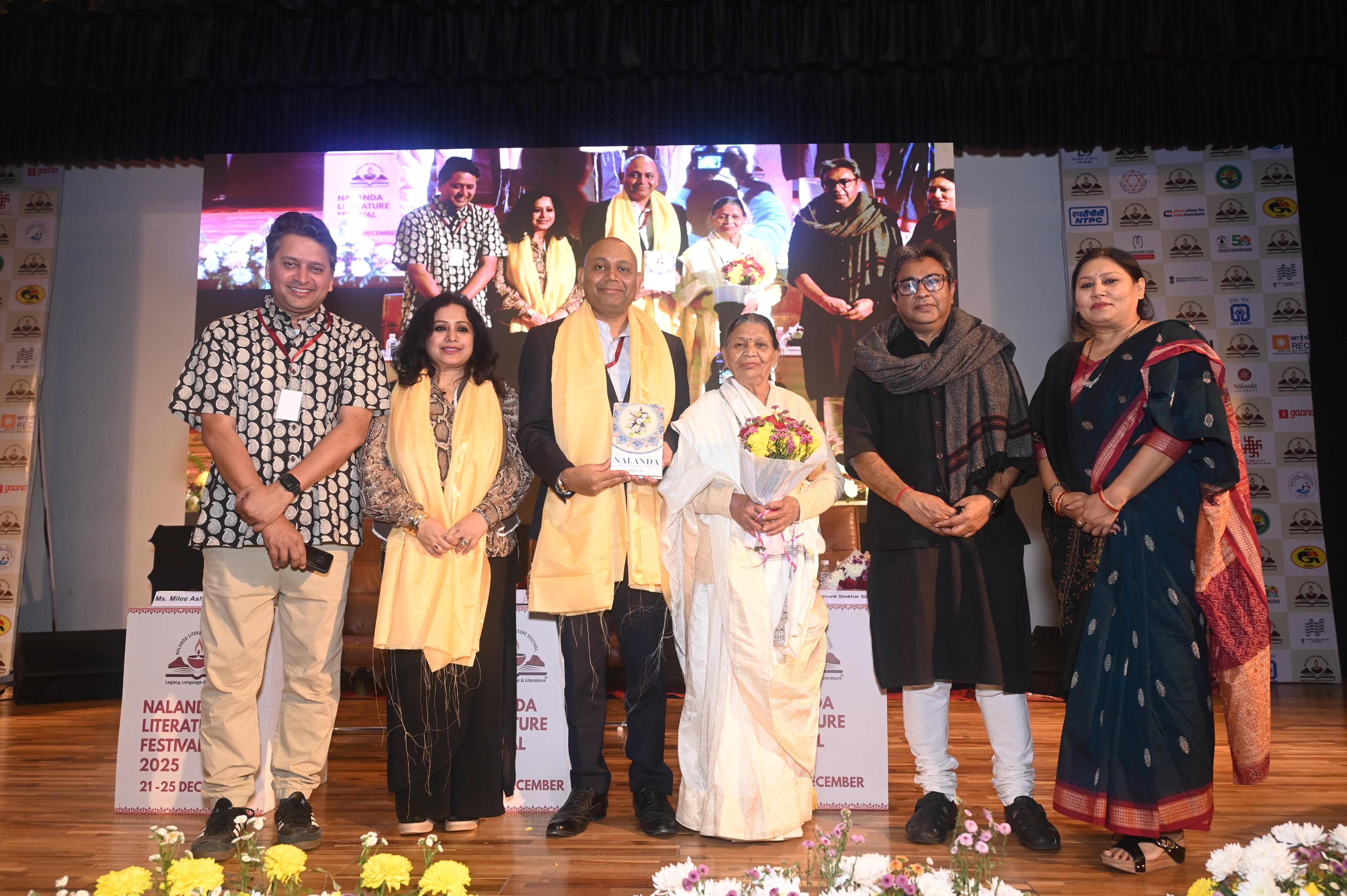
The session “Nalanda: A Window to the World”, moderated by Ms. Milli Aishwarya, examined Nalanda’s enduring global intellectual legacy.
Dr. Shashank Shekhar Sinha presented Nalanda as a living, evolving tradition rather than a site of ruins, highlighting recent research that reveals the vast scale and multidisciplinary nature of the ancient university.
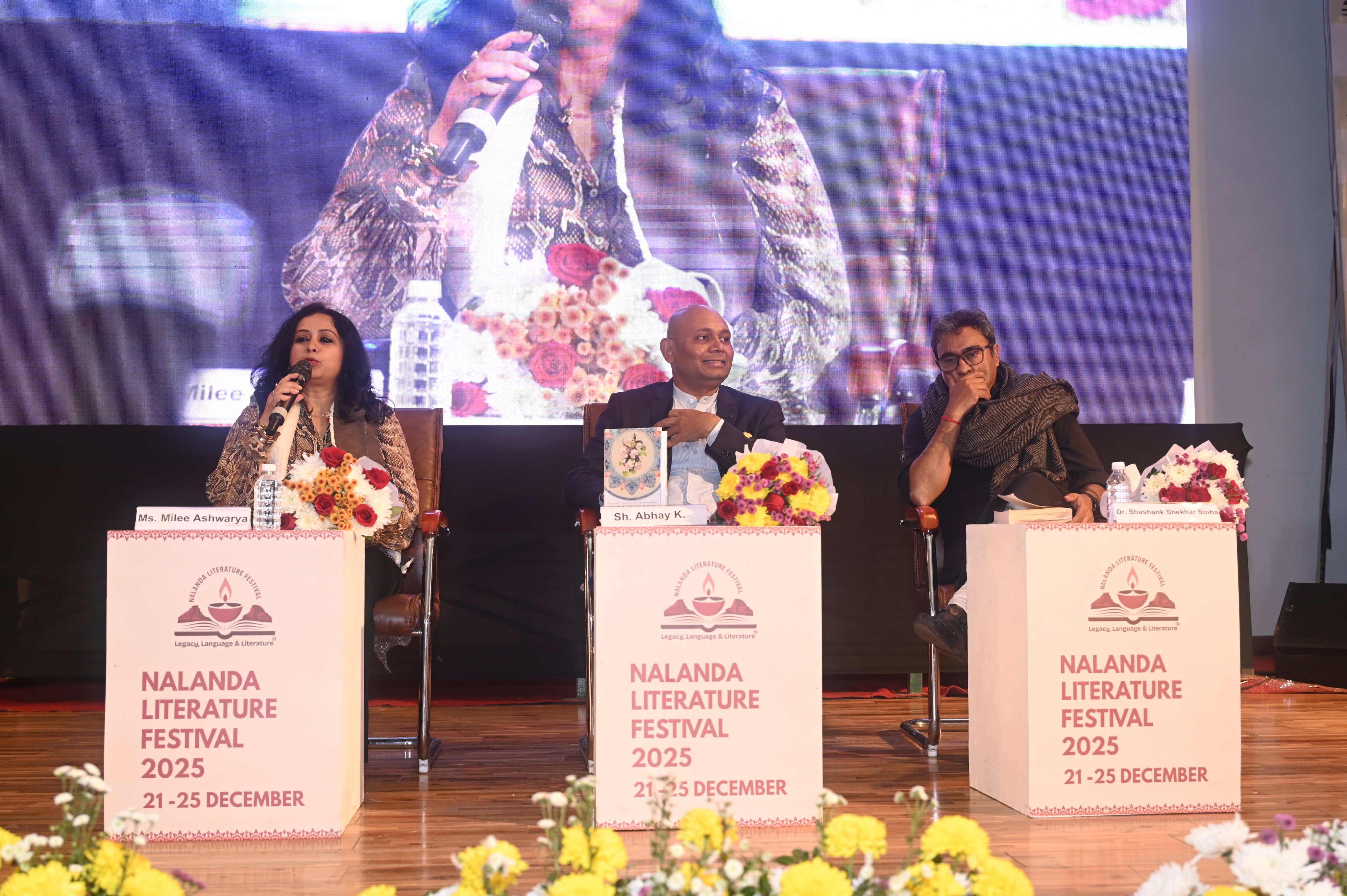
He underscored Nalanda’s role in shaping Buddhist philosophy, including Shunyata and collective scholarly traditions.
Abhay K. further emphasised that Nalanda’s true strength lay in the ideas it generated, which travelled across Asia and beyond. He noted that Nalanda’s culture of inquiry, debate, and openness positioned it as one of the world’s earliest global knowledge networks.
The session, “From Charkha to Chaupal: Gandhi’s Ideals and Their Echo in Bihar’s Folk Traditions”, moderated by Mr. Vinay Kumar, this session featured Mr. Arvind Mohan and Mr. Pushyamitra, who explored Mahatma Gandhi’s enduring influence on Bihar’s folk traditions, village life, and political consciousness.
Mr. Mohan traced Gandhi’s transformation into a mass leader through the Champaran Satyagraha, highlighting the role of the chaupal as a space of dialogue and grassroots politics.
Read also: Literature brings us closer to supreme truth -- Bihar Governor at Nalanda Literature Festival
He discussed the cultural symbolism of the charkha and khadi as instruments of ethical living and self-reliance.
Mr. Pushyamitra examined the economic dimensions of the charkha, linking it to resistance against colonial exploitation and the revival of indigenous industries. The session underlined how Gandhi’s ideas continue to resonate in Bihar’s social fabric, artisanal traditions, and moral imagination.
The sensitive and thought-provoking session “Beyond the Binary: Transgender Characters in Today’s Literature” was moderated by writer and poet Kiran Bhatt and featured renowned transgender writer, poet, and literary thinker Vijayarajamallika.
During the session, Vijayarajamallika made a direct appeal to the Government of India and state governments, urging them to recognise transgender, intersex and LGBTQ+ writers within the mainstream framework of Indian literature.
She pointed out that despite a growing body of significant queer writing, such authors remain largely absent from national and state-level literary awards and official recognition.
Emphasising that transgender literature documents lived realities of social exclusion and resilience, she called upon the Bihar government to initiate steps towards honouring such voices, stating that recognising writers who have sustained their creativity amid systemic discrimination would be a meaningful step towards cultural inclusion and social justice.
Read also: A step toward Bihar’s revival -- Nalanda Literature Festival 2025 kicks off in Rajgir
Moderated by Mr. Ravishankar Upadhyay, the session “Tales Beyond Chokha and Gamchha” featured cultural commentator Mr. Akhilendra Mishra, who presented Bihar’s culinary traditions as an extension of its history, philosophy, and social values.
Drawing from texts like the Ramcharitmanas and Buddhist narratives, he described food as a carrier of memory and ethics, citing examples such as khichdi, kheer, sattu, and seasonal rituals.
Critiquing modern fast-food culture, he advocated for traditional diets as balanced and sustainable. He also highlighted GI-tagged products like makhana, tilkut, anarsa, and Silao khaja, emphasising the need to preserve Bihar’s culinary heritage as part of its cultural identity.
The “Live Show on Veracities of Poem”, moderated by Mr. Dinesh Mali, brought together Padma Shri Haldhar Nag, Mr. Ashutosh Agnihotri, and Dr. Ajit Pradhan in a vibrant celebration of Indian poetry.
Through recitations and reflections, the speakers explored poetry’s truth, emotional power, and relevance in a globalised world. Discussions also addressed translation, linguistic diversity, and the international presence of Indian poets, reaffirming poetry as a living, cross-cultural medium of expression.
Moderated by Mr. Sunit Tandon, the reflective session “Journey of NLF and Its Motivational Facets” featured Ms. D. Alia and Mr. Sanjay Kumar, who traced the vision and evolution of the Nalanda Literature Festival.
Ms. Alia explained the choice of the theme “Legacy, Language and Literature,” emphasising Nalanda’s unmatched civilisational legacy and the centrality of mother tongues such as Angika and Magahi.
Mr. Sanjay Kumar highlighted the festival’s inclusive approach, noting its focus on Dalit, women’s, tribal, and transgender literature, as well as its year-round national outreach through workshops and digital engagement.
The session also acknowledged the crucial role of volunteers and outlined future plans to empower young writers and expand NLF’s international presence.
Ganga Kumar, Festival Director, Nalanda Literature Festival, said, “The inaugural Nalanda Literature Festival has been a deeply fulfilling journey that reaffirmed Nalanda’s historic role as a meeting ground of ideas, cultures, and traditions. Over four days, the festival brought together diverse voices and disciplines, creating meaningful conversations that honoured our past while engaging thoughtfully with the present and the future.”
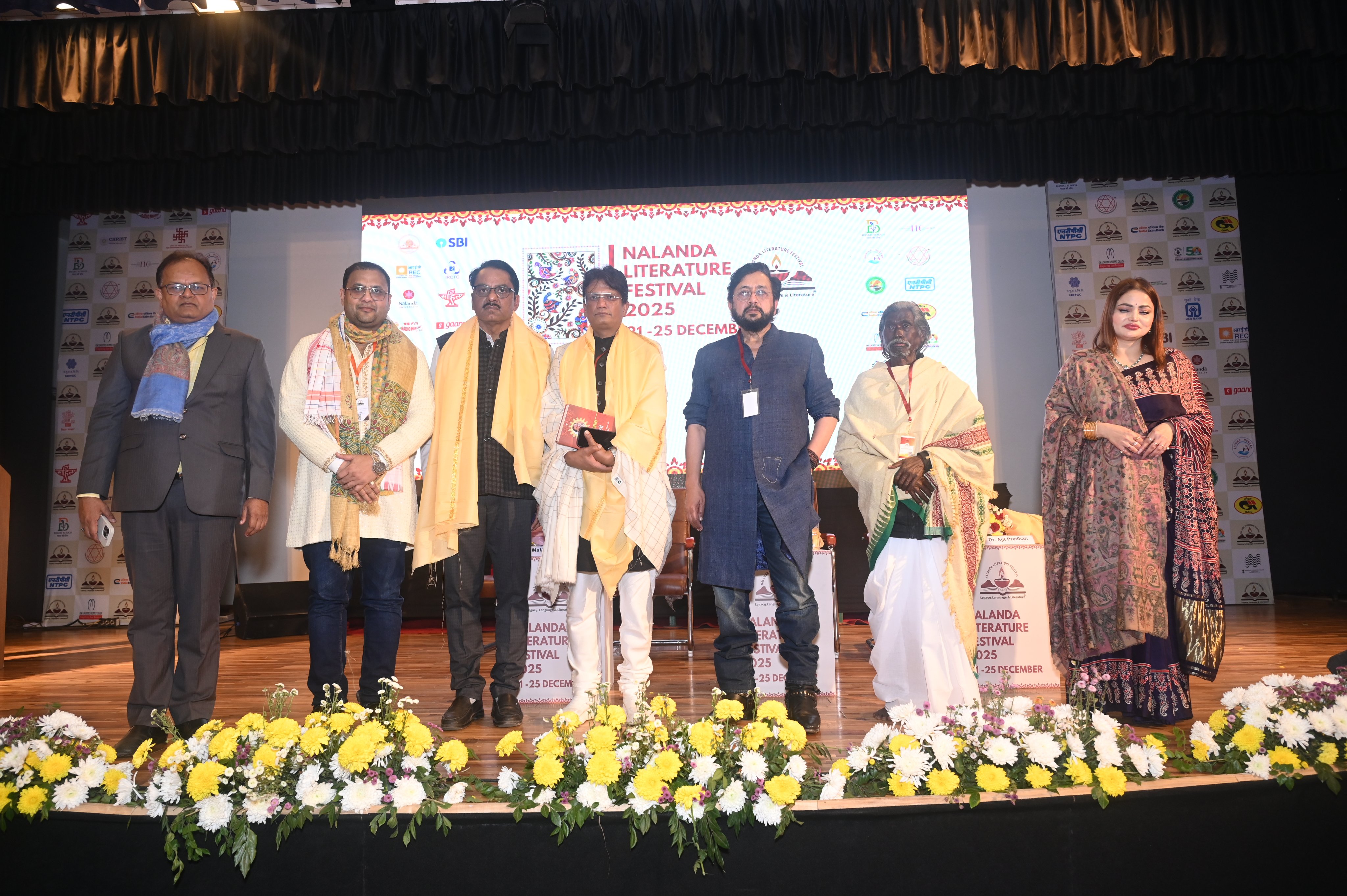
The festival concluded with a Closing and Felicitation Ceremony, honouring speakers, facilitators, artists, and contributors who played a pivotal role in shaping NLF 2025.