Nalanda: The third day of the Nalanda Literature Festival (NLF) 2025 unfolded as a powerful exploration of history, language, philosophy, and cultural identity, drawing deep engagement from scholars, writers, and audiences alike.
The day commenced with yoga and meditation sessions conducted by the Bihar School of Yoga, Munger, offering participants a reflective and balanced start.
Intellectual discussions soon followed, with sessions such as “Reimagining Bharatiya Itihas from an Indic Perspective” featuring Dr. Vikram Sampath, and “Her Words, Her World”, which highlighted the contribution and representation of women’s voices in Indian literature.
Read also: Nalanda Literature Festival explores India’s linguistic and cultural diversity
Several sessions focused on language as a carrier of cultural memory, including “Language as Legacy: How Regional Tongues safeguard our cultural roots” with Prof. Ganesh Narayandas Devy and “Exploring the Nalanda Spirit in the World”, examining how Nalanda’s intellectual ethos continues to resonate across global linguistic and literary traditions.
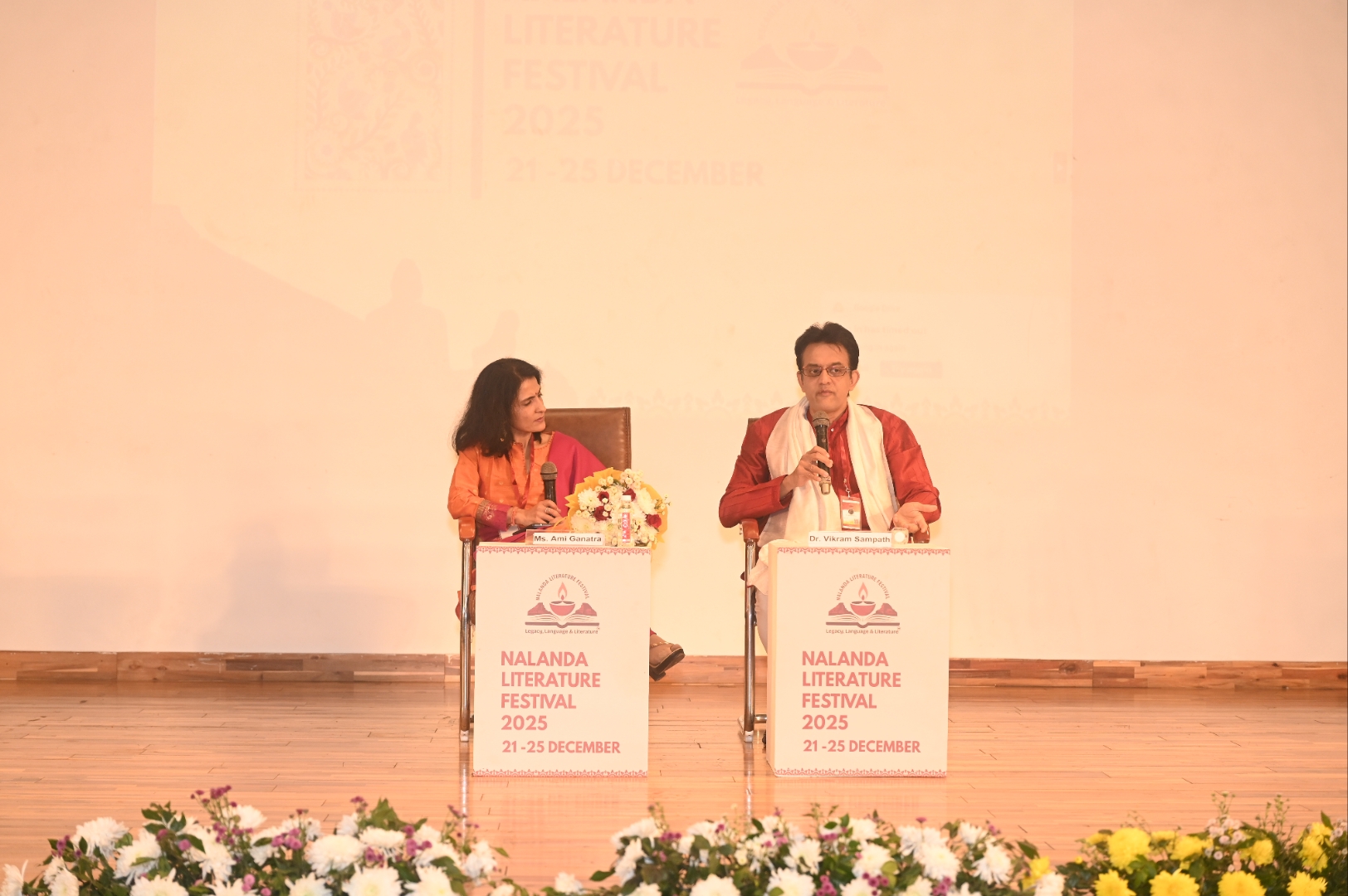
Dialogues on inscriptions from the North Eastern states and reflections on Gandhian philosophy through the Champaran Satyagraha further enriched the historical discourse.
The afternoon sessions brought the spotlight on India’s linguistic diversity, particularly from the North East, with discussions on the languages of the Seven Sisters, the significance of tribal languages, and evolving practices in literary translation from Indian languages to English and vice versa.
Conversations on “Urdu: From Past to Present” traced the evolution and contemporary relevance of the language, while “Oral Literature” with Devdutt Pattanaik revisited the enduring power of storytelling traditions passed down through generations.
Read also: Literature brings us closer to supreme truth -- Bihar Governor at Nalanda Literature Festival
The session “Reimagining Bharatiya Itihas from an Indic Perspective”, moderated by Ami Ganatra and featuring historian Dr. Vikram Sampath, examined the urgent need to reinterpret Indian history through an indigenous Indic lens. Dr. Sampath emphasized that history shapes a civilization’s self-understanding and warned that distorted narratives, largely inherited from colonial frameworks, continue to influence historical discourse even after independence.
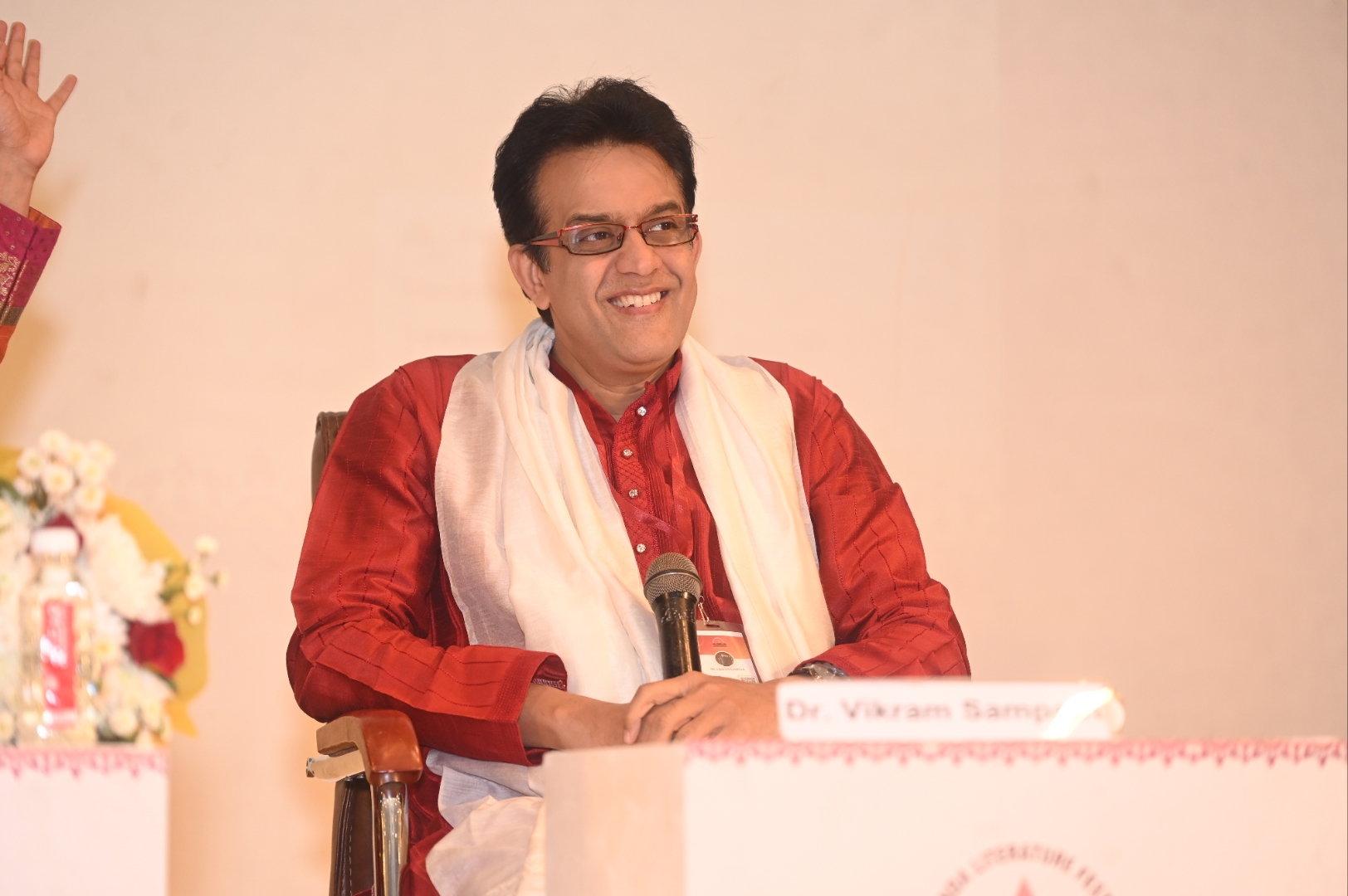
He highlighted the challenges of historical reconstruction due to lost inscriptions, incomplete manuscripts, linguistic complexities, and translation gaps, noting that history evolves with new evidence and archaeological discoveries such as those at Dholavira, Rakhigarhi, and Sinauli.
Ganatra added that history is not confined to textbooks but continuously reshaped by present realities, stressing the importance of fact-based, multi-regional narratives that reflect India’s cultural and philosophical diversity rather than ideologically driven or fictional interpretations.
Read also: A step toward Bihar’s revival -- Nalanda Literature Festival 2025 kicks off in Rajgir
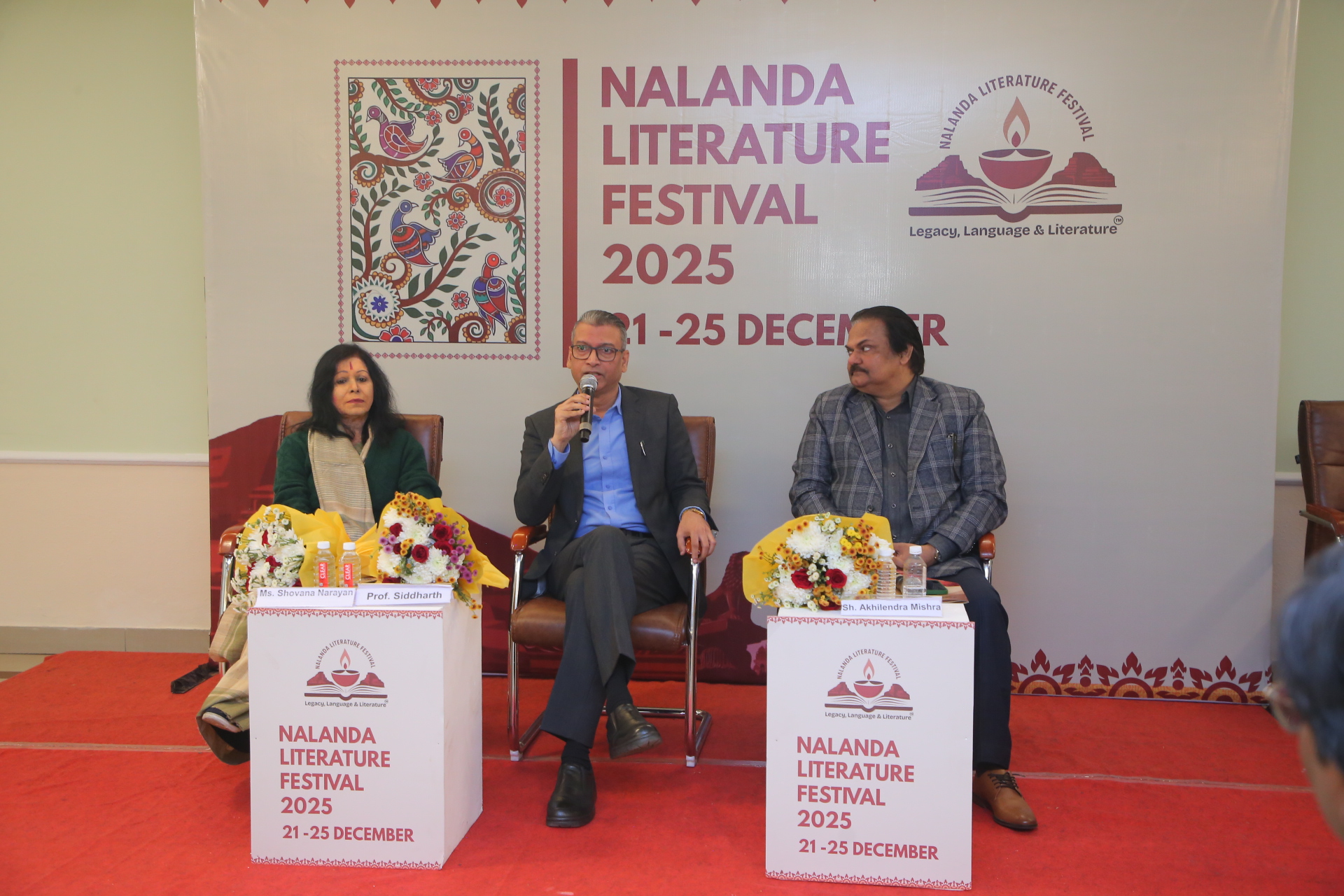
The session “Exploring Nalanda Spirit in the World”, moderated by Prof. Siddharth Singh, brought together Padma Shri awardee and renowned dancer-scholar Shovana Narayan and actor Akhilendra Mishra to reflect on Nalanda as a timeless tradition of dialogue and coexistence.
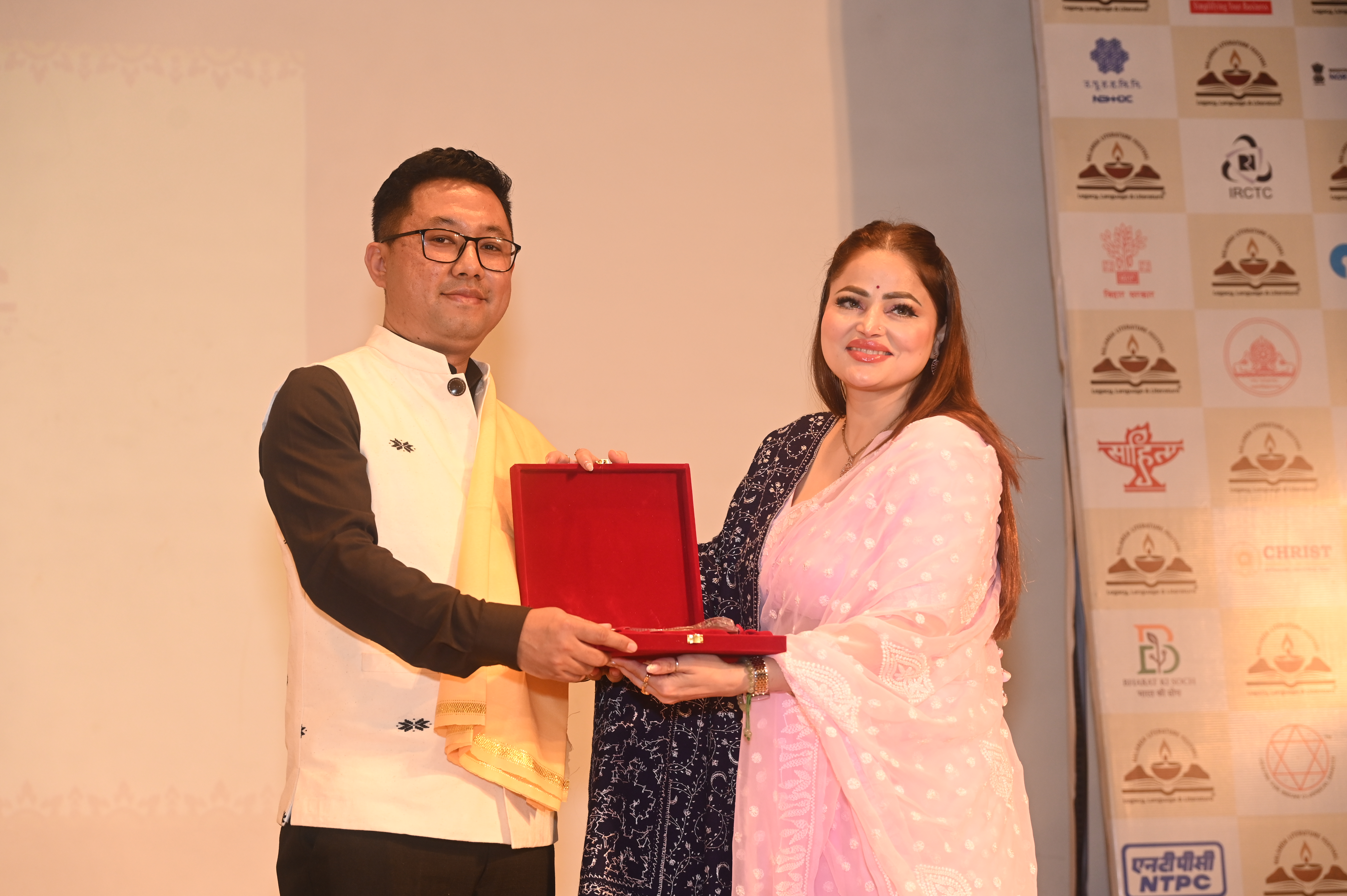
Narayan underscored that Nalanda’s true spirit lies in embracing plurality, sensitivity, and mutual respect, drawing parallels from music, dance, and literature to illustrate how a single word or emotion can hold multiple meanings.
Mishra delved into Indian philosophical and linguistic traditions, explaining concepts such as the Maheshwar Sutras and the integration of language, science, and spirituality within Indian knowledge systems. Together, the speakers reaffirmed Nalanda’s relevance as a guiding philosophy for a world seeking dialogue, diversity, and deeper self-awareness.
The historical discourse deepened further in the session “Inscriptions of North Eastern States”, moderated by Dr. Z. D. Lalmangaihzauva, with insights from Dr. Madhumita Barbora and Sh. Arup Kumar Dutta. The discussion highlighted inscriptions as vital historical sources that illuminate the political, administrative, religious, and linguistic evolution of North-Eastern India, particularly Assam.
Dr Barbora explained how inscriptions from dynasties such as Kamarupa, Salasthambha, Chutiya, and Ahom reveal land systems, governance structures, and the spread of religious traditions, while also tracing the evolution of scripts and languages.
Dutta emphasized inscriptions as key to understanding the layered development of the Assamese language and identity, noting the influence of Vaishnavite reformers like Srimanta Sankardeva.
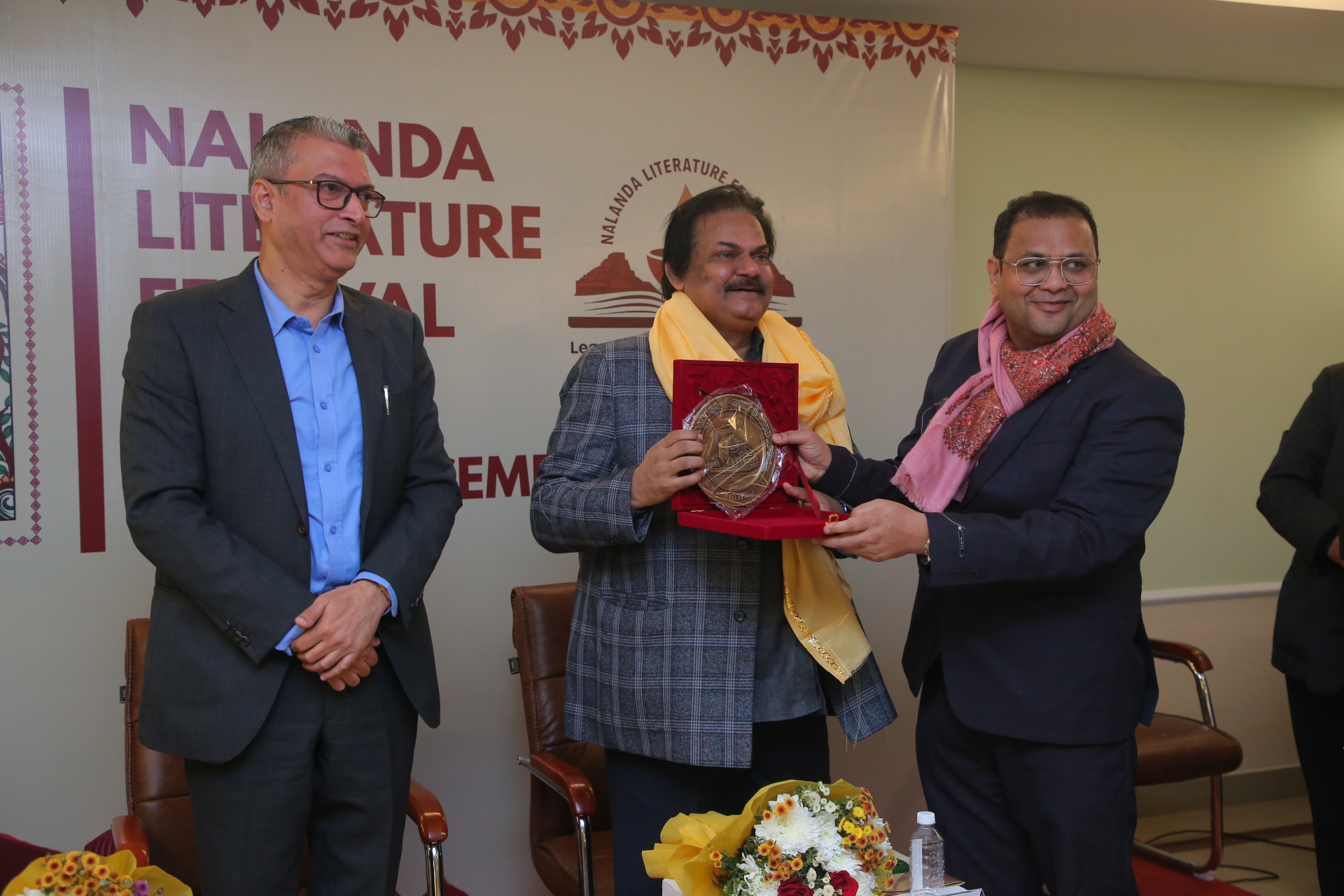
He also stressed the urgent need to preserve endangered languages of the region, underscoring inscriptions, literature, and oral traditions as pillars of cultural memory.
The session “Oral Literature”, moderated by Vandana Rag and led by renowned mythologist Devdutt Pattanaik, explored storytelling as a foundational element of human identity and culture. Mr. Pattanaik noted that stories are not mere narratives but rituals that transmit values, beliefs, and social structures across generations.
Using examples from the Ramayana and global myth traditions, he explained how stories evolve with time, geography, and society, offering new meanings to each generation.
He introduced the concept of “belief-based truth,” illustrating how communities define ownership, identity, and authority through narratives rather than nature.
Emphasizing that civilizations are shaped by stories rather than facts alone, he highlighted how myths reflect ecology, history, and social realities, reaffirming oral traditions as living, dynamic forces that continue to define cultures worldwide.