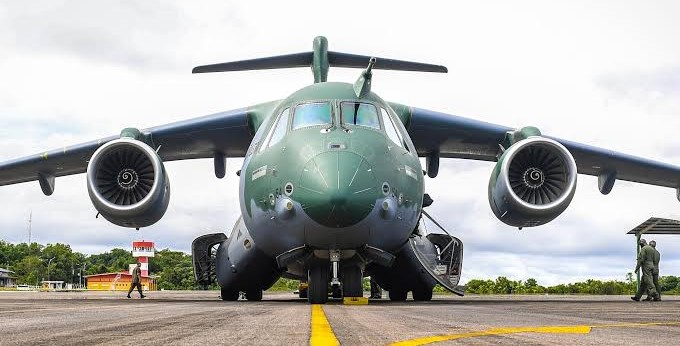
 Embraer's C-390 Millennium (Photo: X)
New Delhi: A technical evaluation of the proposals submitted by three foreign aerospace manufacturers for supplying 60 medium transport aircraft (MTA) to the Indian Air Force (IAF) has been completed, moving a procurement effort that has been on the drawing board in one form or another since the mid-2000s into its next, decisive phase.
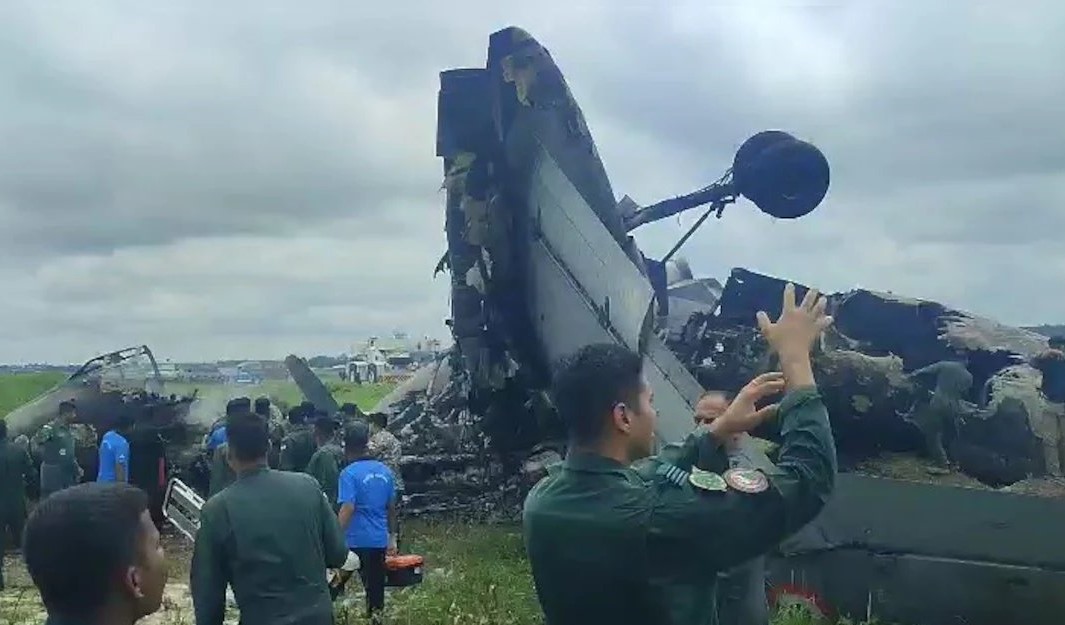
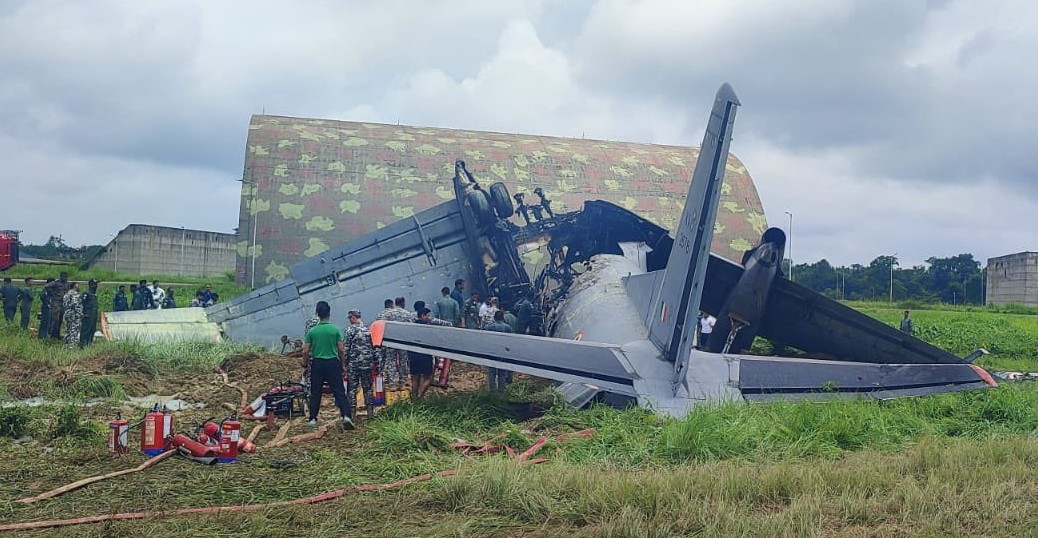
The medium transport aircraft programme is designed to retire the IAF’s fleet of Soviet-era Antonov An-32 aircraft, workhorses of the country’s tactical airlift network for more than four decades. The urgency behind the effort was underlined last month when an An-32 crashed while landing at the Jorhat air force station in Assam on June 13, 2026, killing five personnel – Squadron Leader Prashant Singh, Flight Lieutenant Shubham Kumar, Sergeant Jitendra Sharma and two Agniveervayus, Khemaram Kumawat and Danish Alam. The co-pilot survived and remains under treatment.
The Air Force has ordered a court of inquiry into the crash, the latest in a string of accidents that have dogged the type over the years.
With the technical assessment now finalized, the defence ministry is preparing to issue a formal request for proposal (RFP) to the three contenders, according to sources familiar with the matter.
The RFP will seek commercial bids alongside detailed offers on the transfer of technology (ToT) each manufacturer is willing to provide. Field trials, cost negotiations and, ultimately, contract signing are expected to follow over the coming months.
The contenders
Airbus has put forward its A400M Atlas, a four-engine heavy tactical airlifter. The European manufacturer already builds the smaller C-295 transport aircraft in India in partnership with the Tata group, giving it an established industrial footprint to draw on.
Lockheed Martin, the American firm that has already supplied the IAF with the C-130J Super Hercules, is offering the same platform and likewise operates a manufacturing facility in India with Tata.
Brazil's Embraer, for its part, has proposed the C-390 Millennium and has partnered with Mahindra Defence Systems for domestic production.
Industry watchers reckon the overall MTA effort, once fully contracted, could be worth close to ₹1 lakh crore, making it among the most significant capital acquisitions on the Air Force's books.
Why the gap needed filling?
The requirement for a medium-lift aircraft has taken shape gradually. Discussions on a joint India-Russia transport aircraft, envisaged with a payload of 15-20 tonnes, began in the mid-2000s, but that collaboration eventually stalled and was shelved.
In the interim, the An-32 fleet was subjected to a “total technical life extension” under a contract with Ukraine’s Antonov, intended to keep the aircraft flying safely until 2025 and beyond. That stopgap, however, has not resolved the underlying capability gap, nor stemmed the accident toll: the type suffered dozens of incidents over the past decade, including a 2019 crash in Arunachal Pradesh’s Siang district that claimed all 13 personnel aboard.
The specific requirements now driving the MTA effort were shaped, in part, by operational shortfalls identified after the high-altitude troop deployments along the northern border in 2020, which underscored the need for rapid, flexible movement of soldiers and equipment into difficult terrain.
Officials want an aircraft that occupies the middle ground between lighter platforms such as the C-295 – with a payload of roughly 9 to 12 tonnes – and heavy-lift aircraft such as the C-17 Globemaster III, which can carry up to 70 tonnes.
The IAF’s specifications call for a payload range of 18 to 30 tonnes, with a cargo bay large enough to accommodate light armoured vehicles, including the indigenous 25-tonne Zorawar light tank, the M777 ultra-light howitzer, BrahMos missile canisters and Akash air-defence launcher units.
The aircraft is also expected to operate along the northern and eastern frontiers, including Ladakh and Arunachal Pradesh, and must be capable of landing and taking off from short, unprepared airstrips – a non-negotiable requirement given the nature of forward airfields in mountainous sectors.
Localization at the core
Under the procurement framework being finalized, 12 aircraft will arrive in flyaway condition, while the remaining 48 will be manufactured and assembled in India through a joint venture between the selected foreign vendor and its Indian industrial partner.
Indigenous content is expected to progressively exceed 50 per cent, spanning structural components, wiring harnesses, sheet-metal assemblies, avionics racks and software integration.
New Delhi is also pushing for an open-architecture platform that would let it integrate indigenous software, tactical data links and mission computers into the aircraft without needing the manufacturer’s sign-off for future upgrades – a provision aimed at preserving long-term operational autonomy.
The winning vendor will additionally be required to set up a full maintenance, repair and overhaul (MRO) hub in India, including engine-overhaul facilities, to sustain the fleet through its entire service life.
The Defence Acquisition Council had cleared the its acquisition proposal on March 27, 2026.