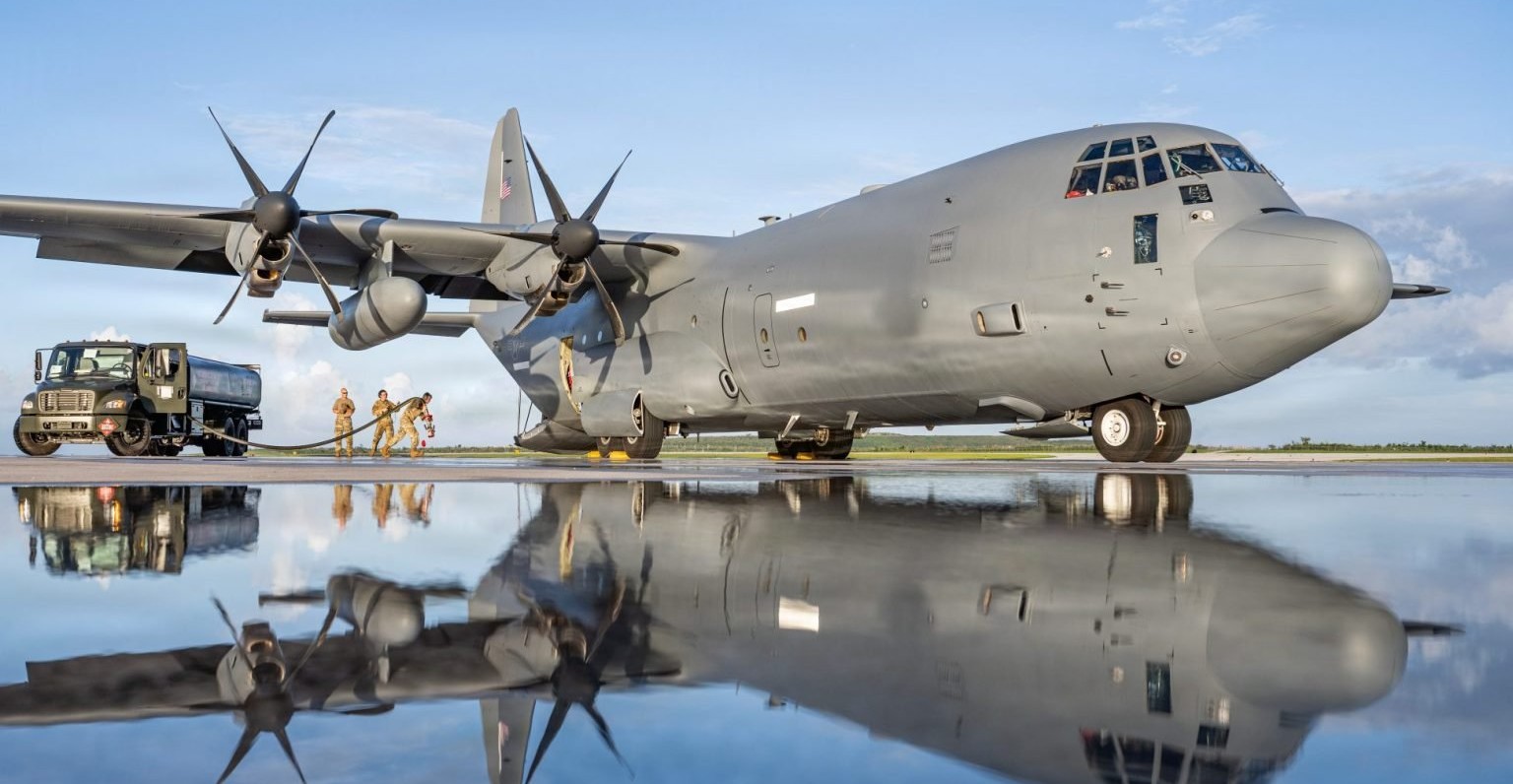
 Lockheed Martin’s C-130J Super Hercules. (File photo)
— By Huma
New Delhi: On the eve of India’s 80th Independence Day, the Ministry of Defence has launched one of the Indian Air Force’s most important transport-aircraft procurements in a while. A tender for 60 multirole transport aircraft in a programme estimated at around Rs 1 lakh crore has been issued.
The procurement is aimed at modernizing the IAF’s transport fleet and addressing the long-standing requirement to replace its ageing An-32 aircraft, while strengthening its ability to move troops, vehicles, artillery and other equipment across India’s challenging operational environment.
The tender also opens a potentially important industrial competition. The Ministry is seeking commercial proposals along with details of the technology transfer and industrial participation being offered by foreign aircraft manufacturers. Indian companies including Hindustan Aeronautics Ltd (HAL), Tata and Mahindra are expected to lead the Indian side of the partnerships.
Read also:IAF's ₹1 lakh crore transport aircraft deal moves ahead; Airbus, Lockheed Martin, Embraer in race
The procurement will now proceed through the subsequent stages of evaluation, including field trials, commercial negotiations and contract finalisation. The competition will include Brazil’s Embraer’s C-390 Millennium, Europe’s Airbus’ A400M Atlas and the US Lockheed Martin’s C-130J Super Hercules.
Filling the gap in the IAF transport fleet
The requirement comes as the IAF restructures a transport fleet spanning several generations and capability classes.
The C-295 is taking over much of the lighter tactical transport role, while the C-17 Globemaster III provides heavy strategic airlift. The MTA is intended to occupy the space between them: an aircraft capable of moving significantly heavier loads than the C-295 without carrying the cost and infrastructure requirements of a heavy strategic airlifter.
The aircraft will need to transport troops, military vehicles, artillery and supplies while retaining the ability to operate from relatively austere airfields.
For India, this capability has particular importance because transport aircraft are increasingly required to support deployments across difficult border regions and sustain operations where road and rail infrastructure can be limited.
The MTA is therefore not simply an An-32 replacement. It is an opportunity to establish a modern medium-lift transport capability for the coming decades.
Three aircraft, three different propositions
Airbus A400M Atlas offers the highest payload capability of the three contenders, at roughly 37 tonnes. Its ability to combine tactical and strategic missions gives the aircraft considerable flexibility.
The challenge for Airbus will be demonstrating that this additional capacity is worth the potentially higher acquisition and lifecycle costs. India will have to determine whether it needs an aircraft at the upper end of the requirement or whether a smaller platform provides better value.
Lockheed Martin’s C-130J Super Hercules has a different advantage: the IAF already operates it
That means India has existing training, maintenance and operational infrastructure around the aircraft. The C-130J is a proven platform for tactical transport, special operations and operations from challenging airfields.
However, the MTA programme also gives India an opportunity to consider whether it wants to deepen an existing American relationship or introduce another major aircraft manufacturer into its transport ecosystem.
That is where Embraer’s C-390 Millennium becomes particularly interesting.
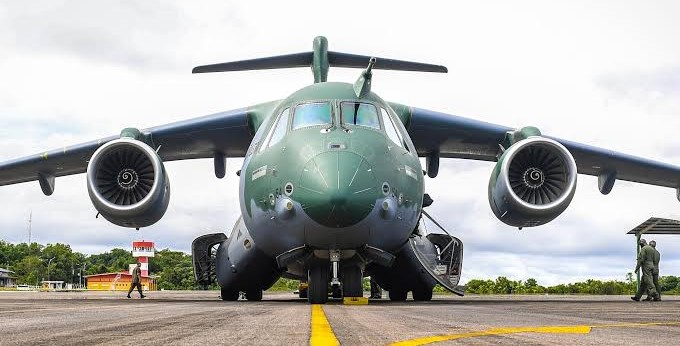
With a payload of around 26 tonnes, the C-390 sits close to the centre of the MTA requirement. It is a modern jet-powered transport aircraft designed for tactical mobility, cargo movement and troop transport.
Its strongest combination may therefore be the blend of operational fit and industrial opportunity. The most consequential element of the MTA competition may not ultimately be the aircraft itself.
India increasingly expects major defence acquisitions to create domestic manufacturing capability, strengthen local supply chains and provide access to technology.
The defence ministry’s requirement for details of technology transfer being offered by the foreign manufacturers makes this particularly important.
India will need to examine what each bidder is prepared to manufacture domestically, which technologies can realistically be absorbed by Indian companies, how much work will go to local suppliers and whether India can establish an independent MRO and upgrade ecosystem.
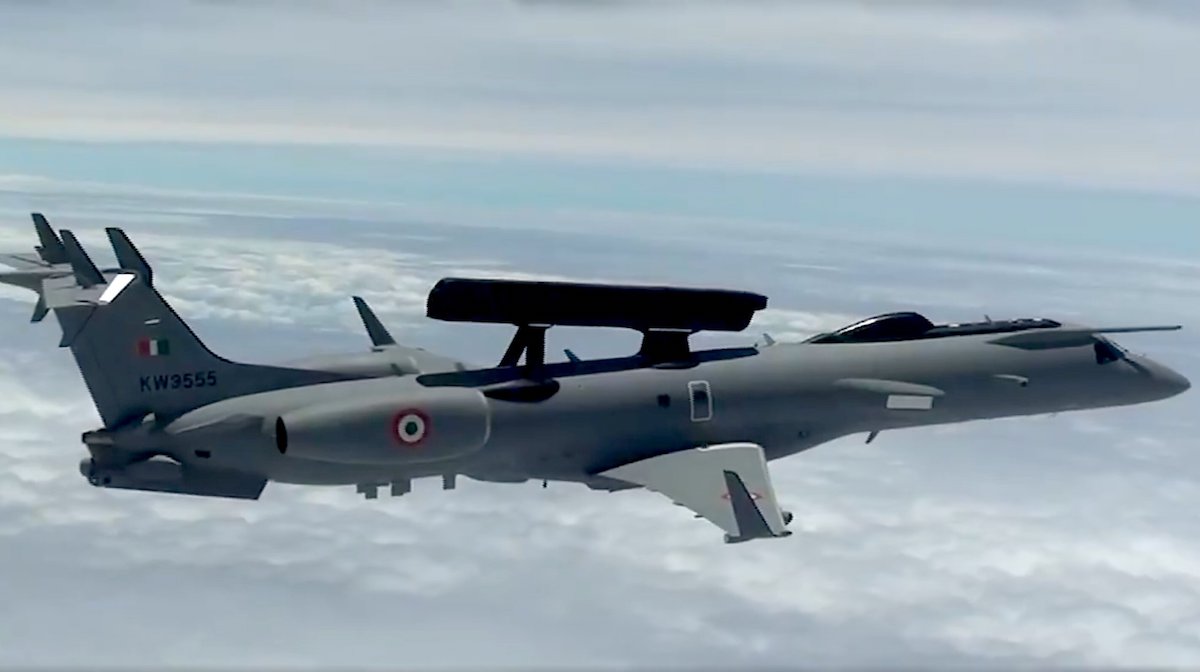
Read also: India plans major boost to Indian Air Force’s airborne early warning fleet
The objective should be to avoid a model in which India assembles aircraft domestically but remains dependent on overseas suppliers for critical components, repairs and future upgrades.
Why Embraer deserves attention
Embraer enters the contest with Mahindra as an Indian industrial partner for its C-390 proposition. That gives the Brazilian manufacturer an opportunity to present the aircraft as more than another foreign platform seeking access to the Indian market. If selected, the programme could potentially create a broader India-Brazil aerospace partnership covering aircraft manufacturing, components, MRO, engineering and supply-chain development. This would also diversify India’s aerospace relationships beyond its traditional dependence on American and European manufacturers.
Brazil is already a major aerospace country, and Embraer has experience developing and exporting both commercial and military aircraft. For India, that creates the possibility of bringing another major aerospace ecosystem into the country. But geopolitical diversification alone cannot justify the selection.
The C-390 would still have to demonstrate its operational suitability, competitive pricing and long-term supportability.
The RFP has also been sent to Adani Defence & Aerospace and Reliance Defence.
Brazilian aerospace major Embraer already has a partnership with the Adani Group in civil aviation. The two companies are also working to establish an MRO facility in India. Embraer has a separate partnership with Mahindra for military aircraft.
If Embraer is selected, it could eventually partner with the Adani Group for the programme. Adani Defence & Aerospace and Embraer entered into a strategic partnership in January 2026 to develop an integrated ecosystem for regional transport aircraft in India. This will include a local final assembly line at Dholera in Gujarat, which is expected to produce regional jets, including the E175 model, with local indigenization, aftermarket support and pilot training also covered.
Should India diversify its aerospace partnerships?
There is a strong strategic argument for diversification, but it must be balanced against the costs of operating multiple aircraft families. Every new aircraft type creates requirements for separate training, maintenance, spare parts, infrastructure and technical expertise. India should therefore focus on strategic autonomy rather than diversification for its own sake.
The key question is which manufacturer is prepared to provide meaningful technology transfer, localise production, develop Indian suppliers and support indigenous upgrades throughout the aircraft’s service life. The MTA programme offers a rare opportunity to make those industrial commitments part of the procurement decision from the beginning.
The contest now moves to the next stage
With the RFP issued, the competition will move from broad discussions about potential contenders to detailed commercial and technical proposals. The subsequent field trials will test how the aircraft perform against the IAF’s actual operational requirements. Cost negotiations will then determine whether the proposed platforms and industrial packages can be delivered within an acceptable financial framework.
For Airbus, the challenge will be to justify the additional capability of the A400M. For Lockheed Martin, the argument will rest heavily on the advantages of an aircraft already established in IAF service. For Embraer, the opportunity is to demonstrate that the C-390 can combine a strong operational fit with a genuinely meaningful Indian industrial proposition.
The MTA programme should ultimately be judged on more than payload, range or acquisition price.
The A400M offers greater lifting capacity. The C-130J offers familiarity and an established support ecosystem. The C-390 offers a modern aircraft closely aligned with the medium transport requirement and the possibility of creating a new aerospace relationship with Brazil.
The winning bidder will need to demonstrate that it can provide India with more than aircraft. It must show how the programme can create technology access, domestic manufacturing, Indian supply chains, MRO capability and a pathway for future upgrades. That is why the MTA contest could become strategically important beyond the replacement of the An-32.
For India, the larger question is not simply which aircraft can carry the most. It is which partner can help India build the most enduring aerospace capability around the aircraft it eventually chooses.
If the RFP produces credible and enforceable commitments on those fronts, the MTA programme could become one of the defining aerospace industrial projects of the next decade and potentially give Embraer a historic opportunity to establish Brazil as a significant new partner in India’s military aviation ecosystem.
(She is a senior journalist, who looks after the defence and strategic affairs developments. She is known for her reporting and writing on India’s defence sector, military modernization, aerospace, national security , diplomacy and strategic affairs.)
Follow us on social media for quick updates, new photos, videos, and more.
X: https://x.com/indiasentinels
Facebook: https://facebook.com/indiasentinels
Instagram: https://instagram.com/indiasentinels
YouTube: https://youtube.com/indiasentinels
© India Sentinels 2026-27