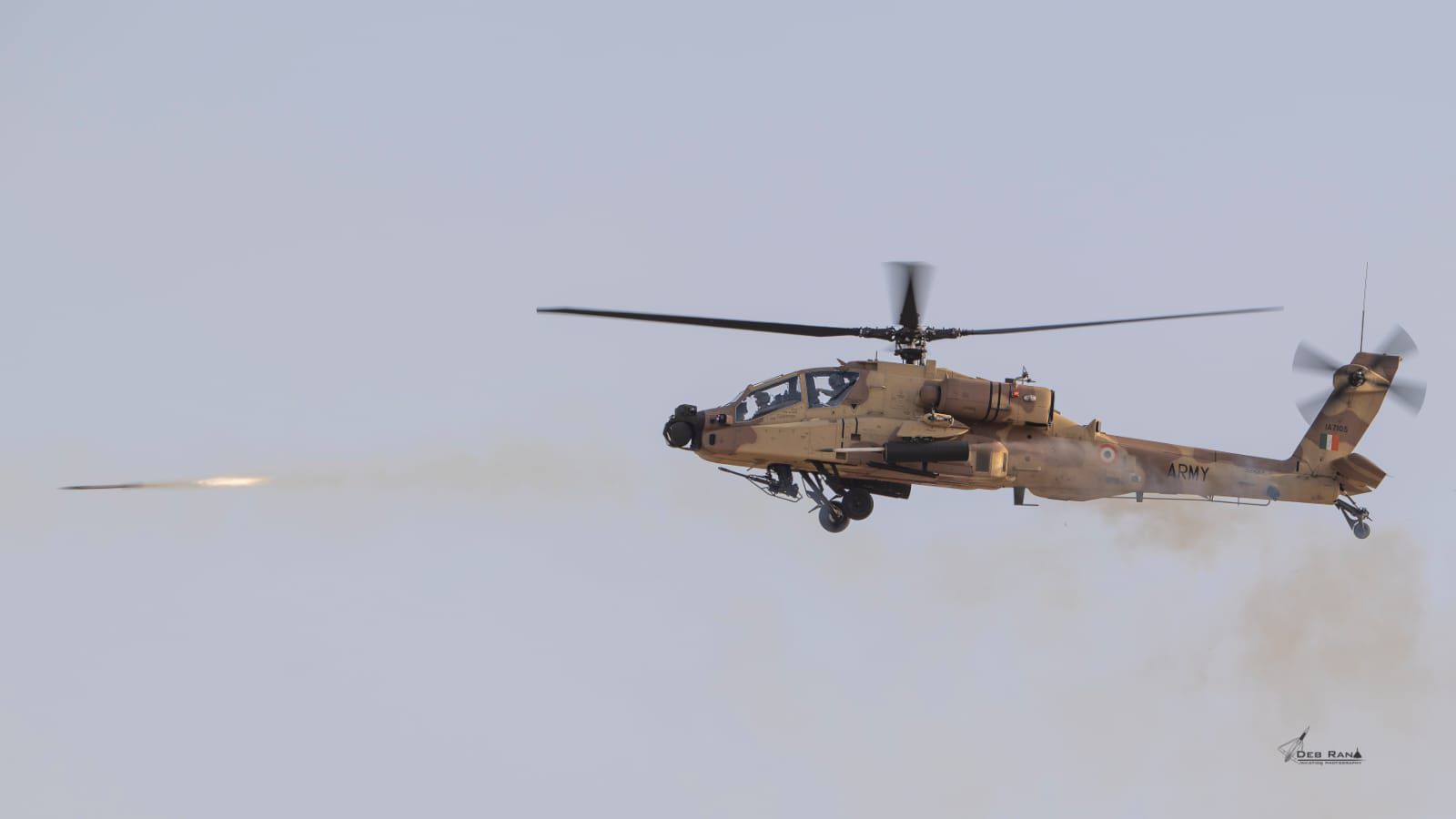
 Apache helicopter fires Hellfire missile at Pokhran, Rajasthan (Photo: Indian Army)
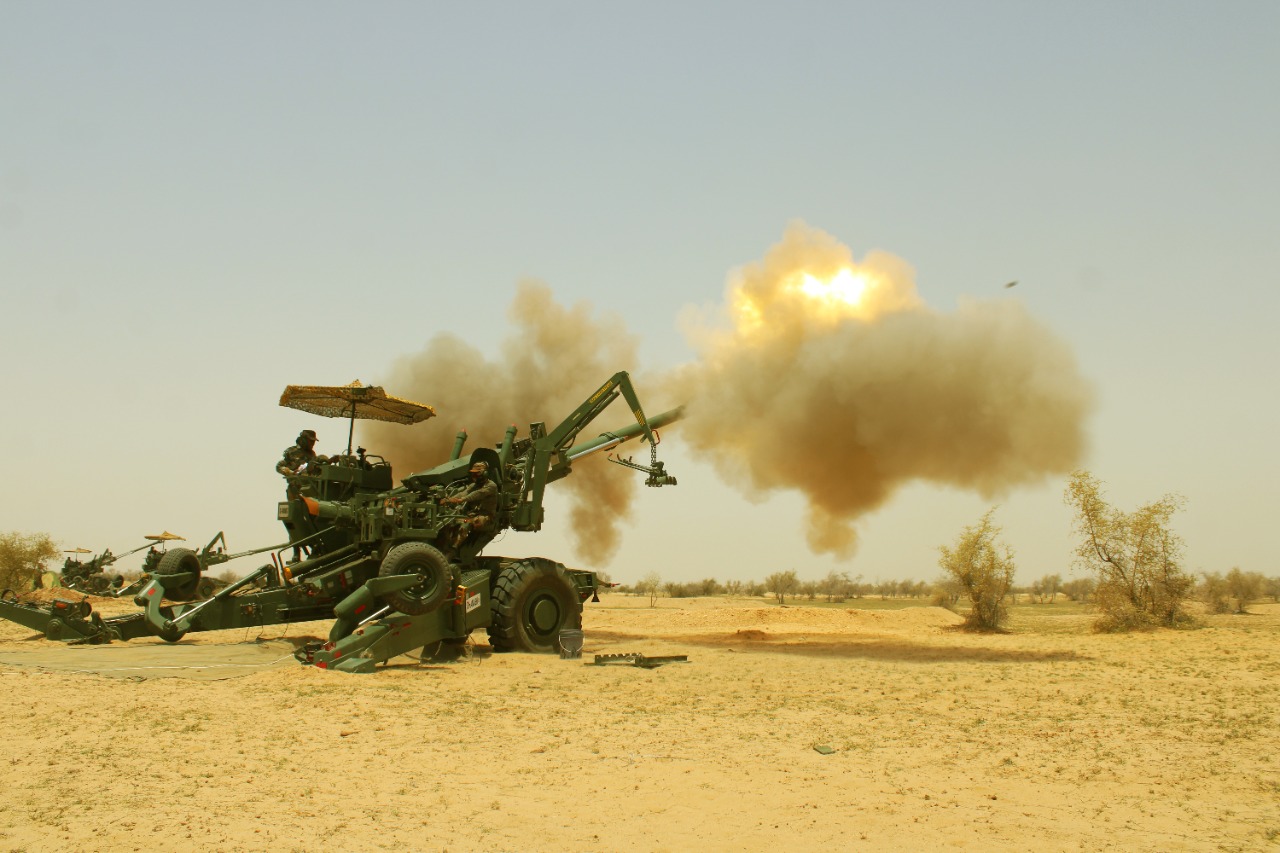
New Delhi: The Indian army has, for the first time, put its Boeing AH-64E Apache attack helicopters through live field firing during exercise Brahmastra at the Pokhran field firing ranges in Rajasthan, engaging targets with Hellfire air-to-ground missiles and other onboard weapons systems in a demonstration of the platform's precision strike capability.
The AH-64E — the most advanced variant of the Apache family — is widely regarded as the world's most capable attack helicopter. It is powered by two General Electric T700 turboshaft engines and can reach a top speed of around 293 kilometres per hour.
The helicopter carries a 30mm M230 chain gun under its nose, can be armed with up to 16 Hellfire missiles, and has provision for 70mm unguided rockets. Its Target Acquisition and Designation Sight (TADS) and Pilot Night Vision Sensor (PNVS) give it a formidable all-weather, day-and-night targeting capability.
The 'E' variant adds improved networking, allowing the helicopter to act as an aerial node — receiving and sharing targeting data with ground forces and other aircraft in real time.
The Hellfire missile — formally the AGM-114 — was originally developed in the late 1970s to give American helicopters a standoff capability against massed Soviet tank formations in Europe.
Its name is a contraction of Helicopter Launched Fire and Forget. Over the decades it has evolved into a family of variants: laser-guided versions for armoured targets, radio-frequency versions for use in adverse weather, and the more recent AGM-114R2 Hellfire Romeo, which uses a multi-purpose warhead effective against both armoured vehicles and personnel.
The missile has a range of roughly eight kilometres and can fly at around 1.6 times the speed of sound. It has been used extensively in conflicts from Afghanistan and Iraq to Libya and Yemen, and its precision — a circular error probable of about one metre — has made it a weapon of choice for forces seeking to minimize collateral damage in complex environments.
India acquired 22 AH-64E Apaches from the United States under a government-to-government deal signed in 2015, valued at approximately $1.4 billion.
The helicopters are operated by the army aviation corps and are based primarily at Pathankot air base in Punjab, placing them within rapid reach of both the Pakistan and China borders.
“The Pokhran live-firing exercise marks a significant step in operationalizing the fleet — moving from familiarization and training to demonstrating the aircraft's full combat potential under field conditions.”
The exercise Brahmastra showcased the Apache's ability to operate in coordination with ground troops in high-threat environments, including against small arms fire, shoulder-fired missiles and drone threats.
Advanced sensors, fire control systems and real-time data links were used to demonstrate faster targeting decisions — compressing the time between battlefield intelligence and an effective strike.
Close air support, which involves aircraft striking targets close to friendly forces, demands precise coordination to avoid friendly fire casualties, and the exercise was aimed in part at refining the procedures that govern this.
The exercise comes at a time when the Indian army is closely watching the use of armed helicopters and drones in the wars in Ukraine and the Middle East, where rotary-wing platforms have faced both significant attrition and significant effect.
The Apache's survivability systems — including radar warning receivers, missile approach warning systems and chaff and flare dispensers — were among the features demonstrated at Pokhran. The army has not disclosed what specific targets were engaged, the full weapons load used, or the precise date on which the firing took place.
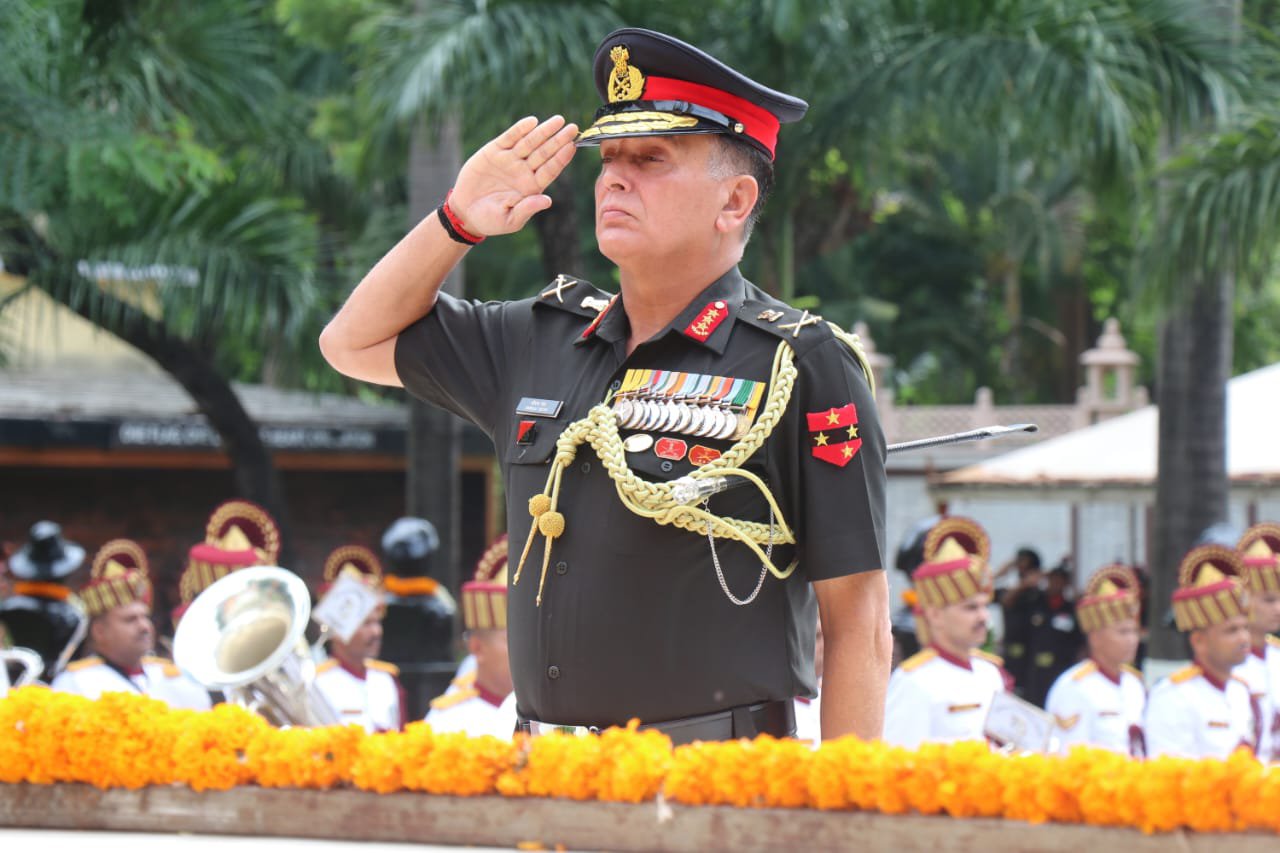
Separately, the chief of army staff, General Upendra Dwivedi, flew a sortie on the indigenously developed Light Combat Helicopter Prachand at HAL's facility in Bengaluru on April 8, 2025 — the day before the Pokhran exercise, as India Sentinels reported earlier.
The Prachand, designed for high-altitude operations and inducted into the army in 2023, is central to India's self-reliance push in combat aviation.
Gen Dwivedi's flight was described as underscoring the army's commitment to indigenous platforms alongside its high-end imported systems.