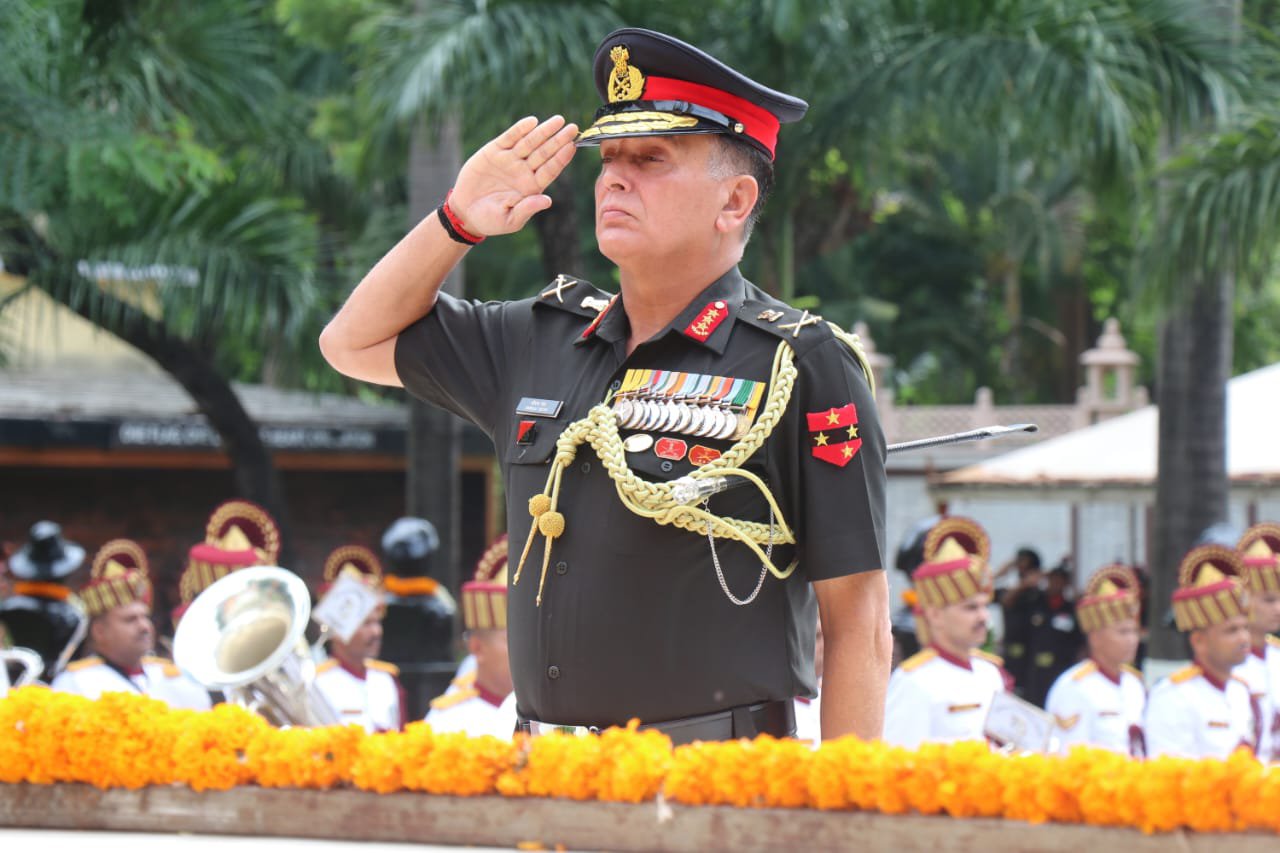
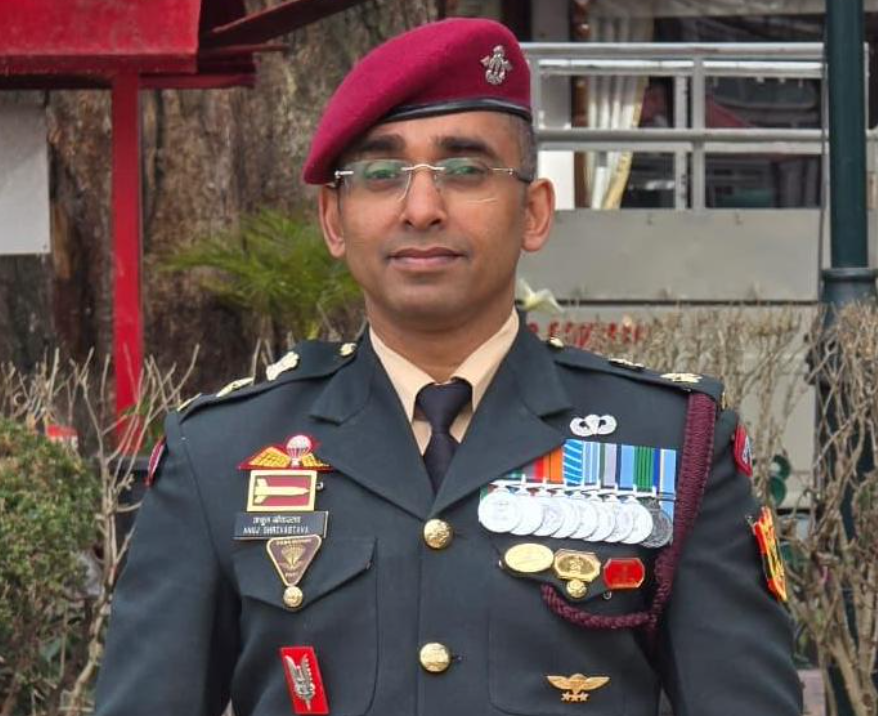
 Lt Col Anuj Chandra Shrivastava. (India Sentinels photo by special arrangement.
New Delhi: An Indian Army officer from the Parachute Regiment’s Special Forces (Para SF) has developed the country’s first indigenously designed combat free-fall parachute system. Defence analysts have termed it as a milestone that could significantly reduce the military’s reliance on foreign suppliers for a category of equipment long considered beyond domestic capability.
Lieutenant Colonel Anuj Chandra Shrivastava, who has prior experience at the Aerial Delivery Research and Development Establishment (ADRDE) under the Defence Research and Development Organisation (DRDO), has developed what he calls the “military combat parachute system” (MCPS), also referred to by the name “Hans”. The system has undergone more than 200 live trials and obtained the necessary certifications for operational use.
Combat free-fall parachuting – where special forces personnel are deployed from high altitudes, often in oxygen-deficient conditions, into hostile territory – has traditionally required highly specialized, expensive imported equipment. India, like many countries, has historically depended on foreign original equipment manufacturers for such systems, including for relatively minor modifications. The MCPS is designed to break that dependence by integrating into a single indigenous platform the multiple components a special forces soldier requires for a high-altitude covert insertion.
Also read: Indian Army jawan VSM for designing innovative drone
The system bundles together a bulletproof combat free-fall helmet designated “Kit Shashi”, which the developers claim is among the lightest of its kind in the world; protective goggles called “Aditi” designed to resist fragmentation; a parachute breathing oxygen system (PBOS) for use at extreme altitudes; a multi-layered thermal clothing system; a tactical load-carrying rucksack designated “Kit Vartika”; and both main and reserve parachutes. The navigation relies on NavIC (Navigation with Indian Constellation), India’s own satellite-based positioning system, developed by the Indian Space Research Organisation (Isro).
This is a deliberate design choice that eliminates dependency on the American GPS network for mission-critical orientation.
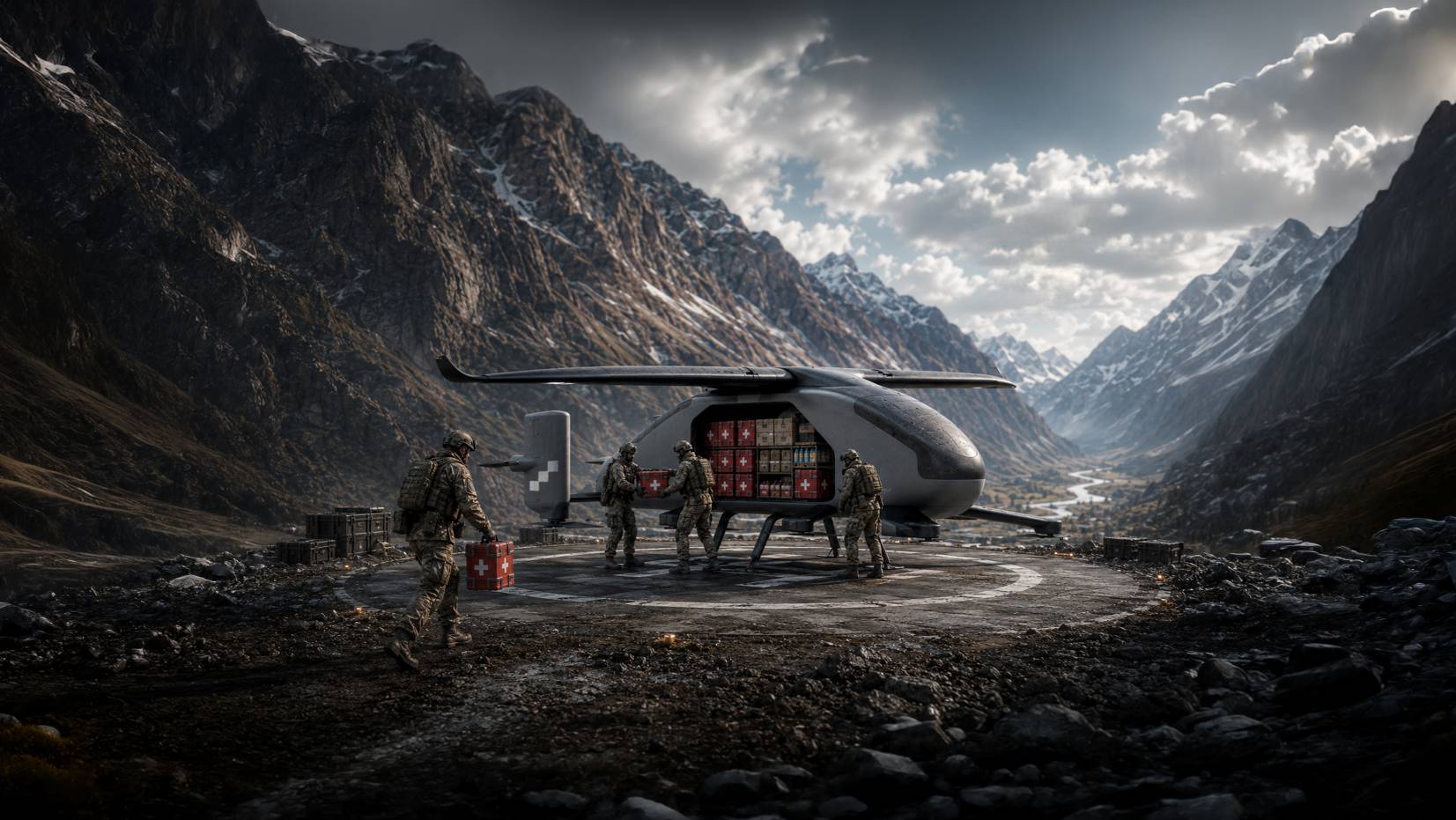
Lt Col Shrivastava holds 12 patents, including those under application, which places him among the more prolific inventors within the Indian Army and DRDO ecosystem. Beyond the MCPS, his work includes Kit Aadi, an altitude detection and deployment indicator designed to improve jump safety during night operations. Kit Aadi was selected in the Inno-Yodha 2025 competition – an Army-run innovation initiative – for mass production. He has also developed “Kit Shaambhawi”, a humanitarian aid and disaster relief kit constructed using reusable and condemned parachute material.
The broader context of this development is the country’s “Atmanirbhar Bharat” (self-reliant India) initiative, which since 2020 has pushed the defence establishment to progressively replace imports with domestically designed and manufactured equipment. The Ministry of Defence has in recent years published multiple positive indigenization lists, banning the import of hundreds of defence items to compel domestic sourcing.
Also read: Army inducts colonel-developed 550 ‘Asmi’ machine pistols
High-altitude special forces equipment, however, has remained a technically demanding segment where indigenous progress has been limited.
India’s special forces, which include units such as the Para SF battalions of the Army, regularly operate in extreme terrains, including at high altitudes along the northern borders, making reliable and well-integrated parachute and survival systems operationally essential rather than merely desirable.
The MCPS has not yet been formally inducted into service by the Army, and procurement decisions will depend on further evaluation and production scaling. However, the completion of over 200 live trials and the obtaining of certifications represent the standard preconditions for consideration in the defence acquisition process.
Disclaimer: The views expressed in the article are the author’s own and don’t necessarily reflect the views of India Sentinels.
Follow us on social media for quick updates, new photos, videos, and more.
X: https://x.com/indiasentinels
Facebook: https://facebook.com/indiasentinels
Instagram: https://instagram.com/indiasentinels
YouTube: https://youtube.com/indiasentinels
© India Sentinels 2026-27