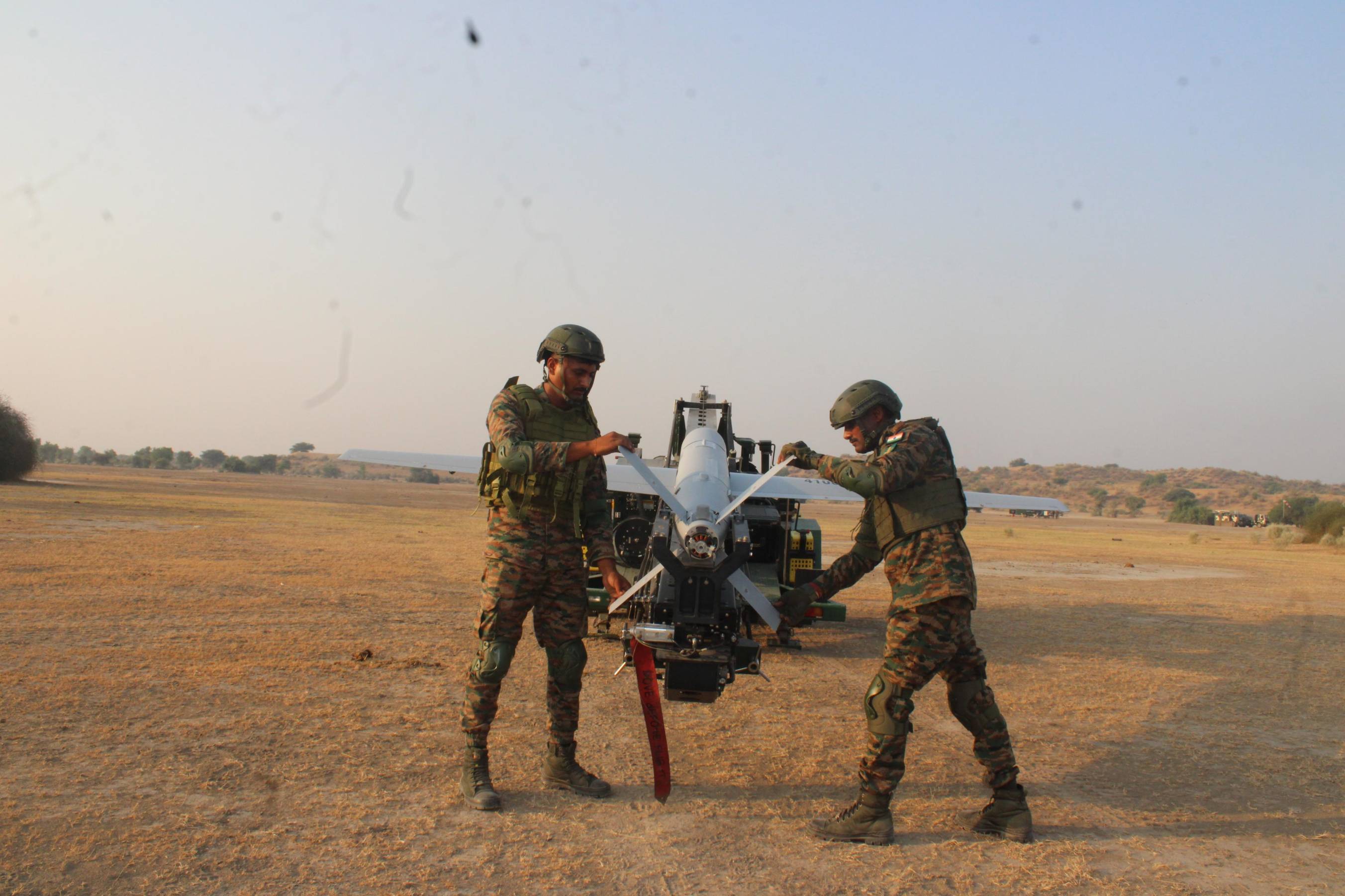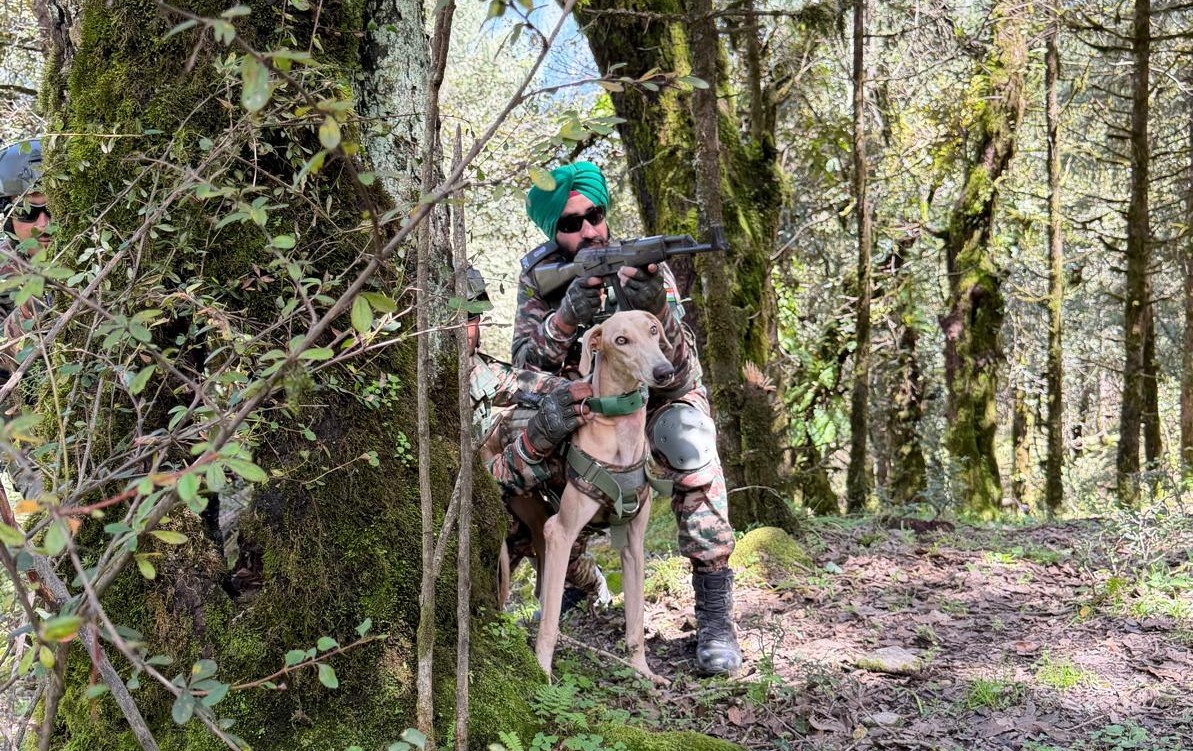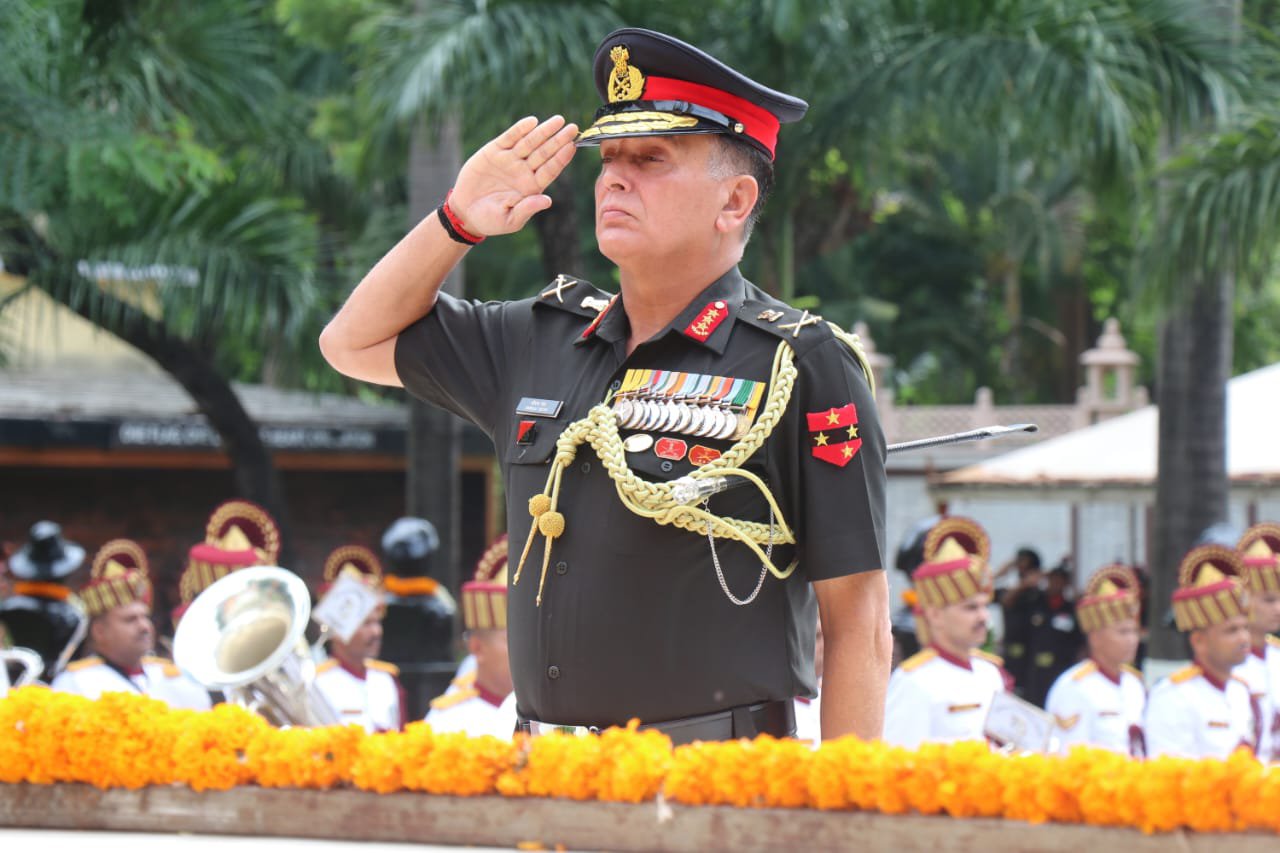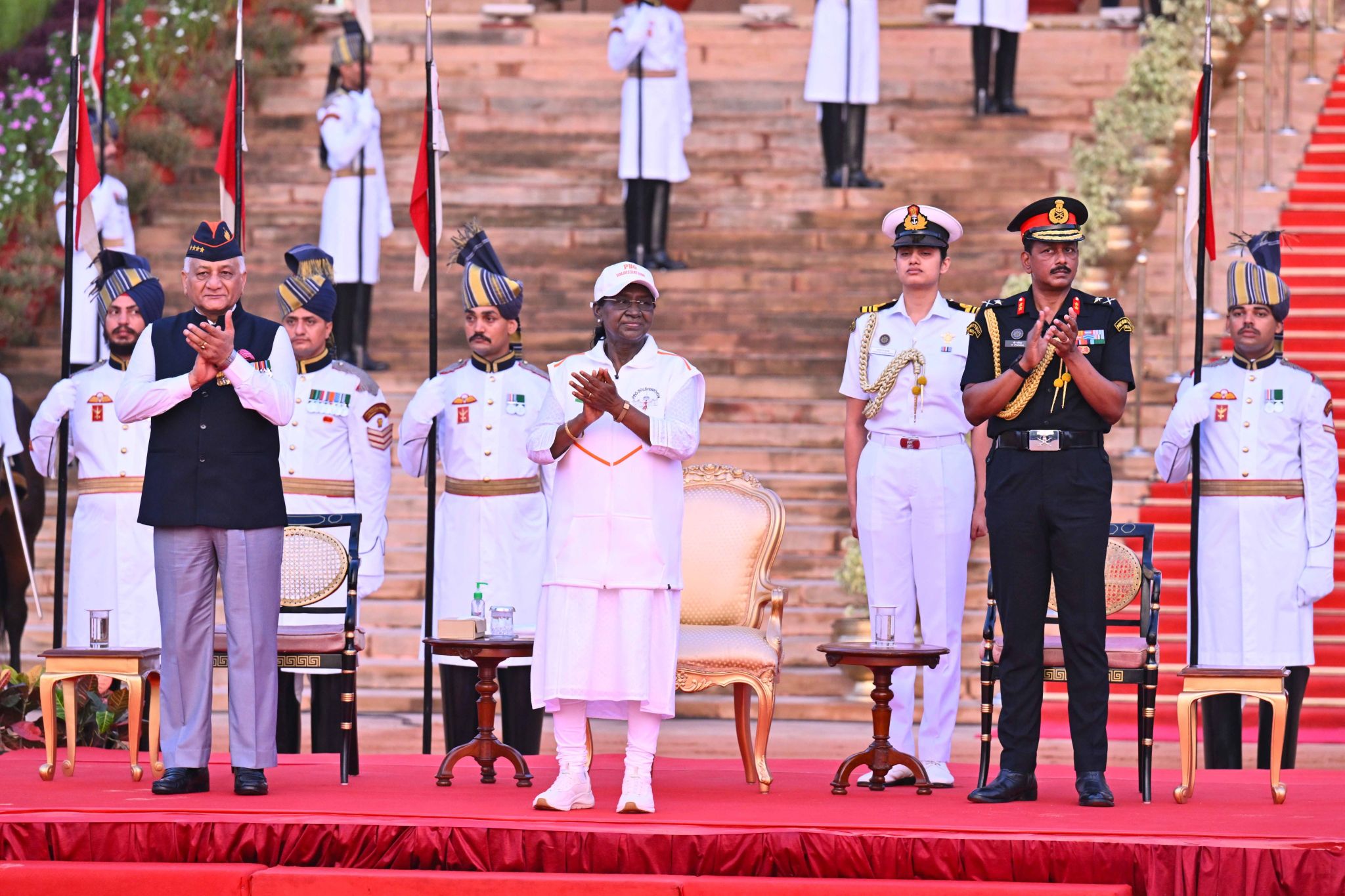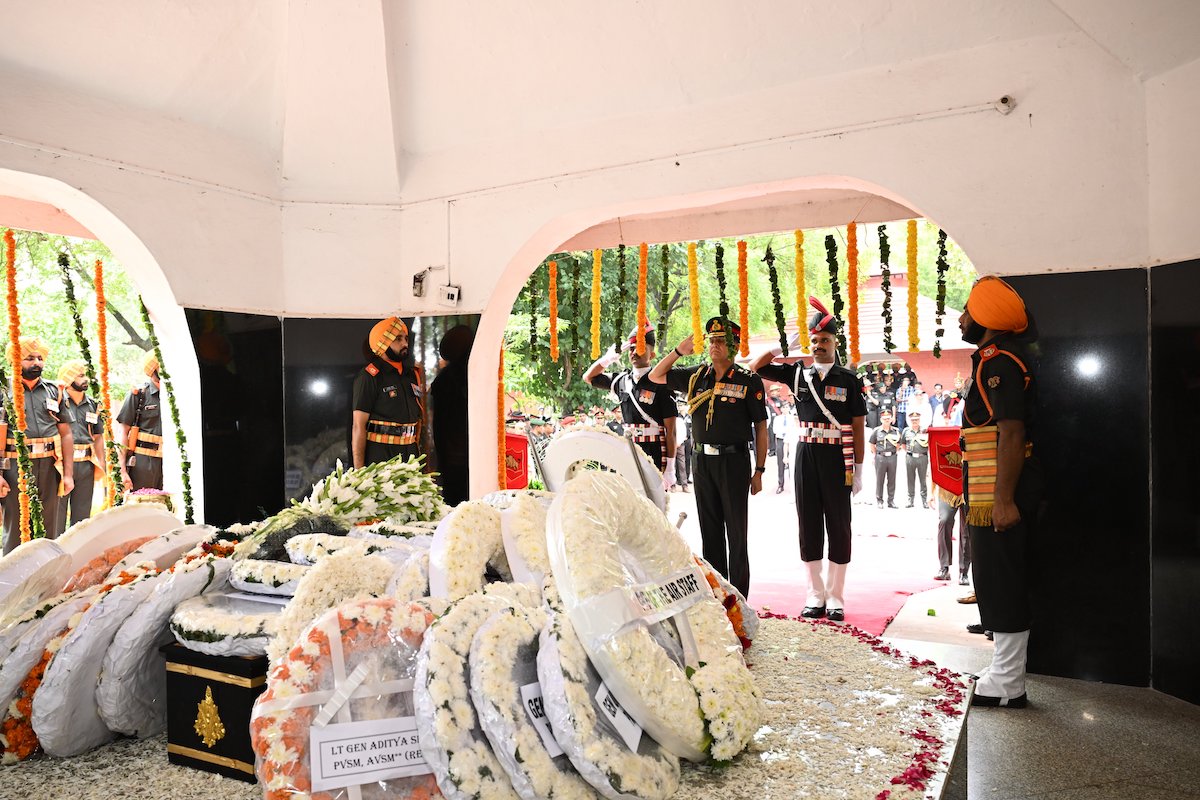
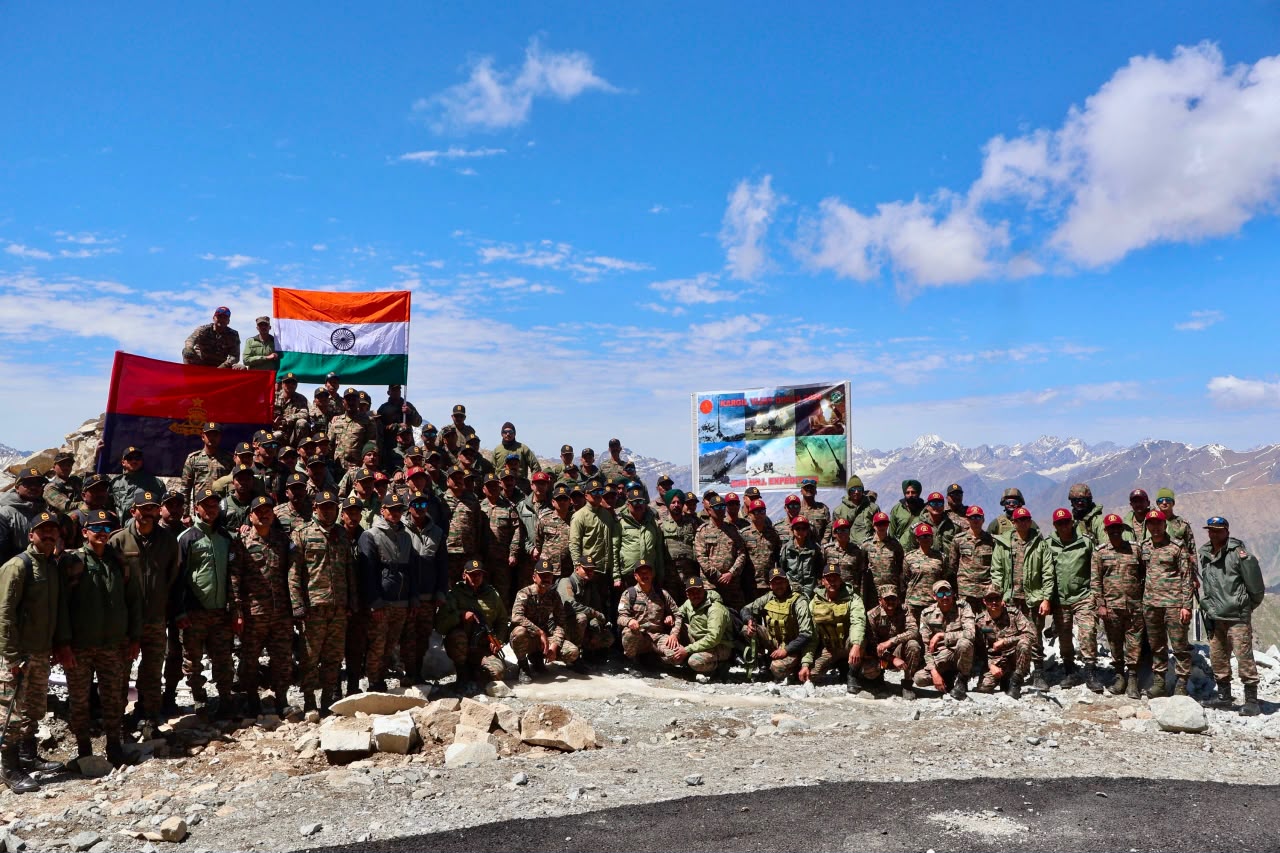
 Veterans lead Indian Army's Gun Hill expedition. (Photo: adgpi)
New Delhi/Dras: Ahead of the 27th anniversary of Operation Vijay, the Indian Army has sent a team of veterans and serving soldiers up Gun Hill, the Dras-sector peak once known as Point 5140, to retrace one of the most closely studied artillery operations of the 1999 Kargil War.
The climb, organized by the army’s Fire and Fury Corps, covers ground about 5km from the Dras-Kargil stretch of National Highway 1 (NH-1), the road that carried the army’s main supply line to Leh during the war and that made the peak’s capture urgent.
Twenty-five of the climbers belong to units that fired on the objective in 1999; the remaining 101 are serving soldiers from units currently based in the area, a mix the army says was intended to connect the generation that fought the war with the one guarding the sector today.
Read also: Akhand Bharat and ‘retaking’ Pakistan-occupied Kashmir
Gun Hill dominates the Dras valley and was, in 1999, an enemy observation post and stronghold that had to fall before the Indian Army could restore full control of the area and stop Pakistani troops from reinforcing other captured heights nearby.
The battle for the peak unfolded in stages. On the night of June 13-14, 1999, 18 Grenadiers seized a feature called Hump, opening the way for the next objective.
Rocky Knob followed, taken by 13 Jammu and Kashmir Rifles with direct fire support from two Bofors guns supplied by 108 Medium Regiment and 158 Medium Regiment (Self Propelled). Artillery fire destroyed three enemy bunkers and sangars in that action, and Rocky Knob fell by 6pm on June 14.
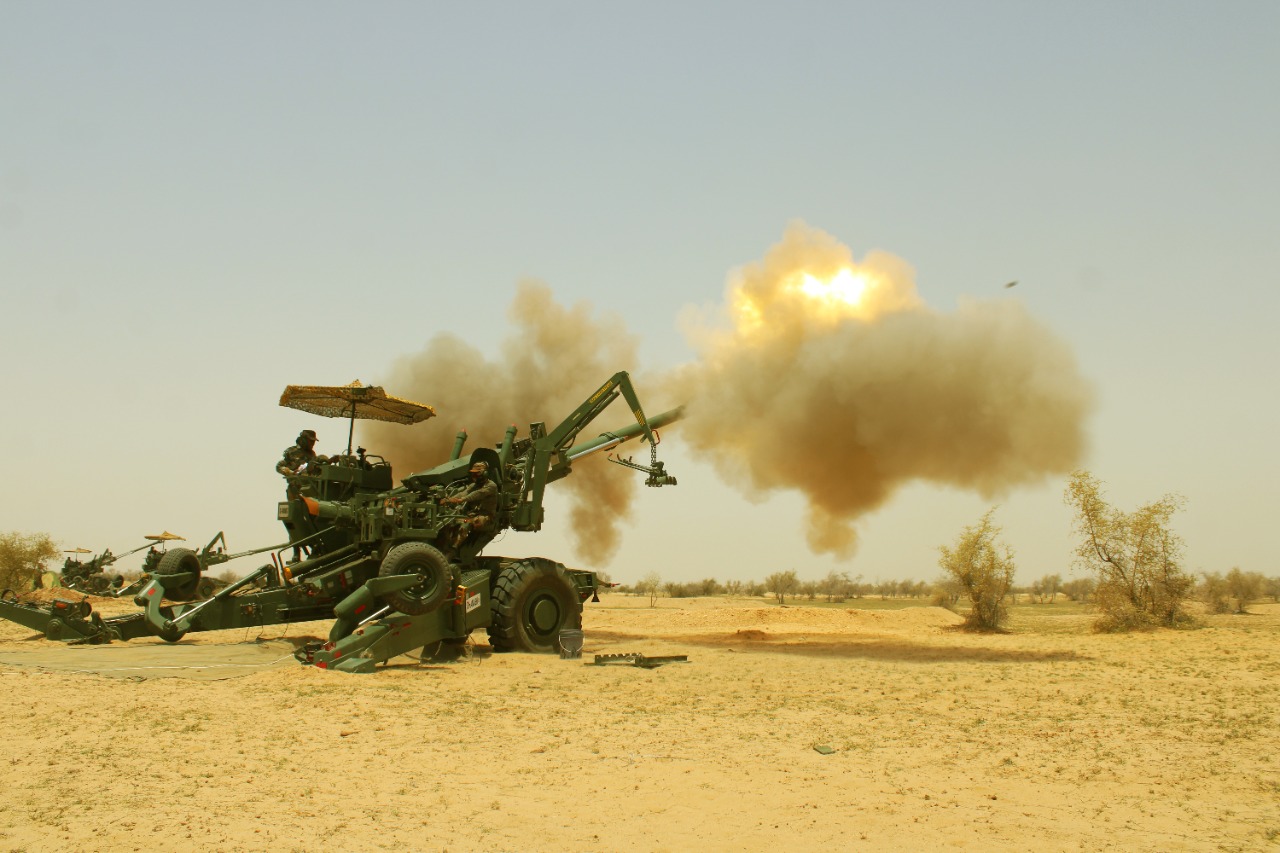
The assault on Point 5140 itself began on the night of June 19-20, 1999, under an artillery fire plan called Shatrunash, which brought together Bofors guns and multi-barrel rocket launchers positioned on both flanks to strike the peak from east and west simultaneously.
Read also: Kargil War -- Unrecognized contribution of BSF
The bombardment degraded the defenders’ ability to fight back before infantry battalions moved in; 13 Jammu and Kashmir Rifles captured the position by 5am on June 20, 1999, alongside neighbouring objectives, breaking a key enemy defensive line in the Dras sector.
What made the assault unusual, according to the army, was that a heavily defended position at roughly 17,000 feet was taken without a single loss of life on the Indian side, a rare outcome in high-altitude combat that the army credits chiefly to the accuracy of the artillery preparation.
Point 5140 was first informally rechristened at a ceremony at the Kargil War Memorial in July 2022, when veteran gunners and army officers laid wreaths in tribute to the Regiment of Artillery.
The name became official in 2023, and the army has run an annual expedition to the peak since, timed to the run-up to Kargil Vijay Diwas on July 26. Last year’s climb, the 26th-anniversary edition, involved 87 soldiers, including 20 gunners from ten artillery units that fought in 1999.
Read also: Pakistan’s suspension of Shimla Agreement: A symbolic move with limited impact
The Kargil War, fought between May and July 1999 after Pakistani troops and invaders crossed the Line of Control and occupied heights above the Dras, Kargil and Batalik sectors, ended in an Indian victory declared on July 26, 1999.
Official figures put Indian military deaths in the conflict at 527, with more than 1,300 wounded.
The army has described the Gun Hill expedition as an exercise in remembrance rather than mountaineering. It is intended to keep alive the memory of soldiers who fought there and to pass on values of duty and service to today’s ranks.