New Delhi: The Indian Army has formally decided to raise specialised drone battalions named “Baaz” – the Hindi word for hawk – under the Army Aviation Corps. It is considered as a move that marks one of the more substantive organisational changes in the service’s ongoing force transformation effort.
The decision, announced by the chief of the Army staff, General Upendra Dwivedi, also known as the “Drone General”, on Monday, stems from hard lessons drawn from two overlapping pressures on the country’s frontiers: the prolonged military standoff with China along the line of actual control (LAC) and the employment of unmanned aerial systems during Operation Sindoor, the cross-border counterterrorism strike against Pakistan last year.
The new formations will occupy a distinct tier in the Army’s rapidly evolving drone architecture – one designed specifically for sustained long-range intelligence, surveillance, and reconnaissance (ISR), deep-area monitoring, target acquisition, and the integration of unmanned aerial system operations with ground formations.
A layered drone structure
To understand what the Baaz battalions represent, it helps to see where they sit within the Army’s broader drone hierarchy, which has been taking shape over the past two years.
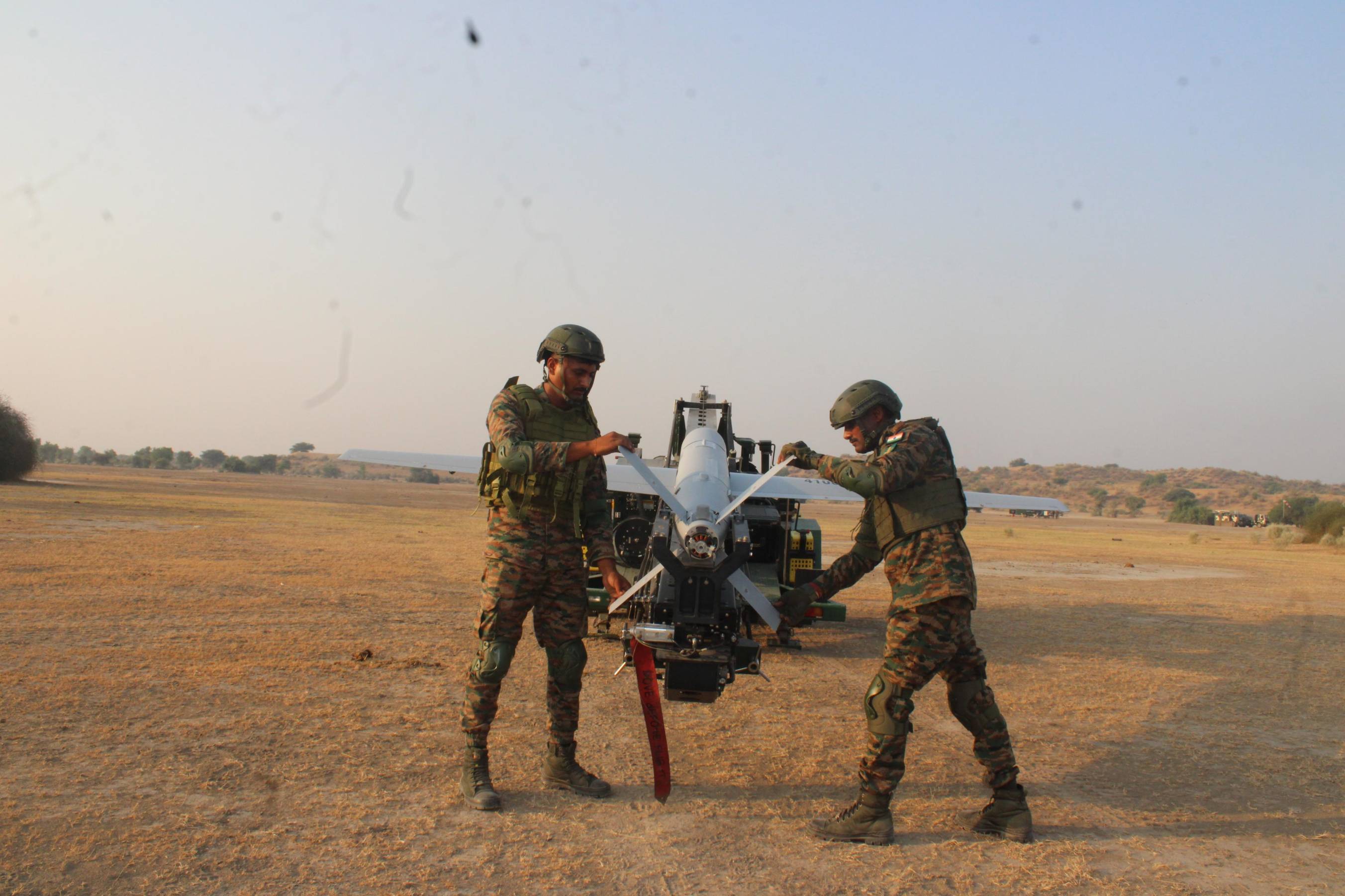
At the tactical end are the Ashini drone platoons, embedded within infantry battalions and designed for short-range, immediate-vicinity surveillance – essentially putting eyes just ahead of an advancing unit.
Each Ashini platoon is a compact team of around 20 specialists, operating a mix of surveillance drones and loitering munitions for close-range strikes.
By late 2025, around 385 infantry battalions had been equipped with these platoons, and the Army has plans to procure nearly 30,000 loitering munitions over the coming years to sustain them.
One step up are the Divyastra batteries within the Regiment of Artillery, which deploy loitering munitions – one-way attack drones that fly to a target and detonate.
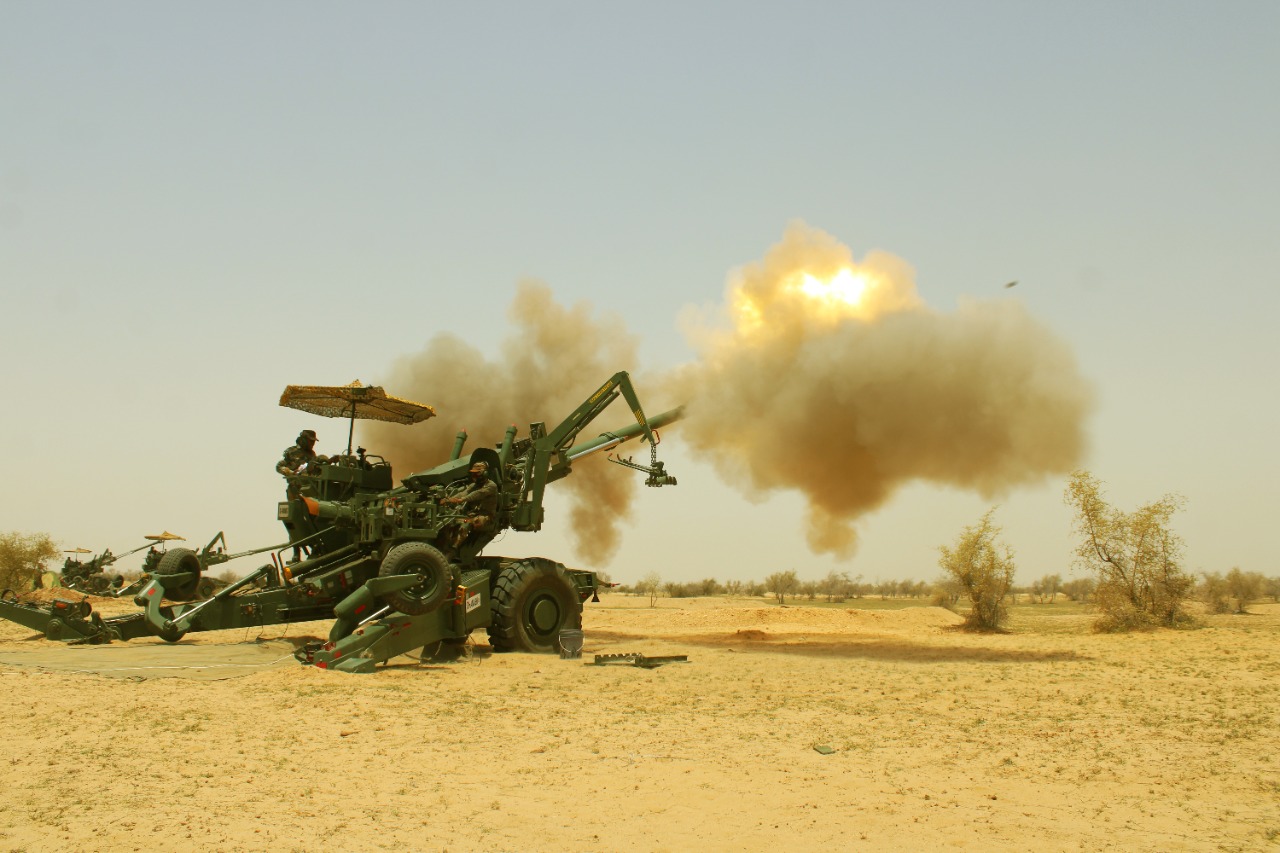
Complementing these are Shaktibaan artillery units equipped with unmanned aerial systems,counter-drone systems, and loitering munitions, placing tactical drone employment at the corps level and below under the artillery arm.
The Baaz battalions sit above both. They are not intended for close-in tactical support. Their purpose is operational depth: persistent border surveillance, deep-penetration reconnaissance, target designation, and the management of high-density data streams from a diverse and expanding fleet of long-endurance unmanned platforms.
What they will operate
The platforms earmarked for the Baaz battalions span a wide capability spectrum. At the high end are the MQ-9B SkyGuardian remotely piloted aircraft systems being procured from the American firm General Atomics under a government-to-government agreement signed in October 2024, valued at approximately $4 billion.
The Indian Army is set to receive eight SkyGuardian variants, a high-altitude, long-endurance platform capable of flying for over 40 hours at altitudes above 40,000 feet and carrying a substantial sensor and weapons payload.
Ten of the 31 aircraft ordered across the three services will be delivered in flyaway condition, while the remaining 21 will be assembled in India, with first deliveries expected by early 2029.
Alongside the American platforms, the Baaz battalions will operate Israeli-origin systems – the Heron and Hermes families of medium-altitude, long-endurance drones, which have formed the backbone of the Army’s long-range surveillance capability along the LAC for several years – as well as indigenously developed unmanned systems from Indian companies.
This is a deliberately mixed fleet, and the management of it is precisely one of the central reasons for creating specialist formations. Standardizing training across platforms of different origin, managing the high-volume technical data they generate, handling software upgrades, and ensuring rapid replenishment cycles in a high-intensity conflict are tasks that cannot be discharged by units whose primary role lies elsewhere.
What General Dwivedi said
Making the announcement, Gen Dwivedi underscored the scale of the requirement ahead. “The Army will require continuous induction, upgrades, and replenishment of drones on a large scale,” he said.
“To maintain pace with this requirement, one of the most important initiatives is raising Baaz battalions. This will be built upon the existing remotely piloted aircraft Ffights. These battalions will comprise a specialist pool of personnel trained to operate and manage the ecosystem of Remotely Piloted Aircraft. This will enhance ISR capabilities through integrated aerial surveillance, persistent battlefield awareness, and rapid response.”
The formations will build upon existing remotely piloted aircraft flights already functioning within the Army Aviation Corps, consolidating and expanding capabilities that have so far been distributed across smaller, less integrated units.
What Op Sindoor and the LAC taught
The decision reflects two distinct but related sets of operational experience. The standoff with China along the LAC from 2020 onwards required the Army to maintain persistent surveillance across some of the most demanding terrain on the planet for an extended period, exposing both the value of long-endurance ISR platforms and the limitations of managing them through ad hoc arrangements.
Operation Sindoor, conducted in May 2025, provided a more direct validation of drone warfare’s decisive role. Loitering munitions were employed extensively in the initial strikes, with drone-enabled precision reportedly accounting for the neutralization of seven of nine targeted positions on the first day.