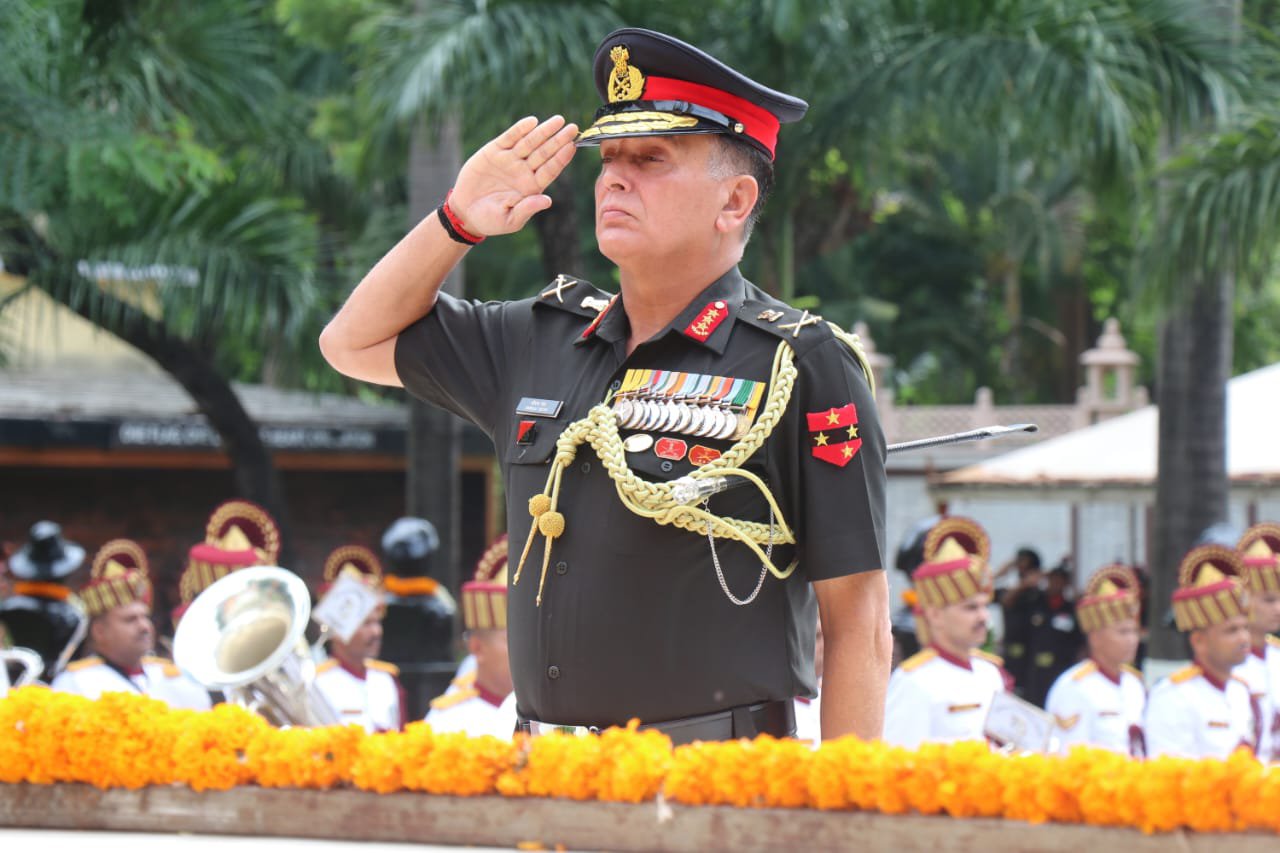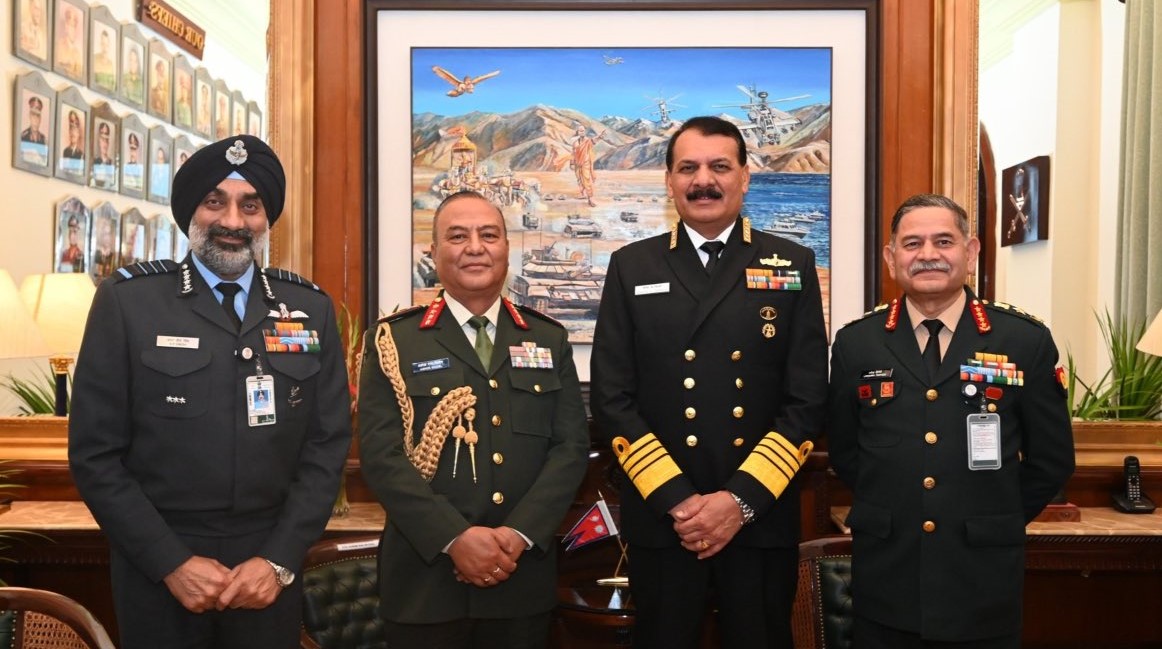
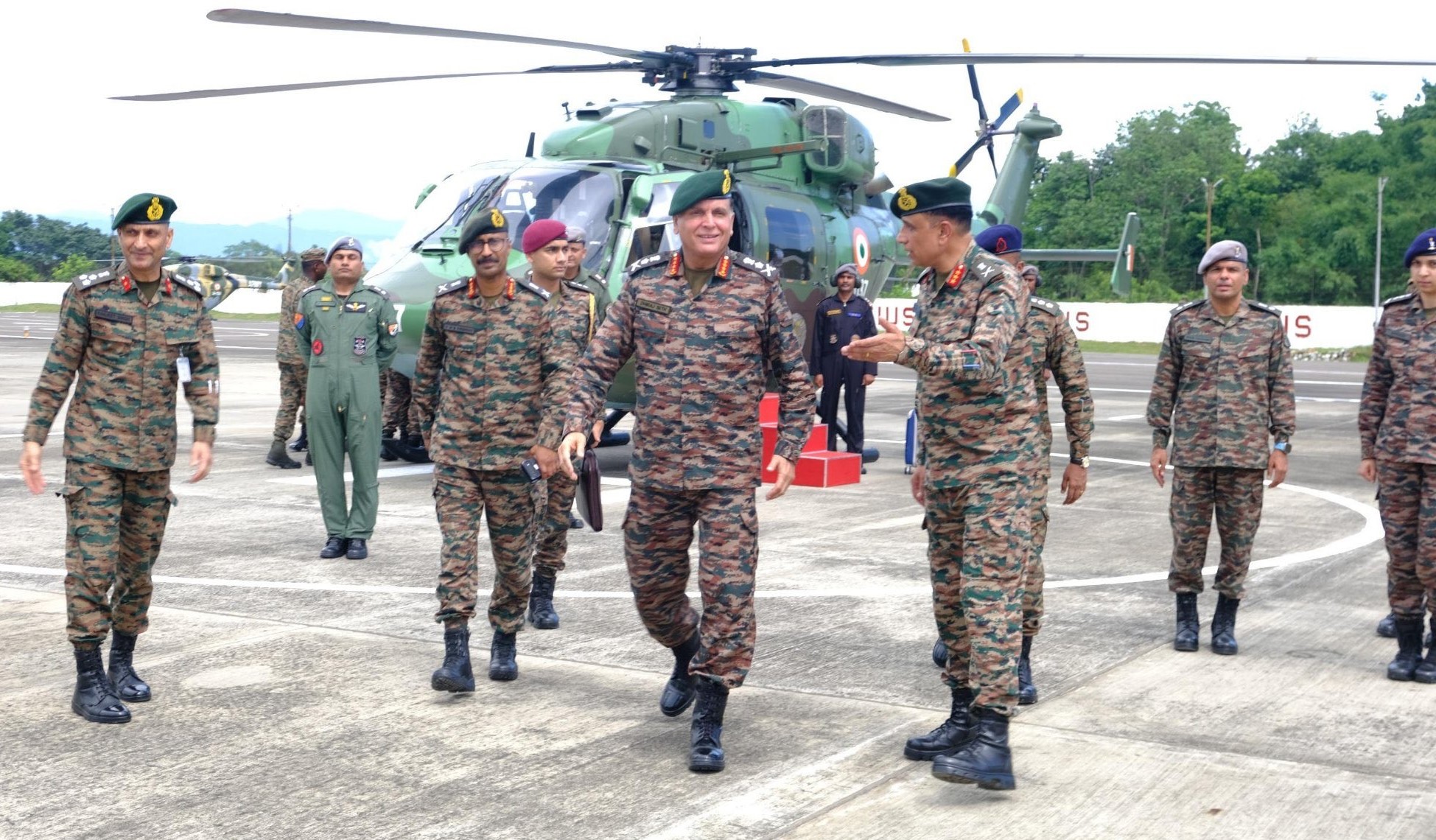
 Gen Dhiraj Seth along with senior army officials in northeast. (Photo: Indian Army)
New Delhi: Barely a fortnight after the Indian Army formally raised its first batch of integrated battle groups (IBGs) along the border with China, the Army chief, General Dhiraj Seth, has spent three days touring forward formations in the north-east to take stock of operational preparedness in the region.
Seth, who took over as the 31st chief of the Army Staff on July 1 – succeeding General Upendra Dwivedi and becoming the first officer from the Armoured Corps to head the force since General Shankar Roychowdhury in the mid-1990s – visited units under the 4 Corps in western Arunachal Pradesh on Thursday, covering the sensitive Tawang-Kameng sector.
The visit followed stops over the preceding two days at the 33 Corps, which looks after the Sikkim sector, and the 3 Corps, responsible for operations in the far-eastern reaches of Arunachal Pradesh as well as along the border with Myanmar.
The tour comes close on the heels of the government's sanction letter of July 1 formally setting in motion the raising of five IBGs under the Mountain Strike Corps – compact, self-contained combat formations that the Army has been trying to operationalize for nearly a decade. The formations, to be based in Sikkim and Arunachal Pradesh, both of which border China, are expected to be fully operational by mid-2027.
What the chief was told?
At each stop, Seth was briefed on the security situation, operational readiness and the pace of capability development by formations of the Eastern Command.
In western Arunachal Pradesh, commanders walked him through the 4 Corps' approach to absorbing emerging technologies to sharpen combat capability, and he asked them to keep formations prepared to meet security challenges across what the Army now describes as a “multi-domain environment” – a reference to warfare that spans land, air, cyber and information space simultaneously.
In Sikkim, the 33 Corps commander apprised him of operational deployments, the surveillance architecture in place along the frontier and the current security dynamics in the sector.
At the 3 Corps, the briefing touched on the evolving operational environment, coordination between different security agencies and steps being taken to further sharpen combat readiness. Seth also reviewed outreach programmes run by local formations aimed at building peace, stability and development across the north-east, an area where the Army has long run civic-action initiatives alongside its security role.
Addressing commanders and troops during the visit, Seth outlined what he called his “VIJAY” vision for the force – standing for vigilance, innovation, jointness, Aatmanirbharta (self-reliance) and “Yodha First”, or putting the soldier first.
He said the five principles were meant to keep the Army agile, adaptive and future-ready while feeding into the government's broader Viksit Bharat 2047 vision of a developed India by the hundredth year of independence.
The battle groups behind the visit
The IBGs at the centre of the current reorganization are a long-pending idea, first mooted under the late General Bipin Rawat when he headed the Army roughly a decade ago, and tested in patches – including along the border with Pakistan in 2019 and during the Eastern Command's Exercise HimVijay – before finally being sanctioned this year.
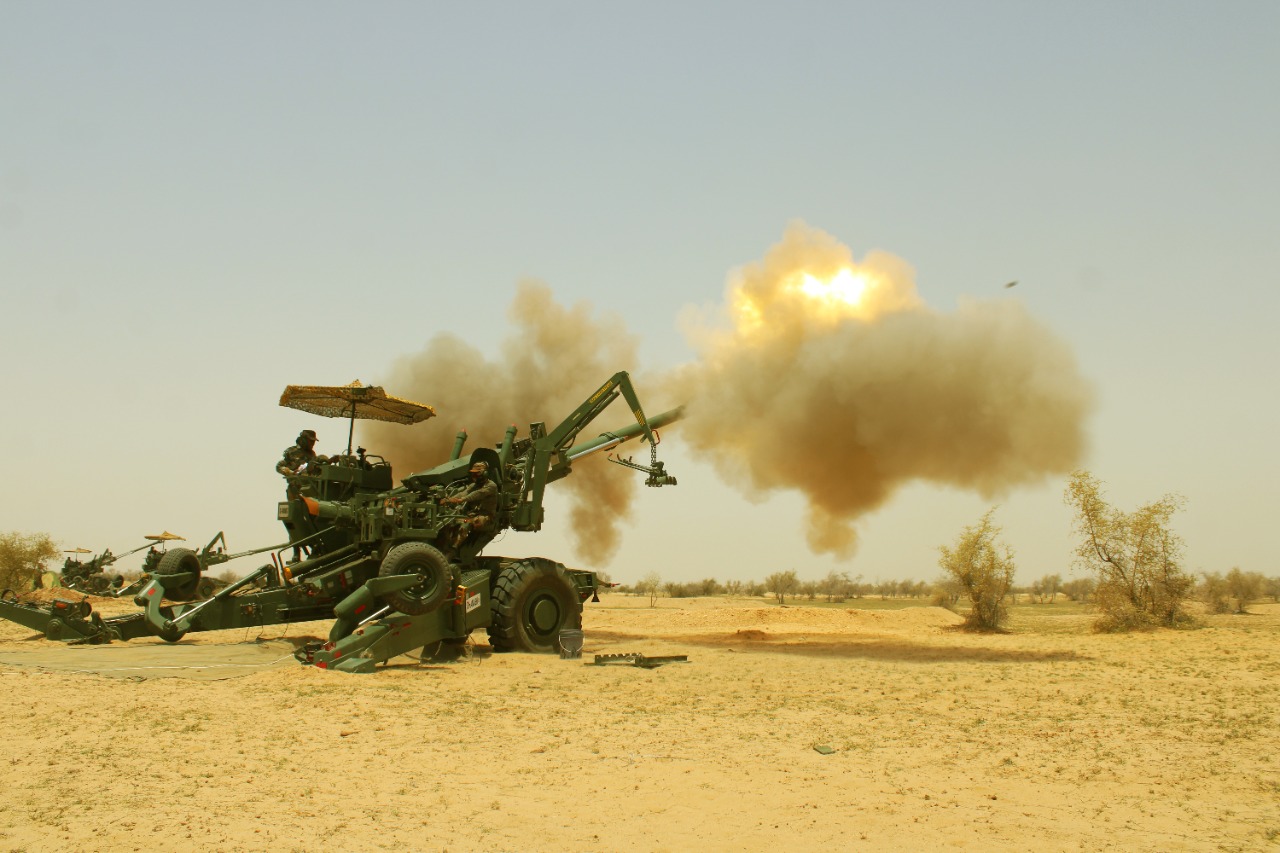
Each formation folds infantry, armour, artillery, engineers, signals, air defence and logistics into a single command, with the explicit aim of cutting reaction time and reducing dependence on larger parent formations.
Where a standard Army brigade musters around 3,000 to 3,500 troops and a division runs to 10,000-12,000, an IBG is designed to sit in between at roughly 5,000 personnel, each commanded by an officer of Major General rank. Five such officers have already been posted to head the new formations, and a dedicated fire support group – built around long-range artillery, reportedly including the Army's Divyastra rocket systems – will back them with firepower that the individual battle groups themselves would not carry.
The Mountain Strike Corps, formally the 17 Corps and headquartered at Panagarh in West Bengal, has two divisions under its charge – one earmarked for the Ladakh sector and the other for the north-east.
The current phase of IBG-isation covers only the north-eastern formations, under the 59 Division at Panagarh and the 23 Division at Ranchi, with the Ladakh-facing division expected to follow once the model is validated.
The push forms part of a wider effort, accelerated in the years since the 2020 stand-off with China in eastern Ladakh and given further impetus following Operation Sindoor, to make the Army leaner, faster and less reliant on the sprawling corps-level structures it inherited from the colonial era.
Dwivedi had told reporters at his annual press conference in January that the government had cleared 31 sanction letters for organizational changes over the preceding 14-15 months, of which the IBG restructuring of the 17 Corps was the most significant.