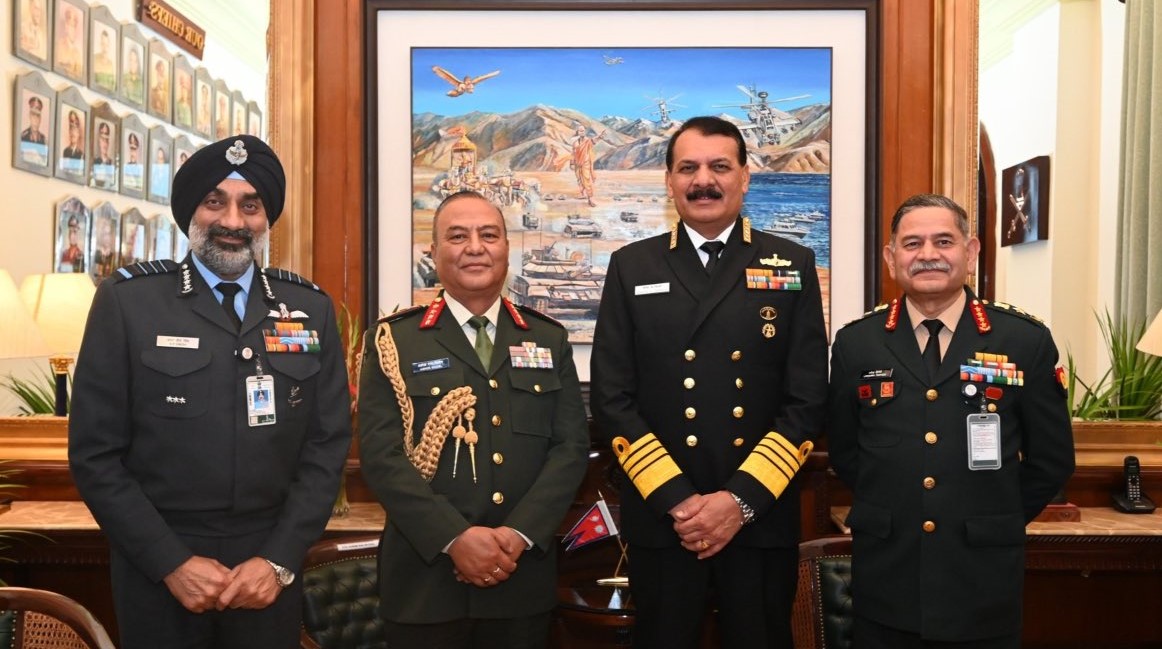
 The controversial painting in the background is now removed from Army chief's office (File photo)
New Delhi: The wood-panelled lounge at South Block, where the Indian Army chief receives visiting dignitaries, has quietly acquired a new look. The painting that had, in the words used to describe it at the time, “sharply divided opinion” within the military fraternity has been taken down, ending an 18-month run that began amid one of the more unusual controversies to have gripped the force in recent memory.
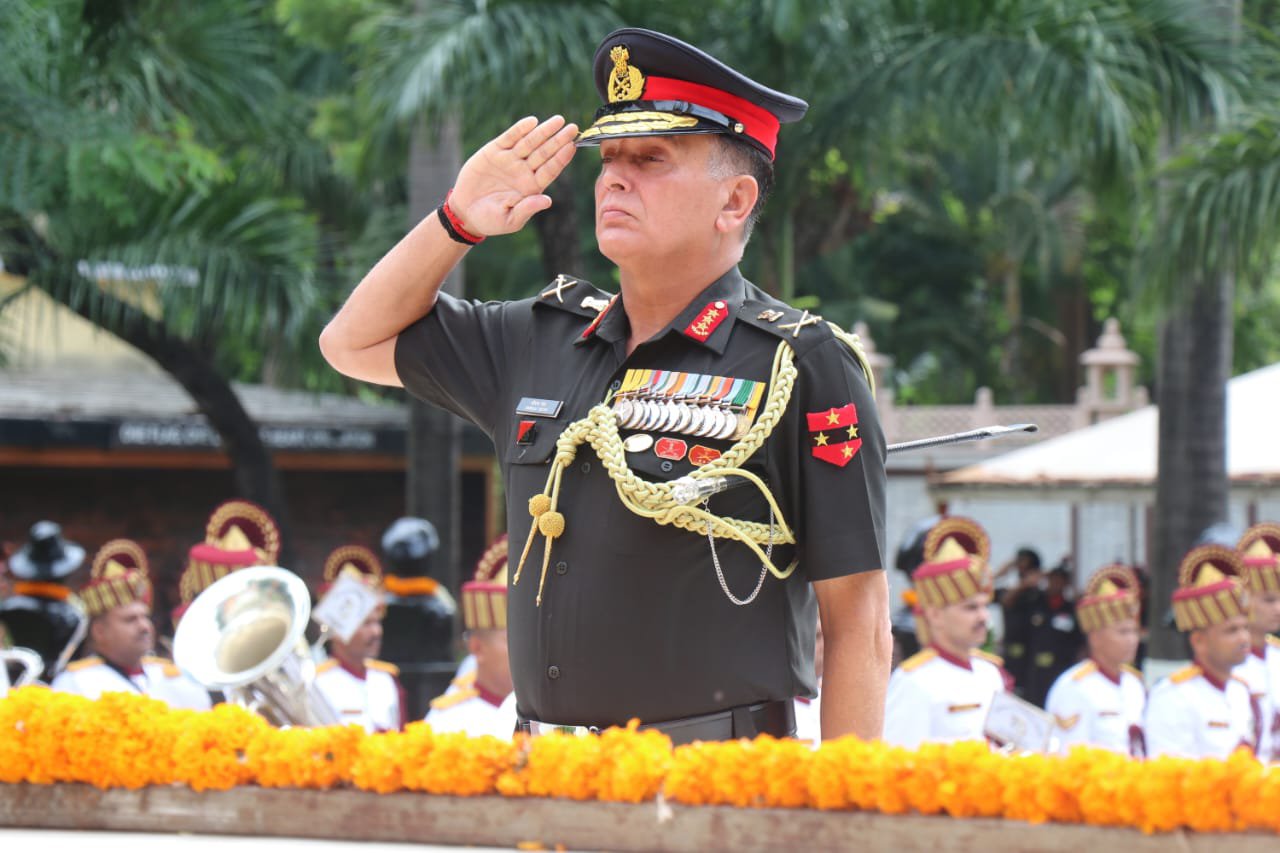
The change came to light on July 22, 2026, when the Eastern Command released a video message from the Army chief, General Dhiraj Seth, wishing the participating teams well ahead of the Durand Cup, Asia’s oldest football tournament, which the command is hosting from July 25 this year in its 135th edition.
In the recording, Seth is seen seated against a plain wood-panelled backdrop bearing the Army’s insignia – precisely where the contentious painting once hung. Seth took over as the 31st chief of the Army Staff on June 30, 2026, succeeding General Upendra Dwivedi.
A painting that split the fraternity
The artwork now removed had itself been installed only in December 2024, when it replaced a painting long regarded as a totem of the Army’s finest hour: the depiction of Lieutenant General AAK Niazi of the Pakistan Army signing the instrument of surrender before Lieutenant General Jagjit Singh Aurora at Dhaka on December 16, 1971, an event that ended the war and led to the birth of Bangladesh.
Its replacement, titled Karam Kshetra, or “field of deeds”, was the work of a serving officer, Lieutenant Colonel Thomas Jacob of the 28 Madras Regiment.
The canvas set the snowcapped banks of Pangong Tso, the Ladakh lake that straddles the Line of Actual Control with China, against a tableau blending contemporary military hardware – tanks, armoured vehicles, patrol boats and attack helicopters – with figures drawn from Hindu scripture and Indian statecraft: Krishna driving Arjuna's chariot from the Mahabharata, the ancient strategist Chanakya, and the mythical bird Garuda.
The Army’s public information wing defended the artwork at the time as a statement of continuity between India’s civilizational past and its modern military capability, with the then chief, Dwivedi, going so far as to point out that an illustration of Krishna and Arjuna’s chariot appears in the original, hand-illustrated copy of the Indian Constitution. But the substitution drew sharp criticism from a cross-section of veterans, several of whom argued that a painting commemorating the most decisive Indian military victory since independence – the capture of more than 90,000 Pakistani prisoners of war – had no business being displaced from the chief's own lounge, of all places, and that religious iconography, however civilizational in intent, sat uneasily with an institution that prizes its secular character.
Within days of the row breaking, Dwivedi had the original 1971 painting relocated rather than shelved, hosting a ceremony to install it at the Manekshaw Centre, the glass-fronted convention venue on the Delhi-Gurugram road named after Field Marshal Sam Manekshaw, architect of that campaign.
The reasoning offered was that the centre, where all three services routinely host major events, would give the painting far greater visibility than the relatively low footfall of the chief's private office.
Veterans cautiously welcome the change
News of the painting’s removal drew a swift and largely approving response from the veteran community. A former Northern Army commander, Lieutenant General HS Panag (retired), who had been among the most vocal critics of the 2024 switch, welcomed the development on X, writing: “Hail the Chief! The Indian Army emblem now forms the backdrop. Hope it is the first step towards bringing back the iconic '1971 surrender' painting!”
Other retired officers echoed the sentiment, with some expressing hope that the original artwork might eventually find its way back to South Block.
Whether the Manekshaw Centre will now cede the 1971 painting back to the chief’s lounge remains unconfirmed and the Army has not issued any statement on the reasoning behind the latest change in decor. What is clear is that the wall behind the chief’s chair - a modest space by most standards, but one that has become an unlikely barometer of institutional messaging - has, for now, settled on the neutrality of the Army’s own crest.