New Delhi: A parliamentary panel has flagged a near two-decade delay in the procurement and induction of the indigenously built Dhanush artillery gun, holding that the lag left the Army making do with ageing, less capable equipment at a time when the geopolitical climate demanded far greater readiness.
The Public Accounts Committee, in a report tabled in Parliament on July 23, 2026, examined how the Bofors FH-77B howitzers, bought from Sweden’s AB Bofors under a 1986 contract, had fared over decades of service, and how the country’s effort to replace them with a home-built successor had unfolded. Its conclusion was blunt: “Considering the current geopolitical scenario, the Army cannot function with obsolete artilleries for such long periods of time.”
A licence deal that took decades to bear fruit
The 1986 Bofors contract, for 410 towed howitzers, included a transfer of technology intended to let India eventually build the guns itself. That promise took an extraordinarily long time to materialize.
Read also: How IIT-Madras’s ramjet innovation is transforming Indian Army’s artillery capability
The defence ministry banned AB Bofors from further Indian business in 1989 following corruption allegations linked to the deal, a decision that, the committee noted, effectively froze use of the technology transfer for years afterward.
With the original supplier blacklisted, the Army turned to global tenders in the 1990s to acquire a new, higher-calibre gun. Repeated procurement attempts through that decade came to nothing, the panel found, leaving the force without a credible replacement programme for years while its existing Bofors stock steadily aged.
It was only in 2013 that the then Ordnance Factory Board – since restructured into seven defence public sector undertakings, including the Gun Carriage Factory at Jabalpur, which now builds the Dhanush – was tasked with producing two electronically upgraded prototypes based on the Bofors design. That order itself came roughly three years after the defence ministry had cleared bulk purchase of the guns. The resulting weapon, rechristened Dhanush, did not enter service until 2022, by the committee’s reckoning, nearly two decades after the process to replace the Bofors guns had begun in earnest.
What the delay cost the Army
The consequence, the committee said, was a serious deficiency in artillery stocks that forced the Army to keep older guns in service well past their prime, with correspondingly limited firepower.
It laid the blame squarely on the ministry, saying it had taken about 20 years to finalize procurement and induction of the new gun system, and that this had a direct bearing on operational preparedness.
Read also: Indian Army reveals plans for modernizing its firepower
The panel was equally critical of the absence of institutional oversight through this period. “It appears the ministry did not have a proper mechanism or operating procedure to ensure periodical review and timely action for technological upgradation of existing gun systems or for procurement of new guns,” the report stated, adding that the committee expected the ministry to be far more proactive in assessing stockpiles and the continued efficacy of such critical weapons.
All about Dhanush gun
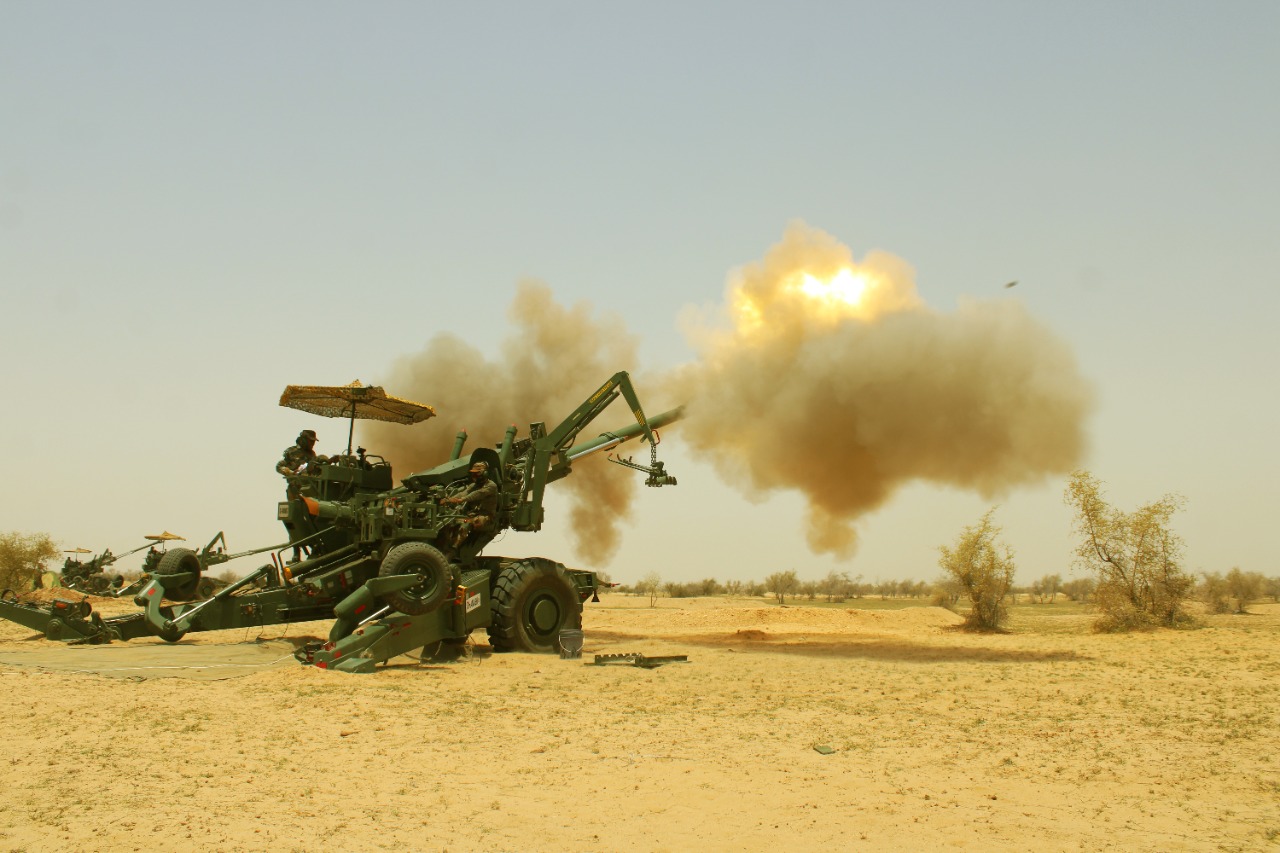
Whatever the delays in getting it into service, the Dhanush that eventually emerged represents a genuine technical advance over the Bofors gun it replaces. Where the original FH-77B is a 155mm/39-calibre piece with a range of around 27km, the Dhanush, re-engineered with a longer 45-calibre barrel, extends that range beyond 36km, according to the manufacturer’s published specifications.
Read also: Indian Army begins raising third regiment of Dhanush artillery guns amid production concerns
It carries an inertial navigation-based sighting system, automated laying, on-board ballistic computation, and a day-and-night direct-firing capability, and is rated to fire three rounds within 30 seconds in a burst and 12 rounds within three minutes in sustained fire.
An auxiliary self-propulsion unit allows the roughly 13-tonne gun to reposition itself over short distances without a towing vehicle, a useful feature in hilly or mountainous terrain. The defence ministry has described it as being more than 80% indigenously sourced.
The Army initially ordered 114 Dhanush guns, sufficient to equip a handful of regiments, with the broader Field Artillery Rationalisation Plan – conceived after the Kargil war of 1999 – originally envisaging the induction of around 3,000 155mm howitzers of various types by the mid-2020s, a target that, on the panel’s own account, has fallen well short of realization.
Reports earlier this year suggested the Army was moving to order 300 more Dhanush guns, which would go towards raising 15 additional artillery regiments and mark a further shift toward the 155mm gun as the mainstay of India's artillery.
Recommendations
The committee’s central recommendation was for a structural overhaul of the ministry’s decision-making process, so that matters bearing on national security were not held up by what it called unrealistic delays. It also pressed the ministry to strengthen supply chain management and to draw up clearer guidelines ensuring suppliers meet the operational requirements set by the armed forces.
Looking ahead, the panel asked the ministry to identify capability gaps against emerging threats at regular intervals, and to take concrete steps to secure critical technology, rather than allow India's artillery modernization to once again fall behind the threats it is meant to counter.