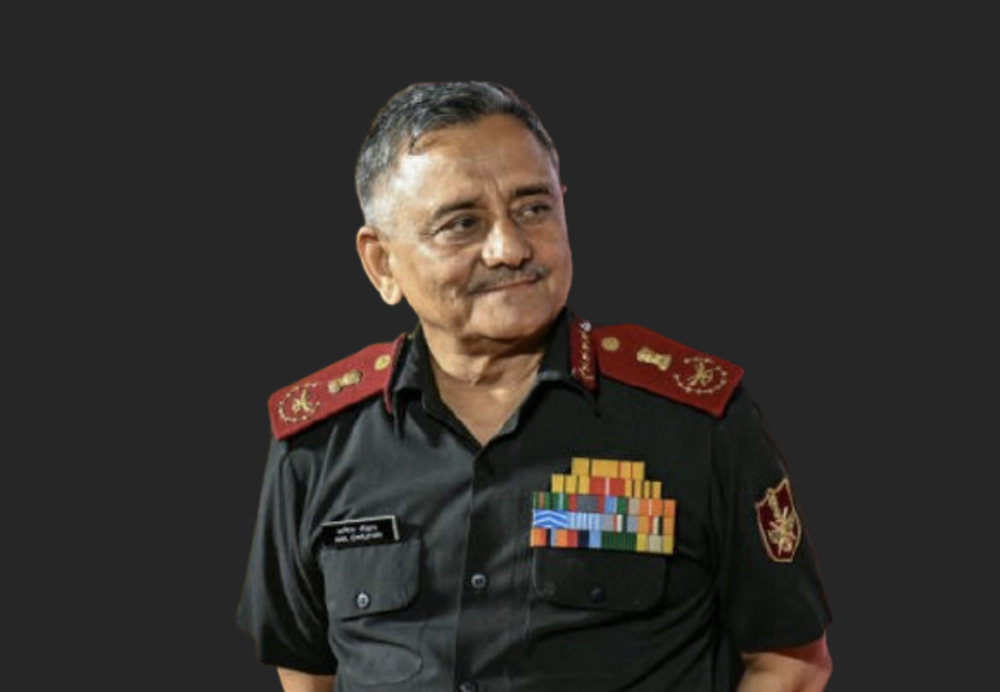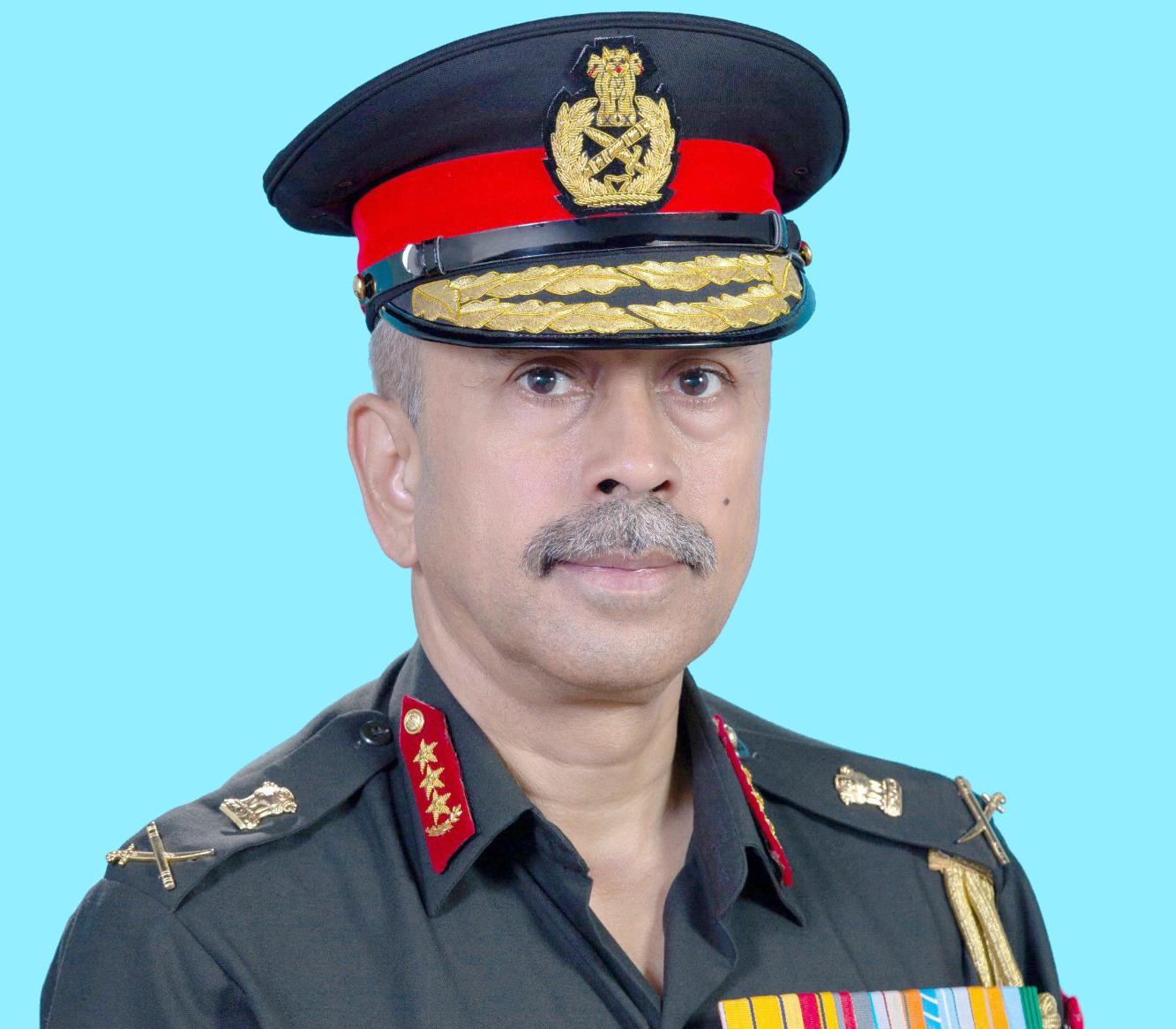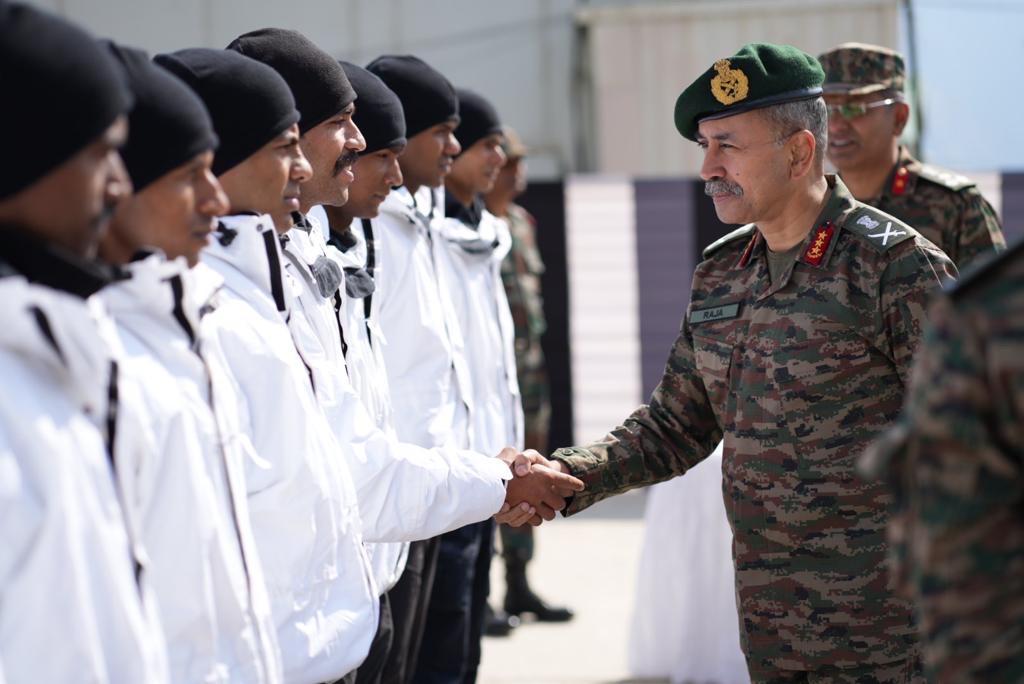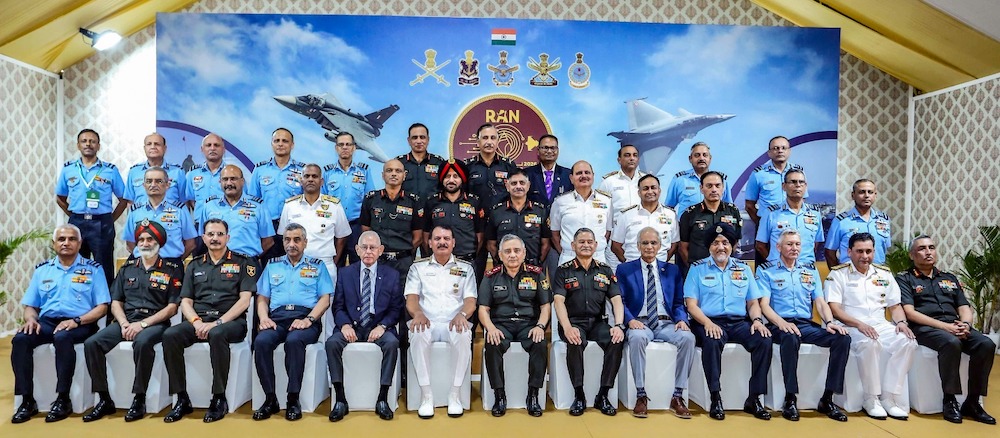
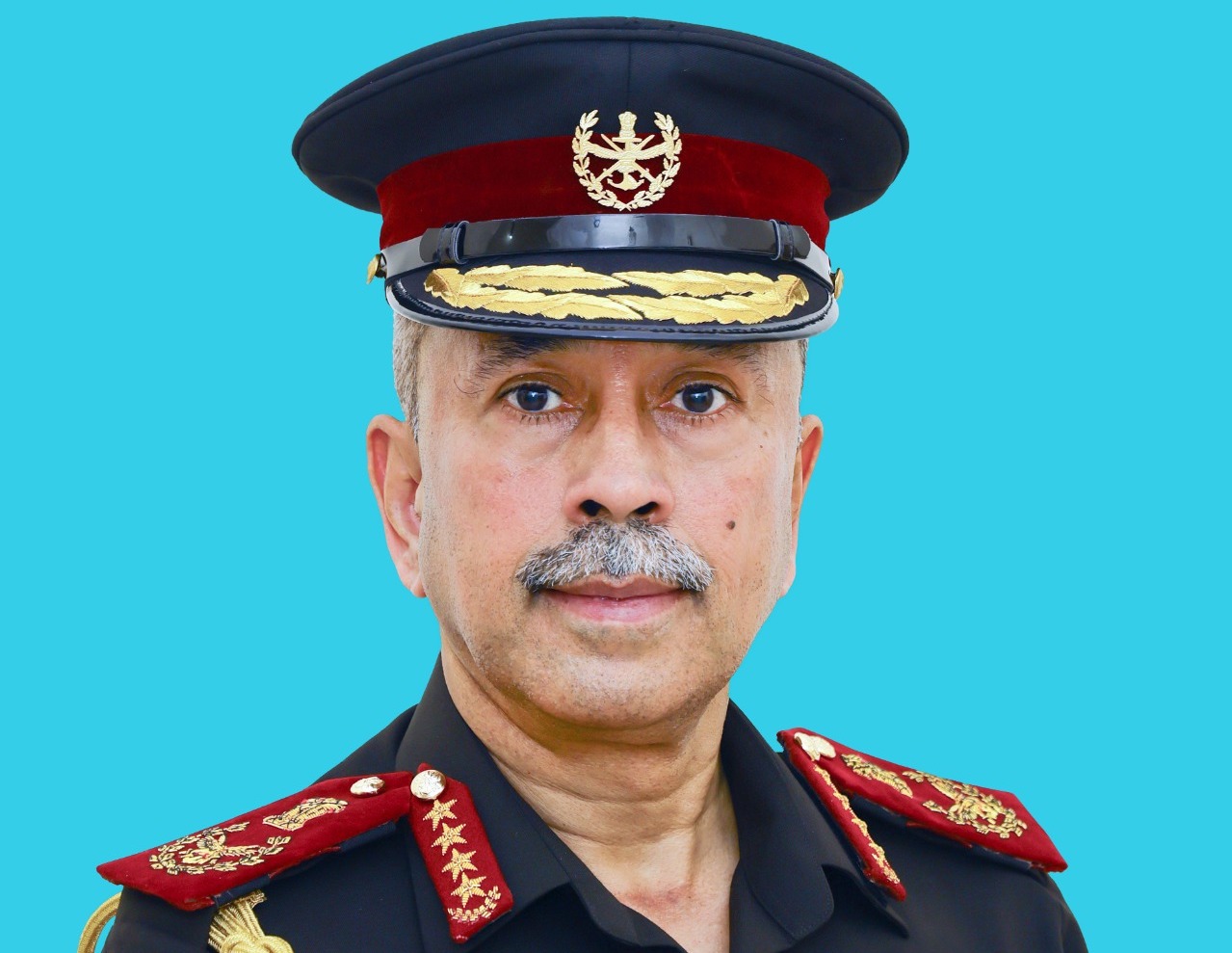
 Gen NS Raja Subramani. (Photo: HQ IDS)
New Delhi: General NS Raja Subramani, a former Indian Army commander, formally assumed charge as India’s third chief of defence staff (CDS) on Sunday, succeeding General Anil Chauhan, who retired after completing his tenure on Saturday. As stipulated in the government’s appointment order issued earlier this month, he will concurrently serve as secretary of the Department of Military Affairs (DMA) under the Ministry of Defence (MoD) – a dual role that places the country’s highest-ranking military officer at the intersection of strategic advice, institutional reform, and industrial policy.
The appointment, announced on May 9, came after Gen Subramani served as military advisor in the National Security Council Secretariat (NSCS) since September 2025 – a posting that gave him a vantage point that neither of his predecessors enjoyed when they first took charge.
The officer
Commissioned into the 8th Battalion of the Garhwal Rifles in December 1985, Gen Subramani is a graduate of the National Defence Academy and the Indian Military Academy. Over four decades of service, he has commanded formations in Jammu & Kashmir, Assam, and along sensitive sectors of the northern borders, and has held appointments in military intelligence, counterinsurgency operations, and higher defence management.
He served as vice-chief of the Army staff from July 2024 to July 2025, and as general officer commanding in chief (GOC-in-C) of the Central Army Command before that – a sequence of postings that gave him direct exposure to both the high-altitude China contingency and the internal security landscape. His decorations include the Param Vishisht Seva Medal, Ati Vishisht Seva Medal, Sena Medal, and Vishisht Seva Medal.
As military advisor to the NSCS, Gen Subramani worked inside the NSA-led apparatus that coordinates national security across defence, intelligence, foreign policy, and home affairs. That exposure equips him to navigate the informal power structures that determine whose advice is actually heard in a crisis.
Read also: CDS ‘advisor to who?’ and the ‘first among equals’ debate
What first CDS built – and left unfinished
When General Bipin Rawat was appointed India’s first CDS at the end of 2019, the Kargil Review Committee’s recommendations on joint military leadership had been gathering dust for two decades. Gen Rawat operationalized both the CDS post and the DMA, driving a radical integration agenda: restructuring 17 single-service commands into a smaller number of integrated theatre commands, and building a joint logistics and training architecture.
He publicly laid out a plan for two to five theatre commands – an air-defence command, a peninsular maritime command, separate western and northern land theatres, and joint training and logistics structures – with aggressive early-2020s timelines.
Critics cautioned that theaterization was being driven top-down without a harmonized joint doctrine, raising legitimate concerns in the Indian Air Force and the Indian Navy about over-centralization. Gen Rawat’s death in the December 2021 helicopter crash froze a process that was still mid-stream, leaving behind broad political endorsement for jointness, a DMA bureaucracy in motion, and ambitious timelines – but no fully implemented theatre command.
Chauhan’s consolidation
Where Gen Rawat was the disruptive pioneer, Gen Chauhan was the consensus builder. Under him, theaterization proposals reached a more concrete stage, with draft plans for three integrated theatre commands – northern, western, and maritime – submitted for government approval. He consistently argued that India’s model would be “unique” – calibrated to its own balance of continental threats and maritime opportunities – and resisted mechanical replication of either the American or Chinese frameworks.
Gen Chauhan’s tenure was also defined by Operation Sindoor, a calibrated punitive campaign launched after the Pahalgam terror attack that he described as India’s first genuinely network-centric, multi-domain operation. The campaign saw coordinated employment of land, sea, and air assets alongside cyber, electromagnetic, and cognitive-warfare tools, validating years of joint planning. For the CDS office, Sindoor served as both a vindication and a pressure point: proof that joint warfighting had progressed, and a new baseline against which future readiness would inevitably be measured.
Read also: Gen Chauhan and the transformative legacy he leaves behind
Theatre commands
The most immediate political expectation surrounding Gen Subramani’s tenure is that he will move the integrated theatre command project from advanced proposals to operational reality, within a window of roughly 18 to 24 months after Cabinet Committee on Security approval.
The friction points are well known. The Air Force has consistently expressed concern that its relatively limited assets will be fragmented across multiple theatres. The Navy has raised questions over the maritime command design. Underlying all of this is the absence of a harmonized joint doctrine – which makes it genuinely difficult to agree on who commands which assets, under what contingency, and along what escalation logic. If the human-capital and systems questions – a secure C4ISR (command, control, communications, computers, intelligence, surveillance, and reconnaissance) backbone, triservice staffing of commands, career incentives for joint postings – are not addressed alongside organizational charts, theaterization risks becoming a cosmetic renaming exercise.
The China-Pakistan challenge
The strategic environment offers little margin for distraction. The line of actual control (LAC) crisis with China continues to shape force posture across the northern and northeastern theatres, and the Pahalgam attack has shown that Pakistan-linked terrorism remains a persistent trigger for rapid conventional escalation. Gen Chauhan, in his final interview before retirement, framed future operations after May 2025’s Operation Sindoor as “Sindoor-plus” – more networked, more contested in the cyber and space domains, and less forgiving of slow decision-making.
Gen Subramani’s extensive experience in high-altitude formations and as general officer commanding-in-chief of the Central Army Command gives him a direct familiarity with the China threat. He will be expected to integrate continental and maritime strategies into a single coherent deterrence picture – treating the Himalayan front and the Indian Ocean as parts of one strategic whole rather than two separate problems.
A less publicly discussed dimension involves nuclear deterrence posture and civil-contingency planning, both of which sit at the intersection of the NSCS, the strategic forces command, and the conventional services – a space he has already operated in as military adviser.
Indigenization
Both Gen Rawat and Gen Chauhan built a strong political case for indigenization and embedded it into the DMA’s planning processes. The pressure to demonstrate visible Atmanirbhar (self-reliance) milestones has not diminished. The Tejas-Mk1A programme, despite delivery delays, represents a maturing platform, and the Tejas-Mk2, a heavier and more capable variant, is in advanced development. However, the gap between political commitment and programme timelines remains a structural problem that the Defence Research and Development Organisation (DRDO), private industry, and the MoD have not fully closed.
Gen Subramani will also have to manage the integration of emerging technologies – AI-enabled decision support, autonomous systems, and counter-drone suites – into joint force structures, where procurement, doctrine, legal frameworks, and export-control policies intersect. As CDS and DMA secretary simultaneously, he will sit at the fulcrum of these trade-offs.
The mandate ahead
The five years since the CDS office was created have transformed India’s higher defence landscape in ways that are difficult to overstate. Jointness is now a structural expectation, not an aspirational concept. Theaterization is treated as a question of when, not whether. Operation Sindoor has provided an early operational test that, by most accounts, the triservice machinery passed.
But Gen Subramani also inherits inter-service mistrust that has not been fully dispelled, doctrinal gaps that remain wide enough to matter in a real contingency, industrial constraints that will not be resolved by policy ambition alone, and civil-military ambiguities – including blurred lines between the CDS, service chiefs, the defence secretary, and the national security adviser – that surface precisely when clarity is most needed. Without statutory backing, the CDS remains first among equals by political convention, not by law, a status susceptible to the personalities occupying the Prime Minister’s Office and the MoD at any given time.
Gen NS Raja Subramani’s tenure will be judged not on the elegance of the organizational design but on whether integrated theatre commands become credible warfighting entities with functioning C4ISR, whether joint doctrine and culture take genuine root at the regimental and squadron level, whether indigenization keeps pace with the evolution of the threat environment, and whether the CDS emerges as a strategic integrator in fact – not merely in designation.
Follow us on social media for quick updates, new photos, videos, and more.
X: https://x.com/indiasentinels
Facebook: https://facebook.com/indiasentinels
Instagram: https://instagram.com/indiasentinels
YouTube: https://youtube.com/indiasentinels
© India Sentinels 2026-27