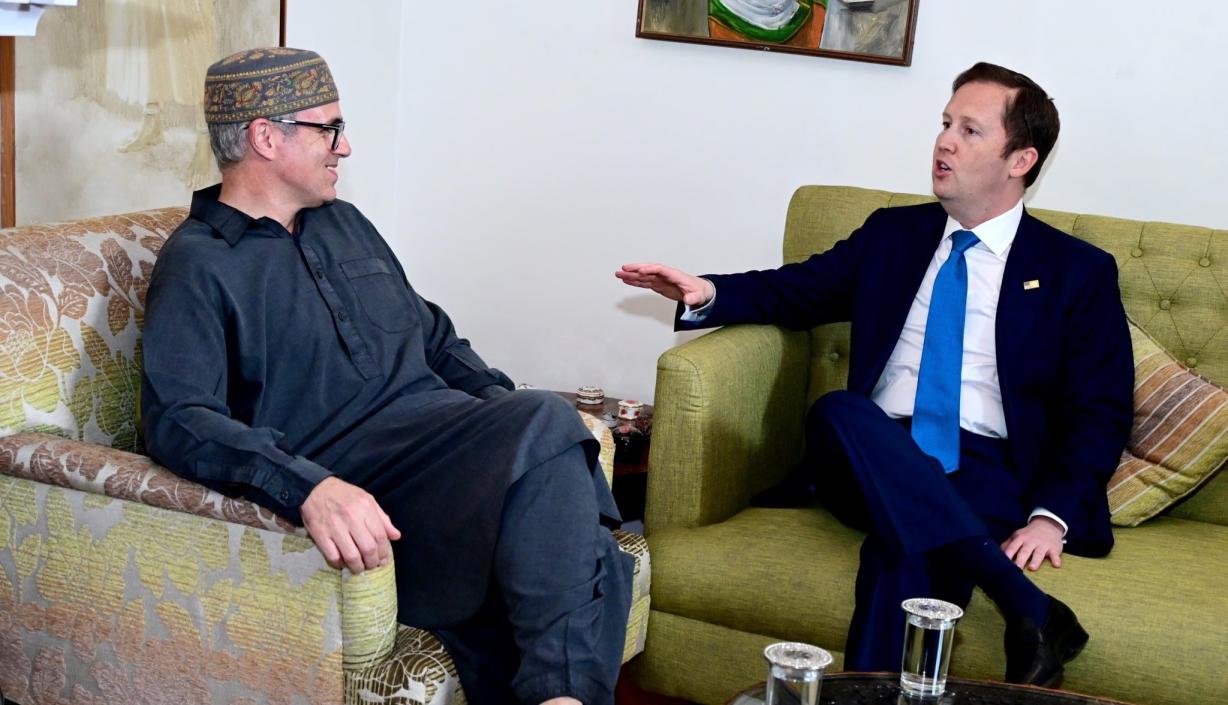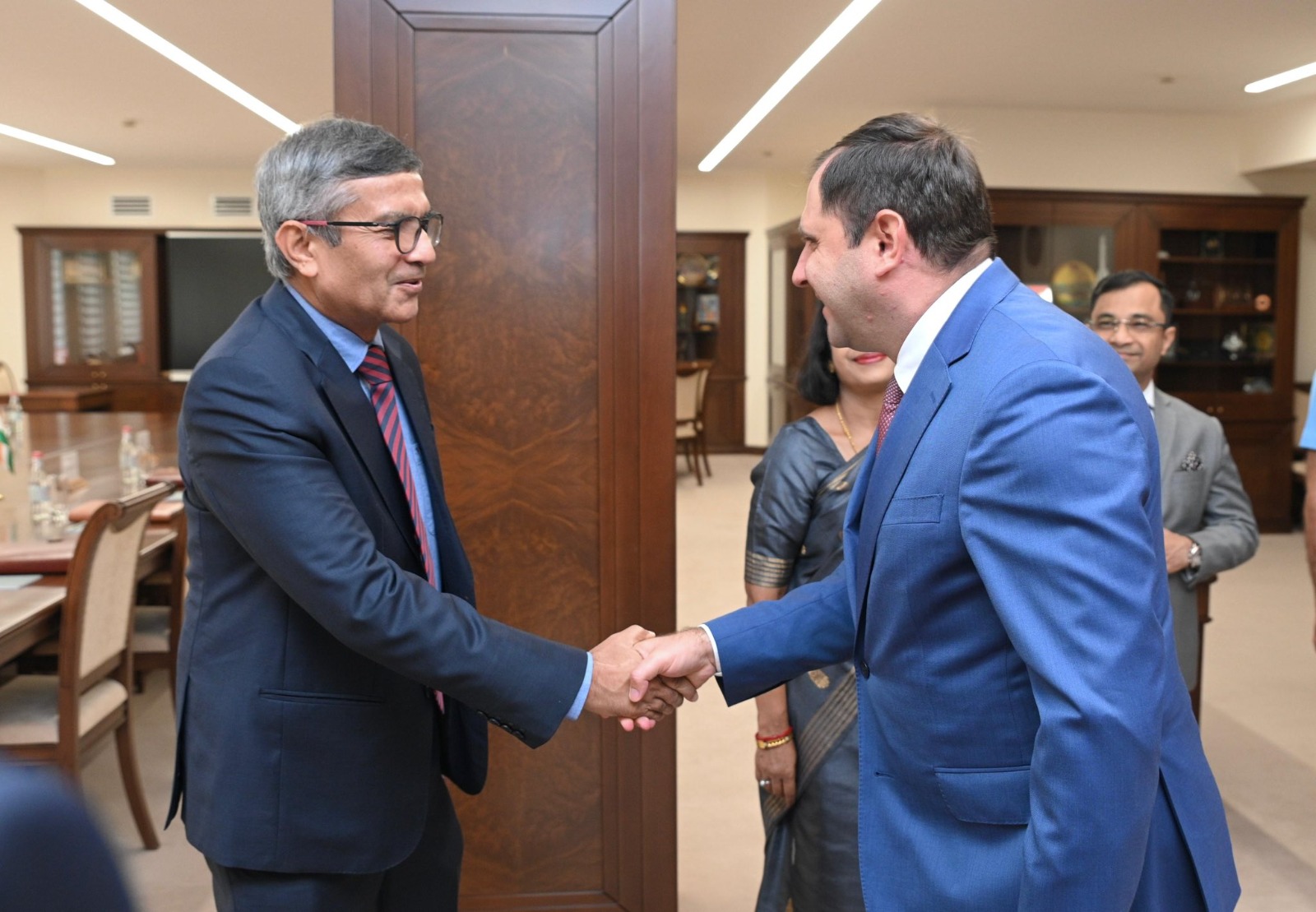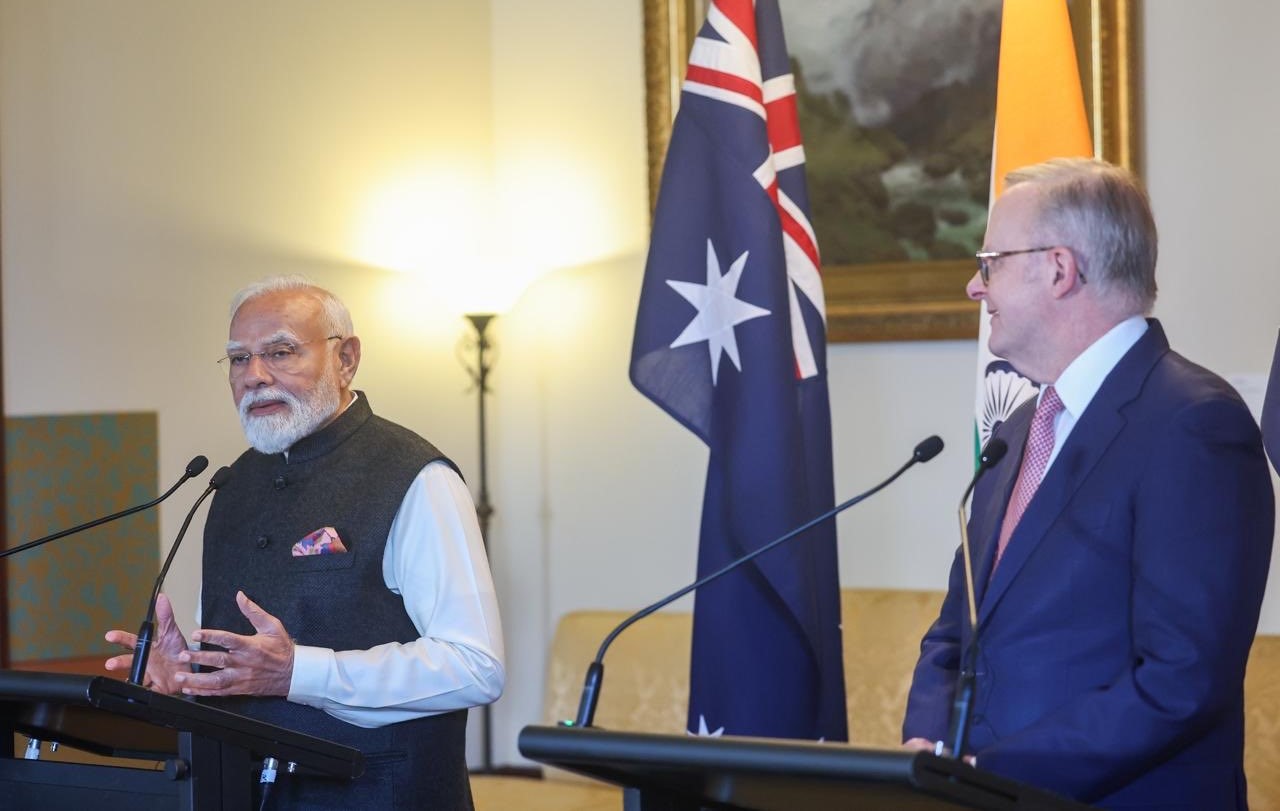
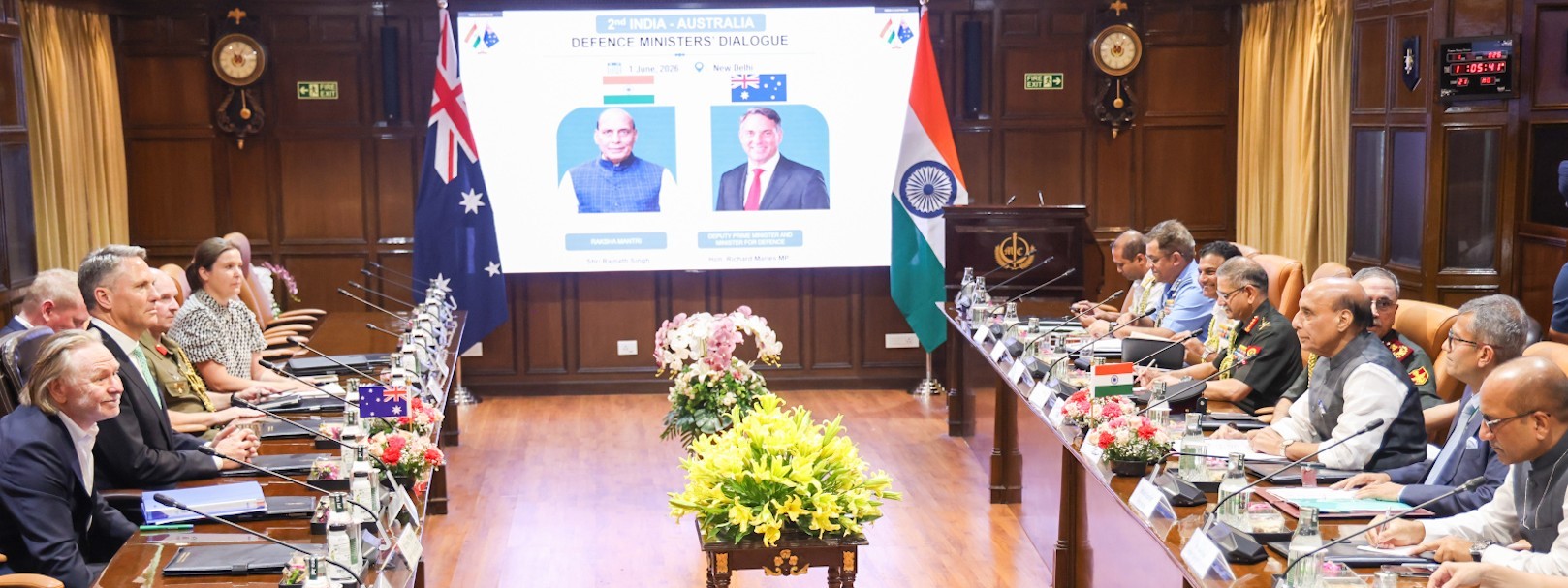
 Rajnath Singh and Richard Marles co-chair India-Australia Defence Ministers' Dialogue (Photo: MoD)
New Delhi: India and Australia have agreed to negotiate a formal memorandum of understanding (MoU) on the supply of defence articles and services, a significant step toward closer defence-industrial cooperation between two Quad partners who are rapidly expanding their strategic footprint in the Indo-Pacific.
The agreement emerged from the second India-Australia Defence Ministers' Dialogue held in New Delhi on Monday, co-chaired by the defence minister, Rajnath Singh, and Australia’s deputy prime minister and defence minister, Richard Marles. That the two sides are meeting again barely eight months after their inaugural dialogue – held in Australia – signals the pace at which the bilateral defence relationship is being pushed forward. Marles arrived in the capital describing the two countries as top-tier security partners.
The proposed MoU on defence articles and services has no finalised details yet; the specifics are still to be negotiated. But the framework, once in place, is expected to cover defence manufacturing collaboration, supply chain integration, and sustainment arrangements – areas where both countries have expressed interest in reducing dependence on traditional Western suppliers and building indigenous industrial capacity.
The dialogue also welcomed Australia’s first defence trade mission to India and the Australia-India Defence Industry Roundtable, both held in October last year – events that marked the early stages of what New Delhi and Canberra are positioning as a maturing defence-industrial partnership.
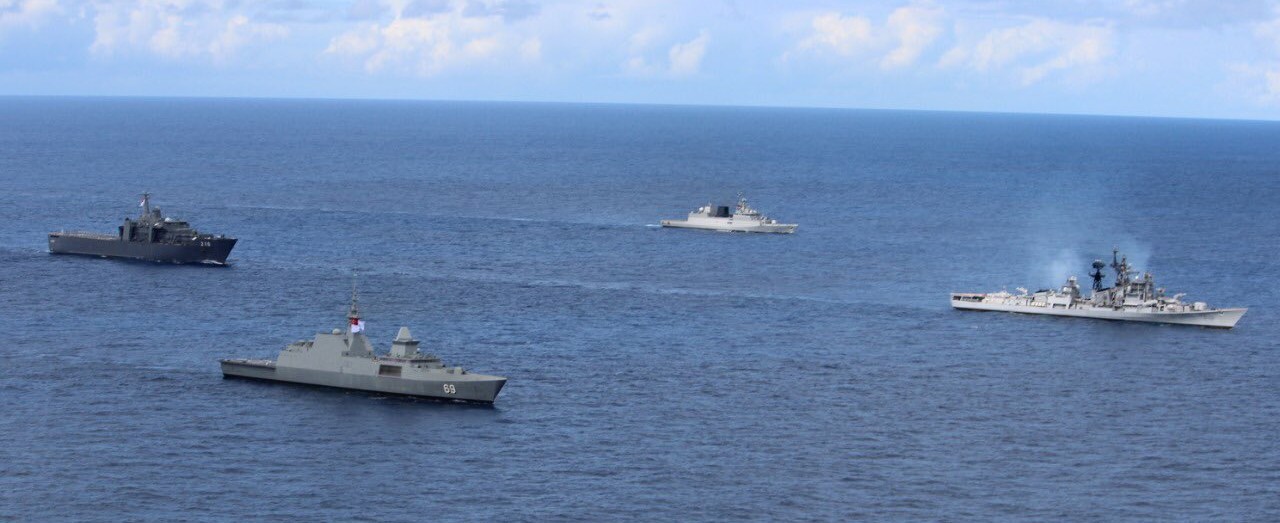
Maritime security dominated the agenda. The two sides agreed to advance collaborative maritime domain awareness activities involving maritime patrol aircraft, and to explore opportunities to strengthen undersea domain awareness – a domain of growing strategic concern given Chinese submarine activity across the Indian Ocean. Both governments also agreed to deepen cooperation between the Indian Coast Guard and Australia’s Maritime Border Command.
India and Australia will jointly host a search and rescue tabletop exercise in Chennai later this month under the Indian Ocean Rim Association (IORA) framework, adding a multilateral dimension to what is primarily a bilateral maritime push.
The maritime cooperation agenda dovetailed with broader Quad priorities. A Quad foreign ministers’ meeting was held in New Delhi last week, and Monday’s dialogue backed the new Quad Indo-Pacific Maritime Surveillance Collaboration initiative.
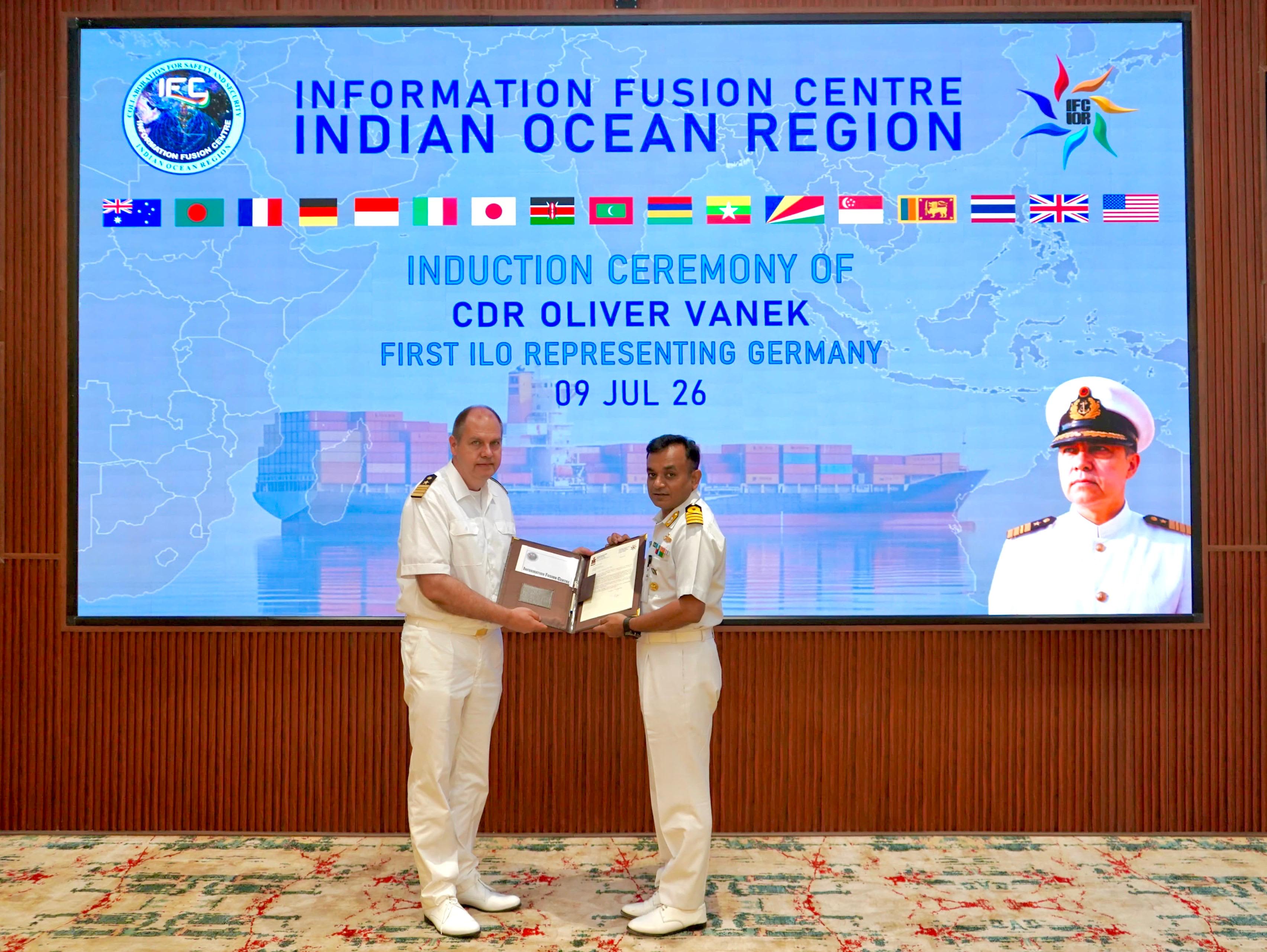
The ministers also welcomed India’s operationalisation of the Indo-Pacific Partnership for Maritime Domain Awareness through the Information Fusion Centre in Gurugram, which serves as a regional hub for collating and sharing maritime traffic data.
On military exercises, the two sides confirmed they will operationalise their first bilateral air-to-air refuelling exercise during Exercise Pitch Black – a major multilateral air exercise hosted by Australia. India will also participate for the first time in Australia’s Operation Render Safe, a counter-improvised-explosive-device and explosive-ordnance-disposal exercise, while Australia has invited India to join the submarine rescue exercise Black Carillon. Together, these reflect growing integration in highly specialized operational domains that, until recently, India had kept at arm’s length.
The two sides further agreed to improve interoperability under the Mutual Logistics Support Arrangement signed in 2020, and confirmed that inaugural joint staff talks will be held later this year – a mechanism that will allow the two militaries to institutionalize dialogue at a senior operational level.
Defence science and technology cooperation also featured prominently, with a particular focus on sensor technologies. Marles invited India to participate in Australia's Defence Science, Technology and Research Summit next year. Officials were tasked with finalizing plans for the deployment of an Indian instructor at the Australian Defence College – a symbolic but telling measure of how deeply the relationship has matured.
The joint statement from the dialogue reiterated support for a “free, open, peaceful, stable and prosperous Indo-Pacific,” and backed freedom of navigation, overflight, and a rules-based maritime order under the UN Convention on the Law of the Sea (UNCLOS) – language aimed squarely at Beijing, though neither side named China directly.
The India-Australia defence relationship has undergone a marked transformation over the past decade. The two countries elevated ties to a Comprehensive Strategic Partnership in 2020, and have since expanded the scope of military engagement across all three services.
India’s growing comfort with the Quad – which also includes the United States and Japan – has provided strategic scaffolding for the bilateral relationship, though New Delhi continues to insist that the grouping is not a military alliance.
The pace of engagement between New Delhi and Canberra now rivals, and in some domains exceeds, India's defence ties with several traditional European partners.