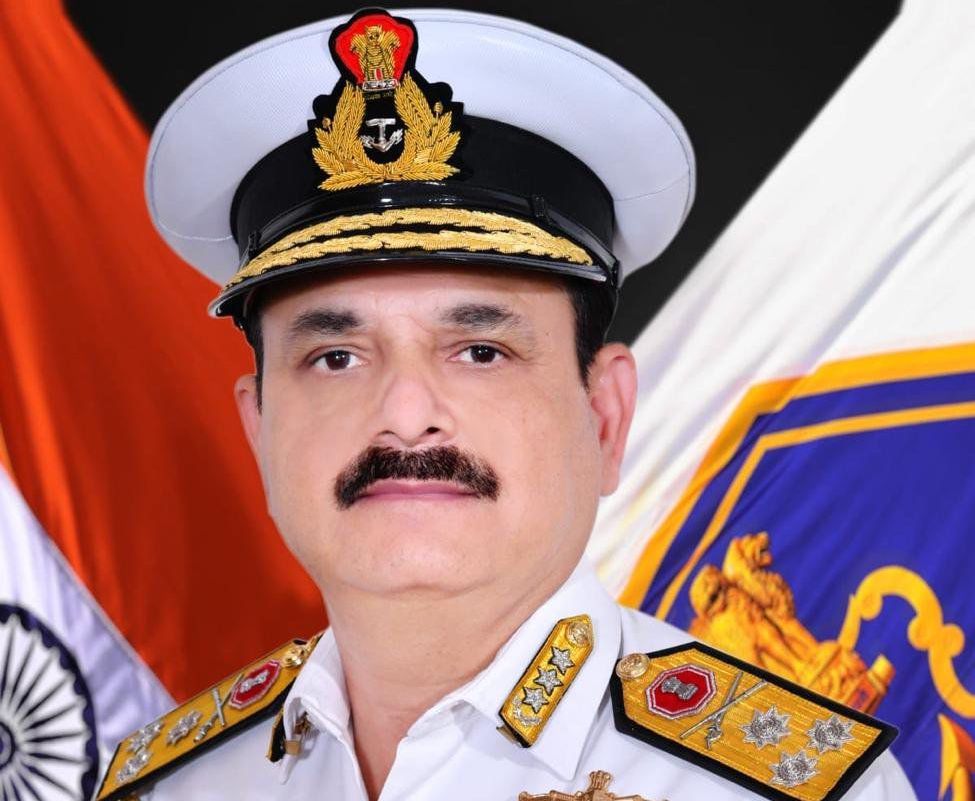
 Vice Admiral Sanjay Vatsayan. (Photo: Indian Navy)
New Delhi: The government has appointed Vice Admiral Sanjay Vatsayan as the next flag officer commanding in chief (FOC-in-C) of the Western Naval Command, headquartered in Mumbai. VAdm Vatsayan, currently serving as the 47th vice-chief of the naval staff, is set to take charge of the Indian Navy’s most operationally consequential command – one that sits astride the Arabian Sea and faces Pakistan’s maritime frontier directly.
VAdm Vatsayan comes from Hiranagar in Hamirpur district of Himachal Pradesh and is a second-generation member of the armed forces. He joined the National Defence Academy (NDA), Khadakwasla, as part of the 71st Course, graduating in 1986, and was commissioned into the Navy on January 1, 1988.
His academic journey through India’s premier military institutions is a textbook study in grooming for high command. He completed the staff course at the Defence Services Staff College (DSSC), Wellington, in 2003, followed by the higher command course at the Naval War College in 2010, and the apex National Defence College (NDC), New Delhi, in 2014 – an educational progression reserved for officers earmarked for flag rank and strategic leadership.
Read also: Government picks Lt Gen Raja Subramani as new CDS
A Specialist’s Career at Sea
VAdm Vatsayan specialized in Gunnery and Missile Systems early in his career – a branch that deals with ship-borne guns, surface-to-surface and surface-to-air missiles, fire control, and associated combat systems – and this thread of expertise runs through much of his subsequent sea service. He was part of the commissioning crew of INS Mysore, the Delhi-class guided-missile destroyer, and also served on the fast attack craft INS Nishank and the Indian Coast Guard offshore patrol vessel ICGS Sangram, accumulating experience across both services.
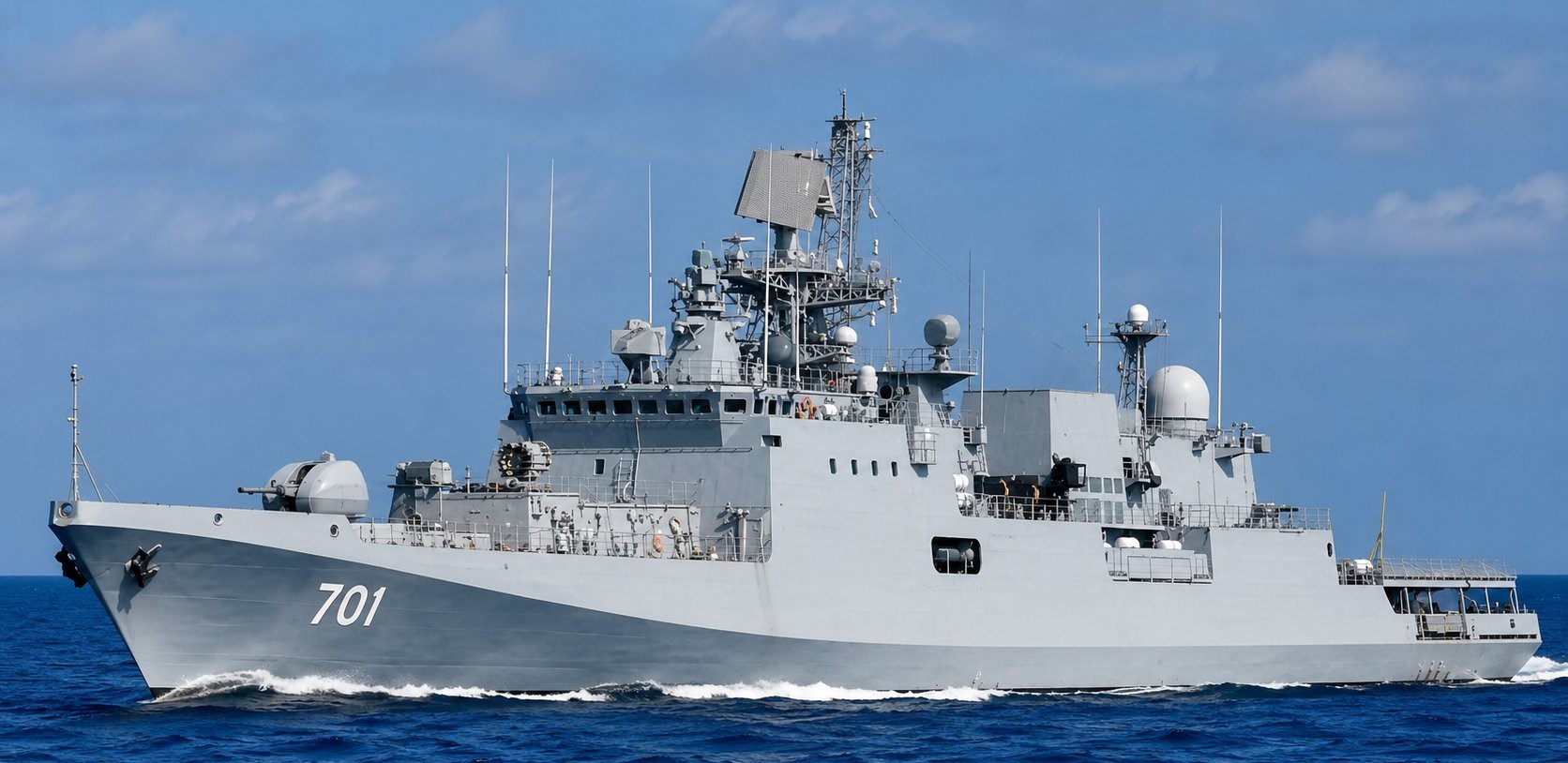
His independent commands are telling. He commanded Veer-class missile boats INS Vibhuti and INS Nashak before taking the helm of the Khukri-class guided-missile corvette INS Kuthar. Most significantly, he served as the commissioning commanding officer of INS Sahyadri – a Shivalik-class stealth guided-missile frigate and one of the Indian Navy’s first indigenous multi-role stealth warships – giving him hands-on experience with next-generation combat systems and indigenous shipbuilding at a formative moment for India’s naval self-reliance push.
Away from the sea, VAdm Vatsayan built a parallel career in policy and planning that would prove equally important to his rise. He served as joint director of personnel, director of personnel (policy), director naval plans (perspective planning), and principal director naval plans at Integrated Headquarters, Ministry of Defence (Navy) – roles that placed him at the centre of long-term force structuring, capital acquisition, and capability development decisions.
On promotion to flag rank in February 2018, he was appointed assistant chief of naval staff (policy and plans), further reinforcing his influence over the Navy’s strategic framework and its engagement with government on procurement and maritime security.
Read also: Who is VAdm Krishna Swaminathan, the new Navy chief?
Eastern Fleet and the Shadow of Galwan
In February 2020, then Rear Admiral Vatsayan assumed command of the Eastern Fleet, headquartered at Visakhapatnam. The timing was significant: the Galwan Valley crisis of June 2020 reshaped India’s strategic posture along its entire frontier, with ripple effects on maritime deployments in the Indian Ocean region. As Flag Officer Commanding Eastern Fleet (FOCEF), he oversaw multi-ship deployments, maritime security operations, and a range of bilateral and multilateral exercises, projecting Indian naval presence from the Bay of Bengal into the broader Indo-Pacific. He relinquished the Eastern Fleet command in February 2021.
After relinquishing command of the Eastern Fleet, VAdm Vatsayan was appointed deputy commandant of the NDA, where he also served as chief instructor, shaping the triservice training of Army, Navy, and Air Force cadets at the pre-commission stage. He subsequently took charge as chief of staff, Eastern Naval Command, on December 16, 2021, functioning as the principal staff officer to the FOC-in-C, coordinating operations, logistics, training, and administration across the eastern seaboard and the Bay of Bengal.
Integrated Defence Staff
In August 2023, VAdm Vatsayan assumed the appointment of deputy chief of Integrated Defence Staff (Operations) at Headquarters Integrated Defence Staff (HQ IDS) – a position that placed him at the nerve centre of joint operations coordination across all three services. On December 1, 2023, he moved to the role of deputy chief of Integrated Defence Staff (Policy Planning & Force Development), a portfolio spanning joint capability development, long-term force planning, and the policy initiatives driving India’s push for theaterization and indigenisation.
These appointments positioned him squarely within the institutional machinery tasked with transforming the Indian military into a more integrated, joint-warfighting force.
Navy’s Second in Command
On August 1, 2025, VAdm Vatsayan took over as the 47th vice-chief of the naval staff, succeeding Vice Admiral Krishna Swaminathan, who moved to Western Naval Command as its FOC-in-C at that time. As vice-chief, he became the second-in-command of the entire Indian Navy – responsible for staff supervision at Naval Headquarters, resource prioritization, inter-service coordination, and day-to-day operational and administrative management of the force.
His tenure drew on his combined background in operations, joint planning, and policy to advance capability development and fleet readiness initiatives.
India’s Maritime Sword Arm
The Western Naval Command is, by the Indian Navy’s own description, its “sword arm” – the command whose operations would be central to the outcome of any conflict at sea against Pakistan. Based in Mumbai, with key assets also deployed at Karwar, the command oversees the Western Fleet and controls India’s entire western seaboard and the northern Arabian Sea, including critical sea lines of communication connecting the Persian Gulf and the Red Sea to Indian shores.
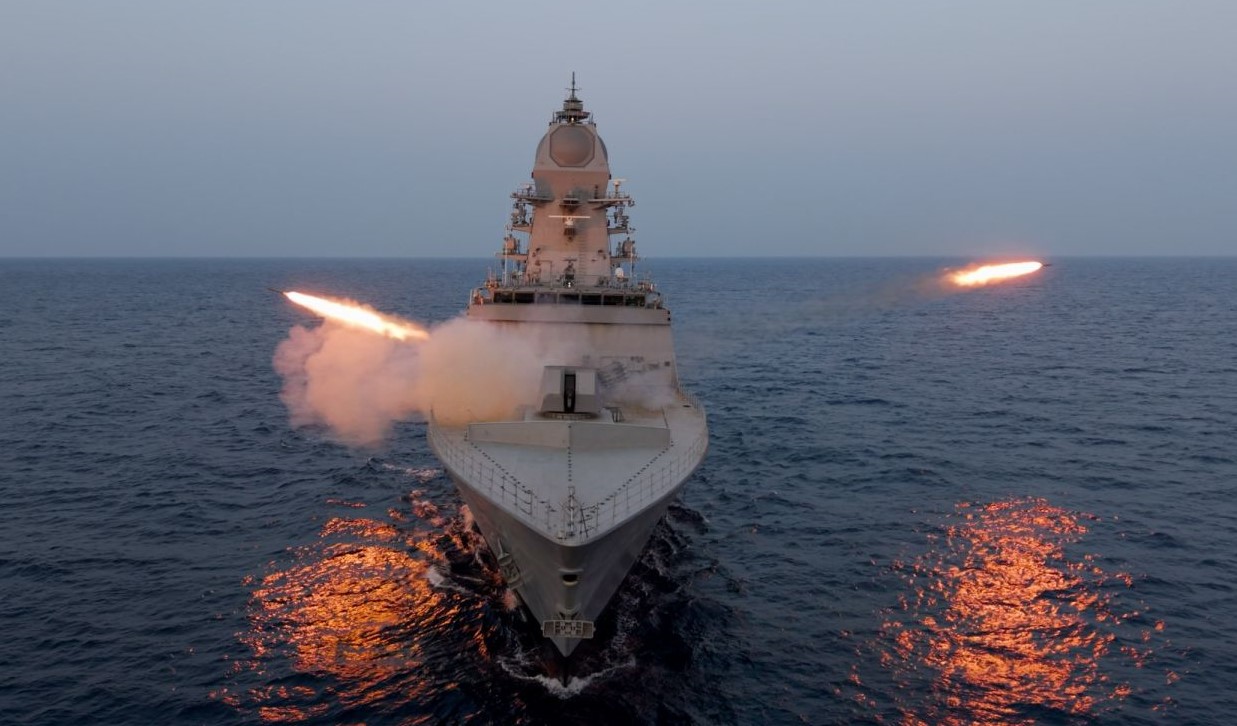
The command hosts a formidable concentration of assets: carrier battle groups, guided-missile destroyers and frigates, submarines, MARCOS special operations units, and naval air stations, in addition to shipbuilding and repair infrastructure at Mazagon Dock Limited in Mumbai, Goa Shipyard, and Cochin Shipyard. VAdm Vatsayan’s appointment places him at the head of this formation at a period of heightened maritime activity in the Arabian Sea – a theatre that has seen increased operational tempo in recent years, including during Operation Sindoor, in which the Western Naval Command played a significant role.
Decorations and Recognition
Over his 38-year career, VAdm Sanjay Vatsayan has been decorated with the Param Vishisht Seva Medal (PVSM), the Ati Vishisht Seva Medal (AVSM) – awarded in 2021 for exceptional service – and the Nao Sena Medal (NM). Together, these honours reflect sustained recognition at multiple stages of his career, from mid-level operational distinction to senior strategic leadership.
His trajectory – gunnery specialist, commissioning commander of a stealth frigate, Eastern Fleet commander, joint-staff architect, vice-chief, and now FOC-in-C of the Western Naval Command – marks him as an officer who has moved with equal confidence across the tactical, operational, and strategic registers of naval command.
Follow us on social media for quick updates, new photos, videos, and more.
X: https://x.com/indiasentinels
Facebook: https://facebook.com/indiasentinels
Instagram: https://instagram.com/indiasentinels
YouTube: https://youtube.com/indiasentinels
© India Sentinels 2026-27