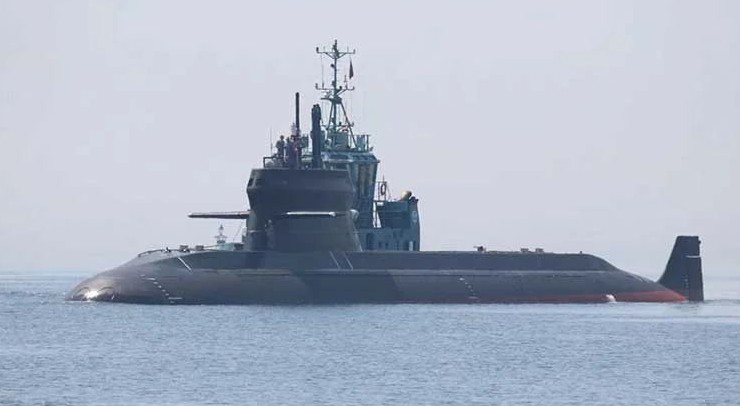
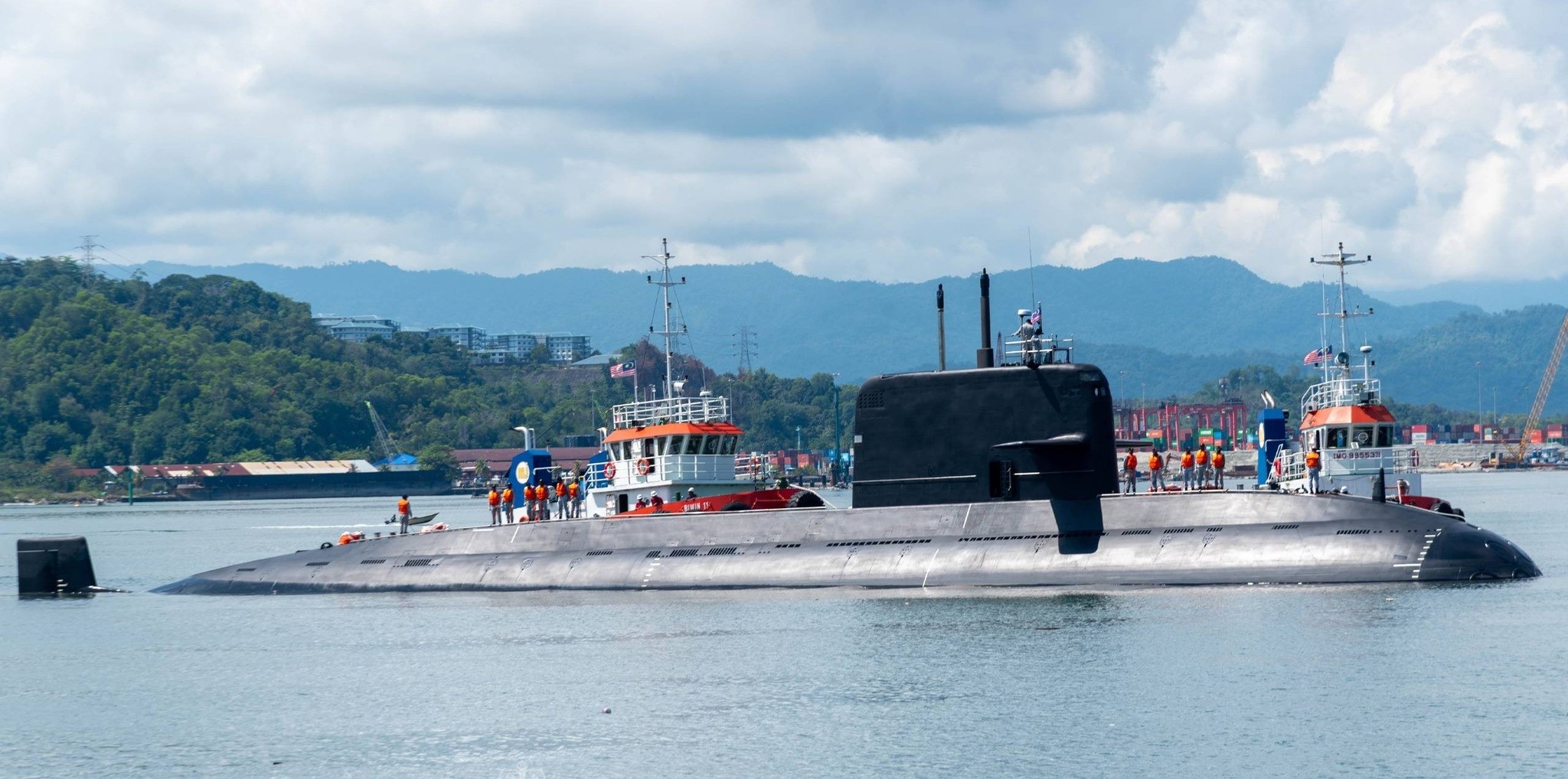
 Pakistan’s first Hangor-class submarine approaching a naval pier at Kota Kinabalu in East Malaysia (Photo: Royal Malaysian Navy)
Pakistan commissioned PNS Hangor on 30 April 2026 in Sanya, China, in a ceremony attended by President Asif Ali Zardari and Chief of Naval Staff Admiral Naveed Ashraf. It was presented, as every milestone in this programme has been presented, as a moment of national achievement.
Built under Chinese collaboration and based on the export derivative of the Yuan-class design, the Hangor class is framed as a transformative addition to Pakistan's sea-denial capability.
The framing is not without basis. But in any country with functioning defence oversight institutions, a naval programme that has slipped behind its original schedule, changed its core propulsion technology mid-stream, and is unlikely to deliver its full contingent before 2030 would generate significant accountability demands.
Parliamentary committees would summon programme managers. Audit agencies would examine cost overruns. The public record would contain, at minimum, a revised timeline and an explanation of the factors that produced the delay. None of this has happened with the Hangor programme.
The delays are real, even if they fall short of the most pessimistic assessments. The original bilateral plan envisaged Pakistan receiving all eight submarines across a delivery window running from 2022 to 2028. That schedule is under pressure from both ends. Of the four China-built boats, only the lead vessel PNS Hangor has been commissioned; sisters PNS Shushuk, PNS Mangro, and PNS Ghazi completed their launches across 2025 and are in late-stage sea trials ahead of their own handovers.
The four vessels to be assembled at Karachi Shipyard and Engineering Works present a more concerning picture: steel was cut for the fifth boat in December 2021, and the keel for the sixth was only laid in February 2025. Full fleet induction is now expected between 2028 and 2030 – a meaningful slide from original projections, even if short of the "early 2030s" framing sometimes applied. What Pakistan has not done is formally acknowledge the change, explain it, or offer a revised timeline on the record.
The engine switch is the most consequential undisclosed decision in the programme. Following a 2021 discovery that MTU engines were being used on Chinese warships in violation of the EU arms embargo, Germany blocked their export to China, foreclosing their use in the Hangor build. China offered its domestically produced CHD620 as a substitute, and Pakistan accepted.
Why the CHD620 was selected over other available alternatives, what evaluation determined it was technically adequate, and what risk assessment addressed its unproven reliability – none of these questions has been answered, because none has been asked in any forum capable of demanding a response.
No publicly confirmed operational navy, excluding possible experimental or prototype use, is known to have adopted the CHD620 for active submarine service. Thailand's navy, facing the same substitution on its parallel S26T contract, required more than 6,000 hours of bench testing before it would accept the engine – a process that, whatever its conclusions, at least existed. Pakistan has produced no equivalent public record of evaluation.
The absence of scrutiny is not accidental. It reflects the structural condition of defence accountability in Pakistan. The US State Department's 2025 Fiscal Transparency Report urged Pakistan to place its defence and intelligence budgets under parliamentary or civilian oversight, stating directly that "the military and intelligence budgets were not subject to adequate parliamentary or civilian public oversight."
The 2025 review echoed concerns raised in previous reports, describing the absence of legislative oversight of defence expenditure as a persistent and recurring problem. Pakistan does have a parliamentary defence committee, but its reach stops well short of the programme-level scrutiny that a procurement of this scale warrants.
Pakistan's 2025–26 defence allocation stands at Rs2.55 trillion – a nearly 20 per cent increase on the previous year – being committed by a country simultaneously managing Rs9.7 trillion in debt servicing obligations and operating under IMF supervision. The financial case for the Hangor programme in that context has not been publicly made.
Pakistan's strategic culture treats defence procurement as a domain requiring secrecy rather than accountability, because transparency would compromise operational security. But the details being withheld – engine specifications, revised delivery timelines, cost overrun figures, the rationale for the CHD620 switch – are not the kind of operational intelligence that secrecy requirements genuinely protect. They are precisely the kind of institutional performance data that accountability mechanisms exist to surface.
Every major Hangor system – propulsion, electronics, weapons, spare parts – traces back to China, making Pakistan's submarine arm structurally dependent on Beijing's continued material and technical support for the foreseeable future. That dependency is, by itself, a strategic question of the first order. It is also one that Pakistan's public institutions are not currently equipped, or permitted, to examine.
The Hangor programme is, among other things, a case study in what happens when a major procurement decision is insulated from scrutiny. The submarines are real. The milestone is genuine. The questions are not going away.