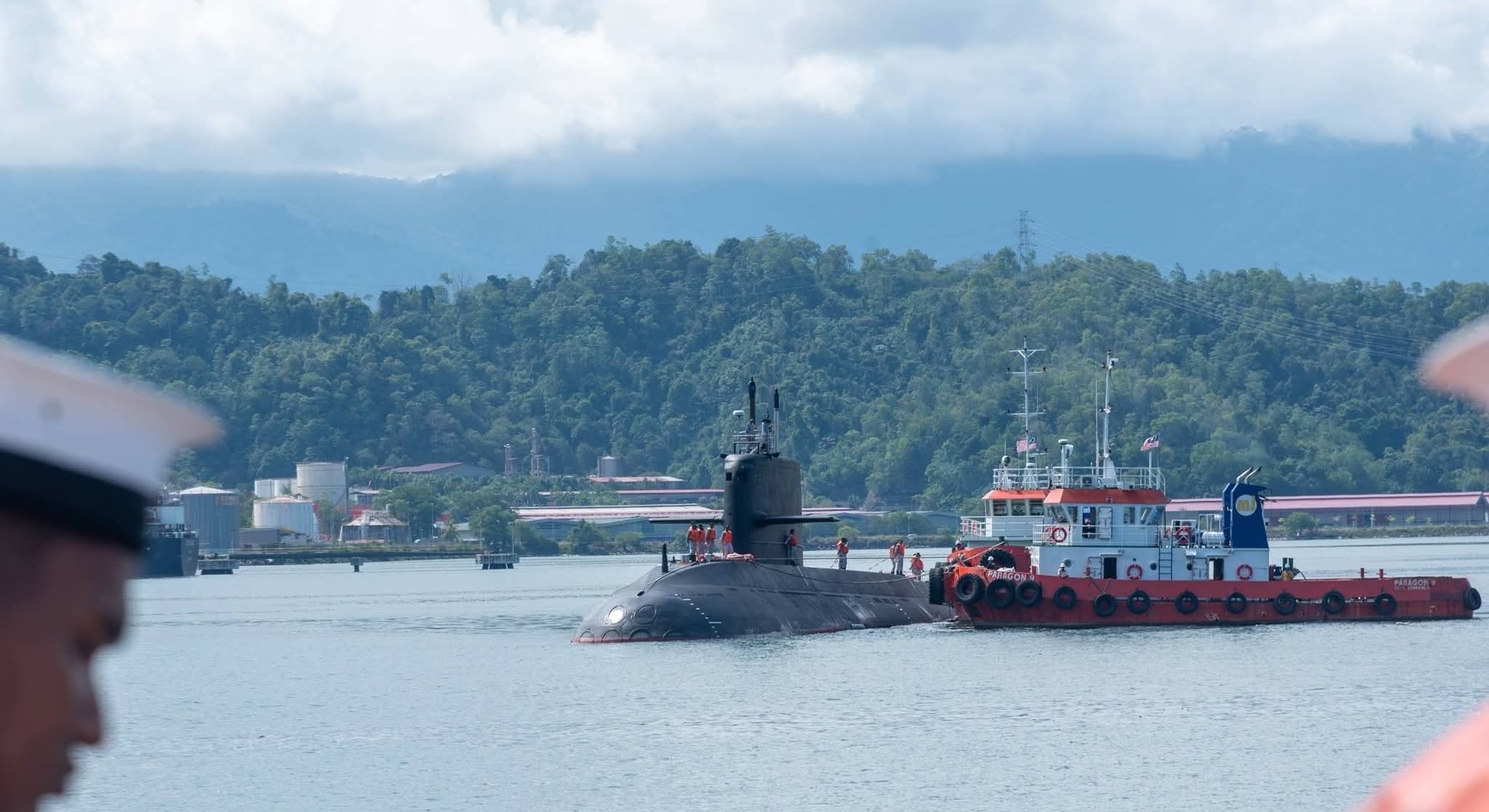
 Pakistan Navy's first Hangor-class submarine at a Malaysian port. (Photo: Royal Malaysian Navy)
Air-independent propulsion (AIP) is meant to reduce how often a submarine must come near the surface. A conventional diesel-electric boat must periodically raise its snorkel to draw in air, run its diesel engines, and recharge its batteries. A Stirling AIP system burns diesel fuel with stored liquid oxygen to generate power underwater, letting a submarine stay submerged for long periods, especially at low speed, without repeatedly surfacing.
AIP does not make a submarine independent of its diesel generators, however. The batteries still need recharging, so the diesels must still run. That makes charging one of the noisiest and most exposed phases of a conventional submarine's operations.
The quality of the diesel generators is therefore central to a boat's design. Submarines are no longer judged only by how long they can stay down. Keeping machinery noise out of the water matters just as much, and engine vibration can travel through mounts, machinery spaces and the hull before it emerges as waterborne sound.
This is where the CHD620 comes in. Thai navy officials have described it as a licensed Chinese-made version of Germany's MTU 396. Any locally produced version of a Western design raises questions about the precision of parts and manufacturing quality, and imbalance or imprecise assembly can increase vibration, which matters especially in a submarine.


No public test of the CHD620’s noise output exists. That does not show the engine is loud, but it means its acoustic performance cannot be verified.
The effects could go beyond the charging process. If the generators prove noisy, or if the batteries need recharging more often and for longer, the submarine would spend more time in its most exposed state. Every extra period of snorkelling is another chance to be detected, which erodes the benefit AIP is meant to provide.
Anechoic coating cannot solve the problem on its own. Its main job is to absorb sonar pulses and reduce echoes from the hull, and its benefit depends on the hull design and on how well machinery vibration is controlled. If engine vibration travels through poorly isolated mounts into the hull, the noise can still radiate into the water.
China’s position is that the CHD620 meets modern stealth requirements through shock absorbers, machinery rafts and vibration isolation. Whether that holds in practice remains a subject of debate among analysts.
The AIP system and the CHD620 therefore cannot be judged separately. Stealth depends on the whole chain: the generators, vibration isolation, hull design and noise-reduction coating. A loud diesel engine could undermine the whole system.
The Hangor class faces this problem on top of the others. AIP lets the boats stay submerged longer, but that advantage matters little if they cannot stay quiet. If the CHD620 produces excessive noise, AIP cannot compensate, and the propulsion package may fall short of the stealth it was meant to deliver.