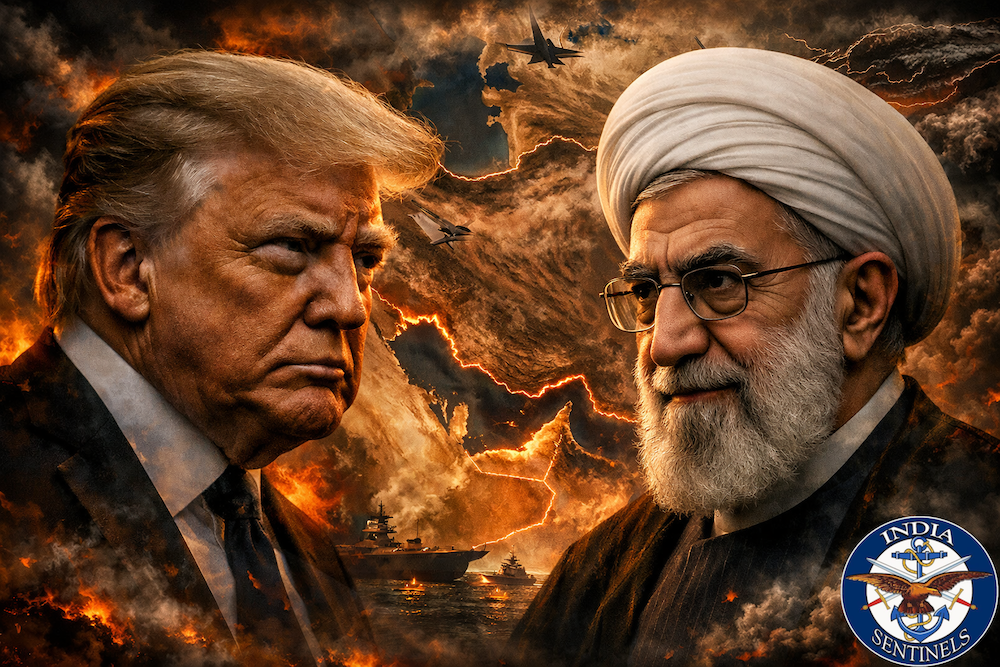
 Illustration for representation. (© India Sentinels 2026–27)
New Delhi: The Persian Gulf is once again on the knife-edge of a conflict that could reshape the Middle East for a generation. With two American carrier strike groups converging on the region, dozens of additional fighter jets repositioned to forward bases, and a 10-to-15-day ultimatum from the United States president, Donald Trump, the confrontation between Washington and Tehran has entered its most dangerous phase in years – and, this time, the machinery of war is not merely being rattled but physically moved into firing range.
Anatomy of a crisis
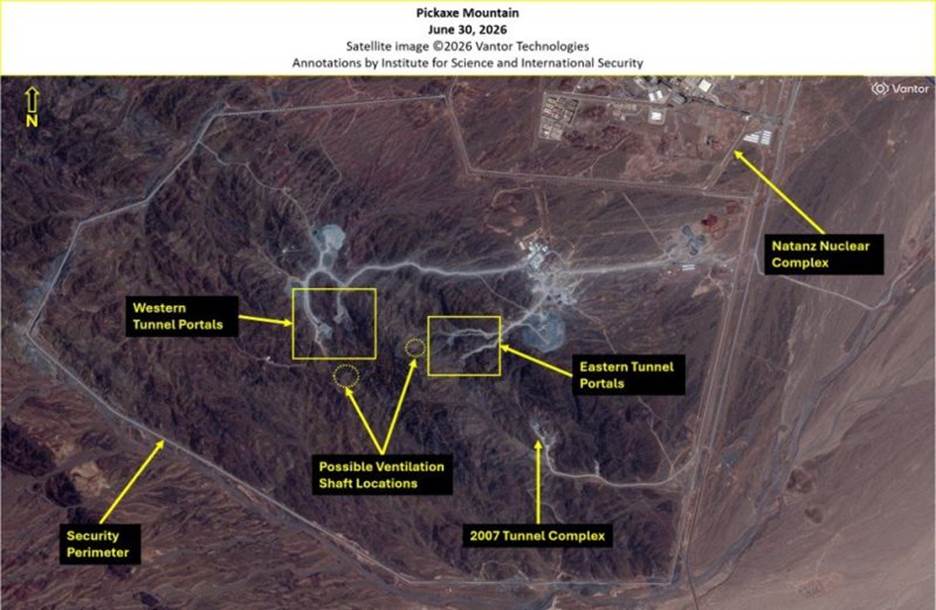
The immediate roots of the current standoff lie in Iran’s nuclear programme and a trail of military escalation that began in earnest last year. In late 2024 and early 2025, the International Atomic Energy Agency (IAEA) reported that Iran had accumulated enriched uranium stockpiles at near-weapons-grade levels, with no plausible civilian justification and with capabilities that could, according to its assessments, yield fissile material for several bombs within a relatively short period. Washington chose to act.
In June 2025, as India Sentinels had reported then, the US’s air force and navy launched Operation Midnight Hammer – a large-scale strike on Iran’s three principal nuclear facilities at Fordow, Natanz, and Isfahan. Seven B-2 stealth bombers dropped GBU-57 “bunker-buster” munitions, while a US submarine fired approximately 30 Tomahawk cruise missiles. US officials declared the strikes had “severely degraded” Iran’s nuclear infrastructure.
In practice, however, subsequent intelligence assessments told a more sobering story: Iran retained the scientific expertise, some dispersed assets, and an intact determination to rebuild, making the nuclear question unresolved rather than closed. A problem bombed is not a problem solved.
Eight months on, the current Trump administration has returned to the same impasse with a far larger force and a shorter fuse. Washington now demands that Iran abandon uranium enrichment altogether, dismantle Fordow and Natanz, and ship its existing highly enriched uranium stocks out of the country – demands that go well beyond the 2015 Joint Comprehensive Plan of Action (JCPOA), which had merely capped and monitored enrichment in exchange for sanctions relief
Widening frame of demands
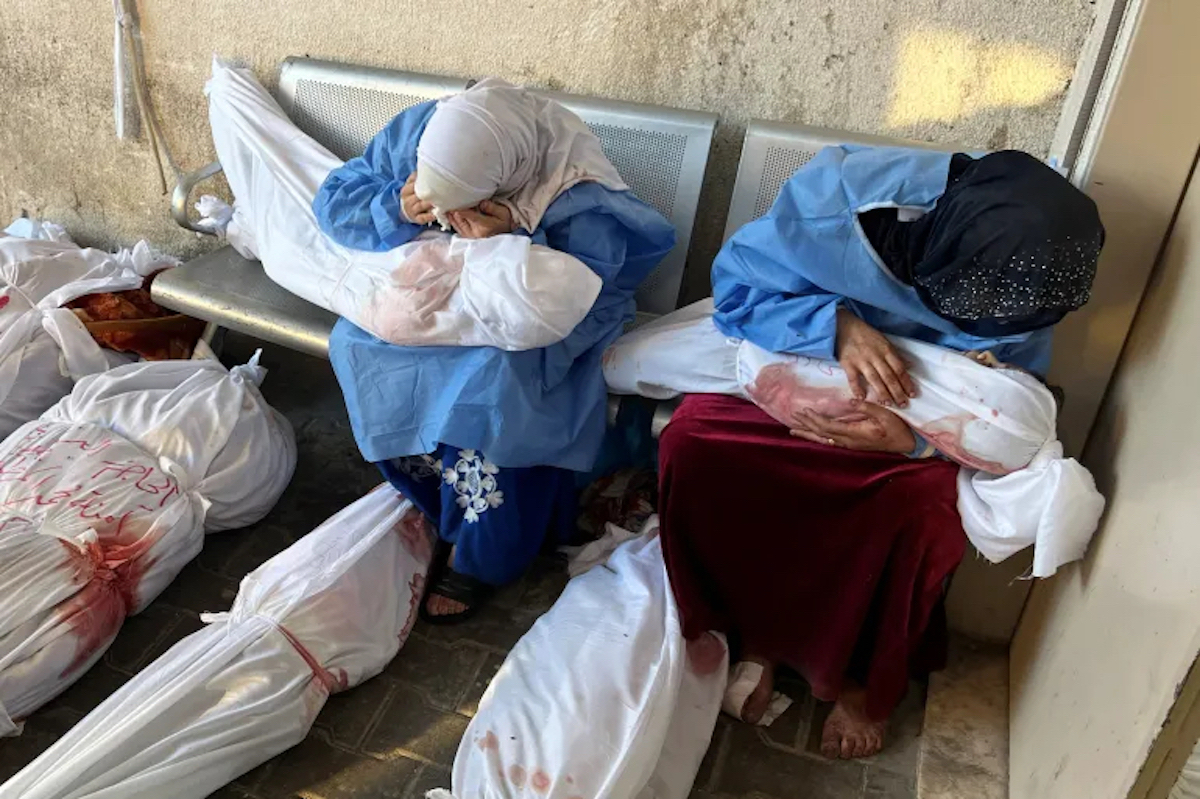
The nuclear file, pressing as it is, does not tell the full story. Since late December 2025, Iran has been convulsed by nationwide protests driven by economic desperation and political discontent. Iranian state media and human rights monitors have reported thousands killed in the subsequent crackdown, with some independent estimates running considerably higher. Trump has made the protests a second pillar of his pressure campaign, declaring the US “locked and loaded” if innocent demonstrators were harmed and warning Tehran that executing detained protesters would provoke a devastating American response.
His articulation of demands has been pointed in its simplicity: “Number one, no nuclear. And number two, stop killing protesters,” Trump has said publicly. Beyond these two stated priorities, Washington has also insisted – over Tehran’s categorical objections – that any comprehensive settlement must address Iran’s ballistic missile programme and its network of regional proxies, from Hezbollah in Lebanon to the Houthis in Yemen and aligned militias across Iraq and Syria.
For Iran, these are sovereign matters; for Washington, they are security imperatives. The gap between the two positions is not one of degree but of kind.
An ‘armada’ takes shape
Against this diplomatic backdrop, the physical dimensions of America’s military posture are striking by any historical measure. Multiple independent assessments describe the current build-up as the most substantial concentration of US naval and air power in the Middle East since the 2003 invasion of Iraq.
The centrepiece is naval. The nuclear-powered USS Abraham Lincoln carrier strike group – redirected from the South China Sea – has been operating in the northern Arabian Sea since the last week of January, its air wing comprising F/A-18E Super Hornets, F-35C Lightning II stealth fighters, EA-18G Growler electronic-warfare jets, and MH-60 Seahawk helicopters. Escorting the Lincoln are at least three Arleigh Burke-class guided-missile destroyers equipped with Tomahawk cruise missiles and Aegis air-defence systems, alongside additional cruisers and littoral combat ships based in Bahrain.
Then, on February 12, the Pentagon ordered the USS Gerald R Ford – the US Navy’s most advanced carrier – to redeploy from the Caribbean to the Middle East. The gigantic carrier crossed the Strait of Gibraltar on February 17, and analysts estimated it could reach operational strike range of Iran by approximately February 20. It is an exceedingly rare moment: two full US carrier strike groups operating simultaneously in the Middle East – a posture last seen during the Iraq War and briefly echoed during last year’s joint strikes on Iranian nuclear sites.
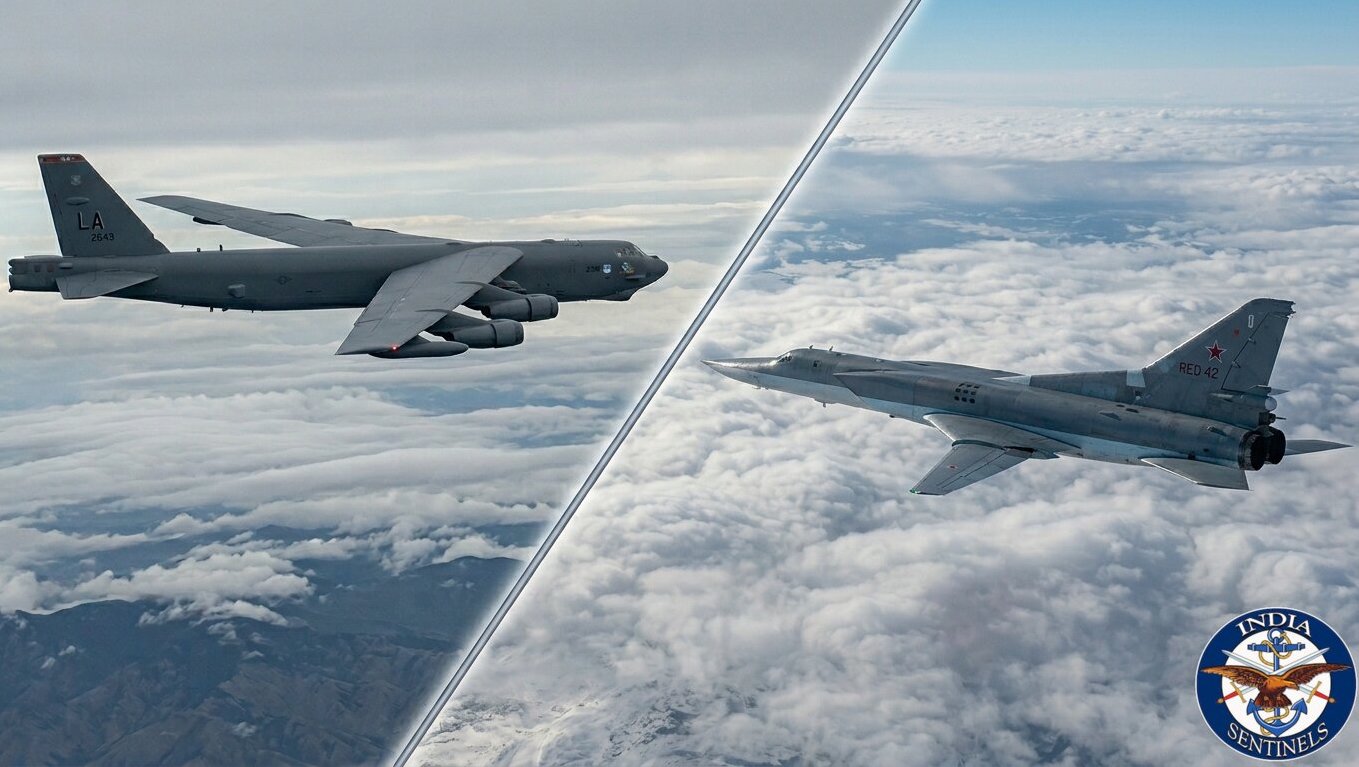
The air component is equally formidable. At least 50 additional combat aircraft – F-35s, F-22 Raptors, and F-16s – have been ordered into the region in recent days, supplementing hundreds already deployed to bases in Gulf states. A squadron of F-15E Strike Eagles has reinforced deep-strike capabilities, while long-range B-2 bombers remain on call from the continental United States, their reach demonstrated conclusively in Operation Midnight Hammer.
Numerous KC-135 tanker aircraft have been repositioned closer to the Gulf to sustain extended operations, and open-source flight tracking has recorded continuous tanker and airborne early-warning activity over the region. On the ground, an existing force of roughly 50,000 US troops is spread across bases in Gulf states, Iraq, and Jordan; some facilities have quietly begun evacuating non-essential personnel – a logistical signal that contingency planning is being operationalized rather than merely theorized.
The clock on the wall
Trump has never been shy about using time pressure as a diplomatic instrument. In late January and February, he escalated that approach into a formal ultimatum. Speaking at the inaugural meeting of his “Board of Peace” in Washington, on Thursday, he stated that Iran had “around 10 to 15 days” to conclude a meaningful nuclear agreement, warning that “really bad things” would follow otherwise.
On Air Force One, he told reporters: “We’re either going to get a deal or it’s going to be unfortunate for them.”
On the same day, media reports in the US indicated that the US military was prepared to strike Iran as early as the coming weekend, with the White House briefed that operational readiness could be achieved within days. No formal public deadline has been set – a deliberate ambiguity that allows Trump to retain flexibility while sustaining maximum pressure. Iran, meanwhile, has been asked to submit a detailed written proposal responding to concerns raised in the most recent Geneva talks, with US sources suggesting a roughly two-week window for the document.
Diplomacy that keeps flickering
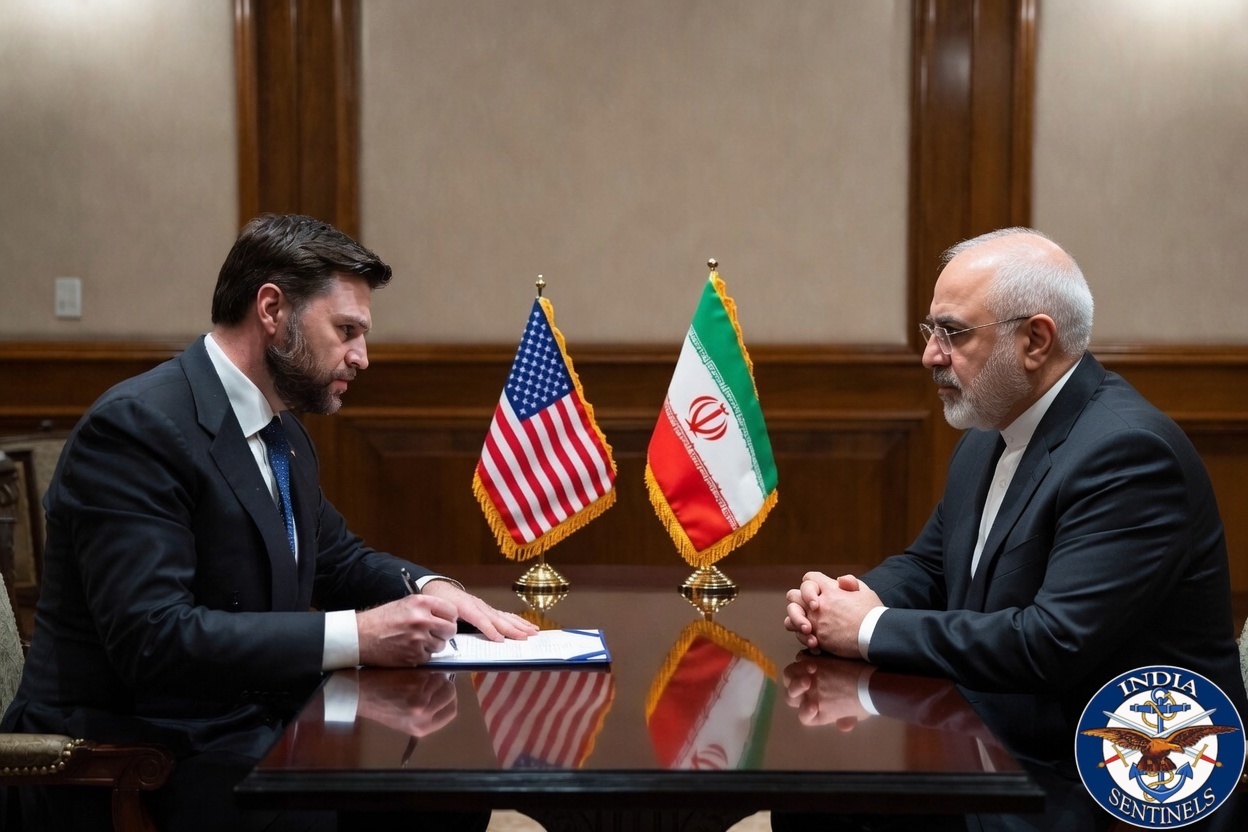
Negotiations have not collapsed entirely, although they have produced more frameworks than outcomes. A complex back-channel history stretches to early 2025, when Trump's special envoy, Steve Witkoff, and Iran's foreign minister, Abbas Araghchi, began indirect talks mediated by Oman.
Several rounds in Muscat, Rome, and elsewhere explored a three-phase Iranian proposal. This included temporarily lowering enrichment levels in exchange for frozen assets, halting high-level enrichment under intrusive inspection for further sanctions relief, and ultimately transferring highly enriched uranium abroad if the US Congress ratified a comprehensive agreement and removed all major sanctions.
The June 2025 strikes broke off those talks. They resumed cautiously in late 2025 and again on February 6, 2026, when delegations met indirectly in Muscat with Oman’s foreign minister, Badr bin Hamad al-Busaidi, as mediator.
A second round in Geneva followed, after which Araghchi announced that both sides had agreed on “guiding principles” for further nuclear discussions – though US officials privately characterized the progress as limited. The US secretary of state, Marco Rubio, is scheduled to meet the Israeli prime minister, Benjamin Netanyahu, on February 28 to coordinate next steps
The structural deadlocks are well-documented and profound: Washington insists on zero enrichment on Iranian soil; Tehran insists enrichment is its sovereign right. The US wants missiles and regional proxies on the agenda; Iran has said these are “never” negotiable. Washington wants front-loaded nuclear concessions before it eases sanctions; Iran wants tangible economic relief before making irreversible commitments.
These are not negotiating positions calibrated for compromise – they are, at present, incompatible demands dressed in diplomatic language.
Tehran’s defiance – and its limits
Iran has responded to the military pressure with characteristic duality: public defiance paired with conditional openness to talks. In a letter to the UN secretary general and the security council, Iran’s UN ambassador, Amir Saeid Iravani, warned that if the US launches strikes, “all bases, facilities, and assets of the hostile force in the region” would become “legitimate targets”. Araghchi has said Iran’s armed forces stand ready “to immediately and powerfully” counter any aggression, with “fingers on the trigger”.
The Islamic Revolutionary Guard Corps (IRGC) Navy has conducted live-fire exercises in and around the Strait of Hormuz – branded internally as "Smart Control of the Strait of Hormuz" drills – practising anti-ship missile launches and issuing rocket-fire warnings to civilian pilots. Iran's defence minister, Aziz Nasirzadeh, has stated that "all US bases in nearby countries are within reach" and would be struck if conflict begins, while Araghchi has sought to reassure regional governments by specifying that Iran's retaliation would focus on "US installations" rather than the sovereign territory of host nations.
Adding a new dimension to this strategic signalling, Iran and Russia announced joint naval exercises in the Sea of Oman in mid-February 2026. This was a calculated message about great-power backing that Moscow is unlikely to convert into direct military involvement.
Iran’s supreme leader, Ali Hosseini Khamenei escalated the rhetoric further, warning Trump that Iran possesses “the weapon to sink American warships” – a reference to its layered arsenal of coastal anti-ship missiles, fast-attack craft, naval mines, and armed drones designed precisely to threaten capital ships in the confined waters of the Gulf.
If war comes
Should diplomacy fail, the likely shape of Iranian retaliation follows a well-established doctrine of asymmetric escalation. Ballistic missiles and armed drones would almost certainly be directed at US bases across the Gulf, Iraq, and Jordan; Iranian officials have said so explicitly and repeatedly. Israel would be another primary target, its layered air-defence systems tested by missile salvos of a scale that could strain intercept stocks – as the 2025 12-day conflict with Israel demonstrated.
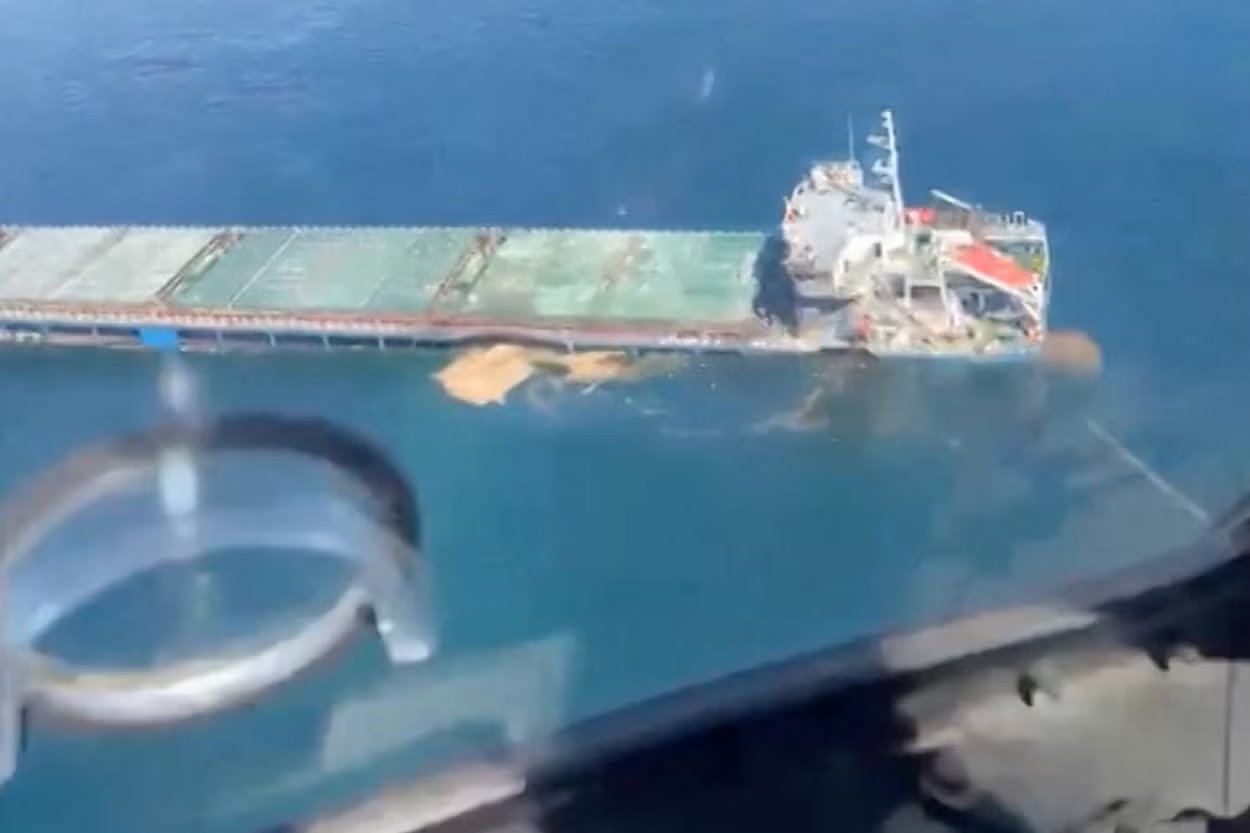
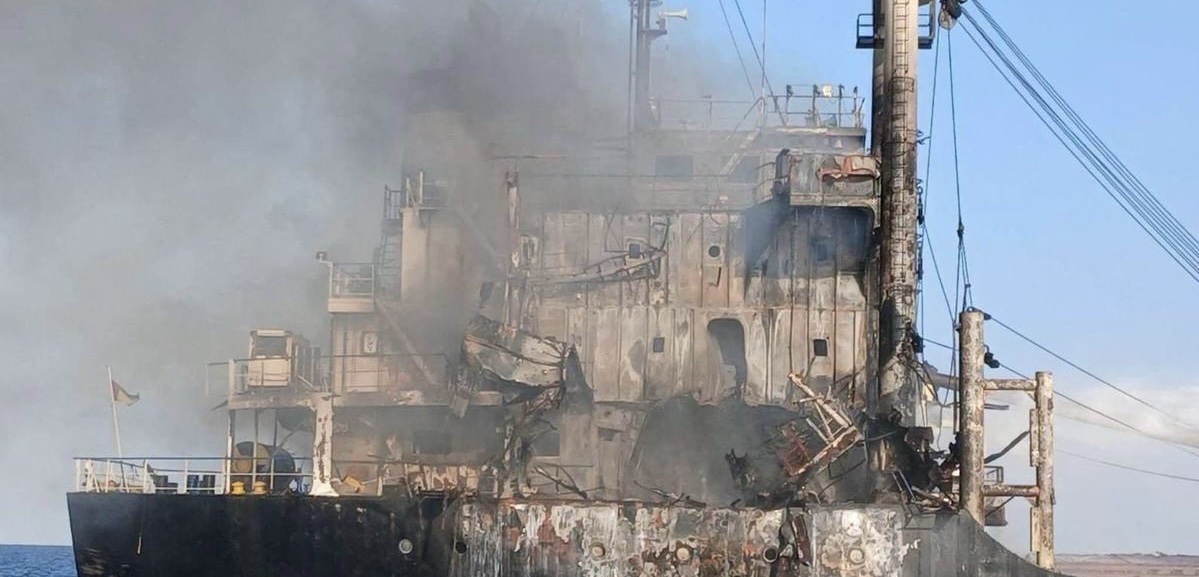
The Strait of Hormuz – through which roughly 20 per cent of global oil trade passes – would become a battlefield rather than a shipping lane. Iran’s asymmetric naval doctrine is built around using geography: fast-attack boats, swarm tactics, naval mines, and coastal anti-ship missiles to harass or disable vessels in narrow waters it knows intimately. While the US and its allies could not be denied passage indefinitely, Iran could inflict serious damage on shipping and produce intermittent closures sufficient to drive global oil prices sharply higher and paralyze insurance markets.
Beyond direct military action, Iran would activate its regional network. Hezbollah could fire precision missiles at Israeli targets; Iraq-based militias could attack US facilities with rockets and drones; and Houthi forces in Yemen could resume attacks on Red Sea shipping, as they have done periodically since 2023. Cyberoperations against energy infrastructure, financial systems, and government networks in the US, Israel, and Gulf states would likely accompany any kinetic campaign. It would not be a clean, short war.
Iran, however, is not without constraints. The 2025 strikes exposed real vulnerabilities in its air-defence network, and its conventional military is not equipped to match a sustained US power projection campaign. Years of crippling sanctions have produced deep economic strain, and the domestic protests – the very issue Trump has seized upon rhetorically – represent a fragility that prolonged war could dangerously aggravate. Tehran’s calculus will therefore be to retaliate hard enough to deter further strikes and demonstrate resolve, while stopping short of actions that could threaten the regime’s own survival.
In a theatre this complex, with this many actors, that calibration is extraordinarily difficult to maintain – and miscalculation, on either side, remains the single greatest danger.
Weight of the moment
As this article goes to the India Sentinels website, the informal clock Trump has set for Iran is ticking down its final hours. The USS Gerald R Ford is approaching operational range. Witkoff and Araghchi have exchanged “guiding principles” but no agreement. And hawkish voices in Washington are reportedly assessing the probability of conflict as high.
For India, a nation that imports significant volumes of Gulf oil, maintains a large diaspora in the region, and has deep diplomatic equities with both Iran and the United States, the stakes extend well beyond the immediate theatre. An oil shock triggered by even limited Strait of Hormuz disruptions would ripple immediately through Indian import bills and fuel prices. New Delhi will be watching these developments with the knowledge that the Middle East’s instability is never merely someone else’s problem.
The coming days will determine whether the world’s most powerful military and one of the region’s most experienced asymmetric adversaries find a path to a negotiated exit – or whether the largest American military concentration in the Middle East since Baghdad in 2003 transforms from a pressure instrument into a weapon of war.
Follow us on social media for quick updates, new photos, videos, and more.
X: https://x.com/indiasentinels
Facebook: https://facebook.com/indiasentinels
Instagram: https://instagram.com/indiasentinels
YouTube: https://youtube.com/indiasentinels
© India Sentinels 2025-26