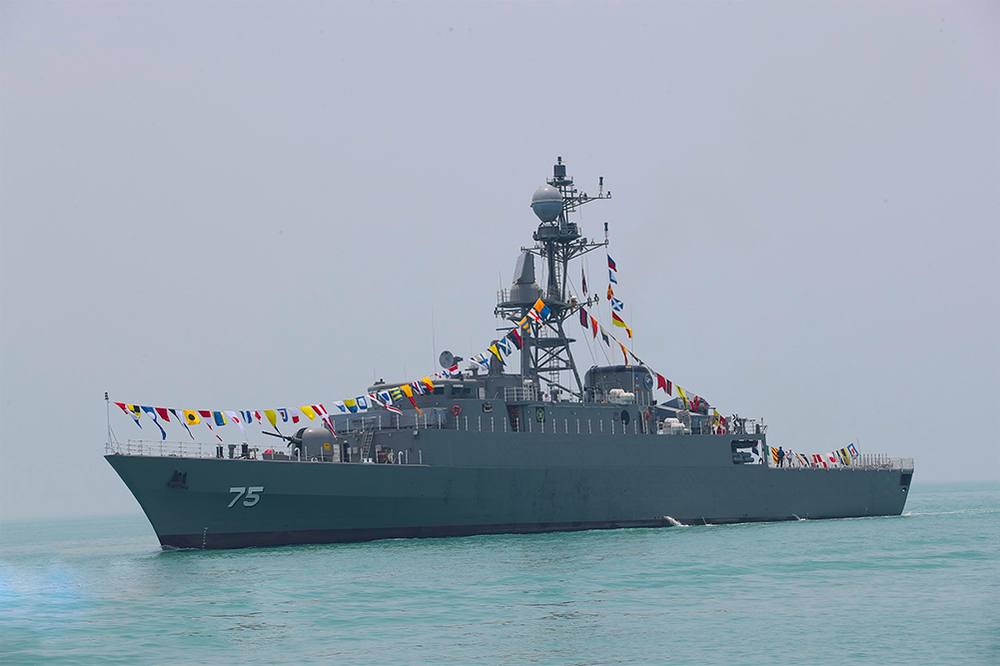
 IRIS Dena during her commissioning ceremony, in 2021. (Photo: Creative Commons/Wikipedia)
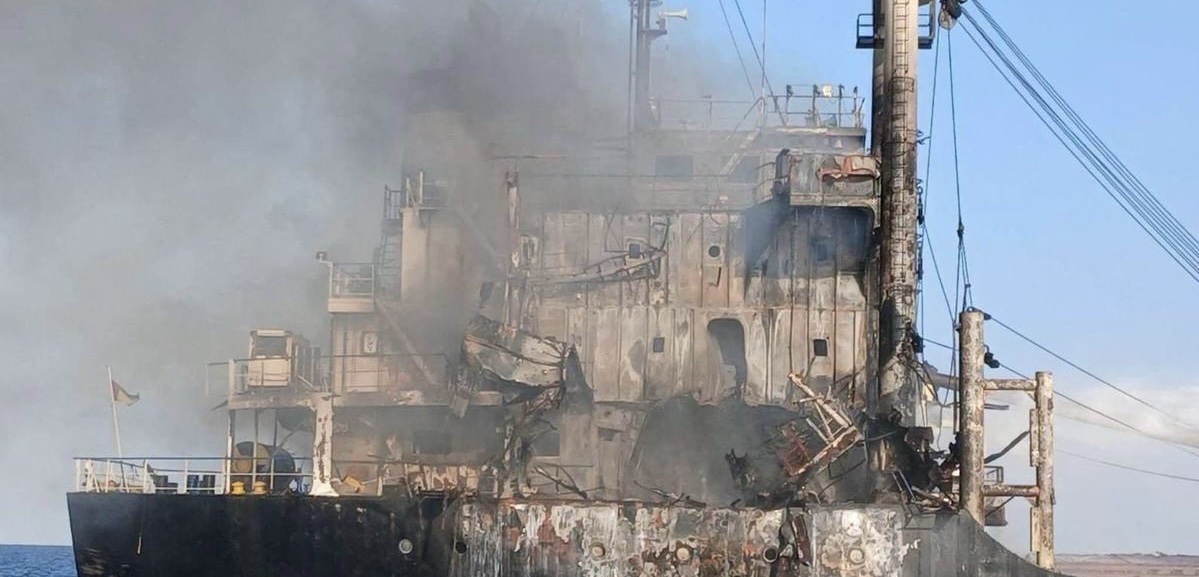
New Delhi: A torpedo fired by a United States Navy fast-attack submarine has sent the Iranian frigate IRIS Dena to the bottom of the Indian Ocean south of Sri Lanka, killing scores of sailors and thrusting the widening US & Israel-Iran war into India’s immediate maritime neighbourhood.
The ship – a modern Moudge-class warship that had been a guest of the Indian Navy barely a fortnight earlier – was homeward bound from Visakhapatnam when it was tracked and struck in waters that India regards as its strategic sphere of influence.
Torpedo strike at dawn
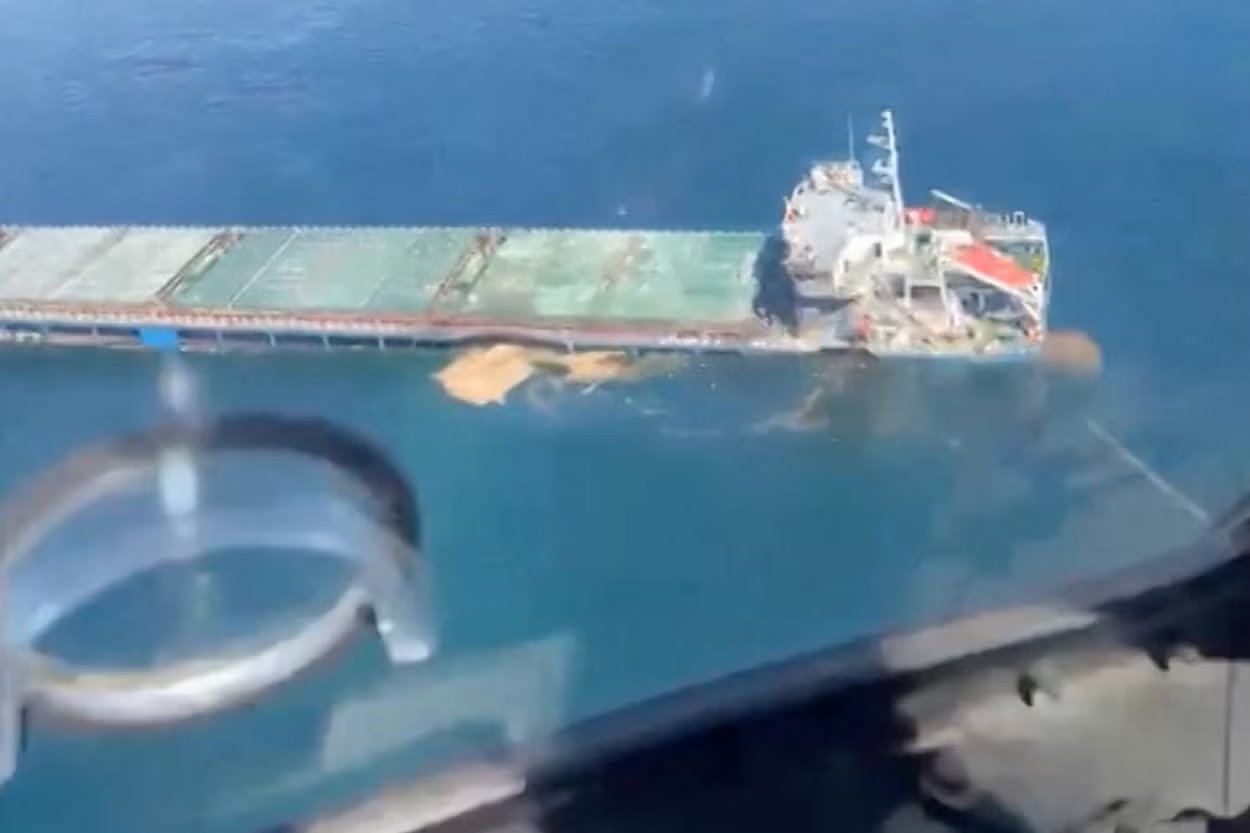
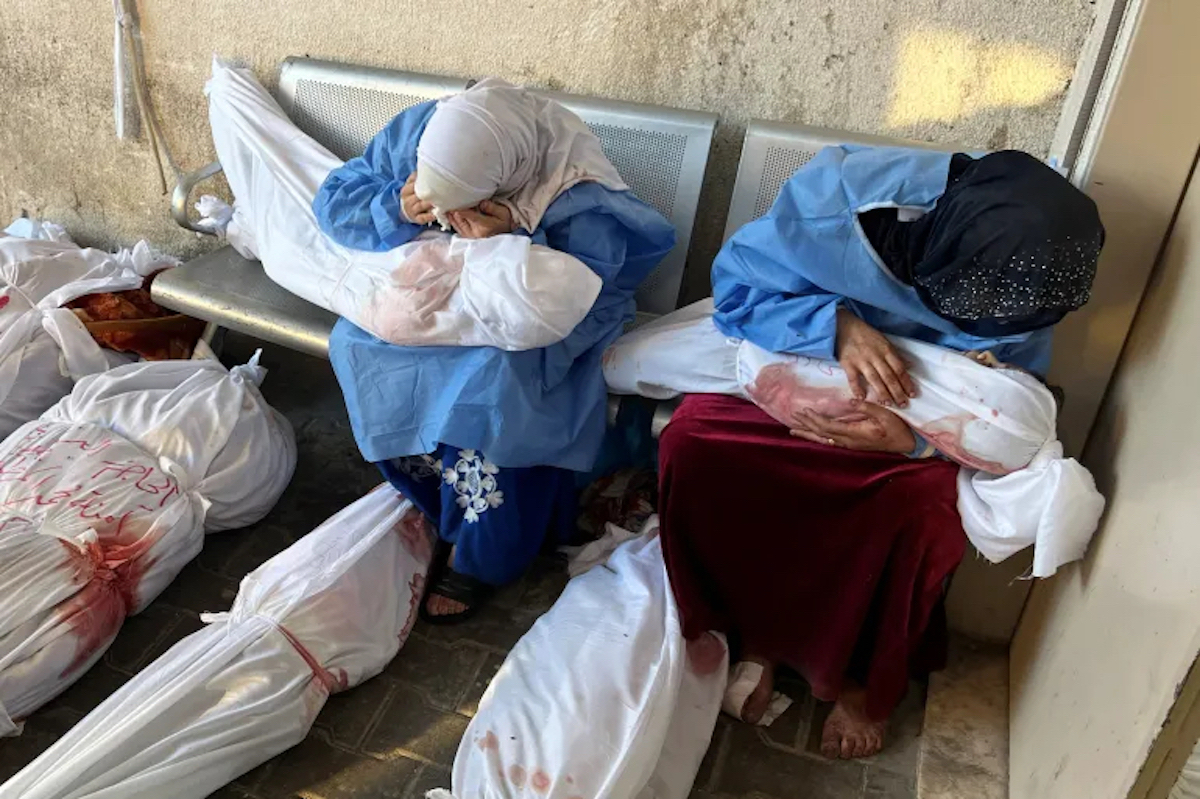
IRIS Dena issued a distress call at dawn on Wednesday, from a position roughly 40 to 44 nautical miles south of Galle – just outside Sri Lanka’s territorial sea but within its search-and-rescue zone under the UN Convention on the Law of the Sea. Sri Lanka’s navy and air force responded immediately, deploying ships and aircraft that pulled at least 32 badly injured sailors from the water and transferred them to hospitals in Galle. Of the roughly 180 personnel believed to have been aboard, more than 100 remain missing.
Sri Lanka’s foreign minister, Vijitha Herath, informed his country’s parliament of the casualty figures and confirmed that rescue operations were underway, with an oil slick and debris marking the site of the sinking. The Sri Lanka Navy spokesman, Commander Buddhika Sampath, was careful to note that the incident lay beyond Sri Lankan territorial waters, stressing that Colombo was acting under its international obligation to respond to vessels in distress – not as a party to the conflict.
Washington confirms ‘quiet death’
After a day of official ambiguity over the cause, the US secretary of defence, Pete Hegseth, publicly confirmed that an American submarine had carried out the attack. “An American submarine sunk an Iranian warship that thought it was safe in international waters … quiet death,” he said in Washington, adding that it was the “first sinking of an enemy vessel by a torpedo since World War II, which is not true. (In 1971, Pakistani submarine PNS Hangor torpedoed and sank Indian frigate INS Khukri during the Liberation War of Bangladesh, and in 1982, British sub HMS Conqueror torpedoed and sank Argentine cruiser ARA General Belgrano during the Falklands War.)
.@SECWAR “In the Indian Ocean—an American submarine sunk an Iranian warship, that thought it was safe in international waters.
— DOW Rapid Response (@DOWResponse) March 4, 2026
Instead, it was sunk by a torpedo—Quiet Death.
The first sinking of an enemy ship by a torpedo since World War 2. Like in that war—back when we were… pic.twitter.com/Y97YQBxQza
Pentagon briefings framed the strike as part of Operation Epic Fury – described as a sustained campaign to “decimate” Iran’s navy and eliminate its ability to threaten US and allied forces across the region.
US officials declined to identify the submarine, describing it only as a fast-attack boat that fired a single heavyweight Mark 48 torpedo and struck the frigate amidships. Unclassified footage of the strike was subsequently released by the Pentagon.
https://t.co/PiqQpVIrMu pic.twitter.com/Wc1e0B0um7
— Department of War ?? (@DeptofWar) March 4, 2026
IRIS Dena and its symbolic weight
The Islamic Republic of Iran Ship (IRIS) Dena was a Moudge-class frigate displacing approximately 1,300 to 1,500 tonnes, armed with surface-to-air and anti-ship missiles, naval guns and torpedoes, and fitted with an air-surveillance (ASR) phased-array radar and a helicopter deck. Commissioned as one of Iran’s more capable domestically built warships, she had taken part in extended oceanic deployments alongside the Iranian support ship Makran – a declaration of Tehran’s intention to project naval power well beyond the Persian Gulf. Her sinking ends that ambition, at least in symbolic terms.
Casualty estimates remain fluid. Sri Lankan and international reports converge on roughly 32 survivors rescued alive and between 80 and 100 sailors confirmed or feared dead, with over 100 still unaccounted for. Initial Sri Lanka Navy statements declined publicly to attribute the sinking to a submarine strike, even as unnamed defence sources told Reuters that they had concluded from the nature of the damage that a torpedo had struck the frigate’s mid-section.
From India’s fleet review to ocean floor
Just days before the attack, IRIS Dena had been among the foreign warships lined up in the Bay of Bengal for India’s International Fleet Review and Exercise Milan 2026 off Visakhapatnam. As India Sentinels had reported, the president, Droupadi Murmu, reviewed the assembled formation of more than 70 Indian and foreign vessels on February 18 from the presidential yacht INS Sumedha – a ceremony that drew navies from over 70 countries under the theme “United Through Oceans”.
The frigate participated in the sea phase of Milan 2026 before departing for Iran. That the same ship was subsequently tracked and sunk by a US submarine while transiting the Indian Ocean – in waters where India styles itself a “net security provider” – has added a charged dimension to New Delhi’s diplomatic calculations. It is also notable that the US Navy sent no ships to Milan 2026, even as Iran’s was among the foreign fleets present – a contrast that has not gone unnoticed in strategic circles.
India’s muted response under scrutiny
India’s government has confined itself to generic calls for “restraint” and “dialogue” since the US-Israel assault on Iran began on February 28. That reticence has drawn criticism from a broad spectrum of voices – retired military officers, opposition politicians, and independent analysts – who argue that New Delhi’s silence is disproportionate given the proximity of the sinking to Indian shores and the specific circumstances of IRIS Dena’s visit.
Former chief of naval staff, Admiral Arun Prakash (retired), described the torpedoing of IRIS Dena “off the southern tip of Sri Lanka, with heavy loss of life” as a “senseless and inflammatory act”, warning that opening a new maritime front would spread alarm on the high seas and disrupt global shipping. Other Indian commentators on security and geopolitics called it a serious escalation of the Iran crisis into the Indian Ocean, noting that the ship was torpedoed close to Indian territorial waters while returning from a formal Indian-hosted exercise.
Strategic analyst Zorawar Daulet Singh argued that Iranian missile activity had pushed US naval forces progressively closer to Indian waters, and warned that the Logistics Exchange Memorandum of Agreement (LEMOA) risked drawing New Delhi into what he characterised as an “aggressive and unprovoked intervention” if the government failed to act independently.
Senior Congress spokesman Pawan Khera asked on X whether the sinking of a ship returning from India’s own fleet review meant that New Delhi had effectively ceded its maritime neighbourhood to “Washington and Tel Aviv”. Recently, the Congress parliamentary party chairperson, Sonia Gandhi, in a widely cited article, had warned that India’s silence on the killing of Iran’s supreme leader, Ali Hosseini Khamenei, raised “serious doubts” about the direction of the country’s foreign policy.
Sri Lanka’s cautious words
Sri Lanka has fulfilled its search-and-rescue obligations while studiously avoiding direct accusations against Washington. Colombo has offered no public assessment of the strike beyond casualty figures and rescue updates, with officials signalling that any wider response will be calibrated to its non-aligned foreign policy posture and acute economic vulnerabilities. Iranian diplomats in Colombo have demanded an explanation from Sri Lankan authorities, and are expected to frame the sinking as evidence that Washington is prepared to pursue Iranian naval assets far beyond the Gulf – including in waters adjacent to South Asia.
Persian Gulf war reaches Indian Ocean
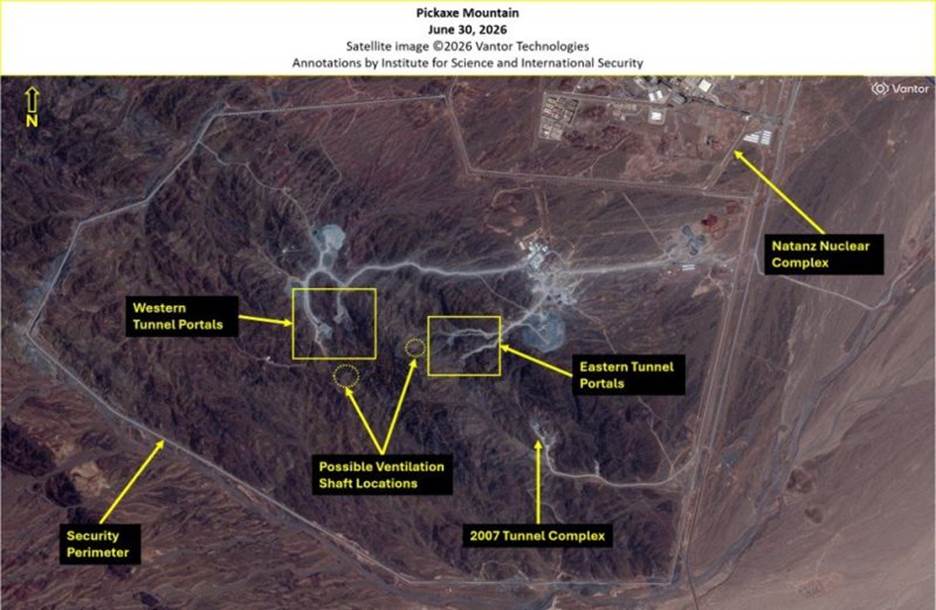
The sinking of IRIS Dena is one episode in a rapidly escalating conflict that began on February 28, as India Sentinels reported, when the US and Israel launched coordinated, large-scale strikes on Iran’s leadership, missile forces and air-defence network. US bombers, cruise missiles and Israeli fighter jets struck hundreds of targets across western and central Iran, hitting command-and-control centres, ballistic missile sites and facilities linked to the nuclear and drone programmes.
Iran’s supreme leader, Ayatollah Ali Khamenei, was killed in these strikes along with senior IRGC commanders. Tehran declared 40 days of mourning and vowed “intelligent and proportionate” retaliation.
Iran has since fired salvos of ballistic missiles and Shahed-series attack drones at Israel, US bases and Gulf Arab states, targeting ports, airports, and energy infrastructure. While US and Israeli air-defence systems claim to have intercepted the bulk of these projectiles, confirmed hits have caused deaths and damage in Israel, Bahrain, the United Arab Emirates, and Saudi Arabia.
Tehran has also declared the Strait of Hormuz closed, threatening to strike any vessel attempting passage – a move that has already sharply reduced traffic through the chokepoint and rattled global oil markets. US Central Command says Operation Epic Fury has struck nearly 2,000 targets in under 100 hours, sinking more than a dozen major Iranian naval units in the process.
For India – home to millions of citizens in the Gulf, deeply dependent on West Asian energy supplies, and increasingly assertive about its maritime role in the Indian Ocean – the combination of a choked Hormuz, sustained missile exchanges, and now a torpedo strike near Sri Lanka compresses the distance between this war and India’s core national interests to a degree that generic calls for calm cannot adequately address.
Follow us on social media for quick updates, new photos, videos, and more.
X: https://x.com/indiasentinels
Facebook: https://facebook.com/indiasentinels
Instagram: https://instagram.com/indiasentinels
YouTube: https://youtube.com/indiasentinels
© India Sentinels 2025-26