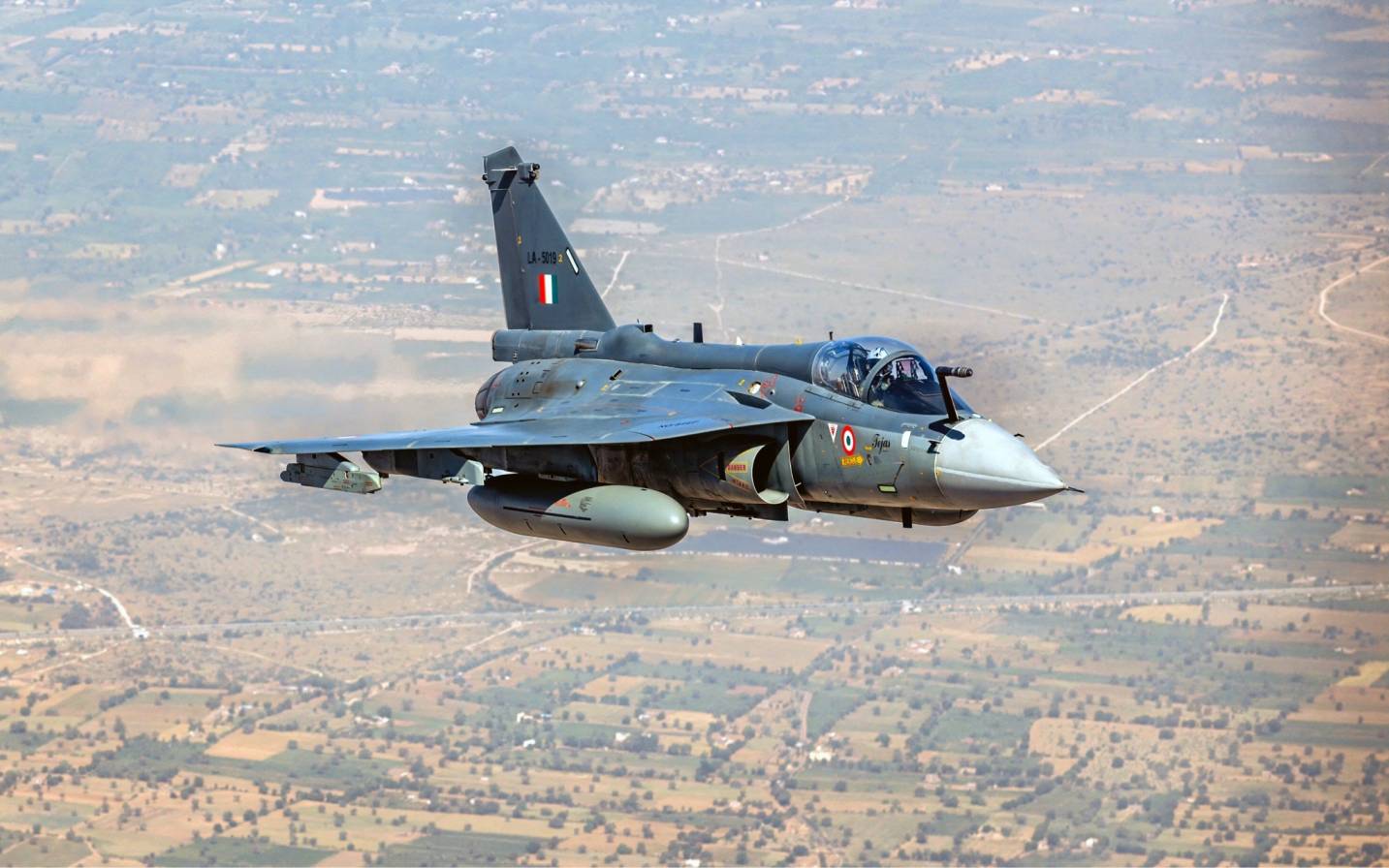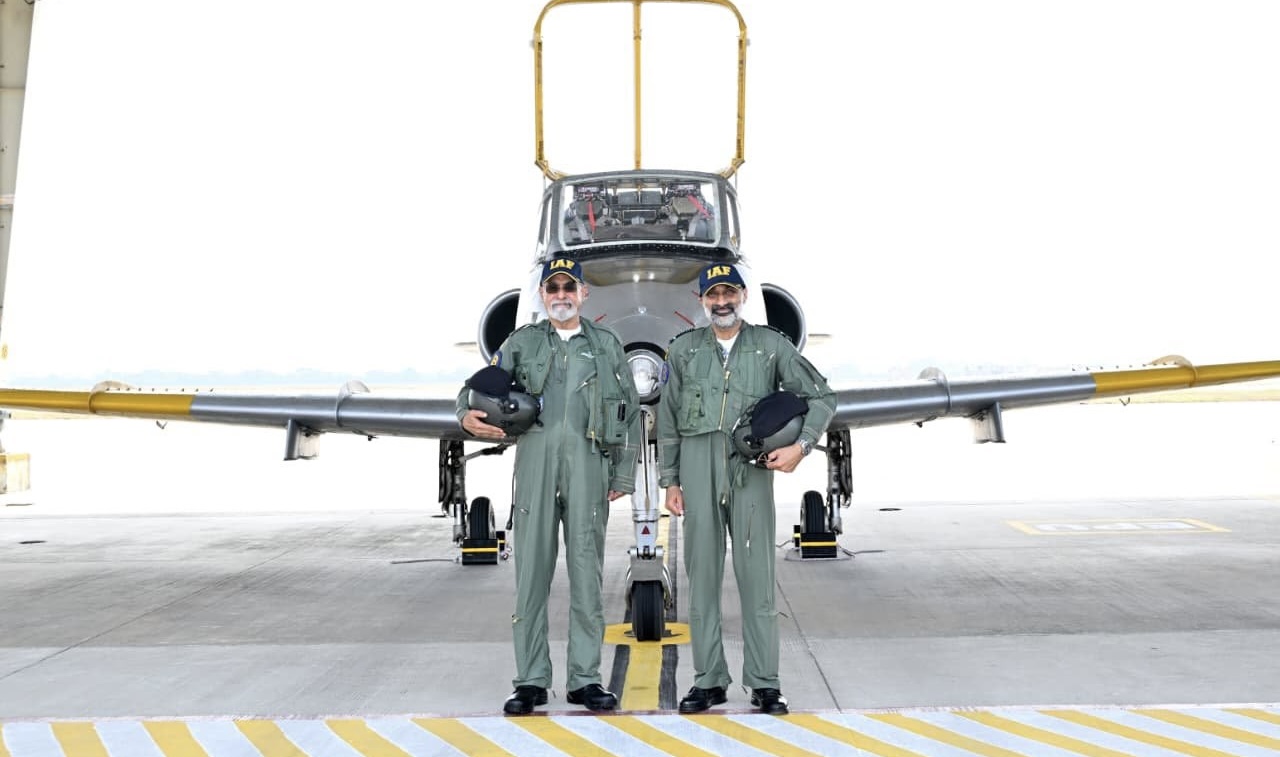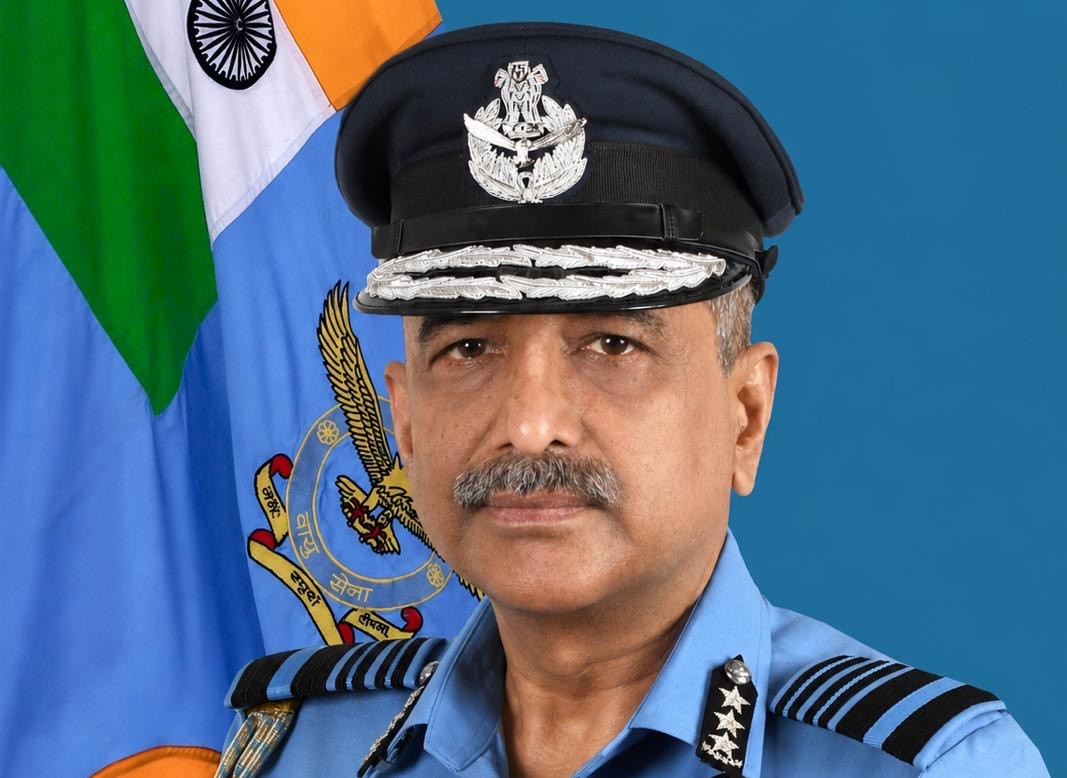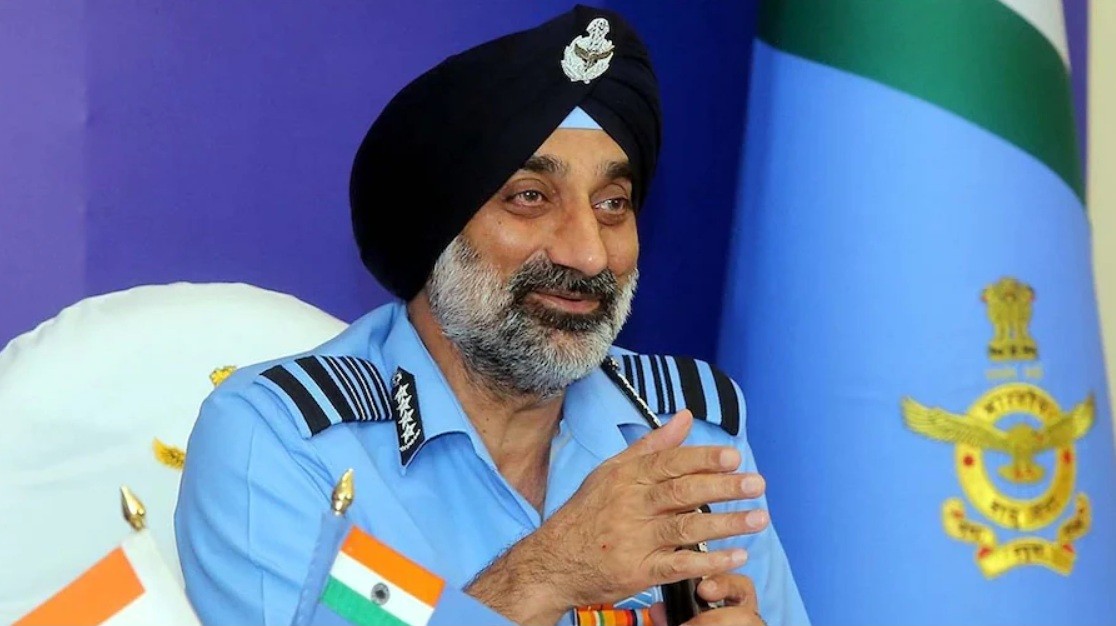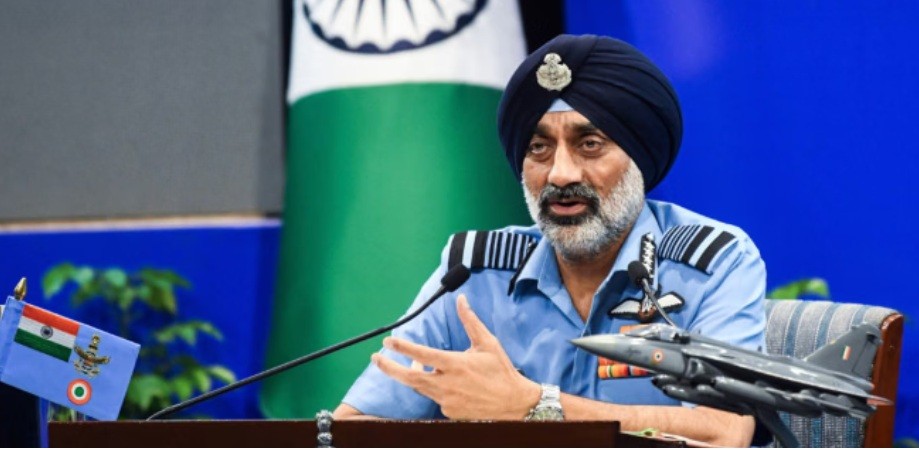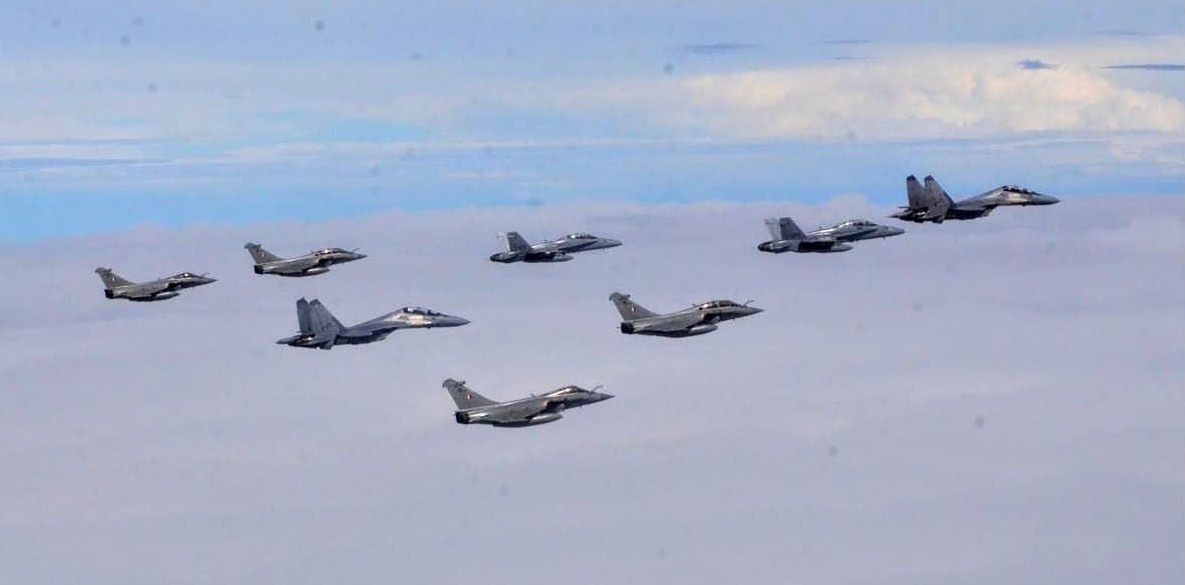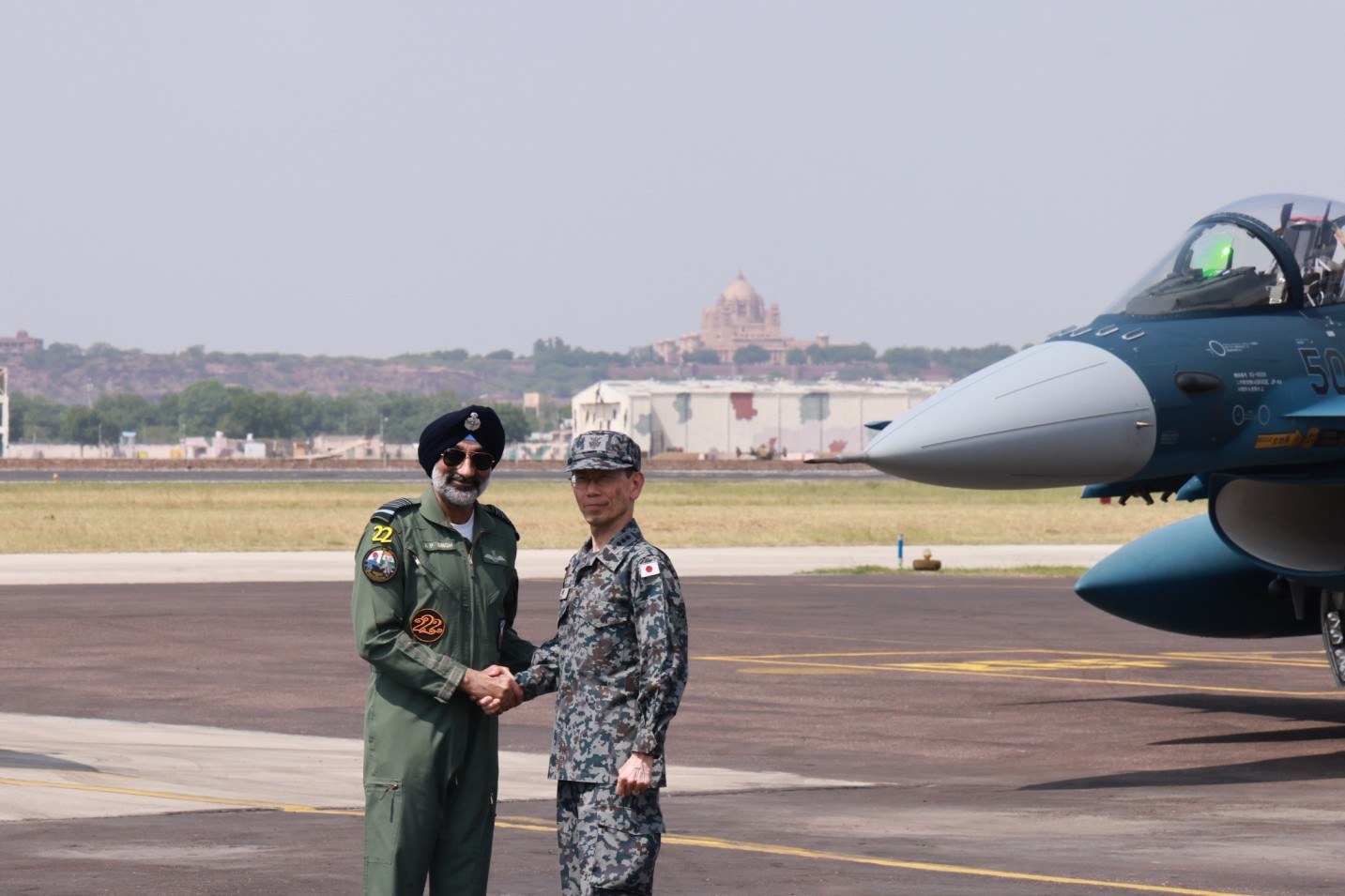
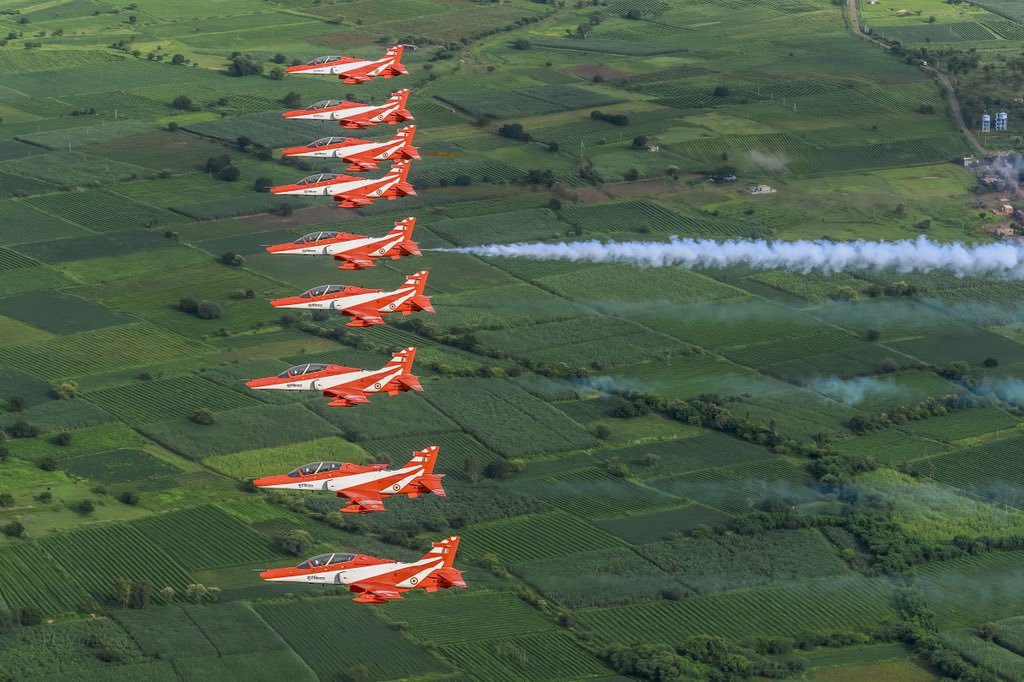
New Delhi: The chief of the air staff, Air Chief Marshal Amar Preet Singh, is expected to fly with the Surya Kiran Aerobatic Team (SKAT) on Tuesday, a symbolic gesture marking three decades since the Indian Air Force’s premier display squadron was raised at Bidar Air Force Station, Karnataka, on Wednesday. The anniversary follows a string of milestones: earlier this year, the team completed its 800th display at Wings India in Hyderabad and, in March, conducted its first aerobatic show over the Himalayas.
Together, they underline the pace at which SKAT has expanded its operational and display footprint.
Surya Kiran is one of only a handful of nine-aircraft aerobatic formations in the world and the only one in Asia. Its pilots fly the Hawk Mk-132 advanced jet trainer – licensed and manufactured by Hindustan Aeronautics Limited (HAL) at separations of less than five metres during complex manoeuvres, a margin that leaves virtually no room for error.
The team today
The squadron is currently commanded by Group Captain Ajay Dasarathi, a Su-30MKI pilot and qualified flying instructor, with Wing Commander Tejeshwar Singh as deputy leader. It draws its 13 pilots from a cross-section of the IAF’s frontline flying streams.
Read also: IAF Surya Kiran mesmerizes Patna on 1857 unsung hero – Veer Kunwar Singh’s birth anniversary
The display routine includes loops, barrel rolls, diamond formations, crossovers and the signature heart-shaped manoeuvre, all flown at altitudes between 100 and 1,000 feet.
The Hawk jets carry indigenous smoke pods developed at the IAF’s Base Repair Depot in Nashik, enabling the team to trail saffron, white and green smoke – the tricolour written across the sky.
A platform with teeth
The Hawk Mk-132, though best known in India through its aerobatic role, is no lightweight display aircraft. It carries a secondary weapons-training capability and can be loaded with up to 3,000 kg of bombs, rockets and missiles, in addition to a 30mm cannon. The aircraft can reach speeds of up to Mach 1.2, placing it in a category above most advanced jet trainers used globally for aerobatic performances.
Read also: Group Captain Anoop Singh, new Surya Kiran CO, talks about his team and its future
Three decades of flying diplomacy
SKAT made its public debut in September 1996 at Coimbatore, just months after being raised. Its first international outing came in 2001, over Colombo, Sri Lanka. Since then, international deployments have taken the team to the UAE, Thailand, Laos, Malaysia, Myanmar and China. A particularly notable chapter was the team’s appearance at the Dubai Air Show, where it flew alongside the Saudi Hawks, Russia’s Russian Knights and the UAE’s Al Fursan – a rare occasion on which Indian aerial precision was measured against some of the finest display teams in the world.
At home, the team’s most striking performance remains an aerial display over Chennai that drew an estimated 1.7 million spectators along the coastline. More recently, SKAT performed at Sukhna Lake in Chandigarh, trailing tricolour smoke through formations including the Tejas and Yuva sequences.
From Kiran to Hawk
The team was formally designated 52 Squadron, “Sharks”, in May 2006, inheriting the legacy of a former MiG-21 FL unit. It had originally flown the HAL Kiran Mk-II trainer – the aircraft from which its name, Surya Kiran (Rays of the Sun), was drawn. When the Kiran fleet was retired, the team went into a brief hiatus before being revived in 2015 with the Hawk Mk-132.
As the squadron marks three decades on Tuesday, its motto – “Sadaiva Sarvottam” (Always the Best) – will be tested once more, this time with the air chief watching from the cockpit rather than the ground.
Follow us on social media for quick updates, new photos, videos, and more.
X: https://x.com/indiasentinels
Facebook: https://facebook.com/indiasentinels
Instagram: https://instagram.com/indiasentinels
YouTube: https://youtube.com/indiasentinels
© India Sentinels 2026-27