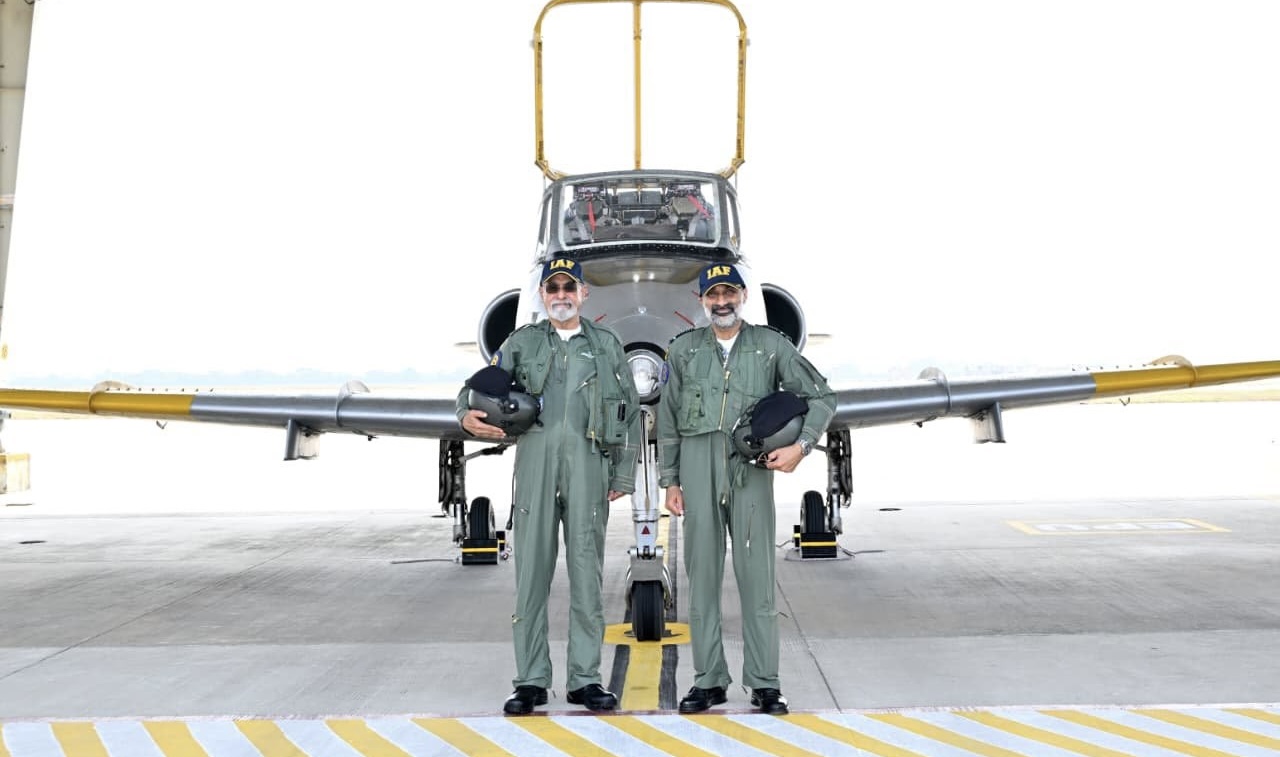
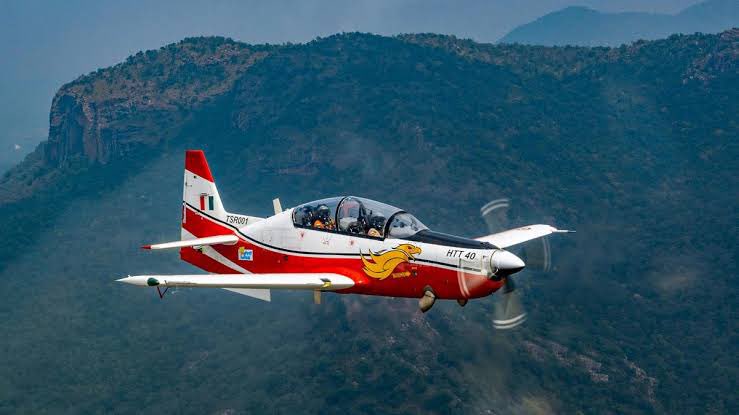
 HTT-40 trainer aircraft (File photo)
New Delhi: A United States aerospace firm – Honeywell – has finally begun delivering engines for India’s indigenous basic trainer aircraft after prolonged supply chain disruptions, but the delays have already dented the Indian Air Force’s (IAF) pilot-training schedule and the damage is far from over.
The American industrial conglomerate has delivered the first three TPE331-12B turboprop engines to Hindustan Aeronautics Limited (HAL) at its facility in Bengaluru, officials familiar with the matter said. The US firm has also assured the state-owned aerospace manufacturer of regular future deliveries.
The development comes after a significant slippage. Under a roughly $100-million contract signed nearly four years ago for the supply and licensed manufacture of 88 TPE331-12B engines and component kits, Honeywell was obligated to deliver the first engine in September 2025. The company missed the deadline.
The remaining engines are now expected to arrive at the rate of two units a month.
The HTT-40 (Hindustan Turbo Trainer-40) programme has been caught in a bind since the IAF placed a ₹6,838-crore order for 70 basic trainer aircraft three years ago. HAL was contractually required to deliver 12 of those aircraft to the air force in fiscal year 2025-26. It has not delivered a single one, solely because engines were unavailable.
“HAL aims to fast-track aircraft deliveries as engine supplies stabilise,” an official said.
The HTT-40 is a tandem-seat, turboprop trainer designed for Stage-I, or ab initio, flying instruction. It features an air-conditioned cockpit, modern avionics, hot-refuelling capability – meaning it can be refuelled with the engine running on the ground – and zero-zero ejection seats that allow safe ejection even at very low speeds and altitudes.
The aircraft currently carries 56 per cent indigenous content, which HAL intends to raise to above 60 per cent through further localisation of major components and subsystems.
Two series-production HTT-40s are currently flying, though with Category B – effectively used – TPE331-12B engines that were first fitted to the prototype aircraft, rather than freshly manufactured units.
To scale up output, HAL inaugurated new production lines for the HTT-40 at its Nashik facility in October last year. The defence minister, Rajnath Singh, presided over the ceremony, which also included the launch of production lines for the Light Combat Aircraft Mk-1A. HAL now says it has the capacity to produce up to 20 HTT-40s annually across its plants in Bengaluru and Nashik.
The urgency is sharpened by the IAF’s reliance on ageing and foreign-origin training aircraft. At present, all rookie pilots undergo Stage-I flying training on the Swiss-made Pilatus PC-7 MkII basic trainer. After completing Stage I, pilots are streamed into fighter, transport, or helicopter tracks. Those on the fighter track proceed to Stage-II training on the PC-7 MkII and the Kiran Mk-1A jet trainer, followed by Stage-III instruction on the British-origin BAE Systems Hawk advanced jet trainer before they qualify to fly supersonic combat aircraft.
Pilots heading to transport or helicopter roles follow different Stage-II and Stage-III tracks on the relevant aircraft types.
India’s dependence on the PC-7 MkII is itself a consequence of earlier procurement difficulties. In July 2019, the defence ministry suspended business dealings with Pilatus Aircraft Limited of Switzerland for one year after the company was found to have violated a pre-contract integrity pact in a ₹2,900-crore deal covering 75 basic trainers. Indian investigative agencies also examined the firm over alleged corruption and financial irregularities. The suspension effectively froze a follow-on clause in the Pilatus contract that would have allowed India to buy an additional 38 aircraft.
The HTT-40 was conceived partly to end that foreign dependency. But with engine supplies only now stabilizing, the air force will have to wait longer than planned before its newest basic trainer begins replacing imported platforms in any meaningful numbers.