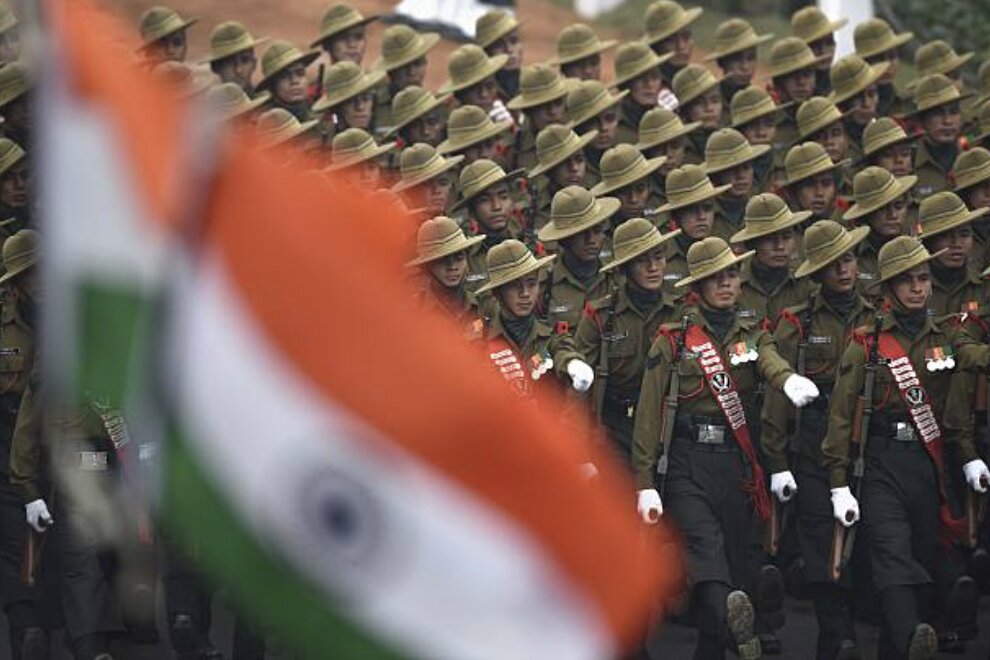
 A Gorkha Rifles contingent marching on an Independence Day in New Delhi. (File photo)
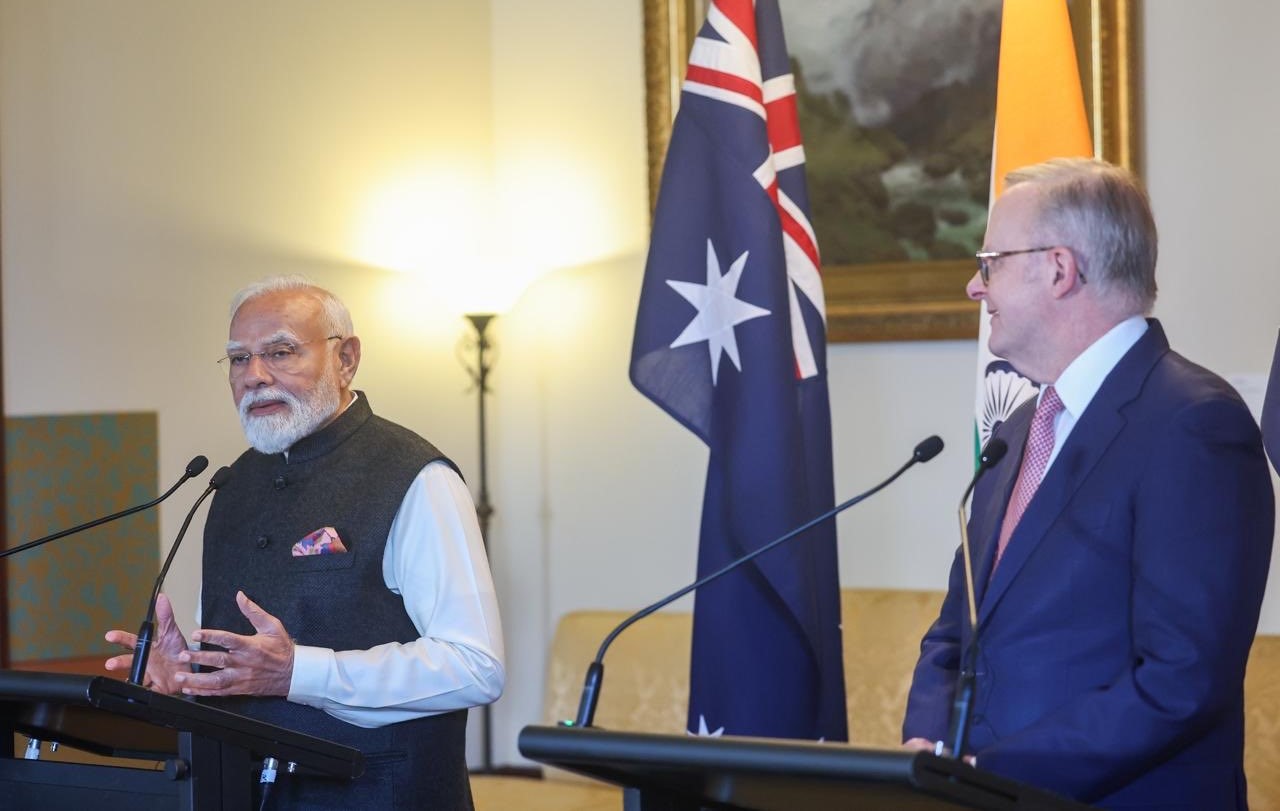
New Delhi: Nepal’s visiting foreign minister, Shisir Khanal, has said that if India wishes to resume talks on Nepal’s suspension of Gorkha recruitment into the Indian armed forces under the Agnipath scheme, Kathmandu is willing to engage. As India Sentinels had reported then, Nepal stopped its citizens from enlisting in the Indian armed forces in June 2022 following the implementation of the scheme in which soldiers are recruited as Agniveers.
The decision has especially affected recruitment drives for the Army’s Gorkha regiments.
Replying to a reporter’s question, Khanal said, “The recruitment used to be done through a tripartite agreement. In the most recent conversations, we have not gone into those dialogues and discussions.” He added, “When the government of India feels it’s necessary, again like any other issue, we are happy to sit at the table and take up these issues as well.”
The Army has seven Gorkha regiments – 1 Gorkha Rifles, 3 Gorkha Rifles, 4 Gorkha Rifles, 5 Gorkha Rifles, 8 Gorkha Rifles, 9 Gorkha Rifles, and 10 Gorkha Rifles – comprising approximately 39 active battalions. These regiments have an estimated combined strength of between 32,000 and 40,000 soldiers.
Gorkha soldiers in the Indian armed forces, particularly in the Army, send significant remittances back to their families in Nepal, most of whom live in rural, underdeveloped, and economically poor regions. Even retired soldiers bring in revenue through pensions paid by India. Hundreds of Nepalese villages are sustained through this arrangement.
What is the tripartite agreement?
The pact – officially titled the Tripartite Agreement Between the Government of the United Kingdom, the Government of India, and the Government of Nepal Regarding the Future Employment of Gurkha Troops in the British and Indian Armies – was signed on November 9, 1947, three months after Independence. The agreement was drafted to divide the existing 10 Gurkha regiments of the British Army and Indian Army under the British government between two newly separate entities: the British Army under the British government and the Indian Army under the newly independent Indian government.
The treaty split the 10 regiments. Four – the 2nd, 6th, 7th, and 10th Gurkha Rifles – were assigned to the British Army. The remaining six – the 1st, 3rd, 4th, 5th, 8th, and 9th Gurkha Rifles – were transferred to the independent Indian Army.
A key clause of the agreement guarantees that Gorkha soldiers serve on terms that are not disadvantageous compared to Indian soldiers. They are entitled to equitable treatment on basic pay, allowances, promotions, leave, and retirement benefits – ensuring that Nepalese citizens are treated as regular professional soldiers, not foreign mercenaries.
The agreement also ensures that Gorkhas retain their Nepalese citizenship and national identity. It stipulates that they cannot be integrated into foreign armies in a manner that completely severs their cultural or national ties, and they are entitled to regular leave to return home to Nepal.
Why Nepal halted Gorkha recruitment
Nepal holds that the four-year, contractual nature of the Agnipath recruitment scheme violates the 1947 tripartite agreement, under which the three countries agreed that Nepalese soldiers would continue to be recruited into the Indian Army on the same terms as during British rule.
Kathmandu also argues that the scheme leaves young Gorkha soldiers financially and socially vulnerable. Under the earlier system, Gorkhas served a minimum of 15 years and retired with a lifelong pension. Under the Agnipath scheme, 75 per cent of Agniveers are released after just four years with a lump sum, and no pension or gratuity benefits. Since pensions from retired Gorkha soldiers are a significant and steady driver of Nepal’s rural economy, Kathmandu contends that releasing young men after four years strips communities of long-term financial security.
Nepal also raises a security concern: thousands of weapons-trained young men returning home at the age of 21 to 23, without stable long-term employment, could pose an internal security risk or be vulnerable to radicalization and recruitment by external mercenary groups.
As a result, since August 2022, Nepal has maintained a firm suspension of all Indian Army recruitment rallies on its soil. While New Delhi has maintained that the Agnipath scheme is a universal policy applicable to all recruits, negotiations remain deadlocked – leaving historic vacancy slots in the Indian Army’s Gorkha regiments unfilled.
Follow us on social media for quick updates, new photos, videos, and more.
X: https://x.com/indiasentinels
Facebook: https://facebook.com/indiasentinels
Instagram: https://instagram.com/indiasentinels
YouTube: https://youtube.com/indiasentinels
© India Sentinels 2026-27