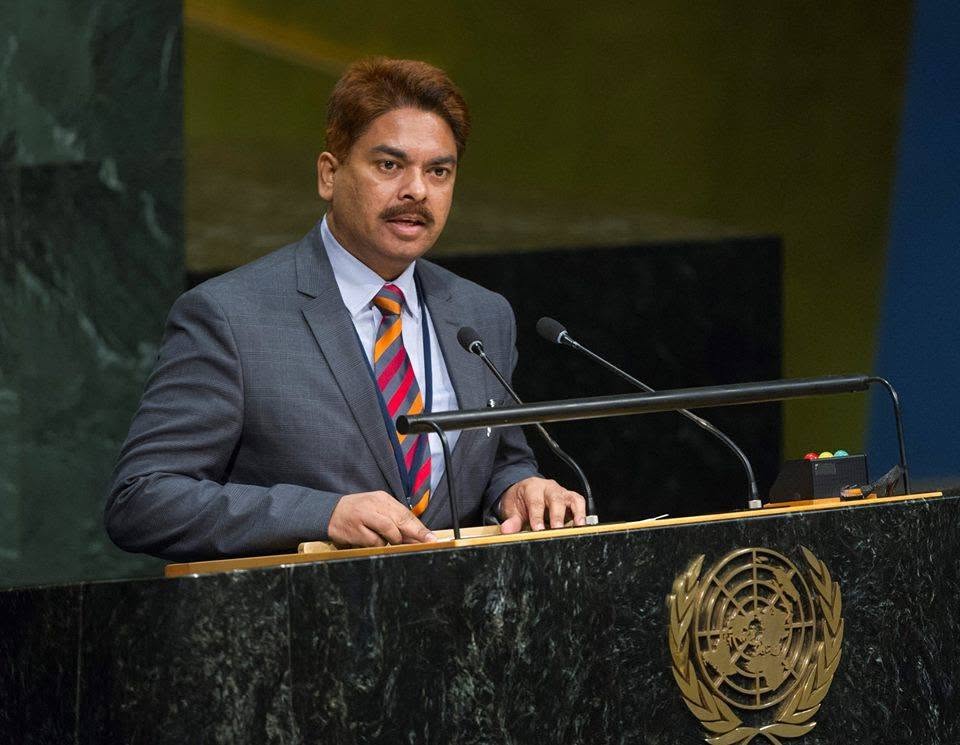
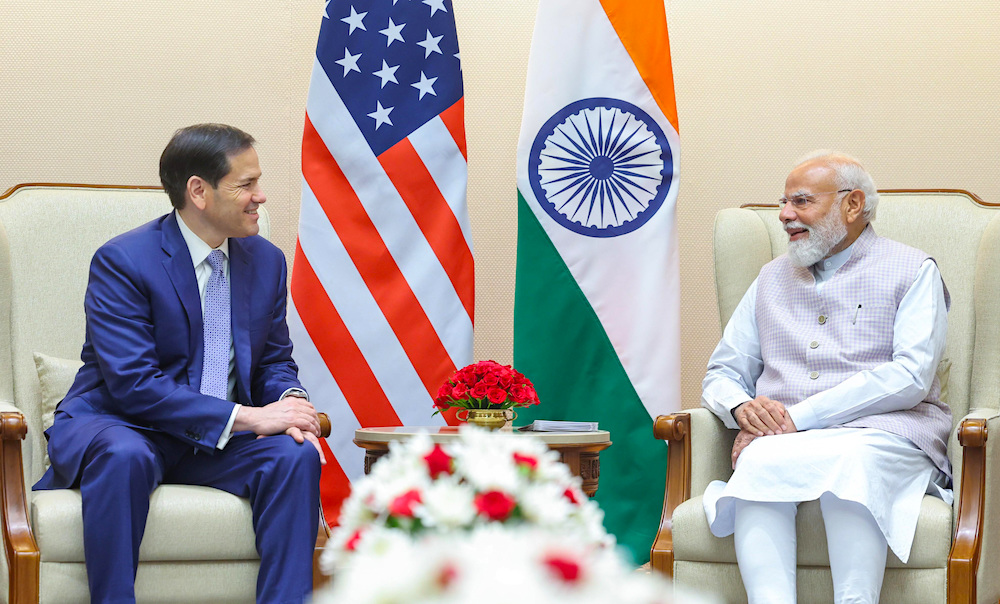
 Marco Rubio (L) with Narendra Modi in New Delhi, on May 23, 2026. (Photo: X/@SecRubio)
New Delhi: The US secretary of state, Marco Rubio, arrived in India on Saturday on a high-stakes visit intended to reinforce a strategic partnership that has been under visible strain – battered by trade disputes, steep tariffs, and the unsettling unpredictability that has marked the Donald Trump administration’s approach to longstanding alliances. The four-day engagement is being closely watched in both New Delhi and Washington as an attempt to stabilize ties ahead of a crucial Quad foreign ministers’ meeting in the national capital.
After landing in New Delhi, Rubio went straight to meet the prime minister, Narendra Modi, and held extensive discussions with the foreign minister, S Jaishankar. According to Indian and American officials, the talks spanned strategic cooperation in the Indo-Pacific, defence collaboration, trade, energy security, emerging technologies, and regional security challenges – including China’s growing assertiveness and the deepening instability across West Asia.
In what is being seen as one of the more consequential gestures of the visit, Rubio conveyed a personal invitation from the president of the United States, Donald Trump, for Modi to visit the White House in the near future. Rubio emphasized the importance Washington places on its partnership with India, describing the relationship as vital for regional stability and global strategic balance.
However, some geopolitical observers saw Rubio meeting the prime minister straight and holding talks with him as ignoring diplomatic protocol. Well-known geopolitical expert and commentator Brahma Chellaney, in a post on X [archived link], said: “Protocol Turned Upside Down: Marco Rubio, after arriving in New Delhi, bypassed the standard diplomatic protocol.”
“Normally, a visiting foreign minister first holds substantive, working-level bilateral talks with the host foreign minister, where the actual negotiations and heavy lifting occur. Only afterward does the visiting minister ‘call on’ the head of government – a largely ceremonial meeting meant to convey leadership messages, provide photo-ops and formally endorse what was already discussed with the counterpart,” Chellaney added.
Repairing strained ties
The visit comes at a sensitive moment in India–US relations. Bilateral ties, which had steadily strengthened over two decades, suffered a visible jolt after Trump imposed steep tariffs on Indian exports over New Delhi’s continued purchases of Russian crude oil. In some sectors, tariff levels reportedly touched 50 per cent, triggering alarm within Indian industry and diplomatic circles alike.
Analysts in both countries view Rubio’s visit as part of a broader US effort to repair the relationship before strategic divergences deepen further. Washington is said to be increasingly concerned that allowing friction with India to fester could undermine its wider Indo-Pacific strategy aimed at counterbalancing China’s influence in the region.
The discussions between Rubio and Jaishankar are understood to have covered trade normalization measures, energy cooperation, supply-chain resilience, and critical minerals. India and the US have already been exploring a trade arrangement designed to reduce tariff barriers and restore commercial confidence between the two economies.
Energy, technology, and Quad
Energy security emerged as a major focus area during the talks. With global oil markets under pressure from tensions in West Asia and disruptions to maritime trade routes, the US is reportedly seeking to position itself as a stable long-term energy partner for India. Rubio discussed expanding cooperation in liquefied natural gas, nuclear energy, and clean-energy technologies.
Beyond bilateral concerns, the visit carries significant strategic weight because it precedes the Quad foreign ministers’ meeting scheduled in New Delhi. The grouping – comprising India, the US, Japan, and Australia – has increasingly evolved into a central pillar of Indo-Pacific strategic coordination. Officials from all four countries are expected to deliberate on maritime security, critical technologies, resilient supply chains, cybersecurity, and regional infrastructure initiatives.
With cooperation already deepening in defence manufacturing, semiconductor supply chains, artificial intelligence, and critical technologies, both governments appear determined to ensure that disagreements over tariffs do not derail broader geopolitical collaboration. The visit is also intended to reassure investors and strategic partners that the India–US relationship retains long-term momentum despite the recent turbulence.
India’s concerns
Rubio’s India visit also reflects Washington’s recognition that relations with New Delhi cannot be reduced to a transactional dispute over trade. Strategic experts in the US have repeatedly argued that India remains indispensable to American geopolitical objectives in Asia – by virtue of its geographic position, economic scale, military capabilities, and growing diplomatic influence.
Indian strategic commentators, meanwhile, have argued that the tariffs Trump imposed damaged trust in the relationship by introducing precisely the kind of unpredictability that New Delhi has sought to insulate itself from. There is also unease in sections of the Indian strategic community over Washington’s recent efforts to improve relations with both Pakistan and China – developments that some analysts view as conflicting with India’s long-term security interests.
Nevertheless, Rubio’s outreach and the invitation extended to Modi are being interpreted by diplomats as clear signals that both sides wish to prevent the partnership from drifting into prolonged uncertainty. Observers say the success of the visit will ultimately hinge on whether Washington and New Delhi can convert genuine strategic convergence into stable, durable economic and trade arrangements.
For India, the visit underlines the continuing importance of the United States as both a strategic and economic partner. For Washington, it is an acknowledgment that maintaining close ties with New Delhi remains central to America’s Indo-Pacific vision in an increasingly contested global order.
Follow us on social media for quick updates, new photos, videos, and more.
X: https://x.com/indiasentinels
Facebook: https://facebook.com/indiasentinels
Instagram: https://instagram.com/indiasentinels
YouTube: https://youtube.com/indiasentinels
© India Sentinels 2026-27