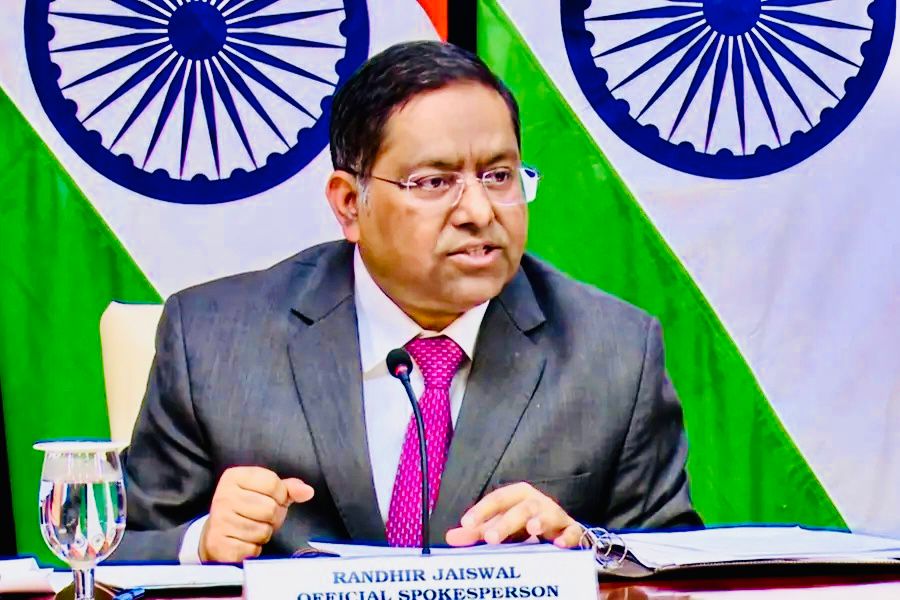
 Foreign ministry spokesman Randhir Jaiswal (Photo: X)
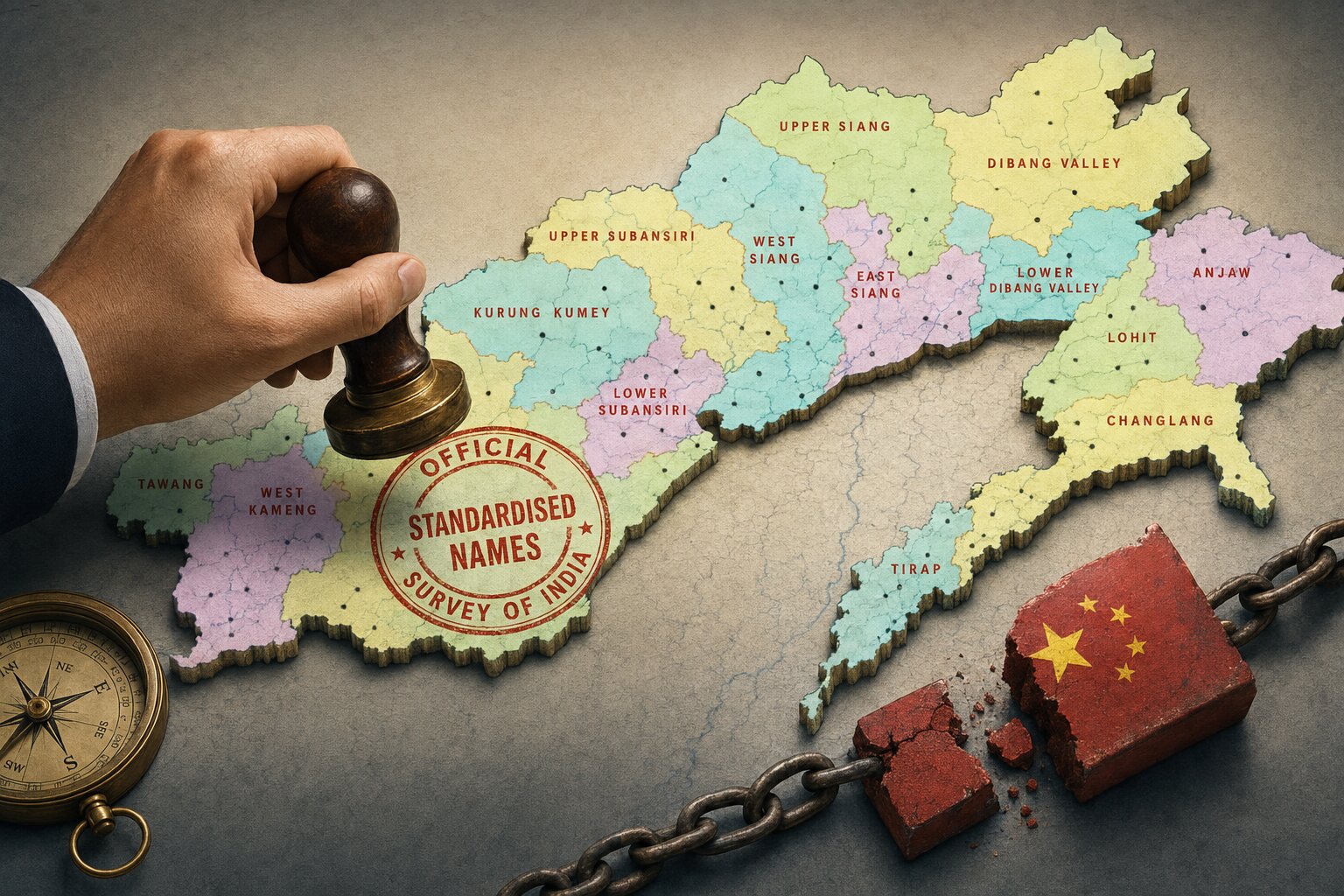
New Delhi: China has renamed 23 geographical features in Arunachal Pradesh in what Beijing calls the “standardization” of place names in the territory it claims as Zangnan, or southern Tibet. The list, published by China’s ministry of civil affairs on April 10, 2026, is the sixth such exercise since 2017 and covers mountain passes, peaks, rivers, and settlements – each assigned a name in Chinese characters, Tibetan script, and pinyin, with precise GPS coordinates.
New Delhi rejected the move swiftly. The Ministry of External Affairs spokesman, Randhir Jaiswal, said New Delhi “categorically rejects any mischievous attempts by the Chinese side to assign fictitious names to places which form part of the territory of India,” adding that such attempts to manufacture “baseless narratives cannot alter the undeniable reality” that Arunachal Pradesh “were, are, and will always remain” an “integral and inalienable” part of India.
He warned Beijing to “refrain from actions which inject negativity into relations” – signalling concern that the exercise could complicate the slow diplomatic repair underway since the 2020 Galwan valley clashes.
A Pattern, Not an Anomaly
The April 10 notification is not isolated. China first issued standardized names for six Arunachal locations in April 2017, followed by lists of 15 in December 2021, 11 in April 2023, 30 in March 2024, and 27 in May 2025. With the latest 23 entries, Beijing has now renamed more than 90 locations in the state.
Read also: China again renames Arunachal Pradesh sites, evokes sharp reaction from India, United States
Timing has rarely been accidental. The 2017 list came shortly after the Dalai Lama visited Tawang monastery. The 2024 batch coincided with Prime Minister Modi inaugurating the Sela Tunnel, an all-weather high-altitude link to Tawang that improves troop mobility along the Line of Actual Control (LAC). The latest list arrives during a period of active diplomatic engagement – lending it the character of a calibrated signal rather than a routine update.
The current batch focuses on strategically sensitive terrain. At least eight of the 23 entries are mountain passes, suggesting the exercise is guided as much by security calculus as by administrative impulse.
Beijing’s Underlying Claim
China’s claim to Arunachal Pradesh rests on the assertion that the territory is historically part of Tibet and, therefore, of China. Beijing rejects the McMahon Line – drawn at the 1914 Simla Convention between British India and Tibet – arguing that Tibet lacked sovereign authority to conclude such an agreement. India, along with most of the international community, recognises the McMahon Line as the legal frontier.
Read also: In new map, Beijing riles New Delhi by showing Indian territories as Chinese
India administers the entirety of the 83,743-square kilometre state. China controls none of it but has invested heavily in road networks and military infrastructure on the Tibetan plateau immediately north of the LAC. India has responded in kind, accelerating its own border infrastructure programme. Scholars describe China’s approach as “cartographic aggression” – the incremental normalisation of territorial claims through maps and administrative lists, a strategy also deployed in the South China Sea.
The Wider Picture
The Arunachal renaming coincides with a separate development on India’s western flank: China’s Xinjiang region established a new county, Cenling, on March 26 near the Karakoram range close to Pakistan-occupied Kashmir. It is the third such administrative unit carved from Xinjiang in little over a year. Together, the moves illustrate the range of instruments China is deploying along its contested frontiers – keeping India’s border managers occupied on multiple axes simultaneously.
India’s Position
India’s response to each renaming has been firm and formulaic: reject, assert sovereignty, warn of consequences, move on. The consistency is predictable, but the sixth list arrived despite active diplomatic engagement, including a Modi-Xi meeting in Russia in October 2024. Washington has backed New Delhi’s position consistently, and the US Senate passed a bipartisan resolution affirming that Arunachal Pradesh is Indian territory.
Read also: China unilaterally tried to alter the status quo
For Arunachal’s 1.4 million residents, Beijing’s lists remain abstractions. The passes, rivers, and hills on China’s latest inventory carry their own names, in their own languages, in their own records. No ministry notification changes that on the ground.
Follow us on social media for quick updates, new photos, videos, and more.
X: https://x.com/indiasentinels
Facebook: https://facebook.com/indiasentinels
Instagram: https://instagram.com/indiasentinels
YouTube: https://youtube.com/indiasentinels
© India Sentinels 2026-27