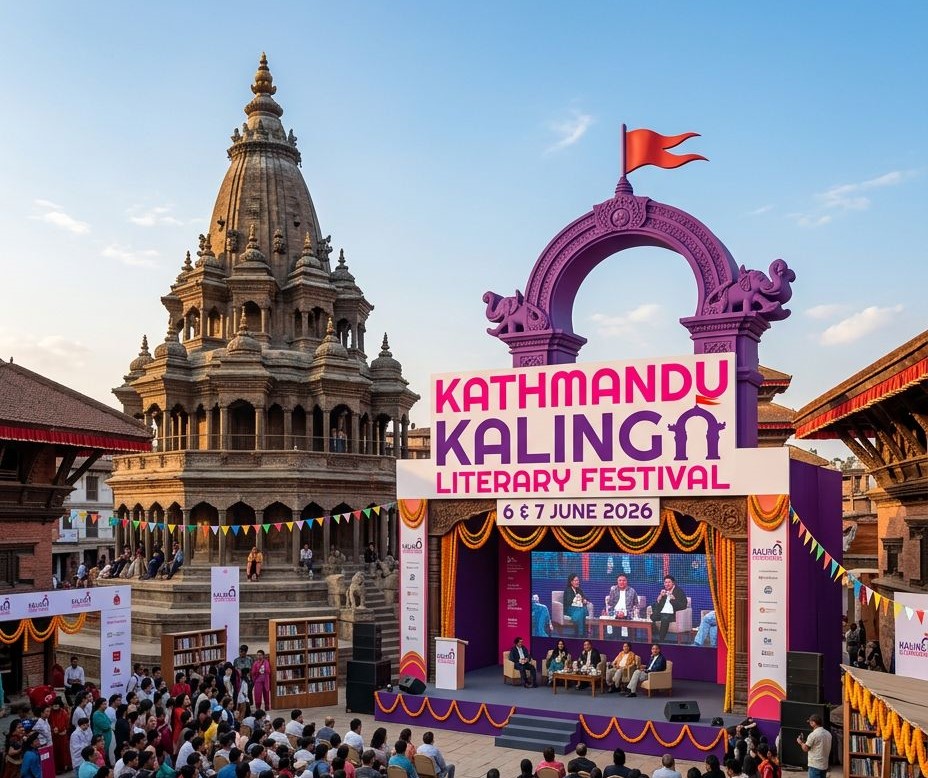
New Delhi: The fourth Kathmandu Kalinga Literary Festival (KLF) opens on June 6 at Hotel Himalaya, Kathmandu, running for two days under the theme “Beyond Borders: South Asian Literature in a Changing World.” Writers, scholars, musicians, and diplomats from across South Asia and its diaspora are gathering to ask what literature can still offer a region under political strain.
The festival's chief guest is Sushila Karki, former Chief Justice of Nepal and the country's first woman to serve as both its top judge and interim prime minister (2024). Her presence reflects KLF's consistent approach of pairing public figures with artists -- treating that conversation as one worth having in public.
India's delegation is wide-ranging: folk and film singer Ila Arun; Jnanpith Award-winning novelist Pratibha Ray; spiritual teacher Acharya Prashant; lyricist and actor Piyush Mishra; classical singer Malini Awasthi; diplomat-novelist Vikas Swarup, whose book Q&A became Slumdog Millionaire; and former Sahitya Akademi president Kuladhar Saikia. Nepal's academic community is represented by scholars Abhi Subedi and Beena Poudyal, among others. Attendees are also expected from Dubai and London, signalling that KLF sees the South Asian diaspora as central to its audience.
Over two days, the programme covers panel discussions, poetry readings, musical performances, book conversations, and sessions on translation. Topics range from women's writing and power to spirituality, finance literacy, and Himalayan tourism. The breadth is ambitious and will need sharp moderation to stay focused.
The festival is organised by the Bhubaneswar-based Kalinga Literary Festival in partnership with Kathmandu's Yashaswi Pragyan Pratishthan. KLF has, since 2022, used its Kathmandu edition to highlight the deep cultural ties between India and Nepal -- shared languages like Maithili, Hindi, Nepali, and Awadhi, open borders, interwoven religious traditions, and centuries of literary exchange.
Those ties exist alongside real friction: border disputes, the aftermath of India's 2015 economic blockade, and ongoing anxieties in Kathmandu about Indian political influence. Literary exchange doesn't fix these tensions, but it keeps human contact alive and that is the bet KLF is making.
The Kathmandu KLF is part of a broader ecosystem that includes the flagship festival in Bhubaneswar, the Indraprastha (Delhi) edition, the KLF Book Awards, and the Mystic Kalinga Festival.