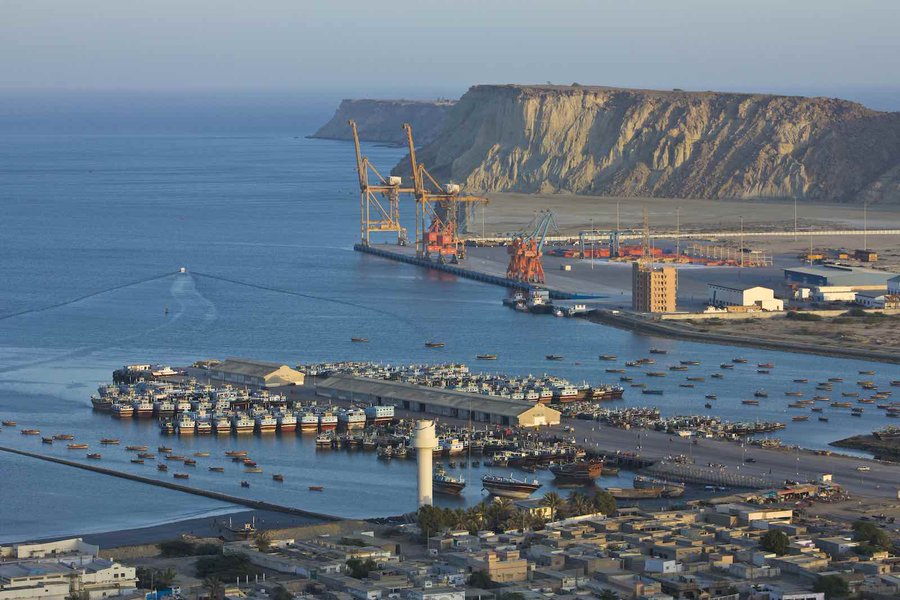
Beijing’s official language on CPEC is one of permanence – “all-weather,” “iron-clad,” unshakeable by attack. That’s messaging for a domestic and diplomatic audience; it isn’t what moves capital. Chinese state-owned enterprises and contractors in Pakistan run their own risk assessments, responding to different signals than a foreign ministry briefing.
Friday’s suicide bombing of a Pakistan Coast Guard camp in Panwan, inside Gwadar’s own district, is the latest entry in a ledger Chinese investors have kept for years.
Capital has already voted once
The clearest evidence that Chinese confidence is conditional comes from outside Gwadar. After an earlier attack on Chinese interests, a Chinese company suspended civil works on the Tarbela 5th Extension Hydropower Project and laid off more than 2,000 workers, citing security directly.
Chinese firms also halted work on the Dasu and Diamer-Bhasha dams after a prior attack, pulling roughly a thousand engineers off-site. These were commercial decisions by companies with hundreds of millions already invested, choosing to pause rather than absorb the risk. If Chinese capital will walk off a hydropower site, it likely treats Gwadar, with its more organized, maritime-capable insurgency, no differently.
Gwadar’s specific problem: The threat followed the investment out to sea
What makes Gwadar harder to insure than an inland dam is that the insurgency has followed the port's own commercial logic into new domains.
The Gwadar Port Authority complex and the Turbat naval base have both been stormed directly. Earlier this year a Coast Guard patrol boat was attacked near Jiwani, and the BLA announced a standing naval unit soon after, signaling that maritime approaches, once assumed the safer half of the port's perimeter, no longer are.
Friday’s bombing shows the group can still hit static land installations too. For Chinese planners, that matters more than any casualty count: there is no longer an obviously “safe side” of the port. Every domain it depends on – docks, lanes, land security – has now been shown reachable.
Chinese officials cite Pakistan’s 2026 order routing Iran-bound transit cargo through Gwadar as proof the port’s commercial mission is taking shape. But it sits beside a broader record: of roughly 90 projects promised under CPEC, only about 38 are complete this year, a third never started. One transit order is a data point, not a track record, and it’s the track record Chinese firms weigh before committing more capital.
The hardest risk to price is one that keeps changing shape. A stable, known threat can be insured against; an insurgency escalating from land ambushes to stormed complexes, a maritime wing, drones, and now a truck bomb against a hardened camp, each step outpacing Pakistan’s security response to the last – is far harder to model. That unpredictability, more than any single incident, is likely the real constraint on Chinese capital flowing into Gwadar, whatever both capitals say about the corridor’s fundamentals.