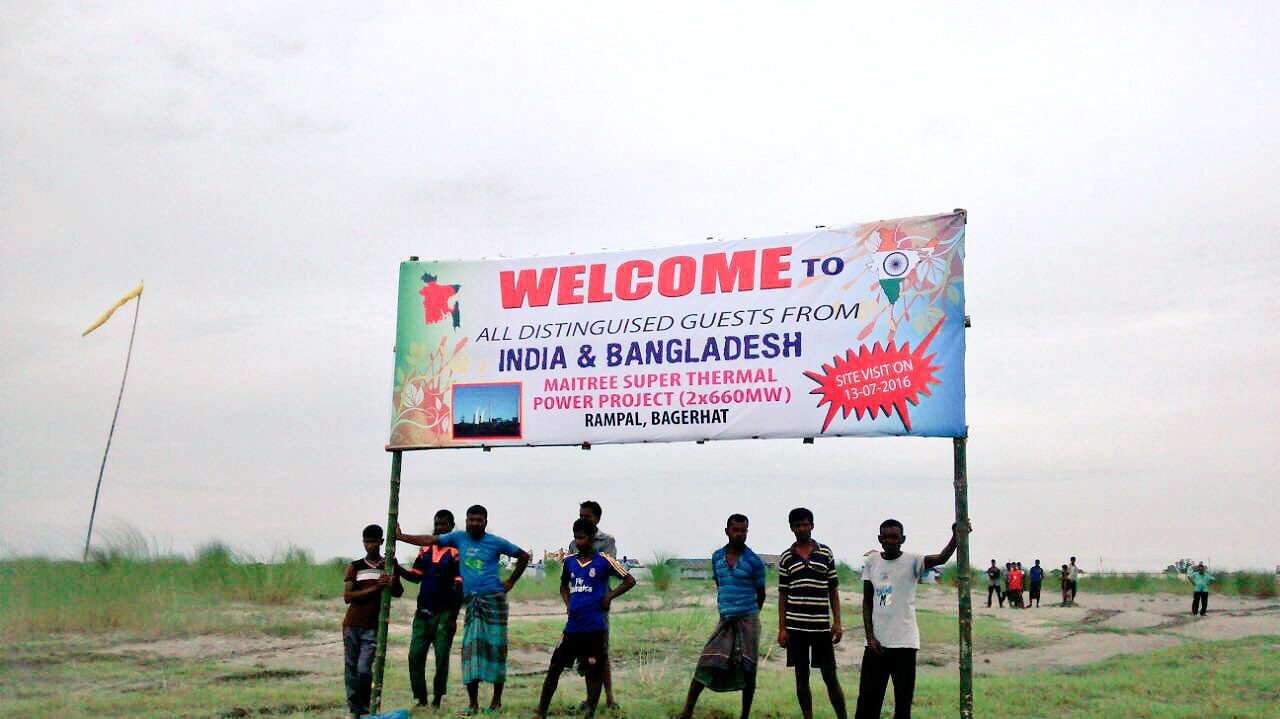
There is a particular kind of infrastructure that only reveals its true value when things go wrong. It sits quietly, doing its job, attracting none of the attention that crises generate and emergency aid attracts. Then the crisis comes – the reserves collapse, the fuel ships stop arriving, the grid starts to strain – and suddenly the value of what was built, years earlier, in calmer times, becomes impossible to ignore.
The Maitree Super Thermal Power Project at Rampal, in southwestern Bangladesh, is that kind of infrastructure.
Located in Bagerhat district within the Khulna division, the 1,320 MW plant – two units of 660 MW each – is a joint venture between India and Bangladesh, developed through the Bangladesh-India Friendship Power Company (BIFPCL), a partnership between Bangladesh's Power Development Board and India's National Thermal Power Corporation.
Built by Bharat Heavy Electricals Limited under India's concessional financing framework, the first unit was commissioned in late 2022. The second followed, adding substantial baseload generation capacity to Bangladesh's national grid at a moment when that grid was under considerable pressure.
What makes Rampal significant is not simply its generating capacity. It is what the plant represents in the architecture of India–Bangladesh energy relations – a shift from transactional trade to something more durable, more embedded, and more strategically consequential.
To understand why that shift matters, it helps to recall what Bangladesh's energy landscape looked like in the years surrounding the plant's commissioning.
Since 2021, the country had been dealing with a severe foreign exchange crisis. Reserves that had stood at nearly $46 billion fell sharply as global commodity prices surged following Russia's invasion of Ukraine. Import bills climbed. Dollar liquidity dried up. And because so much of Bangladesh's generation capacity depended on imported coal and liquefied natural gas, the energy sector absorbed the pain in full. Plants sat underutilised not because they were broken, but because the dollars to feed them were running short.
In this environment, the conventional toolkit of energy diplomacy – emergency fuel shipments, short-term supply agreements, crisis aid packages – had an inherent limitation. Reactive measures depend on geopolitical timing, fiscal availability, and logistical readiness.
They require activation. They can be delayed, politicised, or simply overwhelmed by the scale of the disruption they are meant to address.
Rampal required no activation. The electricity it generates does not cross a border. It is produced on Bangladeshi territory, fed directly into Bangladesh's grid, and backed by institutional arrangements – joint ownership, shared operational responsibility, long-term financing commitments that were established years before any specific emergency arose. When Bangladesh needed baseload power, Rampal provided it not as a diplomatic gesture but as a matter of operational routine.
India's support in ensuring a steady supply of coal to keep the plant running reinforced this logic. In practical terms, New Delhi was not merely selling coal – it was protecting the performance of a jointly owned asset that both countries had a stake in keeping operational. That distinction, subtle as it sounds, transforms the nature of the bilateral relationship. It moves it from a periodic supplier and buyer to co-invested partners in a shared piece of critical infrastructure.
This model sits in interesting contrast to the two dominant modes of energy cooperation that developing nations have historically been offered. Foreign aid and emergency financing come with conditions – governance benchmarks, strategic alignment requirements, the ever-present possibility of suspension if political winds shift. Purely commercial power trading arrangements are more reliable, but they remain transactional; they do not create the kind of mutual stakes that make continuity a shared interest rather than a favour.
Rampal occupies different ground. Bangladesh retains sovereign control over electricity distribution within its own territory. India gains a regional energy partnership embedded in Bangladesh's long-term growth rather than contingent on any single government or diplomatic moment. Both countries become stakeholders in the plant's continued operation. That shared stake is itself a form of stability – not dependency, but strategic co-development.
The benefits for Bangladesh extend beyond the megawatts on the grid. Reliable baseload power is not an abstraction – it is the condition under which garment factories can run night shifts, under which urban businesses can plan with confidence, under which investors can make long-term commitments without building the cost of generator fuel into every projection. Bangladesh's export manufacturing sector, which drives a significant portion of its economic growth, depends on electricity in ways that become visible only when it is absent. Rampal strengthens that foundation.
For India, the project advances regional integration through a mechanism that combines strategic depth with genuine developmental contribution. Co-developed infrastructure embeds India into Bangladesh's economic future in a manner that periodic supply agreements – however important – cannot replicate. The relationship it creates is more resilient, more mutual, and more resistant to the disruptions that have made South Asia's bilateral relationships so unpredictable over the decades.
The broader lesson of Rampal is straightforward, even if it is underappreciated. Emergency assistance delivered after a crisis begins is always going to be imperfect – too slow, too conditional, too dependent on circumstances that crises themselves tend to disrupt. The infrastructure that prevents vulnerability from escalating into crisis in the first place is worth far more. It does not make headlines. It does not generate the images of solidarity that emergency aid convoys do. But it keeps the lights on when it matters most, and it does so without asking anyone to scramble.
In an era of growing global uncertainty, that quiet reliability may be the most valuable thing one neighbour can offer another.
Disclaimer: The views expressed in the article are the author’s own and don’t necessarily reflect the views of India Sentinels.
Follow us on social media for quick updates, new photos, videos, and more.
X: https://x.com/indiasentinels
Facebook: https://facebook.com/indiasentinels
Instagram: https://instagram.com/indiasentinels
YouTube: https://youtube.com/indiasentinels
© India Sentinels 2026-27