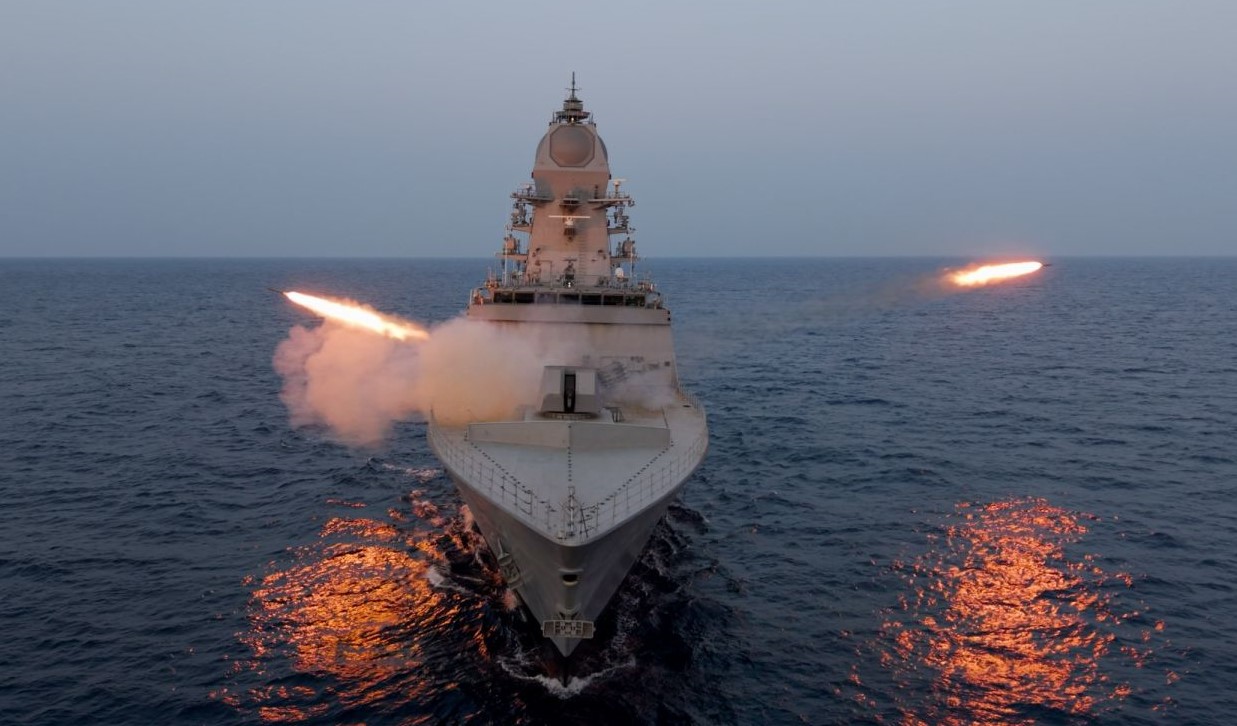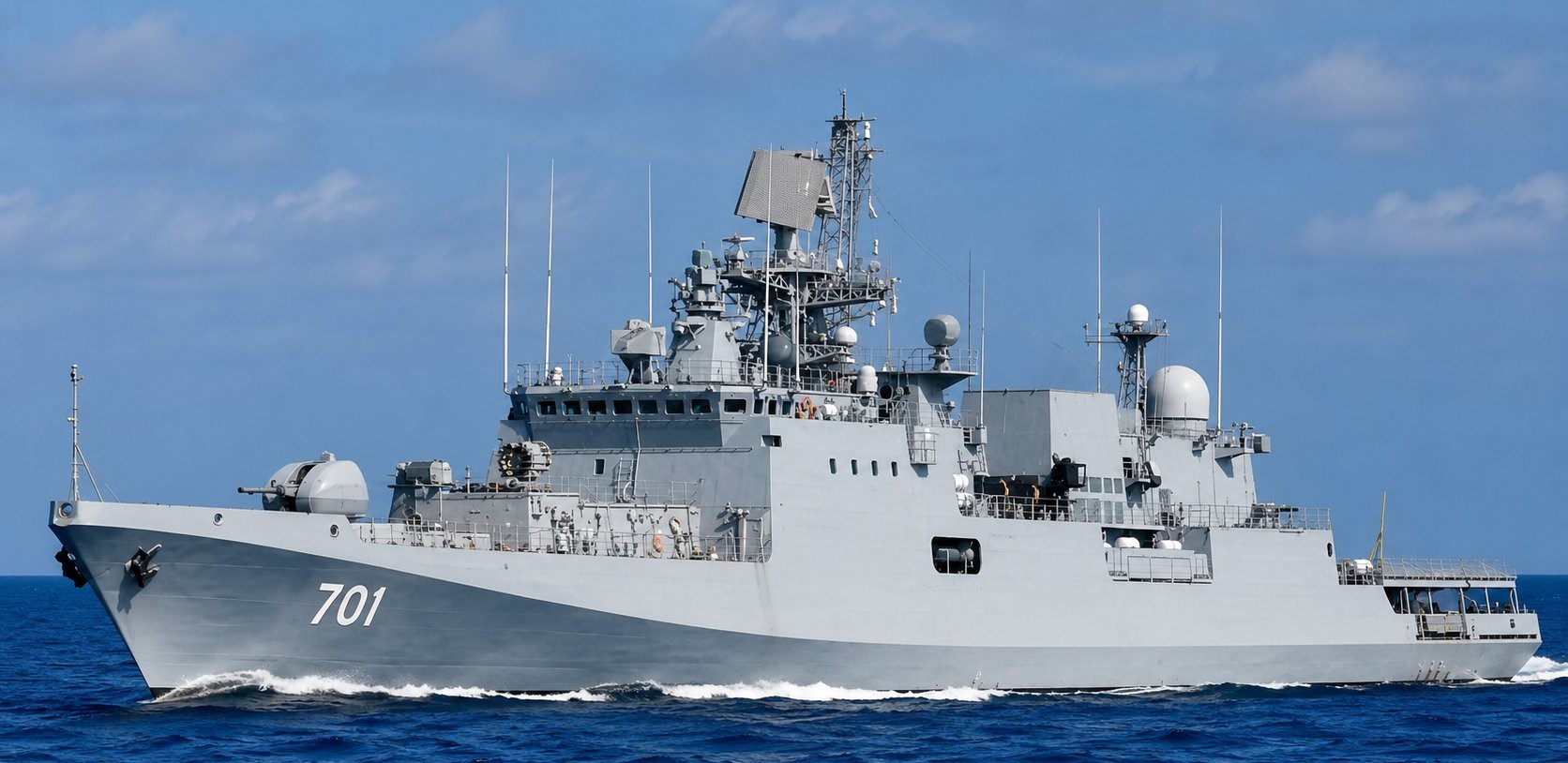
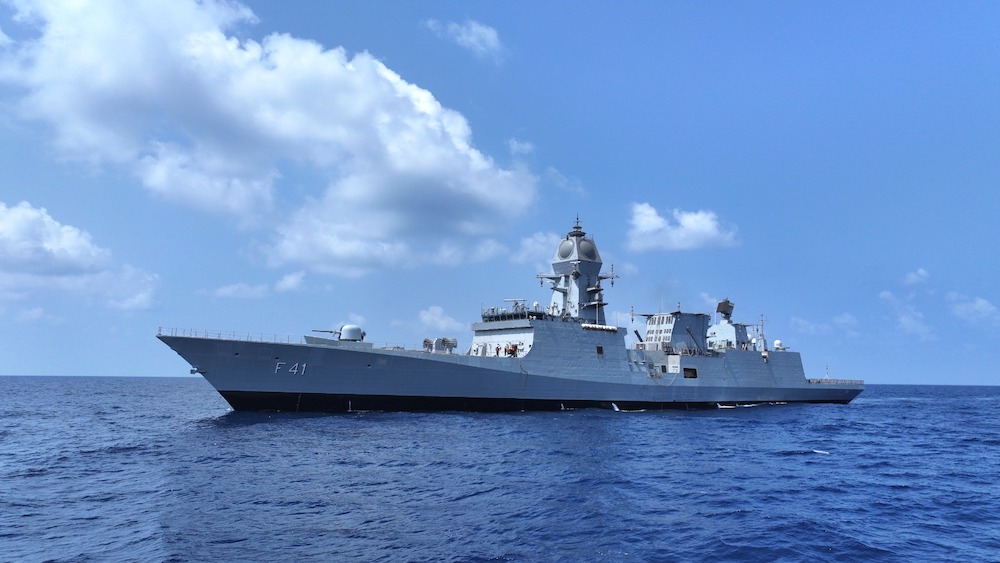
 INS Taragiri. (Photo: Indian Navy)
Visakhapatnam: India expanded its naval combat capability on Friday when the defence minister, Rajnath Singh, commissioned INS Taragiri, at a ceremony here in Vizag. As reported by India Sentinels earlier, this is the fourth warship of the Indian Navy’s Project-17A stealth frigate programme.
The ship, a 6,670-tonne multi-role frigate, is the latest addition to a class designed to operate across the full spectrum of naval warfare – from high-intensity combat to anti-piracy patrols, maritime surveillance, and humanitarian relief. It was designed by the Warship Design Bureau and built by Mazagon Dock Shipbuilders Limited (MDL) in Mumbai, with components sourced from a network of micro, small, and medium enterprises across the country.
More than 75 per cent of INS Taragiri’s content is indigenously sourced, a figure that reflects both the ambitions and the progress of India’s defence manufacturing programme. Navy officials said the ship was delivered in significantly reduced timelines compared with earlier projects of comparable scale.
The frigate is equipped with advanced stealth architecture that substantially reduces its radar cross-section – a critical attribute in contested maritime environments. Its weapons fit includes BrahMos supersonic cruise missiles and surface-to-air missiles, alongside modern radar and sonar suites. The BrahMos, a joint venture between India and Russia, is among the fastest anti-ship cruise missiles in operational service globally, with a range of approximately 290 kilometres in its ship-launched configuration.
Speaking at the commissioning ceremony, Singh described the warship as a symbol of India’s technological progress and strategic resolve. “This ship is capable of high-speed transit and can remain deployed at sea for extended periods,” he said. “It is equipped with systems designed to monitor enemy movements, ensure its own security, and, if necessary, deliver an immediate response.”
Singh also set the vessel’s commissioning in a broader strategic context, noting that India’s 7,500-kilometre coastline – he cited 11,000 kilometres, which includes island territories – borders three seas, and that roughly 95 per cent of the country’s trade moves by sea. Energy imports, including crude oil from the Persian Gulf, are almost entirely seaborne. “Building a strong and capable Navy is not merely an option, but an absolute necessity,” he said.
He underlined the Navy’s expanding operational role in the Indian Ocean region, where it maintains a continuous presence to protect commercial shipping lanes, monitor choke points such as the Strait of Hormuz and the Malacca Strait, and respond to crises. The Navy has in recent years conducted evacuation operations – including Operation Kaveri in Sudan in 2023 – and anti-piracy deployments in the Gulf of Aden.
“Whenever tensions flare, the Indian Navy steps in to guarantee the security of commercial vessels and oil tankers,” Singh said.
The chief of the naval staff, Admiral Dinesh Kumar Tripathi, recalled the legacy of the name Taragiri, which was previously borne by a Leander-class frigate commissioned in 1980 that played a significant role in developing India’s anti-submarine warfare doctrine. He noted that the security environment in the Indian Ocean region had grown considerably more complex since then, shaped by shifting geopolitics, the proliferation of precision weapons, and non-traditional threats including piracy and grey-zone maritime activity.
Project-17A, sanctioned in 2015 at an estimated cost of around ₹50,000 crore for seven ships, is divided between MDSL and Garden Reach Shipbuilders and Engineers (GRSE) in Kolkata. The first ship of the class, INS Nilgiri, was commissioned in January 2025 at Visakhapatnam. INS Himgiri and INS Udaygiri preceded Taragiri in the series; three more hulls – INS Mahendragiri, INS Surat, and a seventh vessel – are at varying stages of construction.
The class builds on the earlier Project-17 Shivalik-class frigates and incorporates significant improvements in stealth, automation, and weapon integration.
The commissioning comes at a time of heightened activity in the Indian Ocean, where China has steadily increased the presence of People’s Liberation Army – Navy (PLAN) vessels, including submarines, research ships, and, periodically, aircraft-carrier task groups. India has responded by accelerating its fleet modernization and expanding basing arrangements, including at the Duqm port in Oman and Assumption Island in the Seychelles.
Follow us on social media for quick updates, new photos, videos, and more.
X: https://x.com/indiasentinels
Facebook: https://facebook.com/indiasentinels
Instagram: https://instagram.com/indiasentinels
YouTube: https://youtube.com/indiasentinels
© India Sentinels 2026-27