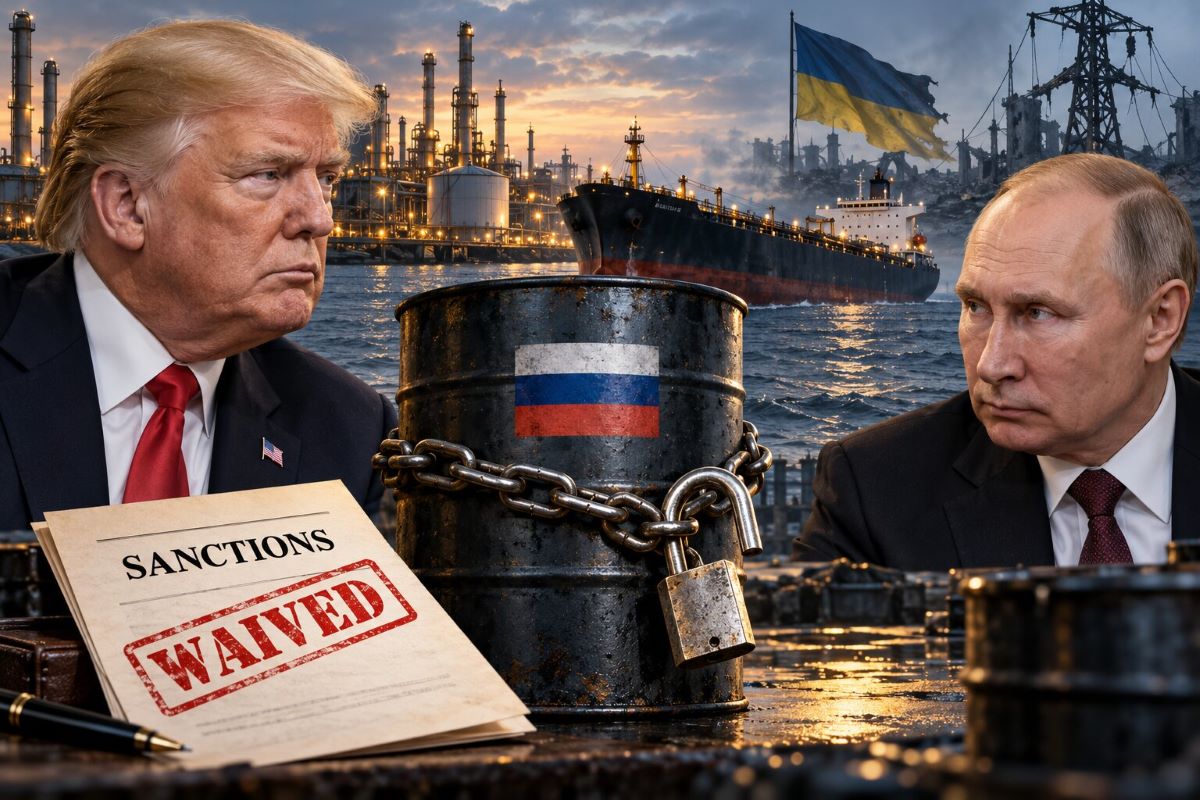
 Illustration for representation. (© India Sentinels 2026 – 2027)
New Delhi: The US president, Donald Trump, has waived sweeping new sanctions against Russia just two days before they were due to take effect, setting aside measures he signed into law last month. The decision follows his agreement to allow Russian diesel supplies into US and global markets and suspends new tariff provisions that could have affected India and other major buyers of Russian energy.
Trump issued the executive order on Friday, invoking a national-interest waiver contained in the legislation. The move has drawn criticism from American lawmakers and Ukraine, whose supporters argue that Washington is weakening economic pressure on Moscow while Russia continues its war.
The legislation, formally named the Lindsey O. Graham Sanctioning Russia and Iran Act of 2026, was signed on September 18. It authorized additional sanctions, tariffs and restrictions against Russia and extended existing measures against Iran, with major provisions scheduled for implementation on October 18.
Its intended targets included Russian officials, financial institutions and the “shadow fleet” of tankers used to transport oil outside conventional sanctions controls. The legislation sought to increase the economic cost of the war and strengthen Washington’s ability to pressure the Russian president, Vladimir Putin, into negotiations.
A particularly consequential provision concerned additional tariffs of 100 per cent on goods from the five largest importers of Russian crude oil and natural gas if they knowingly made new purchases from October 18. The order also addressed duties on countries facilitating sanctions evasion but waived the application of these new tariff measures.
For India, one of Russia’s largest oil customers, the immediate implication is a reprieve from this additional source of trade pressure. New Delhi had raised concerns about the legislation, whose reach extended beyond Russia to countries purchasing its energy.
The waiver does not, however, dismantle the existing American sanctions framework against Moscow. The order explicitly preserves earlier sanctions imposed under specified executive authorities and requires continued monitoring of Russian energy purchases and sanctions evasion, leaving open the possibility of further action.
The decision comes a week after Trump announced a diesel agreement with Putin on October 9, presenting additional supplies as a way to reduce fuel costs. According to the Council on Foreign Relations, the US Treasury subsequently issued a temporary licence allowing Russian diesel deliveries until April 2027.
Under the announced arrangement, Russia would initially supply more than 300,000 tons of diesel, followed by another 500,000 tons in November and further deliveries thereafter. Trump has emphasized relief for farmers, truckers and other consumers facing higher operating costs ahead of the November 3 congressional elections.
The economic case remains contested, particularly over how quickly the additional fuel could influence prices. Energy specialists cited by the Council on Foreign Relations questioned whether the proposed volumes and delivery timetable could meaningfully ease shortages before the elections, especially given damage to Russia’s refining capacity from Ukrainian attacks.
The sanctions waiver has also intensified the political dispute in Washington over how the administration should use the powers Congress provided. The Democratic senator, Richard Blumenthal, a co-author of the legislation, accused Trump of abandoning American public opinion, Congress and European allies, while the Republican representative, Don Bacon, argued that the decision would prolong the war.
The Ukrainian president, Volodymyr Zelenskyy, criticized the retreat from sanctions as Russia continued attacking his country’s energy infrastructure before winter. Responding on October 17, he argued that the legislation could still help end the war, but only if its provisions were implemented.
The administration said it had submitted the required certification and explanation to Congress, although the White House did not immediately publicly detail its substantive justification. The waivers have no fixed expiry date and will remain in place until Trump or the secretary of state determines that further action is appropriate.
Follow us on social media for quick updates, new photos, videos, and more.
X: https://x.com/indiasentinels
Facebook: https://facebook.com/indiasentinels
Instagram: https://instagram.com/indiasentinels
YouTube: https://youtube.com/indiasentinels
© India Sentinels 2026-27