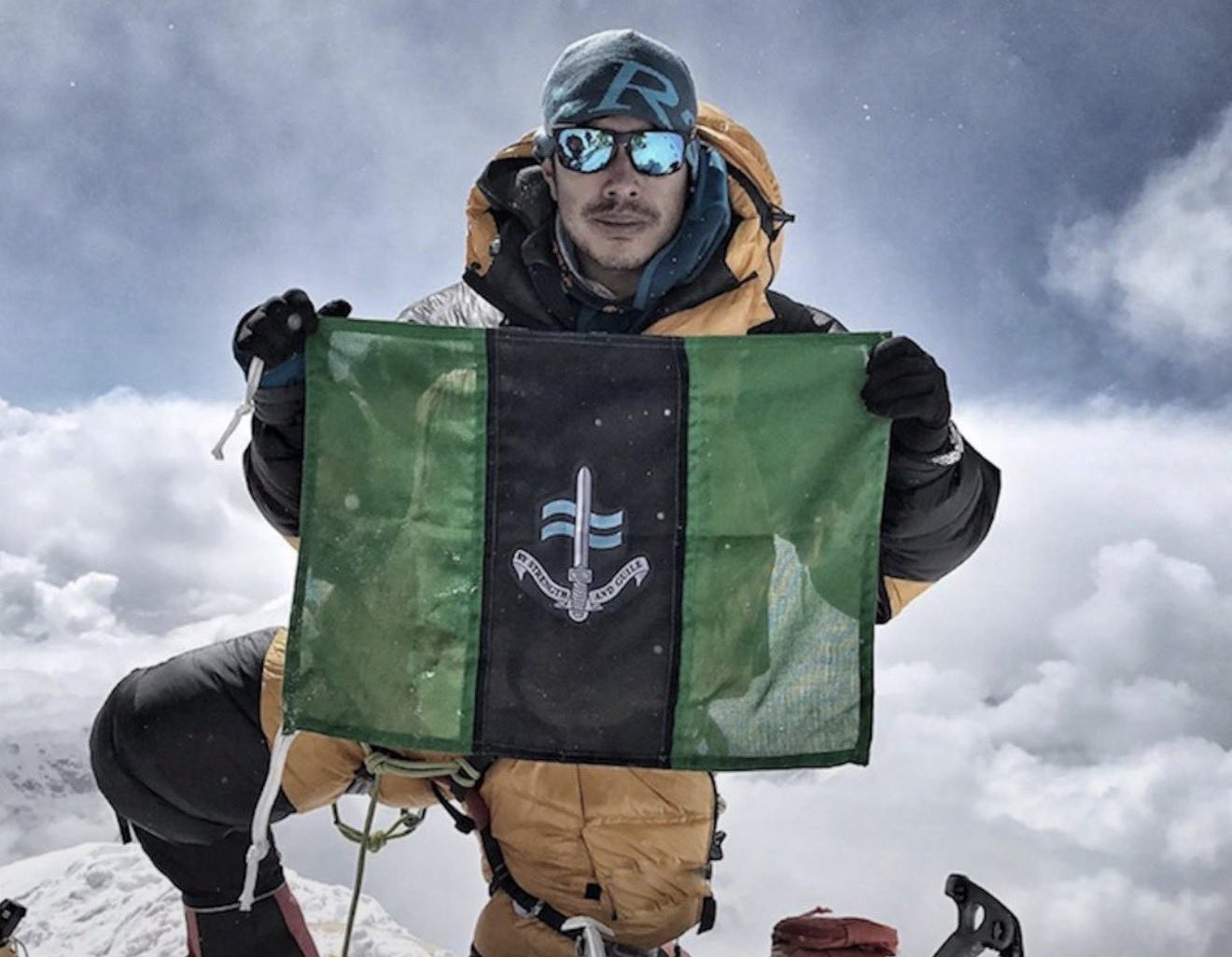
 Nirmal Sherpa with SBS flag after conquering a summit.
New Delhi: The body of Nirmal Purja, the Nepali mountaineer known globally as “Nimsdai”, was recovered on Broad Peak on Sunday, days after an avalanche tore through his 10-member expedition on the Karakoram giant and buried the entire team. A ground rescue team of the Alpine Club of Pakistan (ACP) located him at approximately 5,700 metres, alongside three more bodies lying close by, taking the number of team members accounted for since the disaster to eight.
The avalanche struck Broad Peak’s standard West Ridge route, at an altitude of between 21,600 and 21,850 feet, on the morning of July 30. It killed not only Purja, one of the sport’s most decorated record-breakers, but five of Nepal’s most accomplished high-altitude guides – men whose collective résumés included dozens of Everest summits, a historic winter ascent of K2 and, in one case, all 14 of the world’s 8,000-metre peaks.
Nepal’s mountaineering industry has described it as one of the heaviest single losses its climbing fraternity has ever endured – not merely 10 lives lost on a mountainside, but decades of accumulated technical expertise erased in a single avalanche.
Recovery hampered by weather, terrain
Purja’s expedition, organized by Elite Exped, the company he co-founded, comprised six Nepalis including himself, and one climber each from Pakistan, Oman, the United States and China. The bodies of the Omani mountaineer, Nadhira Ahmed Abdullah Al Harthy, and the Nepali guide Pur Bahadur Gurung were the first brought down, on July 31, 2026, along with remains believed to be those of the American climber, Sarah Mallory Geis.
By Saturday, Elite Exped had confirmed that none of the 10 had survived. The body of the Nepali guide Gyaljen Sherpa was recovered the same day, and aerial reconnaissance spotted five more bodies scattered across the slope.
An eight-member ACP ground team, drawn from Pakistan and Nepal, reached Camp 1 before 9am on Sunday to continue the search. Helicopters could not be deployed because of poor weather, forcing rescuers to negotiate crevasses and unstable snowpack almost entirely on foot.
Pakistani rescuers have so far recovered the bodies of three of the 10 climbers swept away. One body, spotted at a considerably higher elevation, is unlikely to be recovered at all given how hazardous the terrain has become.
Broad Peak rises 8,051 metres in the Karakoram range of Gilgit-Baltistan, in Pakistan-occupied Kashmir, close to K2 and a short distance from the Chinese border. It is the world’s 12th-highest mountain and, though it lacks the notoriety of Everest or K2, remains a technically demanding climb that has claimed lives regularly since an Austrian team first summited it in 1957.
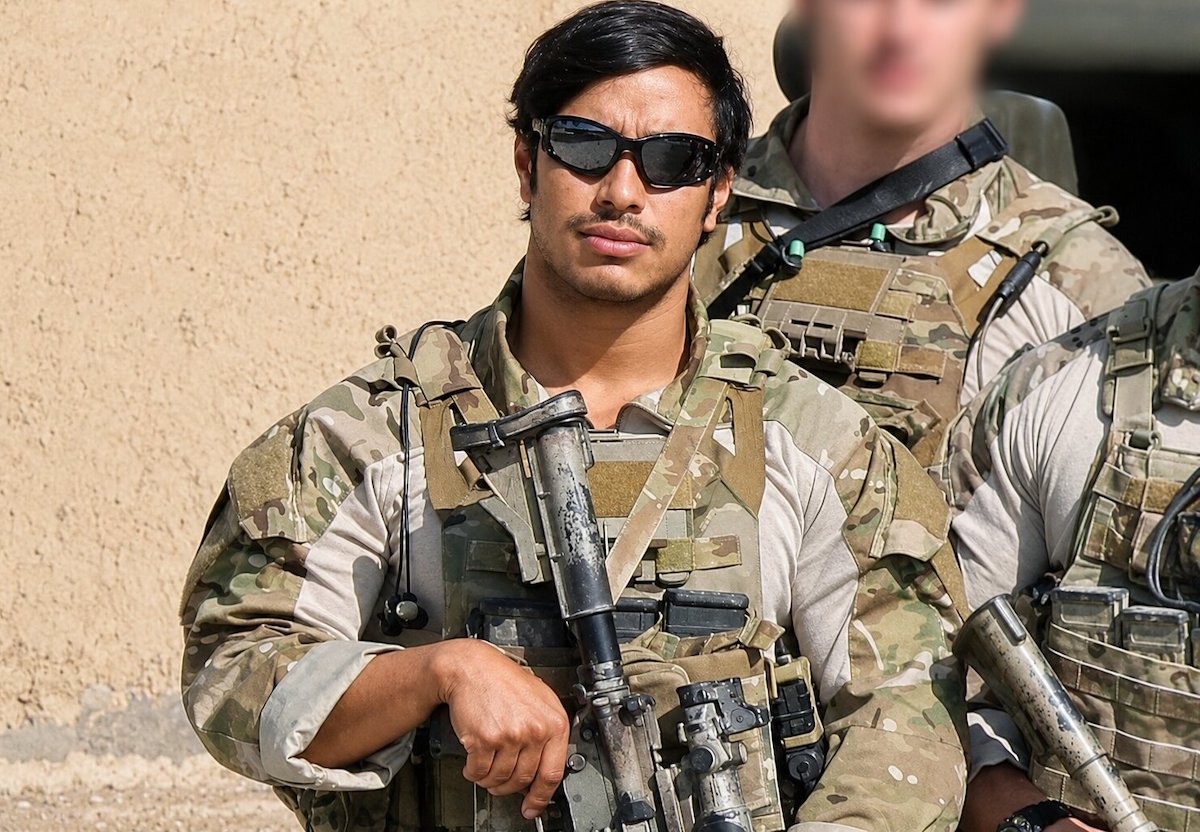
Elite commando who became world’s fastest climber
Purja, 43, was born on July 25, 1983, in Myagdi, in Nepal’s Gandaki province, into a family with a long tradition of Gurkha service. He joined the British Army’s Brigade of Gurkhas in 2003 and, six years on, became the first Gurkha accepted into the Special Boat Service, the Royal Navy’s elite special forces unit, where he served as a cold-weather warfare specialist.
He was also the first Gurkha to summit Everest while still in uniform, and in 2016 abandoned his own summit bid to rescue a stranded climber from the death zone.
After leaving the army, Purja set out to climb all 14 of the world’s 8,000-metre peaks faster than anyone before him, achieving the feat in six months and six days in 2019 – a record later chronicled in the Netflix documentary “14 Peaks: Nothing Is Impossible” and broken only in 2023.
He was awarded an MBE by the late queen, Elizabeth II, in 2018, and in January 2021 led an all-Nepali team to the first winter ascent of K2. He had recently written online that he was close to becoming the first person to climb all 14 “super peaks” twice without supplemental oxygen.
The prime minister of Nepal, Balendra Shah, said the climbers’ courage and dedication would continue to inspire long after their journeys were cut short. The prince of Wales, William, said he was saddened by the loss of a man who had served with distinction before becoming one of the world’s greatest mountaineers, crediting him with putting Nepalese climbers on the map.
The British climber Kenton Cool, who has summited Everest more times than any non-Sherpa alive, said Purja’s real legacy lay in how he transformed high-altitude guiding as an industry.

Nepali superclimbers killed alongside Purja
Alongside Purja, the avalanche killed Pur Bahadur Gurung (“Yukta”), Kili Pemba Sherpa (“Kilu”), Nima Sherpa, Nawang Thendu Sherpa and Gyaljen Sherpa (“Gyalu”). Kili Pemba’s death carries particular poignancy: barely a month earlier, on July 3, 2026, he had summited Nanga Parbat to complete all 14 8,000-metre peaks, having also been part of Purja’s 2021 winter K2 team.
Born in 1980 in Beding, in Dolakha’s Rolwaling valley, he began expedition work at 16, summited Everest 15 times, and guided disabled climbers, including a Chinese double amputee to Everest’s summit in 2018.
Gyalu Sherpa, who had worked with Seven Summit Treks for nearly eight years, held a Guinness World Record for summiting Kanchenjunga three times in one season. Yukta had climbed 12 of the 14 8,000-metre peaks and become the first member of the Gurung community to summit Everest 10 times.
Nima Sherpa had climbed four 8,000-metre peaks in 2026 alone, while Nawang Thendu, 29 and the youngest of the group, had summited Everest, Lhotse, Manaslu, Kanchenjunga, Makalu and Ama Dablam in barely four years of professional climbing.
The director of Seven Summit Treks, Chhang Dawa Sherpa, said an international-standard mountain guide cannot be produced overnight, and that companies spend years training climbers from remote Himalayan villages to reach world-class standard.
Nepal has lost individual legends before, industry figures said, but rarely so many at once, and never quite this abruptly.
Follow us on social media for quick updates, new photos, videos, and more.
X: https://x.com/indiasentinels
Facebook: https://facebook.com/indiasentinels
Instagram: https://instagram.com/indiasentinels
YouTube: https://youtube.com/indiasentinels
© India Sentinels 2026-27