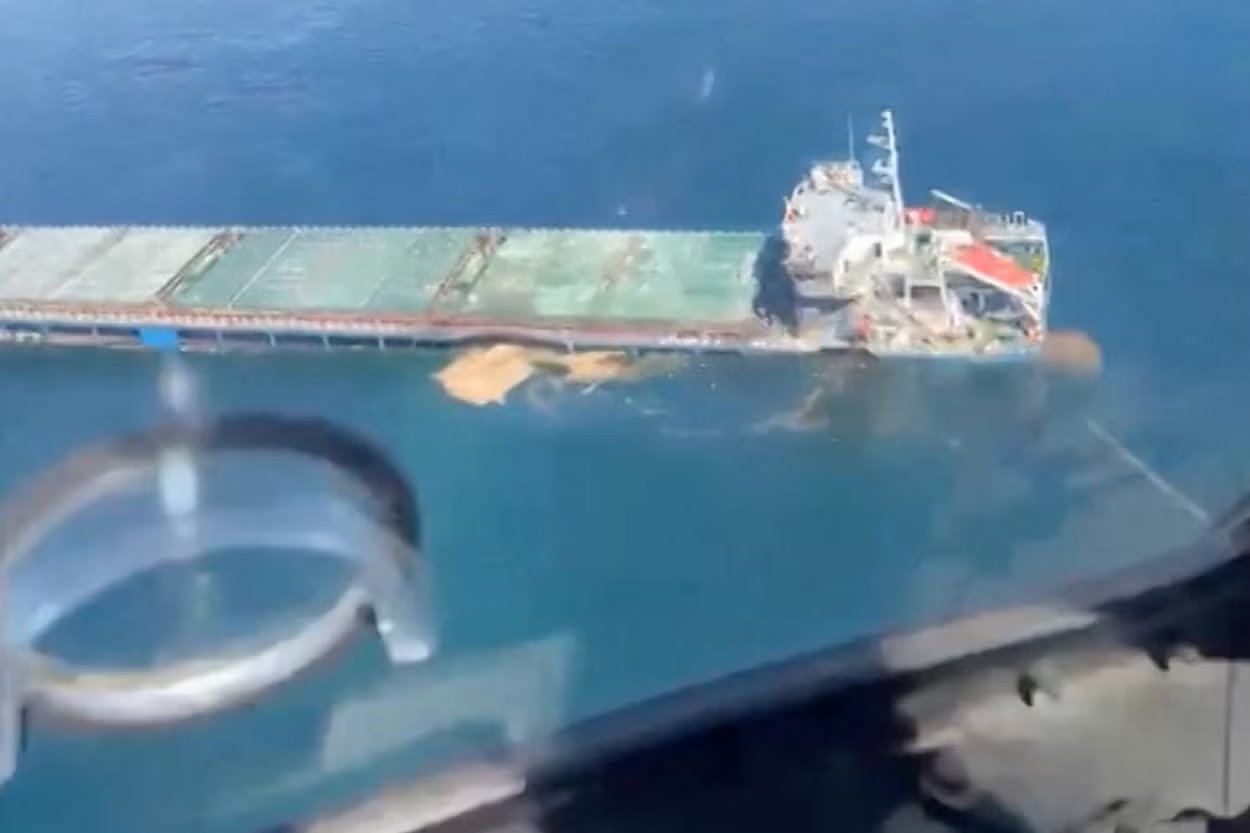
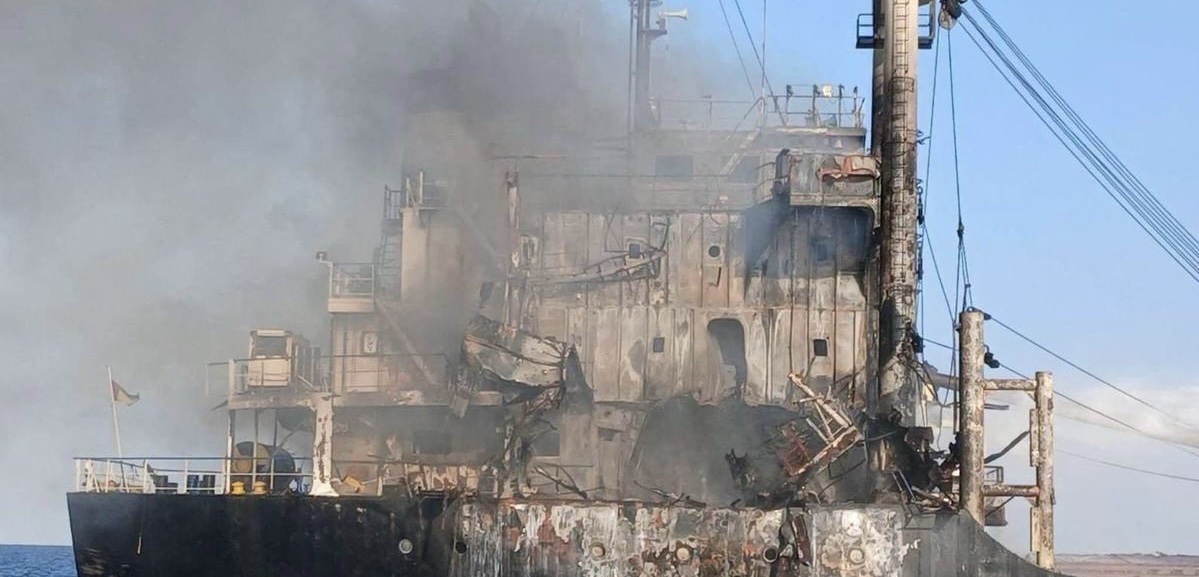
 A UAE-flagged ship after being hit with a missile during the current US-Iran war. (Photo: X)
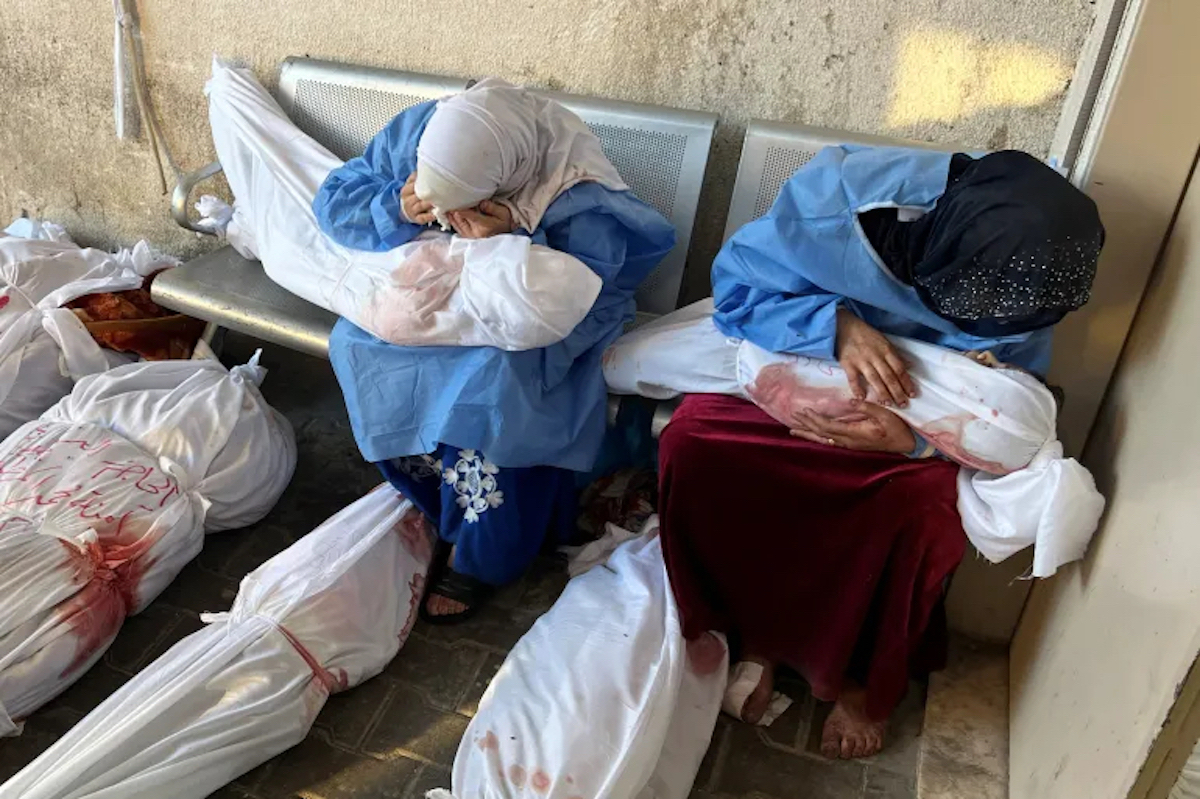
New Delhi: The deaths of four Indian seafarers in Russia’s missile strike on the merchant vessel MV Golden Leo have intensified concerns among India’s maritime community, with many sailors saying they are increasingly being asked to operate in some of the world’s most dangerous waters with inadequate protection. The Guinea-Bissau-flagged cargo ship, carrying Ukrainian corn, was struck near Ukraine’s Odesa port on July 20, killing 10 crew members, including four Indians.
The attack prompted a sharp diplomatic response from New Delhi. The Ministry of External Affairs summoned the Russian chargé d’affaires to lodge a formal protest and stressed that the safety of Indian nationals serving aboard merchant vessels must be respected.
Speaking exclusively to India Sentinels, marine engineers, merchant navy officers and seafarers serving across the world said the latest tragedy has reinforced fears that civilian mariners are increasingly becoming casualties of wars in which they have no role. Their message was unequivocal: “No seafarers, no global trade – and no global economy.”
A merchant navy officer, whose identity has been withheld, said Indian seafarers are growing increasingly anxious about accepting assignments through conflict zones. “From what we have seen in the news, Indian seafarers seem to be losing their lives disproportionately, even though multinational crews operate across these waters. Every new incident leaves families back home more fearful,” he said.
The strike on MV Golden Leo is the latest in a series of attacks exposing commercial shipping to military action in the Black Sea, the Red Sea and the Gulf region.
Over the past two years, merchant vessels have repeatedly come under missile, drone and explosive attacks, placing thousands of civilian seafarers at risk while keeping global trade moving. Despite the growing dangers, several seafarers alleged that shipping companies continue sending vessels through high-risk areas by offering substantially higher wages to volunteers willing to remain onboard.
“Companies are still trading in conflict zones and asking seafarers to continue by offering almost four times the normal salary. Masters on some ships are earning close to $50,000 a month,” one seafarer said.
According to him, companies generally obtain the crew’s consent before entering dangerous waters, allowing those unwilling to continue to sign off. However, many questioned whether generous financial incentives could ever justify the constant threat of missile and drone attacks.
Several sailors accused shipping companies of placing commercial interests ahead of crew welfare. A merchant navy officer currently sailing in North America said, “Practically no shipping company bothers about the mental well-being of seafarers. They care about the cargo and the money being made from these conflicts.”
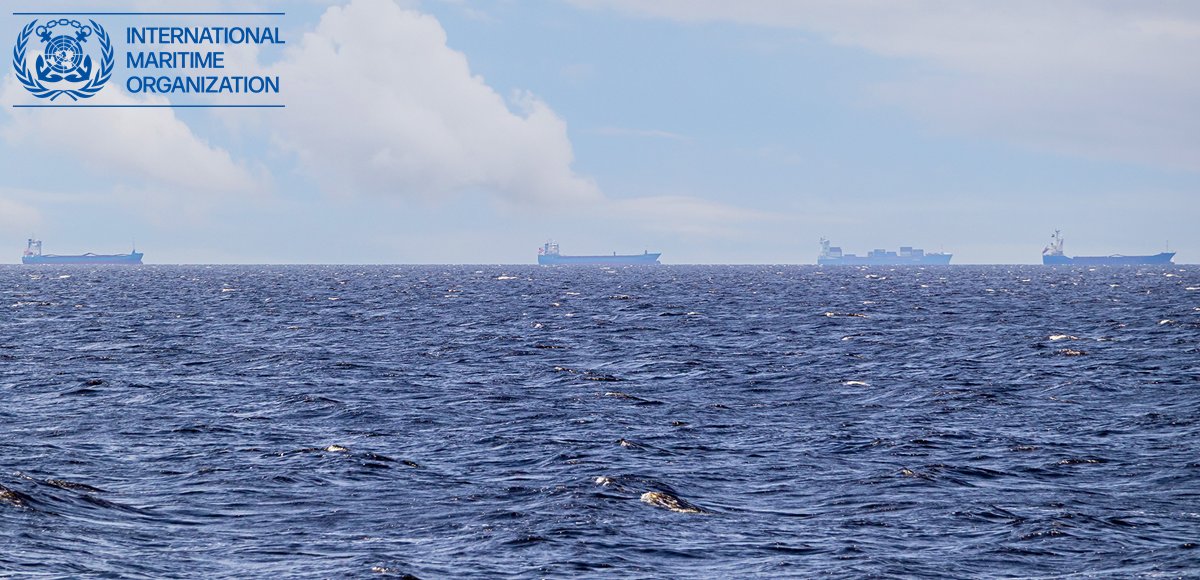
Another seafarer described the operational dilemma confronting merchant ships navigating the Gulf. According to him, vessels now follow routes recommended by the International Maritime Organization closer to the UAE coast, but whichever course they take carries significant risks. “If the owner loses the ship, insurance pays. If the cargo is lost, insurance pays. But only the seafarers lose their lives,” he said.
Beyond the threat of attack, sailors said routine operations have become increasingly difficult. Bunkering, repairs, provisioning and maintenance are often delayed because support vessels are reluctant to enter areas vulnerable to missile strikes, leaving some crews surviving on minimal food supplies.
The absence of emergency medical evacuation has become another major concern. One sailor recalled a recent incident in which the body of an Indian crew member remained onboard for several days because the vessel could not enter a safe port. “Medical evacuation has virtually collapsed in these conflict zones because no one wants to expose rescue teams to missile attacks,” he said.
The seafarers said governments and international maritime organisations must do more to safeguard merchant shipping during armed conflicts. They urged countries to respect the United Nations Convention on the Law of the Sea (UNCLOS) and ensure that civilian commercial vessels carrying food, fuel and other essential cargoes are not targeted.
Some acknowledged that operational procedures have improved despite deteriorating morale. Security levels onboard have been raised, with ships receiving daily threat assessments from the Maritime Security Centre Indian Ocean and maritime intelligence firms such as Ambrey, but many said timely warnings offer only limited reassurance against incoming missiles.
India is among the world’s largest suppliers of maritime manpower, with nearly 320,000 seafarers serving aboard merchant vessels worldwide.
For many of them, the attack on MV Golden Leo is a grim reminder that while global commerce depends on merchant shipping, those who keep it moving remain among the least protected civilians in modern conflict.
Follow us on social media for quick updates, new photos, videos, and more.
X: https://x.com/indiasentinels
Facebook: https://facebook.com/indiasentinels
Instagram: https://instagram.com/indiasentinels
YouTube: https://youtube.com/indiasentinels
© India Sentinels 2026-27