 Soldiers of the 9 Jat during the Battle of Chhamb during the 1971 India-Pakistan war. (Photo: Brig RA Singh (R))
— By Brigadier RA Singh, VSM (Retired)
The 9th Battalion of the Jat Regiment (9 Jat) was mobilized as part of 68 Infantry Brigade from Khrew (Jammu & Kashmir) to the Akhnoor area in September 1971, to be launched as part of 10 Infantry Division’s offensive against Pakistan. The unit was concentrated in the general area of Akhnoor for training and coordination for the planned offensive.
All commanders of the unit up to platoon level were made to carry out reconnaissance of Pakistani border outposts – namely Bokan, Dalla, and others – approximately 30 kilometres deep into what is now Pakistani territory from Chhamb, wearing Border Security Force uniforms for the planned offensive. The 9 Jat also carried out extensive infantry-tank cooperation training in the area of Jaurian (PDC) with the 9 Deccan Horse.
The unit was ready as part of the 68 Infantry Brigade (corps reserve) to take revenge for the 1965 loss of Chhamb to Pakistan.
On December 3, Pakistan carried out pre-emptive airstrikes on Indian airbases, which surprised all and the battle profile of the 10 Infantry Division immediately changed from offensive to defensive operations, though their formations were still in their defensive positions.
The 9 Jat was asked to move to the Pallanwala sector to take up defences on the eastern bank of the Manawar Tawi river. No one from the unit had ever seen this area, but the unit was pushed forward to find its own way and organize defences.
While the unit (9 Jat) was moving on December 4, 1971, during the day on the Akhnoor-Pallanwala axis for its new defensive operational task, on foot, troops of the 191 Infantry Brigade – who had been forced by the enemy to abandon their permanent defences within just three days – were also withdrawing on this axis from across the Manawar Tawi defences.
One could imagine what impact such a retrograde operation would have on the morale of these fresh troops of the 9 Jat, moving up to take defences in an absolutely new area, to stall the enemy’s advance, which was following close on the withdrawing troops’ heels. To precipitate the problem, a few Pakistani artillery observation posts had also managed to infiltrate along with the withdrawing troops of 191 Infantry Brigade and were bringing accurate artillery fire on our moving column.
However, the unit managed to reach its new operational location in excellent shape and with high morale.
Having reached Pallanwala, battalion headquarters occupied bathing cubicles of a well outside the school since there was intense enemy artillery shelling and no defences were available in that area. Companies were briefed about the general area for their defences on the eastern bank of the Manawar Tawi river – an absolutely new area for the unit.
The companies of the 9 Jat had to take up hurried defensive positions along the Manawar Tawi’s east bank. The area had 10-foot-high sarkanda grass (Tripidium bengalense) and was interspersed with boggy patches. For the sake of administrative convenience, their platoon localities were sited about 50 metres behind the river line without having visible fields of fire and domination over the Tawi.
There were no mines or other defence stores, and the defences were hastily prepared within four to five days.
There was also no tank support or artillery observation post with the unit. The unit was guarding the Raipur and Darh crossings – the most expected route of enemy armour ingress – without any outside support.
Since the unit had just come from modification “M” to “P”, it hurriedly managed to collect its recoilless guns (six only) from Mumbai, and no worthwhile conversion training of detachments could be carried out before deployment on the Manawar Tawi defences.
The expected attack on the 9 Jat area was launched by Pakistan’s 111 Brigade of the 23 Pakistani Infantry Division and their 28 Cavalry. The attack commenced at 1am on December 10 opposite the Darh and Raipur crossings.
This included the assault on the two forward companies of the 9 Jat by enemy tanks as well as its depth company, which were overrun in the Pakistani 28 Cavalry-led assaults. Since there was no armour support with the 9 Jat, it was purely an infantry-tank battle. Some jawans of the 9 Jat tried to climb the assaulting enemy tanks and some faced these with their SLR rifles and died fighting. But the Balwans* of 9 Jat did not leave their trenches or locations.
The following enemy infantry assault was repulsed by the unit despite severe defensive handicaps, inflicting heavy casualties on the enemy but in turn suffering the loss of three officers, three junior commissioned officers, and 76 other ranks killed. The 9 Jat also suffered an equal number as wounded; hence the unit was minus two rifle companies, including their company commanders (killed), on the next fateful day of December 10, 1971.
Despite so many casualties, the 9 Jat companies did not leave their positions, which later provided a firm base for our 10 Infantry Division counterattack to regain lost locations.
Small mercies certainly came from God for the 9 Jat jawans: the area around these two crossings of the Manawar Tawi was very boggy for the enemy tanks to manoeuvre, hence these could not move ahead; and secondly, the general officer commanding the Pakistani assaulting 23 Infantry Division died in a helicopter crash on December 10, and the command shifted to the commander artillery of the 23 Infantry Division, who did not press on the gains. Hence our division’s counterattacking force did not find the enemy, who had already withdrawn to the west of the Manawar Tawi.
Despite their numerical superiority and geographical advantage, the Pakistani forces failed to make inroads, and multiple attacks were beaten back by the fierce and brave 9 Jat Balwans occupying weak defences.
It was the resolute leadership and dauntless courage of the officers and men of the 9 Jat that stemmed the tide of multiple waves of enemy onslaught, ensuring the unit held its defences despite all odds in the honour of their unit, regiment, country, and the nation.
But unfortunately, this valour of the 9 Jat was not recognized by 10 Infantry Division since the 9 Jat was part of the corps reserve and, secondly, as usual, the formation overlooks such acts of bravery when you suffer overall serious reverses in the battle.
So was the case with 10 Infantry Division, which lost the Chhamb sector again – the second time – to Pakistan.
The 9 Jat pays rich tribute to its martyrs in the Battle of Chhamb in 1971 on December 10 every year. The aim now is to get the unit its due recognition in the Battle of Chhamb in 1971, which has been overlooked till date.
In real terms, it was the 9 Jat who stalled the enemy advance to Akhnoor at the Manawar Tawi at a very high cost.
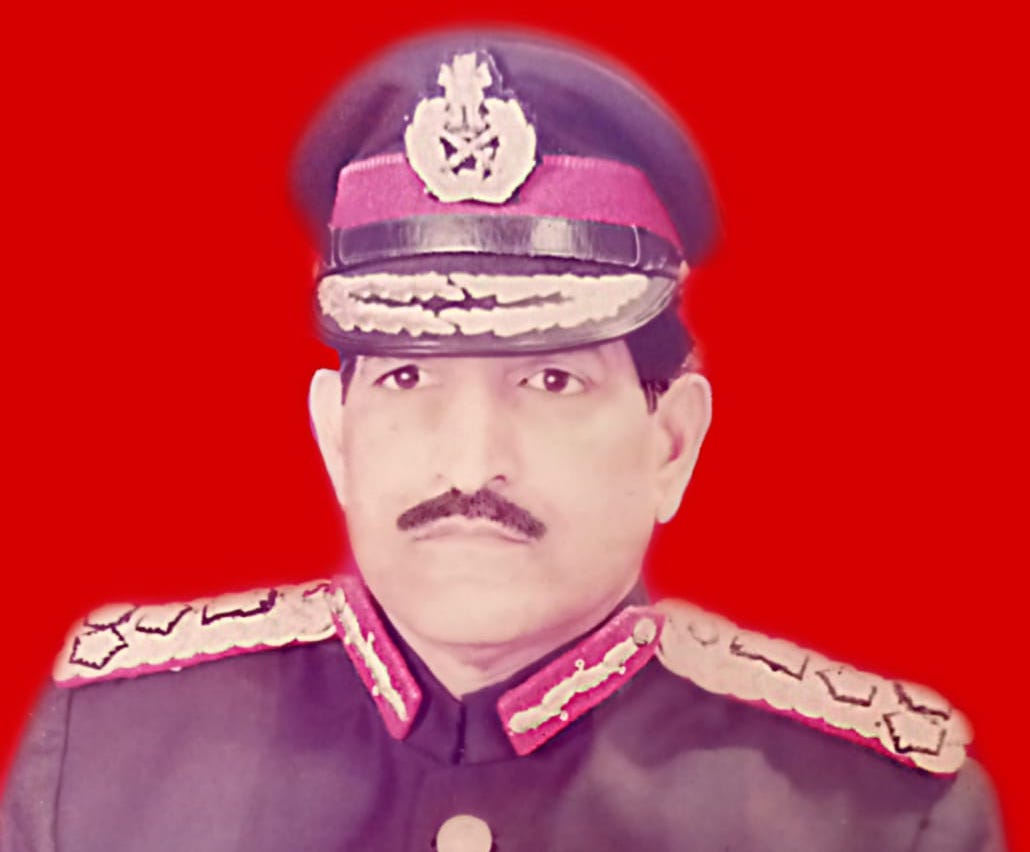 Brig RA Singh, VSM (R)
*Balwan, which means “strong” in English is what Jat Regiment soldiers are informally called. It comes from the regiment’s war cry “Jat Balwan, Jai Bhagwan! (The Jat is Powerful, Victory to the Lord!)”
The author, Brig RA Singh (R), was a captain and the adjutant of 9 Jat during the Battle of Chhamb during the 1971 India-Pakistan war.
Disclaimer: The views expressed in this article are author’s own and the authenticity of the events mentioned are his own findings. His views don’t necessarily reflect the views of India Sentinels and India Sentinels can’t vouch for the authenticity of the events mentioned .If any reader has any dispute with the veracity of certain facts and/or have additional information, kindly write to us at [email protected].
Follow us on social media for quick updates, new photos, videos, and more
X (formerly Twitter): https://x.com/indiasentinels
Facebook: https://facebook.com/indiasentinels
Instagram: https://instagram.com/indiasentinels
YouTube: https://youtube.com/indiasentinels
© India Sentinels 2025-26