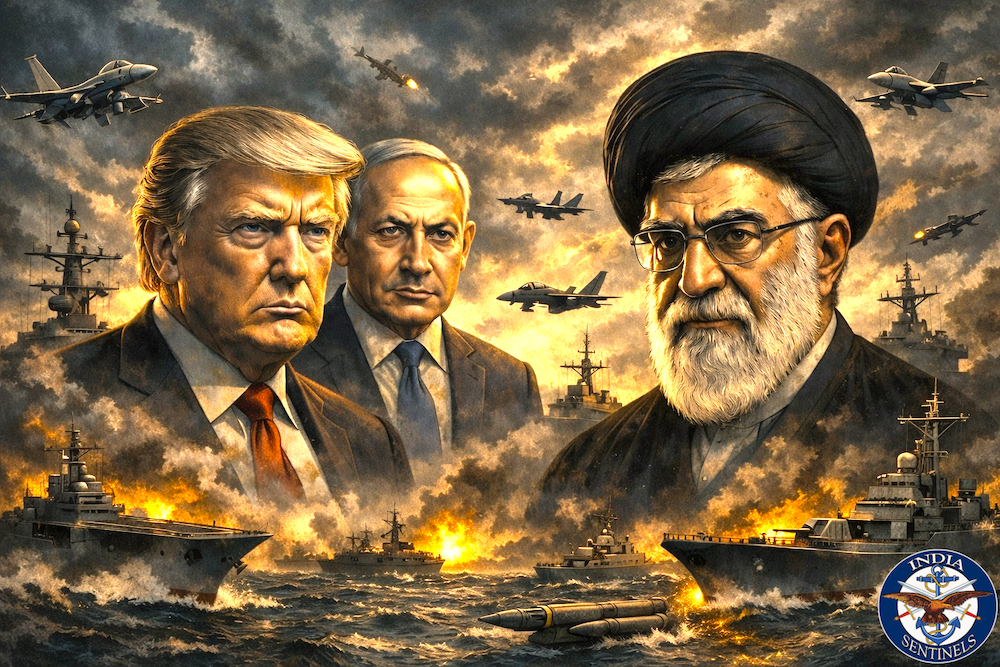
 Illustration for representation. (© India Sentinels 2026–27)
There is something almost pitiable about watching the most powerful man in the world – the president of the United States, Donald Trump – being frog-marched toward a war he didn’t originally seek. He is being coerced by the imperatives of domestic politics, the weight of campaign finance, and, above all, by the long-held dream of the Israeli prime minister, Benjamin Netanyahu, who has spent the better part of three decades trying to remove, once and for all, the Iranian regime’s capacity to threaten Israel.
The negotiations currently underway between Washington and Tehran – the latest round of which concluded in Geneva not long ago – increasingly resemble the overture before a tragedy already written, a diplomatic curtain raiser before the bombs begin to fall.
Read also: Putin visit masterclass in geopolitical theatre, but where’s the beef?
American War Plan
Those who expect a repeat of Desert Storm – massed armoured columns, six carrier battle groups and thousands of sorties over a flattened adversary – are thinking about the wrong war. Serious analysts who have spent careers inside the American and Israeli intelligence and military establishments are in broad agreement: if Washington moves against Iran, it will not be a conventional campaign. It will be an intelligence-driven operation built around tailored strike packages designed to achieve outsized outcomes – decapitation, disruption of command and control, and the activation of pre-positioned regime-change assets.
What these analysts describe is not a campaign that begins on the day the bombs fall. It is a layered regime-change project years – perhaps decades – in the making. The Mossad and the CIA have spent an extraordinary amount of time and resource building agent networks inside Iran, penetrating academic institutions, scientific bodies, and the Revolutionary Guard itself.
The Israeli operation that planted pager bombs inside Hezbollah’s middle leadership, or that ran secret drone factories inside Iranian territory using locally recruited operatives, was not a one-off improvisation; it was a glimpse into the depth of a long-term infiltration campaign whose Iranian chapter is no less advanced.
Read also: Pakistan’s Last Refuge – Nuclear rhetoric after military defeat
The negotiating table, in this reading, is itself a collection platform. Every Iranian delegation that sits across from Jared Kushner or Steve Witkoff generates what intelligence professionals call “pattern-of-life activity” – communications, movements, cellular structures of decision-making – that the Americans and Israelis harvest and map. The nuclear talks are not a sincere attempt at a deal; they are a mechanism for identifying the missing links in Washington’s targeting chain, for locating the supreme leader’s communications nodes and for decompressing the network of agitators held in reserve for the moment the bombs begin to fall.
The People’s Mojahedin Organization of Iran (MEK), the monarchists, the Kurdish militias with their machine-guns in the backs of pickup trucks – none of them appeared during the last round of internal Iranian unrest. That was deliberate: they are being held back for the endgame.
Iran’s ventilation shafts at Fordow, long considered invulnerable, were apparently struck twice during the 2025 exchanges. Its currency was deliberately collapsed to generate precisely the street protests the Americans needed to justify moral intervention and study the regime’s response patterns.
These are not the acts of a country blundering into war; they are the preparations of one that has been rehearsing this campaign for a generation. The conclusion of those who have studied this most carefully is that if the trigger is pulled, it will be because Israel and the US believe they have sufficiently prepared the ground – intelligence, covert networks, targeting data – to carry out those tailored strikes and get the job done.
Read also: Thank you, Trump, for making India understand America like never before
Will Trump actually pull the trigger?
A cooler, more sceptical body of American strategic opinion is less convinced by the coherence of this planning than the above account might suggest. These analysts see not a sophisticated long game, but improvisation dressed up as strategy – a White House with no coherent strategic framework for either Iran or Russia, whose approach to adversaries amounts to little more than threatening and bullying in the hope of subordinating them to Washington’s will.
Trump makes things up as he goes along, and his negotiating gambits are better understood as political theatre than as the overture to a carefully sequenced military operation.
Yet even these sceptics don’t doubt that the war will come. Washington is currently assembling one of the largest concentrations of US air and naval power in the Middle East since the 2003 invasion of Iraq, and the strategic objective – as perceived in Tehran, Moscow, Beijing, and Ankara – is unmistakable. This is not a demonstration designed to persuade. The goal, as bluntly articulated by American hawks and inferred by every serious observer of the build-up, is the disintegration of the Iranian state and its society.
That is what Netanyahu wants. That is what the broader Israel lobby and its financial infrastructure in the US has purchased.
Read also: How Trump lost India – and why America must win it back
Those voices within the American foreign-policy establishment who retain some independence are quite direct on this point: were it not for the Israel lobby and the enormous power exercised by its donors and institutional allies inside the US, Washington would not be preparing to attack Iran. Trump has given his word, taken the money and has little choice in the matter.
The negotiations are useful for mollifying the press and buying time for targeting, but they are not a genuine search for agreement. The conditions on the table are Netanyahu’s conditions, and no Iranian government that wishes to survive domestically can accept them.
What ought to concern every serious strategic mind is what happens if the war begins and does not end quickly. The Boer War offers an instructive precedent: 30,000–40,000 guerrillas embarrassed more than a quarter of a million British troops, sent a message to the world about the limits of imperial power, and began the long unravelling of British strategic credibility.
If Iran can absorb the initial strikes, disperse its surviving forces, activate its proxies and inflict high-visibility losses on American assets, the psychological and strategic consequences for the US would be severe and lasting.
The Houthi campaign is the recent cautionary tale: big brash statements, enormous firepower expended, and an adversary that simply refused to break. Washington eventually put some paper on it and called it a success. An Iranian war would be several orders of magnitude more difficult to paper over.
Read also: Charting India’s Strategic Autonomy – A perspective on geopolitical reset
Worst-Case Calculus: What War Games Say
A detailed analytical scenario exercise examining the worst-case trajectories for both Iran and the US – grounded in available military, economic, and energy data as well as the record of earlier war games – paints a picture that should give pause to the most enthusiastic hawk in Washington or Tel Aviv.
The American opening salvo would, in all probability, be devastating. B-2 stealth bombers, B-52s, cruise missiles, electronic warfare, and precision-guided munitions would strike in coordinated waves against nuclear facilities, missile sites, command-and-control nodes, air-defence systems, and – in the expanded campaign – energy infrastructure. Casualties in the first week of intensive bombing could run into the low thousands; extrapolated over weeks, they would be far higher. The port of Bandar Abbas, refineries at Abadan and Arak, the electricity grids serving Tehran and Esfahan – all would come under sustained attack.
But here is where the historical record intervenes to puncture optimism. Every major air and missile campaign in modern history, with the sole exception of Israel’s stunning 60-hour operation against Arab air forces in June 1967, has fallen short of its declared objectives. Kosovo in 1999 didn’t break Serbian will until ground forces threatened; Afghanistan and Iraq produced long occupations at staggering cost; even the campaign to suppress the Houthis in Yemen demonstrated that a non-state actor with modest means can absorb enormous punishment and keep fighting.
Independent analysts are unsparing on this: every air and missile campaign, without exception, has failed to perform to expectation. There is no compelling reason to believe the next one will be different.
Read also: As Sergio Gor lands, India must map its own course amid Trump’s SA reset
Iran, unlike Iraq in 1991, has spent 25 years specifically preparing for this attack. Its underground facilities are staggering in number. Its ballistic missiles – the very weapons whose elimination Washington demands as a condition of any deal – are dispersed, mobile and numerous enough to saturate even advanced Patriot and THAAD batteries defending US bases at Al Udeid in Qatar, the naval facilities in Bahrain, and the forward operating bases in Kuwait and the UAE.
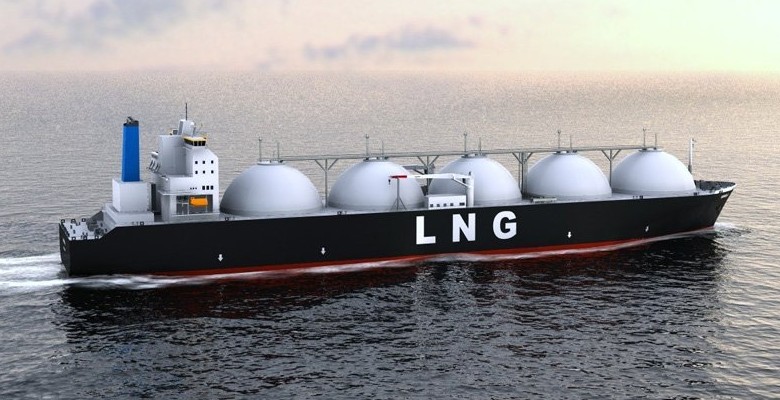
In a worst-case scenario, Iranian restraint disappears once the bombs fall. Hezbollah in Lebanon, the Hashd al-Shaabi in Iraq, the Houthis in Yemen and aligned groups across the “Axis of Resistance” simultaneously unleash their arsenals against Israel, Red Sea shipping and US military infrastructure. The Strait of Hormuz – through which passes roughly one-fifth of the world’s traded oil and significant volumes of liquefied natural gas – is mined or effectively closed.
The consequences for global energy markets are catastrophic. Analysts have estimated that even a partial Hormuz disruption could send Brent crude towards $150–200 a barrel under worst-case assumptions, with liquefied natural gas prices in Asia and Europe returning to crisis levels.
The 2002 Millennium Challenge exercise, in which the “Red Team” representing an Iran-like adversary used asymmetric and unconventional tactics to sink a substantial portion of the US fleet in the opening days, was not a script for reality – but it was a warning that the US chose to ignore by restarting the exercise on a pre-scripted basis that guaranteed an American victory. Simulations conducted since then have repeatedly shown that an aircraft-carrier battle group, if engaged by massed saturation salvos of anti-ship ballistic missiles and cruise missiles in the confined waters of the Gulf, is vulnerable to catastrophic losses.
The loss of a carrier – with its 5,000 crew members, its air wing and its symbolic weight as the primary instrument of American power projection – would not merely be a military setback. It would be a civilizational shock, of the same order as the fall of Singapore in 1942 or the sinking of HMS Prince of Wales and Repulse in the same week, events that announced to the world that the incumbent superpower could be hurt in ways previously thought impossible.
Read also: Amnesia vs Engagement – A soldier’s view on India’s China dilemma
The Wider World
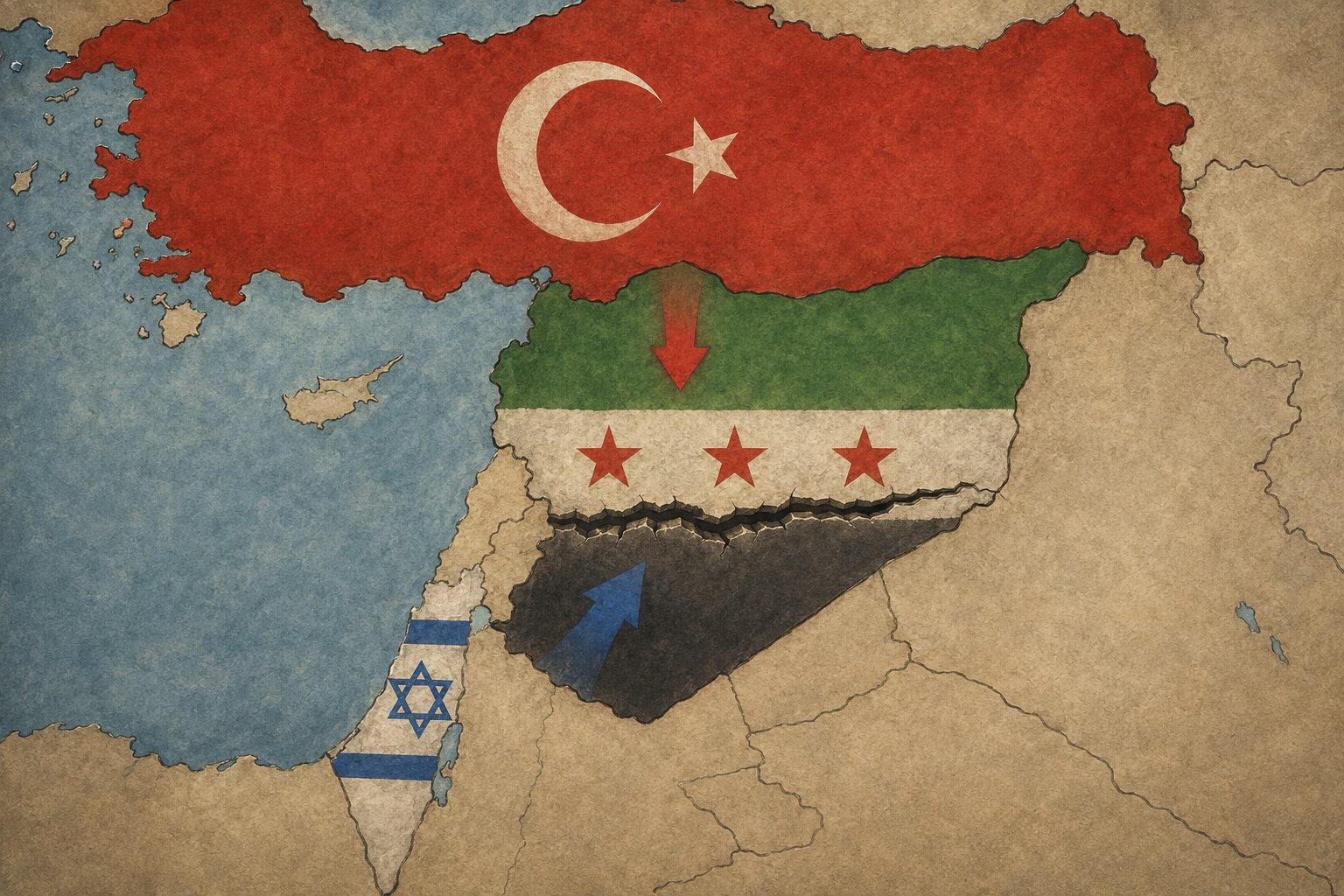
For the Middle East, a protracted US-Iran war would not stabilize the region. It would fragment it further. Iraq, still barely holding together after two decades of American intervention, would be convulsed by its Shia militias. Lebanon, already economically ruined, would face another destructive Israeli-Hezbollah exchange. Syria would become a new arena for competing proxies. Saudi Arabia and the UAE, however much their leaderships privately acquiesce in American planning, would face Arab street pressures they can’t indefinitely suppress. Egypt, Jordan, and Turkey would be under competing pressures they can barely manage.
The region, in short, would look less like a post-war landscape amenable to American management and more like the Syria-Libya fragmentation scenario that haunts every serious analyst of the Iranian state’s possible internal collapse.
For the global south, the war would register primarily as another instance of the powerful imposing their will on the less powerful, dressed up in the language of non-proliferation and human rights. Washington’s claim to be the defender of a rules-based international order – already severely damaged by Iraq, Afghanistan, the unilateral withdrawal from the JCPOA and the evident double standards applied to Israel’s own undeclared nuclear arsenal – would sustain a potentially fatal blow.
Read also: India’s Eastern Front – The new battleground that could eclipse Pakistan
At the United Nations, the US would face withering scrutiny over the legality of preventive strikes against a country that has repeatedly stated it is not seeking a nuclear weapon, and whose programme has been monitored by the IAEA. China, Russia and the wider global south would compete to present themselves as the responsible, de-escalatory powers, and they would not have to try very hard.
For India, the stakes are acutely personal and immediate. We depend on Gulf oil and gas for the overwhelming majority of our energy imports. Even a temporary Hormuz closure or sustained disruption of Gulf shipping would strain our current account, drive domestic fuel prices to politically destabilizing levels and complicate the management of growth and inflation at a moment when our development ambitions are at their most ambitious. Our diaspora in the Gulf – nearly 9 million citizens – would face mortal danger. Our trade routes through the Arabian Sea and the Red Sea would be contested. The 8 million barrels per day that India currently processes would become a daily source of economic anxiety.
There is, additionally, the geopolitical dimension that our strategic community must think through with care. A protracted American entanglement in Iran would divert US military and diplomatic attention from the Indo-Pacific, creating space for Chinese assertiveness that could directly affect our interests in the Himalayas, the Indian Ocean and our neighbourhood. At the same time, Russia – already deeply invested in its war in Ukraine – would find new opportunities to deepen its relationship with Tehran, supplying weapons, economic lifelines and diplomatic cover.
India would be forced, once again, into the uncomfortable position of navigating between great-power contests that we didn’t initiate and cannot control.
Read also: Devil’s Triangle – India’s strategic nightmare that could choke northeast
The Endgame
Having studied the assessments – the intelligence analyses, the war-game results, the arguments of those who know these theatres from the inside – this author is compelled toward a conclusion that will satisfy no one: Iran will survive. It will be devastated, certainly. Its cities will burn, its infrastructure will be shattered, its economy will contract to depression-level depths. But the Islamic Republic, as a governing and fighting entity, will not be eliminated by air power alone, and the US has no appetite – politically, financially or militarily – for the ground invasion that regime change would actually require.
What the war will produce, most likely, is a pyrrhic American military victory accompanied by strategic catastrophe. The US will inflict grievous damage on Iran’s nuclear and military infrastructure. Iran will inflict grievous damage in return – on American bases, on Gulf shipping, on Israel, and almost certainly on American naval assets in the confined and missile-saturated waters of the Persian Gulf.
The loss of a significant naval vessel, possibly an aircraft carrier, can’t be ruled out. The domestic political consequences in the US of such a loss – coming from a war initiated not in response to an attack on American soil but on behalf of a foreign government’s strategic preferences – would be severe and lasting.
Read also: China’s Brahmaputra Gambit – A strategic assessment of Motuo dam
Will Washington reach for nuclear weapons? No. The constraint here is not moral scruple alone, although this author hopes that plays some role. It is strategic logic: the moment the US employs a nuclear weapon against a non-nuclear state, it hands Russia a precedent – and possibly a pretext – to employ tactical nuclear weapons in Europe against Ukraine. The carefully maintained fiction that nuclear weapons are instruments of deterrence rather than warfighting would collapse, with consequences that neither Moscow nor Washington wishes to contemplate.
This constraint, paradoxically, is one of Iran’s most important protections.
The longer-term strategic damage to the US would manifest in several dimensions: the further erosion of the non-proliferation regime, which assumes that diplomatic engagement is preferable to force; the acceleration of de-dollarization and the BRICS alternative financial architecture; and the hardening of Iranian nuclear ambitions, since a country that is bombed rather than rewarded for restraint will draw the obvious lesson. Beyond these immediate consequences, such an action would also deepen the global perception that Washington's alliances and commitments are driven by the priorities of specific domestic lobbies rather than by any coherent conception of the national interest.
Read also: Network-Centric Warfare – Pakistan’s edge and India’s wake-up call
Fingers Crossed
This author writes this as a soldier who has spent a career studying the uses and limits of military power. He has seen what happens when political leaders convince themselves that force can achieve what diplomacy has failed to deliver. The history is not encouraging. The current nuclear talks in Geneva – however cynically one views their purpose – remain the last available firewall against a conflict that would leave both Tehran and Washington badly damaged, and much of the world, including India, paying a steep price for choices made far from New Delhi.
Perhaps the talks will produce something. Perhaps some back channel, some face-saving formula, some creative ambiguity on the enrichment question will give Trump enough political cover to step back from the edge. The Iranians, for their part, are not suicidal; they understand, as the grand ayatollah has publicly acknowledged, that they are facing the most powerful military in the history of the world, even as they insist it will not be able to eliminate them.
This author is a veteran soldier, not an optimist by professional formation. The accumulation of forces in the Gulf, the internal logic of the negotiations, the political commitments already made, and the financial debts already incurred all point in one direction. But he keeps his fingers crossed – because the alternative is a fire that, once lit, no one in Washington, Tel Aviv or Tehran will be able to control, and whose smoke will darken skies from the Strait of Hormuz to the Gangetic Plains.
Disclaimer: The views expressed in the article are the author’s own and don’t necessarily reflect the views of India Sentinels.
Follow us on social media for quick updates, new photos, videos, and more.
X: https://x.com/indiasentinels
Facebook: https://facebook.com/indiasentinels
Instagram: https://instagram.com/indiasentinels
YouTube: https://youtube.com/indiasentinels
© India Sentinels 2025-26