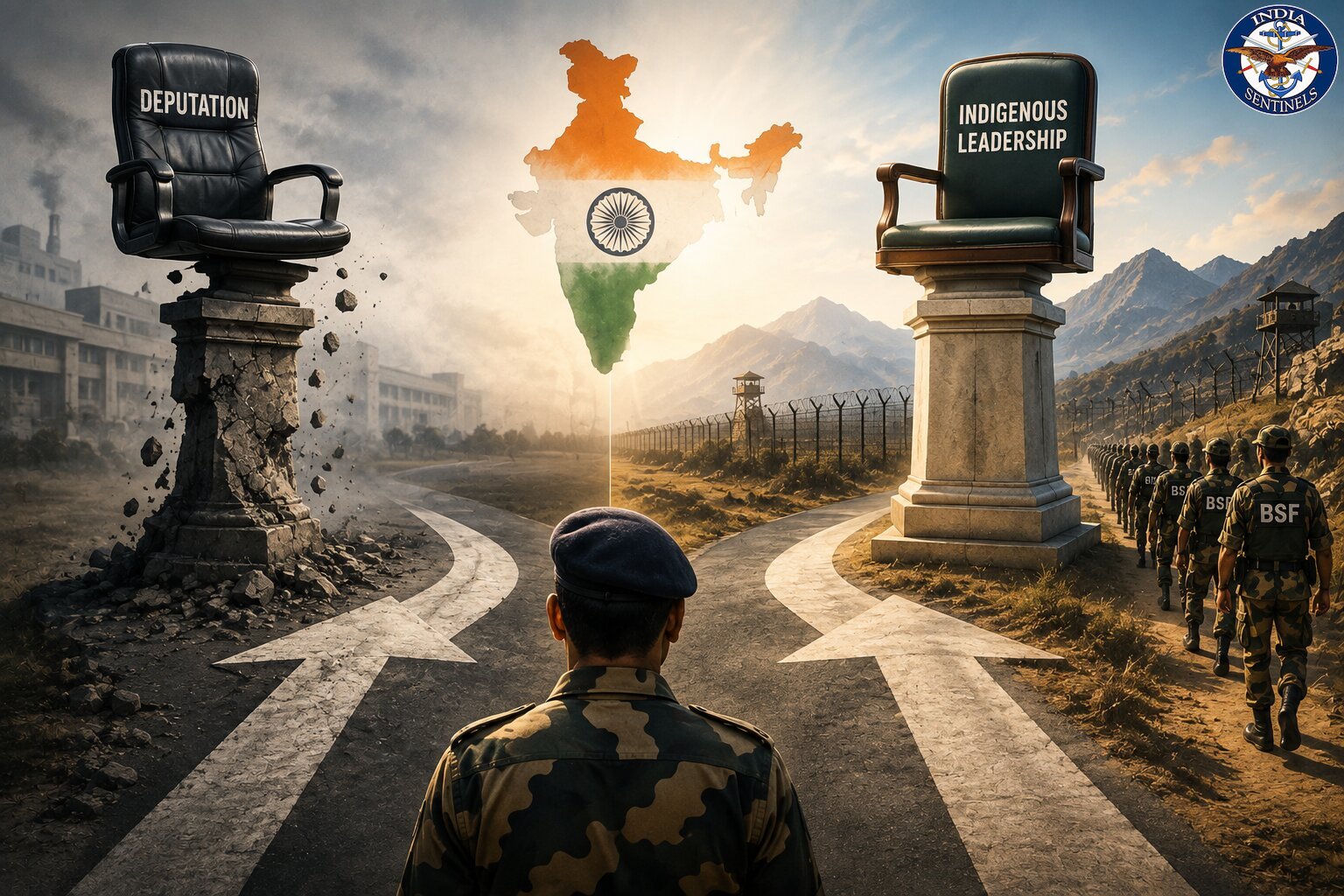
 Illustration for representation. (© India Sentinels 2026–27)
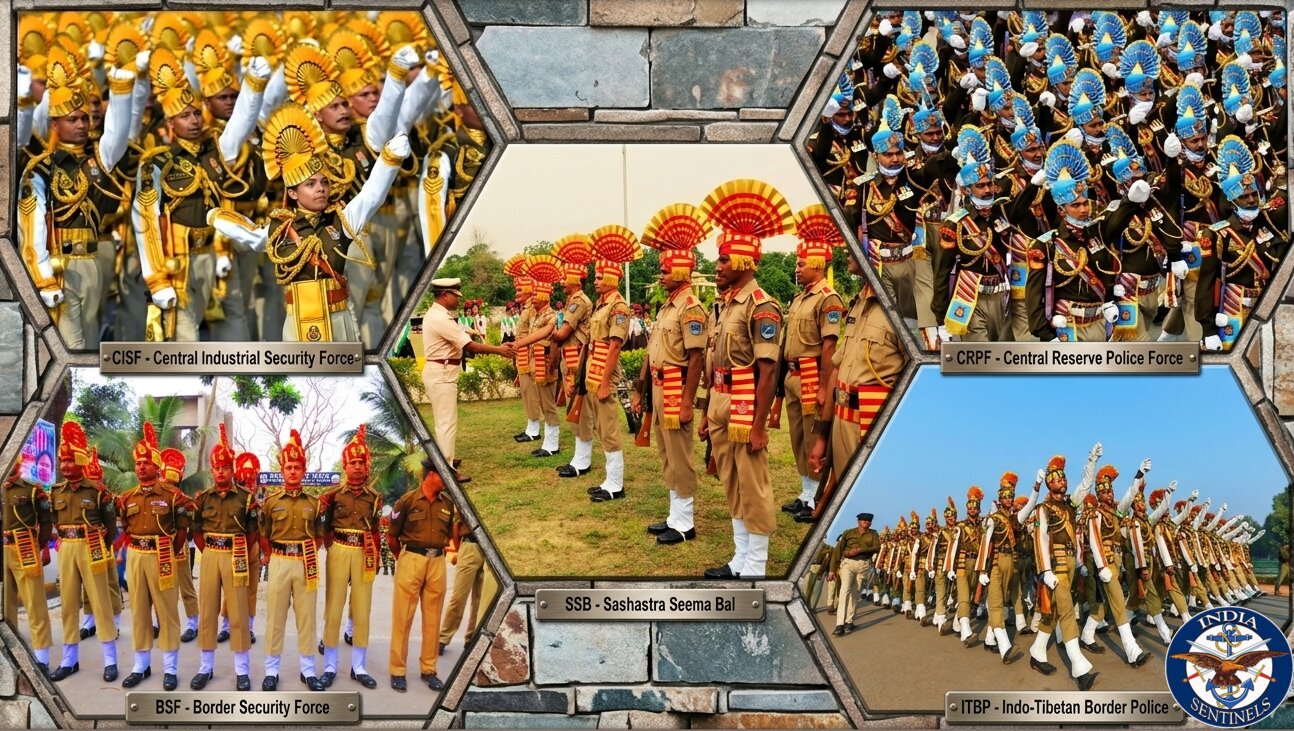
The central armed police forces (CAPFs) constitute a formidable 1.1 million-strong armed component under the Ministry of Home Affairs (MHA). These forces safeguard India’s security and territorial integrity during peacetime along borders, on battlefronts, and in internal security operations. During Operation Sindoor, the Border Security Force (BSF) fought a standalone battle along the entire Jammu region down to south of Chenab, not only destroying Pakistani defences but also crushing enemy morale to its lowest ebb.
Yet, despite such extraordinary service, the difficult, hostile and hazardous conditions that CAPF personnel face remain largely anonymous, invisible and unacknowledged. Their contributions seldom receive tangible recognition in terms of improved service conditions and career progression from the political executive and bureaucracy, though the nation’s conscience recognizes their unparalleled devotion to national security.
The Structural Flaw: IPS Officers Leading CAPF Pay Cells
A fundamental problem lies in how CAPF interests are represented before pay commissions. Pay commission cells within CAPFs are typically headed or controlled by Indian Police Service (IPS) officers who, lacking exposure to CAPF operational environments, cannot fully appreciate the professional difficulties, hazardous climates and threat scenarios in which CAPF personnel operate. This is why genuine demands and concerns remain largely unaddressed and invisible in pay commission recommendations.
Read also: Radicalization in India is a national crisis that demands constitutional resolve
While it is the prerogative of CAPFs to constitute their pay commission cells, the peculiar hierarchical structure – helmed by IPS officers – creates an inherent conflict of interest. These cells, tasked with preparing recommendations, must compulsorily be headed by cadre officers. Similarly, committees studying and filtering recommendations for submission to the MHA or pay commission must be headed by cadre additional directors general, with cadre inspectors general and deputy inspectors general as members.
Following principles of natural justice, IPS officers should have no role in CAPF pay commission cells and committees, as they have no professional or personal stake whatsoever in CAPF recommendations. They serve different career trajectories with different operational realities.
A History of Marginalization Across Pay Commissions
The 5th Pay Commission
The 5th Central Pay Commission (CPC) addressed CAPFs as “central paramilitary forces” and clubbed together the Assam Rifles, BSF, Central Industrial Security Force (CISF), Central Reserve Police Force (CRPF) and Indo-Tibetan Border Police (ITBP). It even designated the Railway Protection Force as paramilitary under the railway ministry.
After designating them as paramilitary forces, the 5th CPC accepted the acronym CPO (Central Police Organisation) when CAPFs argued for abolition of posts like second-in-command and additional deputy inspector general, since these posts do not exist in police hierarchy. Yet serious thought was not given to the hostile and hazardous climatic and threat environments, nor to career progression, while making recommendations.
The 6th Pay Commission
The 6th CPC also referred to present-day CAPFs as central paramilitary forces, treating them neither as armed forces – which they are – nor as civilian bureaucracy. It denied them Organized Group “A” Service (OGAS) status, which they had already held since 1986, and the benefit of non-functional upgradation (NFU).
Read also: Bangladesh in Turmoil -- Why BSF must abandon non-lethal tactics now
Based on misplaced logic, it rejected pleas for reintroduction of the ranks of lance naik and naik on the grounds that it would create relativity problems with other police forces within central government – alluding to Delhi Police – and with personnel below officer rank (PBOR) in defence forces. This reasoning was flawed: these ranks exist in defence forces, so the question of relativity does not arise. Comparing CAPF rank structure with Delhi Police defies reasoning, since Delhi Police is Delhi-specific and operates in an entirely different environment.
The 7th Pay Commission
The 7th CPC also rejected CAPF pleas for OGAS status based on positions articulated by the MHA and the Department of Personnel and Training (DoPT). However, in an attempt to strike a balance, it recommended that cadre officers should get sufficient opportunity to occupy senior positions and should not be precluded from manning the highest posts in their respective organisations. It suggested that service rules be amended accordingly.
The 7th CPC chairman felt that NFU should be extended to CAPF officers on the pattern of civilian bureaucracy. The MHA did not accept these recommendations.
Supreme Court Recognition: OGAS Status Confirmed
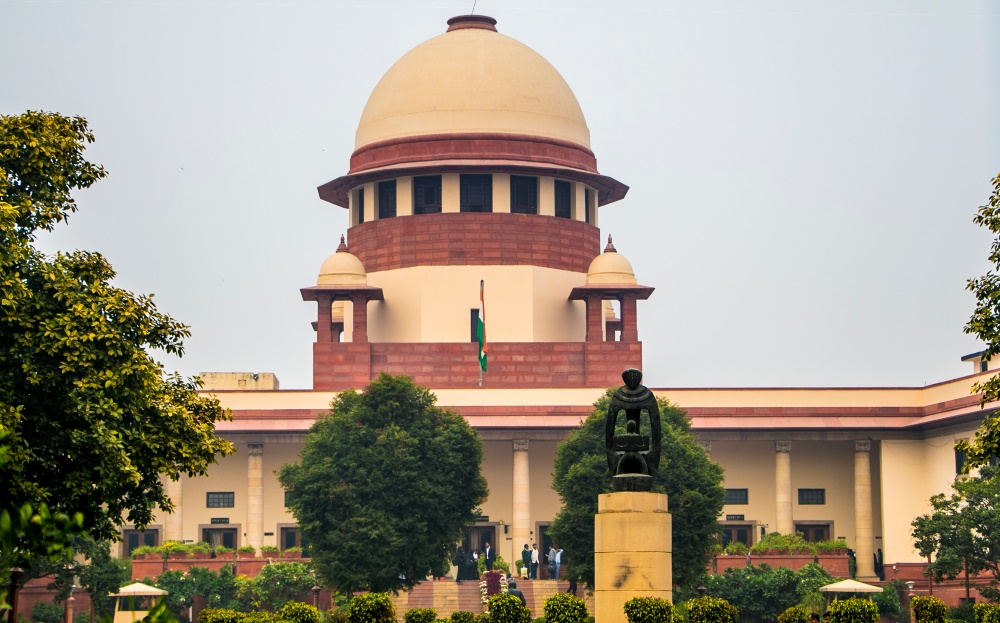
The 8th CPC, headed by Justice Ranjana Prakash Desai, former judge of the Supreme Court, needs to make its basic starting point for CAPF pay structure and allowances the fact that these forces have been recognized as Organized Group “A” Services by the honourable Supreme Court, and the government’s final challenge in the form of a review petition stands dismissed.
Read also: Fighting White-Collar Terror – India’s battle begins in the classroom
Various time-bound aspects of this judgment are yet to be implemented by the MHA.
Correcting a Misconception
Unfortunately, in an opinion piece in The Tribune dated January 9, 2026, titled “Civil-Military Gap Must Be Bridged”, Admiral Arun Prakash (retired), former chief of naval staff, stated that NFU stands implemented for CAPFs, whereas CAPF cadre officers are still waiting for implementation, staring at the doors of the MHA and the honourable Supreme Court.
He wrote: “Non-functional upgrade (NFU), which guarantees civilians automatic higher pay entitlements, even without a merit or vacancy-based promotion. By according this unjustifiable benefit to the civilians and then to CAPFs, but denying it to the military, [the government] not only depressed the latter’s relative status but also dealt a blow to morale.”
It is pertinent to note that NFU accorded to CAPFs by the honourable Supreme Court has not been implemented by the MHA. Something emanating from the pen of the highly respected Admiral Prakash gives the wrong message to the nation at large. Hence, it must be clarified, with hesitation and a heavy heart, that CAPFs have not been given the benefit of non-functional upgrade.
The Stagnation Crisis: A Career Progression Catastrophe
There is an urgent need for respective CAPF pay commission cells to carry out in-depth analysis of reports from the 3rd CPC onwards and examine how CPMFs/CPOs/CAPFs have been marginalized and rendered invisible in terms of pay, allowances and career progression – both for officers and other ranks – and recommend measures to undo this injustice to ensure high morale, motivation and professional sharpness in the national security domain vis-à-vis adversaries and anti-national elements.
Personnel Below Officer Rank: Waiting Two Decades for First Promotion
The first issue of immediate urgent concern is acute stagnation for both officers and personnel below officer rank. A CAPF soldier attains the first rank of havildar after approximately 22 years of service – between ages 40 and 42, at a declining physical prime. By the time he picks up the rank of assistant sub-inspector (ASI), he is 50 years old. He will likely retire as sub-inspector or, if lucky, may become inspector.
Read also: Supreme Court judgment on CAPF officers is final. Implementation must begin
The situation is similar for direct-entry sub-inspectors, some of whom may retire as deputy commandants.
The flawed rank restructuring means that almost 50 per cent of other ranks – including section commanders, platoon commanders, company havildar majors (CHMs), company quartermaster havildars (CQMHs) and the fighting component – will be between 50 and 60 years of age: physically and mentally drooping, not in a state to shoulder the burden of hostile, hazardous environmental and threat factors in the highly demanding border-guarding and internal security routine.
Solutions are needed to ensure a young age profile and speedy career progression.
The Solution: Rank Restoration and Restructuring
As a first right step, restore the ranks of lance naik and naik, abolish the rank of assistant sub-inspector in the general duty stream, and redesignate head constable as section commander and naik as section second-in-command (2IC) for the sake of relativity and harmony with PBOR in defence forces. This would promote a young age profile, professionalism and the building of junior leadership.
This revolutionary reform will revitalize CAPFs and ensure faster promotions. Sub-inspectors should be brought back as platoon commanders, and inspectors adjusted as company 2ICs and in reorganized mortar and medium machine gun (MMG) platoons with six mortars and MMGs, instead of making them platoon commanders at the lowest point of their physical and mental prime.
Read also: Border Security Force is an armed force, not police, nation must know
Between 2019 and 2023, there were 46,753 voluntary and premature retirements from CAPFs – an attrition rate equivalent to almost nine battalions per year. This does not include superannuation. In addition, automatic financial upgradations should be authorized as per residency period for promotion.
It is illogical to compare CAPF personnel working in hazardous threat environments with a civilian working in a Delhi office. Rather, there is a need to bring personnel below officer rank in CAPFs at par with PBOR in defence forces for better career progression and professionalism, with CAPF-specific rank reforms.
Officer Cadre: Commanding Battalions at 50
For the CAPF officer cadre, there is an urgent need to restore parity. IPS officers generally lead districts in their early thirties. Colonels in the army get command in their late thirties or early forties. Command in CAPFs comes in the early fifties – no age to command a battalion in active service.
This disparity needs analysis to work out a methodology to reduce command age to the early forties in CAPFs. The solution is time-scale promotions coupled with non-functional upgrade, which will automatically reduce the age of command for CAPF officers – a mode and methodology already upheld by the Supreme Court and awaiting implementation by the MHA.
Read also: Democratic Dilemma – How elections compromise border security
It must be kept in mind that officers of the 1997 batch, after putting in almost 29 years of service, are still seconds-in-command – a Guinness Book of World Records entry. Officers of the 1993 batch picked up the rank of deputy inspector general after almost 32 years of service, a colossal delay of 17 to 18 years, since they were entitled to the same rank within 15 to 17 years – again, a Guinness world record.
The Hardship Factor: More Than Altitude
Another critical issue is hardship categorization. Areas need to be categorized considering hazardous geography, threat environment and harsh climatic conditions, which vary seasonally and affect personnel mentally and physically.
For example, personnel deployed in the highly hazardous climatic and threat environment of the Rann of Kutch and Sir Creek – marshy and salty coastal islands with sultry weather causing serious skin diseases and fungal infections, very high sulphur dioxide prevalence causing suffocation and sudden death, high turbulence from April onwards, and the menace of Russell’s vipers – face conditions comparable with high-altitude deployments as far as climate and threat environment are concerned. Yet such difficult hazardous environmental and threat scenarios surprisingly escape the mindset of security professionals and bureaucrats.
Similarly, personnel deployed on the Punjab border, especially in winter, face zero night-time visibility due to fog and sub-zero temperatures. They are deployed continuously for eight to nine hours until relief arrives and is stabilized before they leave their duty platform on the border.
Read also: Ladakh Unrest – When promises meet reality on India’s strategic frontier
Such area-specific categorization is a must for all CAPF areas of deployment. CAPFs need a holistic and realistic ground approach while submitting proposals. Simply saying that allowances may be given at par with defence forces is acceptable for areas along the line of control (LoC) and line of actual control (LAC), but not for other regions, since the army is in barracks training for war and not continuously on border or internal security duty. Similarly, the officer cadre needs to be provided compensation in lieu of accommodation.
Time for Justice
CAPFs have been dispensed justice by the honourable Supreme Court through recognition as Organised Group ‘A’ Services and the grant of non-functional upgradation. Now it is time for the MHA to implement the judgments in totality, honour the verdict of the constitutional court and dispense justice to the CAPF cadre.
Read also: Beyond Fencing – Complex reality of India’s most vulnerable border
Central armed police forces operate in battle mode round the clock. There is no peace for them. They have ensured the sovereignty and territorial integrity of national frontiers with total dedication in hostile, hazardous and difficult environments, compounded by acute stagnation impacting self-esteem and social standing. They fight shoulder to shoulder with the armed forces during war and guard national frontiers in peacetime as soldiers of the nation.
The ball is now in the court of the honourable 8th CPC and the Ministry of Home Affairs to dispense justice to CAPFs – forces that have earned it through blood, sweat and silent sacrifice on India’s borders and internal security frontlines.
Disclaimer: The views expressed in the article are the author’s own and don’t necessarily reflect the views of India Sentinels.
Follow us on social media for quick updates, new photos, videos, and more.
X: https://x.com/indiasentinels
Facebook: https://facebook.com/indiasentinels
Instagram: https://instagram.com/indiasentinels
YouTube: https://youtube.com/indiasentinels
© India Sentinels 2025-26