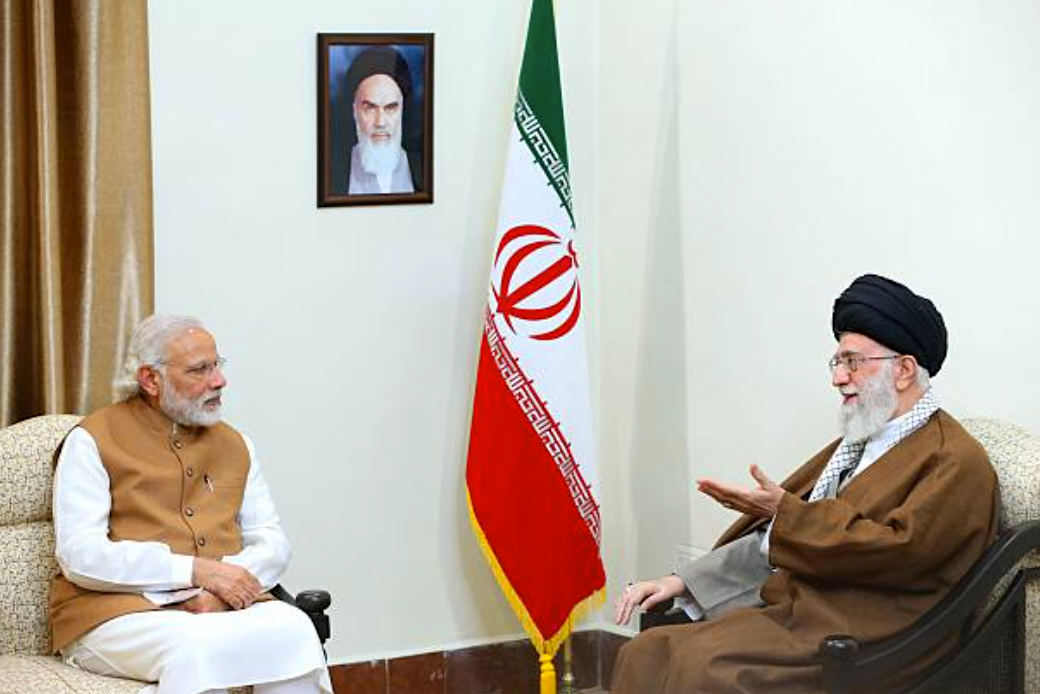
 Narendra Modi (L) and Ali Khameini during their meeting on the former’s visit to Tehran, on March 23, 2016. (Photo: Iranian Supreme Leader’s Press Office)
When Colonel Douglas Macgregor (retired), the blunt-speaking American military analyst, told the journalist Rajdeep Sardesai that the United States was unprepared for war with Iran, he was not merely offering a tactical assessment. He was articulating an uncomfortable truth that resonates far beyond his own country – one that strikes at the very heart of India’s economic survival and strategic interests.
India’s $500 million investment in the Chabahar port was already smouldering under the weight of American sanctions. Now, with the Strait of Hormuz under threat, the 2.6 million barrels of oil that flow through it each day have become a lifeline held hostage to the ambitions of distant powers. Every Indian household, from the chai stall in Varanasi to the corporate canteen in Bengaluru, will ultimately pay this war’s invisible tax – not in blood, perhaps, but in rupees.
Operation Midnight Hammer and Its Aftermath
In June 2025, following the Israeli-US joint air campaign codenamed Operation Midnight Hammer, the president of the United States, Donald Trump, declared with characteristic flourish that Iran’s nuclear infrastructure had been “annihilated and obliterated”. For a moment, it seemed as though a dangerous chapter had been closed.
It had not. The question that must be asked – and asked honestly – is this: if the political objective of dismantling Iran’s nuclear assets was achieved in June 2025, what then was the justification for Operation Epic Fury that followed? The answer, stripped of its strategic language, is uncomfortable: this was never purely a war of necessity. It was a war of choice.
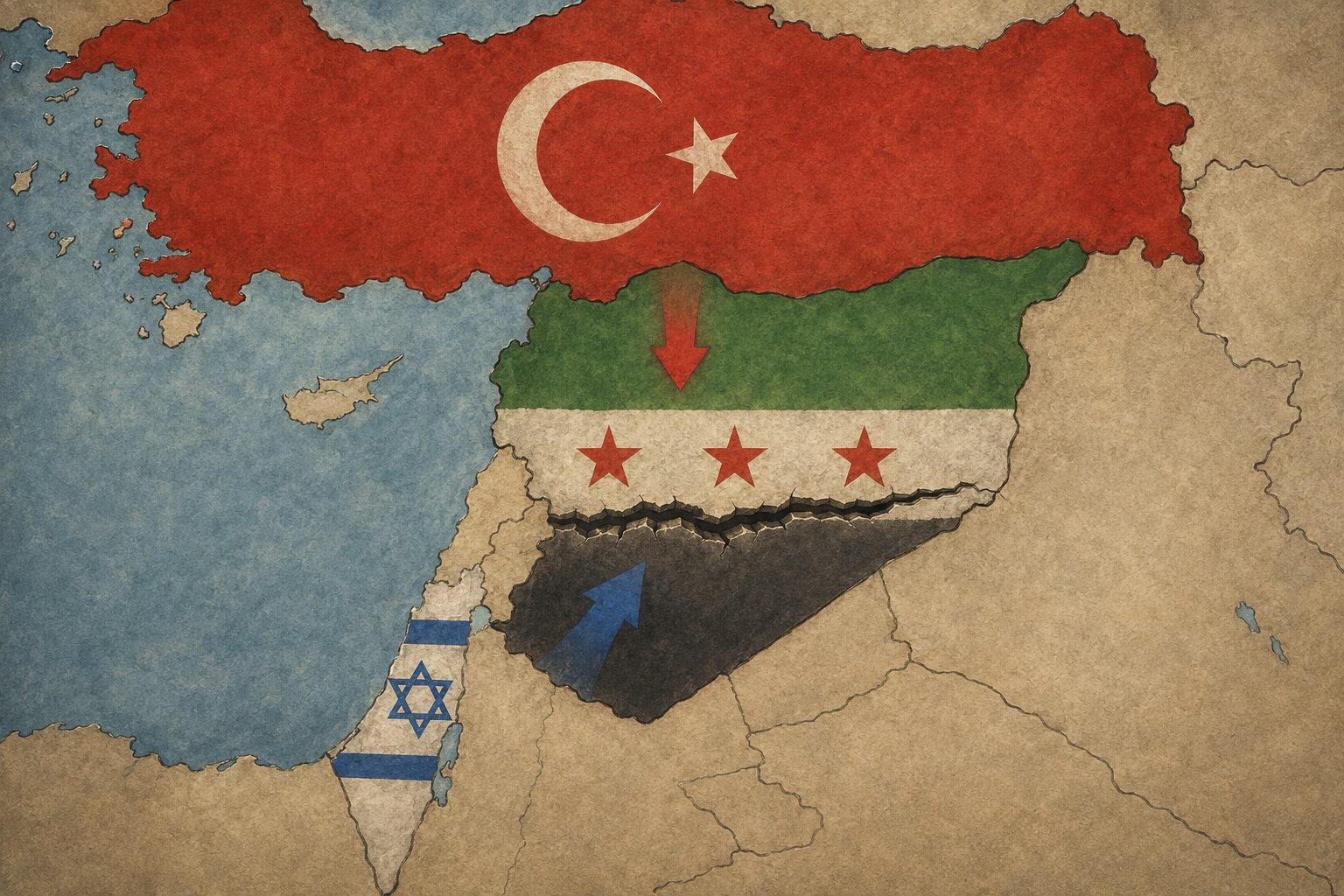
The objective that has slowly come into focus is the establishment of Israeli regional hegemony – a “Greater Israel” ringed by compliant governments. The targeted assassination of Iran’s supreme leader, Ayatollah Ali Hosseini Khamenei, on February 28, removed all remaining ambiguity. Regime change was the aim. The US, under Trump, was not dragged into this war by circumstance. It was drawn in by the Israeli prime minister, Benjamin Netanyahu, whose strategic objectives and Trump’s theatrical impulses found a mutually convenient alignment.
Read also: Netanyahu’s War, America’s Blood – The trap being set in the Persian Gulf
Iran’s Calculation
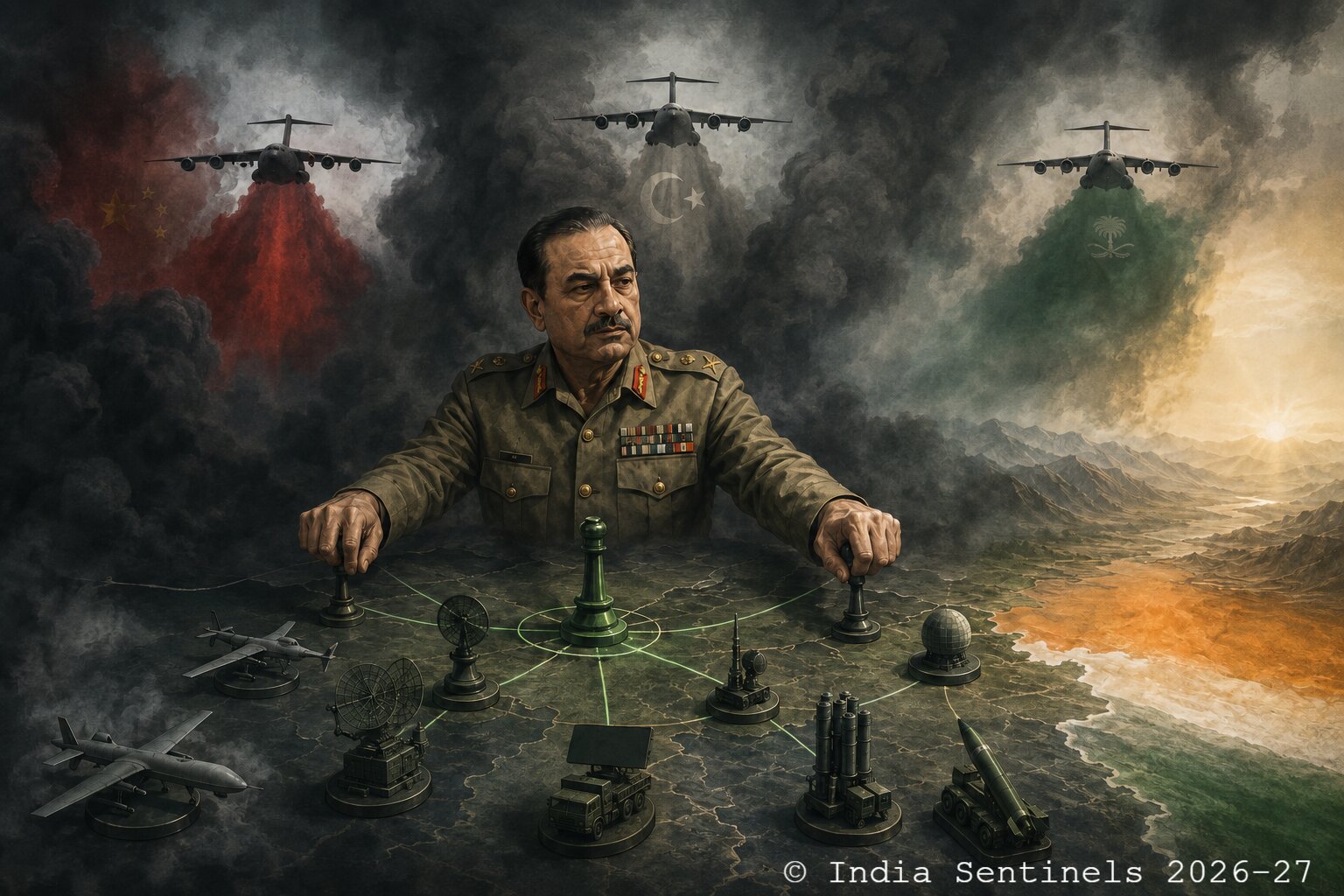
Iran, having absorbed the shock of Operation Midnight Hammer, did not collapse. It had learned, and it had prepared. The Islamic Republic’s resilience is not merely ideological; it has been materially sustained. China, seizing the opportunity to field-test weapons systems it may one day deploy elsewhere – not least in any future confrontation over Taiwan – has kept Iranian arsenals replenished. Russia, meanwhile, appears to have upgraded Iran’s air defence networks, allowing Tehran to absorb blows that would have been catastrophic even two years ago.
Iran’s response to the air campaign has been neither passive nor scattered. It has struck methodically at Gulf states hosting US military bases – their oil infrastructure, their energy installations, their air facilities – turning what was conceived as a localized strike operation into a regional conflict drawing in nearly 14 countries across West Asia. The strategic lesson being transmitted to the Gulf monarchies is unambiguous: American bases on your soil do not purchase your security. They purchase your vulnerability.
Read also: Give CAPF officers what Supreme Court ordered – and what they earned
Shape of the War Ahead
The future trajectory of this conflict resists confident prediction. The US possesses unprecedented military capacity, yet capacity and control are not the same thing. Effective control of the war’s tempo and direction has, for now, shifted to Iran. Whether the Netanyahu-Trump axis can achieve the regime change it seeks without deploying ground troops – an option that remains politically unthinkable in Washington – is increasingly doubtful.
Trump’s own shifting pronouncements are telling. Having begun with the language of annihilation, he has moved to more modest formulations: destroying missile-launching facilities, targeting production lines, and now, extraordinary as it sounds, appealing to factions within the Iranian military to turn on their own government. The recalibration speaks of exasperation, of military setbacks, and of a domestic political audience growing impatient with an open-ended conflict that offers no clean resolution. For the US, the spectre of strategic embarrassment looms.
Read also: Unfenced Borders – Why prioritize jurisdiction over infrastructure?
Where India Stands in the Conflict
Prime Minister Narendra Modi’s visit to Israel on February 26–27 was historic in ways that were both intended and deeply unintended. The official narrative was straightforward: a reaffirmation of shared values, a deepening of bilateral ties across defence, education, agriculture, and technology. India and Israel have built a genuinely productive partnership, and there was nothing inherently wrong in tending to it.
But timing, in diplomacy, is everything.
The launch of a fresh wave of Israeli-US military operations against Iran within hours of Modi landing back in Delhi – whether coincidental or not – produced an optic that no carefully worded statement could undo. India, the great advocate of multipolarity, of strategic autonomy, of settling disputes through dialogue rather than destruction, was seen standing in the Israeli corner at the very moment the bombs were falling.
India’s failure to formally condemn the assassination of Khamanei, a sovereign head of state – whatever one’s views of his governance, has compounded the damage to New Delhi’s standing considerably. Silence, in such moments, is not neutrality; it is complicity by omission.
Khamenei was assassinated on February 28. It was not until nearly a week later, on the March 5, that India offered any response – and even then, in the most subdued and perfunctory of fashions. There was no official government statement, no ministerial declaration; merely the foreign secretary, Vikram Misri, signing a condolence book. It was too little, too late – a gesture performed for optics, and nothing more.
India’s position in this conflict, meanwhile, has come to resemble total alignment with the axis of belligerence – a posture that sits in stark and troubling contradiction to the prime minister’s oft-repeated declaration, made on several distinguished occasions, that “this is not an era of war.”
Equally disturbing is the sinking of the Moudge-class frigate IRIS Dena while still, in effect, within India’s strategic ambit – returning home after participation in the International Fleet Review 2026 and Exercise Milan 2026, both held at India’s own invitation. New Delhi has remained conspicuously silent on this matter, and the government ought to have conveyed its strong disapproval to Washington without delay. It is not yet too late to speak.
A graver question also presents itself, and it cannot be set aside: whether intelligence shared under the Basic Exchange and Cooperation Agreement (BECA)* or the Maritime Information Sharing Technical Arrangement (MISTA)* was in any way utilized to locate, target, and sink the Iranian frigate – a vessel that may well have been unarmed and defenceless at the time. If so, this would constitute a grave breach of the spirit, if not the letter, of India’s defence partnerships.
India must find her voice – and find it now.
For decades, India’s foreign policy earned it a rare form of moral capital: the trust of the global south, the ear of the non-aligned world, the credibility of a nation that refused to be herded into blocs. That capital is not infinite. Spent carelessly, it does not replenish quickly. By choosing visible alignment over non-alignment at this moment, India has, at least temporarily, surrendered the strategic autonomy that has been the cornerstone of its foreign policy since Independence.
The uncomfortable question now is whether a new, pliable government in Tehran – should the war’s architects achieve their objective – will even be disposed to repair ties with New Delhi. History suggests that governments installed by foreign force rarely feel gratitude towards those who watched from the sidelines. And if the regime change never materializes, India will face a resentful, battle-hardened Iran with diminished goodwill to offer.
Read also: Why 8th pay panel must recognize CAPF personnel as true soldiers
Implications for India
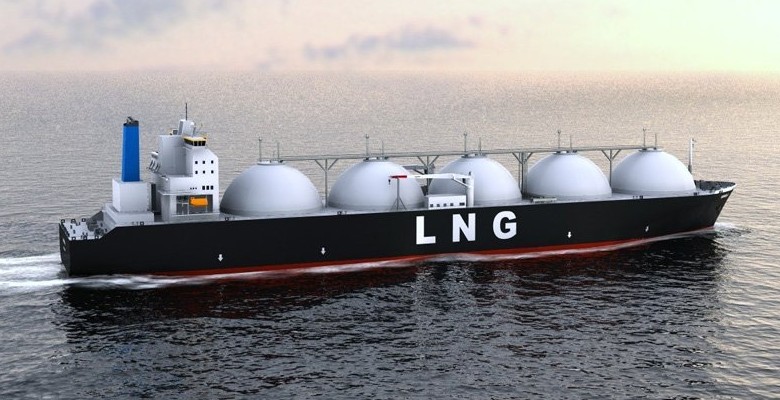
The economic stakes could not be higher. India depends on imports for roughly 88% of its fuel requirements and approximately 50% of its liquefied natural gas (LNG) needs. More than 40% of those energy imports are routed through the Strait of Hormuz. The attacks on Saudi Arabia’s Ras Tanura refinery and Qatar’s gas infrastructure at Ras Laffan and Mesaieed have already disrupted production and supply chains. As traffic through the strait dwindles under the threat of conflict and the crushing weight of high-risk insurance premiums, every Indian family will feel the consequences at the petrol pump and on their monthly household bills.
The Chabahar port, meanwhile, tells its own painful story. India invested $500 million in this Iranian deep-water facility as the cornerstone of a connectivity vision – a land-and-sea route linking it to Afghanistan and the Central Asian republics, bypassing Pakistan entirely. First, American sanctions forced India into an awkward, incomplete engagement with the project. Now, with Israel having targeted Chabahar’s infrastructure and India’s diplomatic positioning calling its future involvement into question, the strategic setback is severe.
The vacuum will not remain empty for long. China, which already controls Gwadar on Pakistan’s Balochistan coast, is well positioned to step into Chabahar. Should that happen, Beijing will exercise strategic dominance over both shores of the Arabian Sea – a scenario that ought to keep Indian security planners awake at night.
For Pakistan and China, the outcome is a near-perfect strategic windfall: economic and military influence over Afghanistan, control of regional connectivity, and India diminished on both flanks.
India’s export trade with Europe and the Mediterranean passes through the Red Sea and the Suez Canal. Houthi activity in the Red Sea and a potential closure of the Bab el-Mandeb strait would force rerouting around the Cape of Good Hope – adding weeks to delivery times and substantial costs to Indian exporters already navigating a turbulent global economy. The cumulative damage to India’s trade competitiveness could be significant and lasting.
Read also: Bangladesh in Turmoil – Why BSF must abandon non-lethal tactics now
Diaspora at Risk
Perhaps the most human dimension of this crisis is the vulnerability of India’s diaspora in the Gulf. Approximately 10 million Indians are employed across the region, sustaining not just their own families but contributing meaningfully to the national economy. In 2024, the Gulf diaspora accounted for around 38% of India’s record $135 billion in foreign exchange remittances – a figure that represents real income for millions of households across Kerala, Uttar Pradesh, Bihar, and beyond.
As the conflict widens, the safety of those workers is genuinely at risk. The loss of employment, forced repatriation, and a sharp decline in remittances would impose immediate distress on families already living at the margin. Should the situation deteriorate further, India would face the logistical and political challenge of organizing mass evacuations from an active conflict zone – under time pressure, with constrained resources, and without the diplomatic leverage that genuine neutrality would have provided.
Read also: Radicalization is a national crisis that demands constitutional resolve
Internal Security Dimension
The assassination of Khamenei has already provoked significant protests in Jammu & Kashmir, Ladakh, Telangana, and some other parts of the country’s heartland. These demonstrations have, by and large, been peaceful expressions of dissent – an unremarkable feature of any democracy. However, they must be watched carefully, not to suppress legitimate grief or anger, but to ensure that genuine public feeling is not cynically channelled by elements inimical to India’s internal security.
Radicalization does not require a majority. It requires a moment of profound grievance and the presence of organized actors willing to exploit it.
The government’s obligation is clear: protect the space for lawful protest while remaining vigilant against those who would transform a young person’s anger into a recruitment opportunity. The line between the two requires intelligence, restraint, and political wisdom in equal measure.
Read also: Fighting White-Collar Terror – India’s battle begins in the classroom
So, What Now?
India’s immediate priorities are not difficult to identify, even if they are hard to execute. Fuel supply security must be addressed through diversification and strategic reserves. Trade routes must be protected through active engagement with all parties. The wellbeing of the Gulf diaspora must be treated as a first-order national concern, not an afterthought.
But beyond these immediate imperatives lies a deeper question of strategic posture.
India has spent decades building the credibility of a nation that speaks for peace without fear or favour – that can pick up the telephone to Tehran and Washington alike, to Moscow and Riyadh, and be heard. That credibility is a finite resource, and it has been drawn down.
The path back to genuine strategic autonomy will require more than clever statements. It will require India to re-engage diplomatically with Iran, to reaffirm its historic commitment to a rules-based order that protects sovereignty – including the sovereignty of nations whose governments one may not admire – and to resist the gravitational pull of single-axis alignment that flatters the vanity of great powers but diminishes those who submit to it.
The road ahead is difficult. It is not, however, unnavigable – provided India remembers who it has always aspired to be.
*For the benefit of readers less familiar with these instruments: BECA provides for the exchange of and access to advanced satellite data, as well as topographical, nautical, and aeronautical information between the two countries; MISTA facilitates the sharing of intelligence and information in the maritime domain, with a particular focus on the Indo-Pacific region. Both agreements were signed in 2020.
Disclaimer: The views expressed in the article are the author’s own and don’t necessarily reflect the views of India Sentinels.
Follow us on social media for quick updates, new photos, videos, and more.
X: https://x.com/indiasentinels
Facebook: https://facebook.com/indiasentinels
Instagram: https://instagram.com/indiasentinels
YouTube: https://youtube.com/indiasentinels
© India Sentinels 2025-26