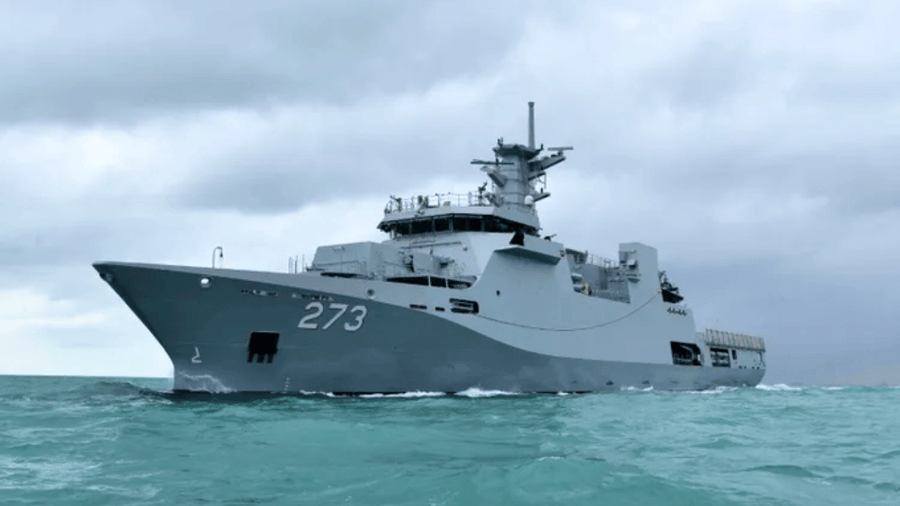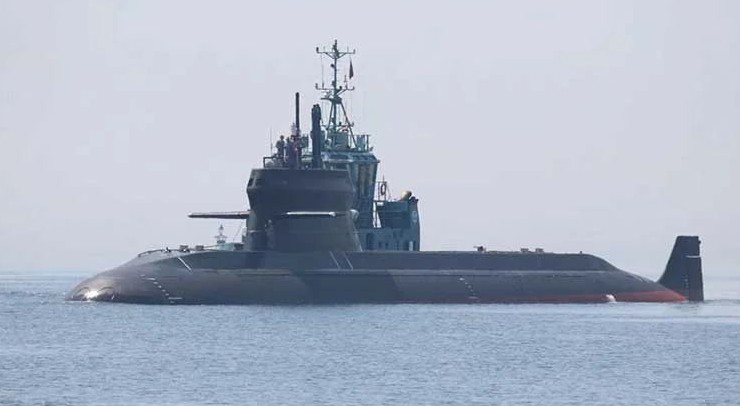
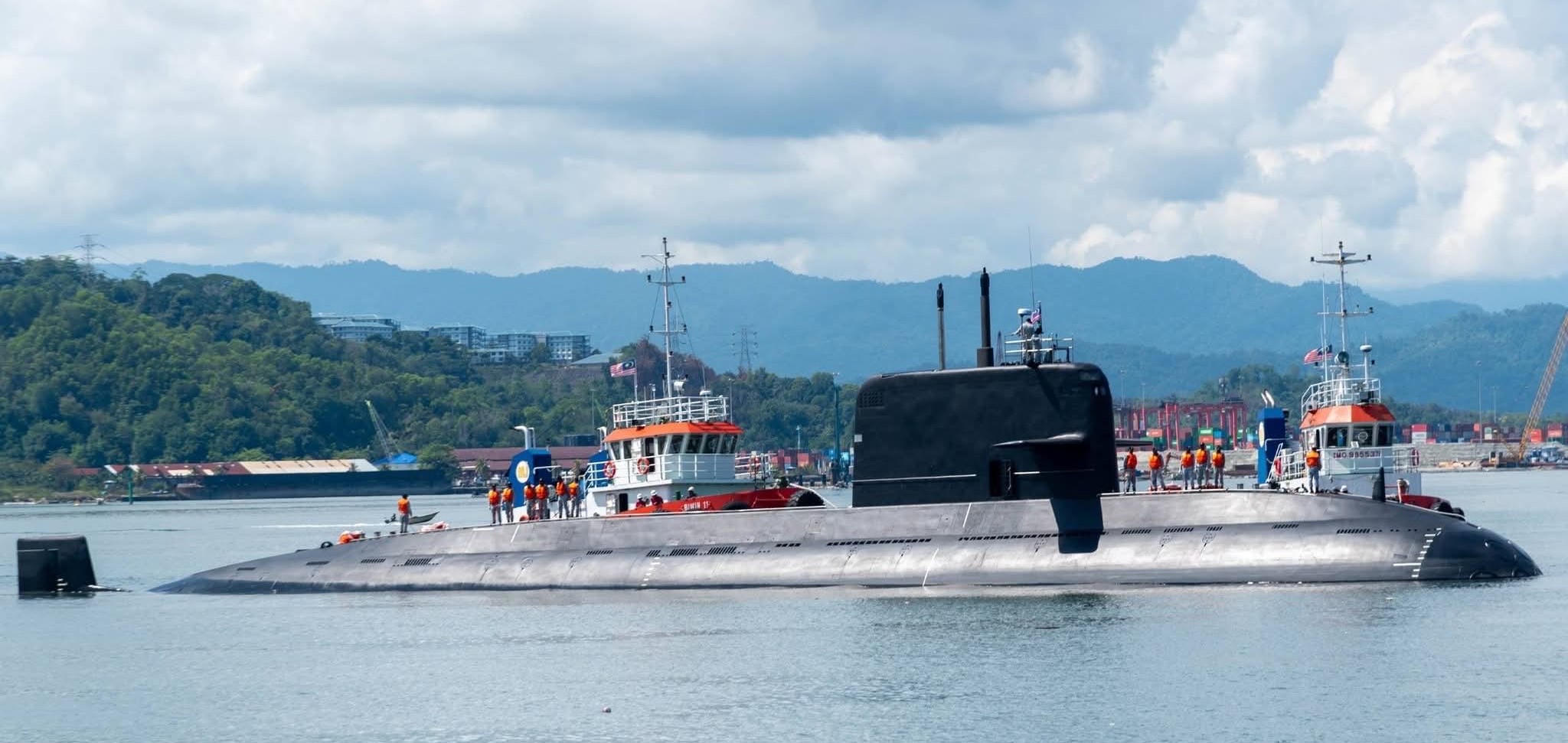
 PNS Hangor makes port call in Malaysia (Photo: Malaysian Navy)
In fiscal year 2024, the World Bank estimated that Pakistan’s poverty rate had reached 40.5 per cent, measured at $3.65 per person per day in 2017 purchasing power parity terms, with an additional 2.6 million Pakistanis falling below the poverty line.
In the same period, Pakistan was advancing the induction of its first advanced submarine class, at a programme cost the government has never publicly disclosed but which independent analysts consistently estimate at $4 to $5 billion for all eight vessels.
The coexistence of mass poverty and major weapons acquisition is not unique to Pakistan. But the scale of the contradiction and the political silence that surrounds it – is worth examining directly.
The numbers behind the human cost
Pakistan ranks 109th out of 127 countries in the 2024 Global Hunger Index. Nearly half of an average household's monthly expenditure goes towards food, and 82 per cent of the population cannot afford a healthy diet. These are not figures from the country’s most vulnerable provinces alone, they describe the national condition.
Between November 2024 and March 2025, approximately 11 million people in Pakistan's rural population were experiencing high levels of acute food insecurity, IPC Phase 3 or above, including 1.7 million people classified as facing emergency levels.
The analysis covered 68 rural districts across Balochistan, Sindh, and Khyber Pakhtunkhwa, representing roughly 20 per cent of Pakistan's total population, meaning the crisis in those districts is structural, not exceptional.
On child nutrition, Pakistan has the second-highest prevalence of stunting in South Asia, after Afghanistan. Pakistan's global acute malnutrition rate stands at 17.7 per cent, exceeding emergency thresholds, with a severe wasting rate of 6 per cent among children aged 6 to 59 months. These are not lagging indicators from a decade ago. They are current measurements of a population in which a significant proportion of children are not receiving adequate nutrition during the developmental window that determines the rest of their lives.
The fiscal architecture of the trade-off
Pakistan's 2025-26 federal budget increased defence spending by more than 20 per cent, to Rs 2.55 trillion ($9 billion), while overall spending was cut by 7 per cent from the previous fiscal year.
Health, education, and infrastructure programmes all took direct hits to make room for military allocations, at a time when Pakistan remains under sustained IMF pressure to reduce subsidies and tighten public spending.
The defence budget increased by 14 per cent in 2022-23, 15.4 per cent in 2023-24, 17.6 per cent the year after, and now by 20.2 per cent in 2025-26, all during years in which Pakistan was on the verge of default, inflation was near 40 per cent, and poverty and unemployment were rising. After debt servicing, which accounts for more than 45 per cent of the total budget, defence is the second-largest expenditure in Pakistan's federal budget.
The political economy of this asymmetry is well understood: Pakistan's military establishment has consistently secured budget protection that civilian social ministries have not. The consequence is not merely an abstract misallocation – it is a measurable compounding of the conditions that produce child stunting, maternal malnutrition, and household food insecurity.
The security debate Pakistan needs
The Pakistani government's position is that defence spending is non-negotiable because the security threats the country faces are existential. Following Pakistan's most serious confrontation with India in nearly three decades, the government cited national security imperatives to justify the budget increase. This argument deserves engagement, not dismissal. The threats are real, the regional context is volatile, and the 2025 escalation demonstrated that the risks are not hypothetical.
But genuine security is multidimensional. A state in which 40 per cent of the population lives in poverty, in which the majority of citizens cannot afford a nutritionally adequate diet, and in which children are stunted at rates that exceed regional averages – that state is not secure. It is fragile in ways that no submarine fleet can address.
The question that Pakistan's public institutions are not currently structured to ask is whether the balance between external deterrence and internal human security is correctly calibrated and whether, in the absence of any public accountability for major procurement decisions, Pakistani citizens are in a position to make that determination for themselves.