 Illustration for representation. (© India Sentinels 2026–27)
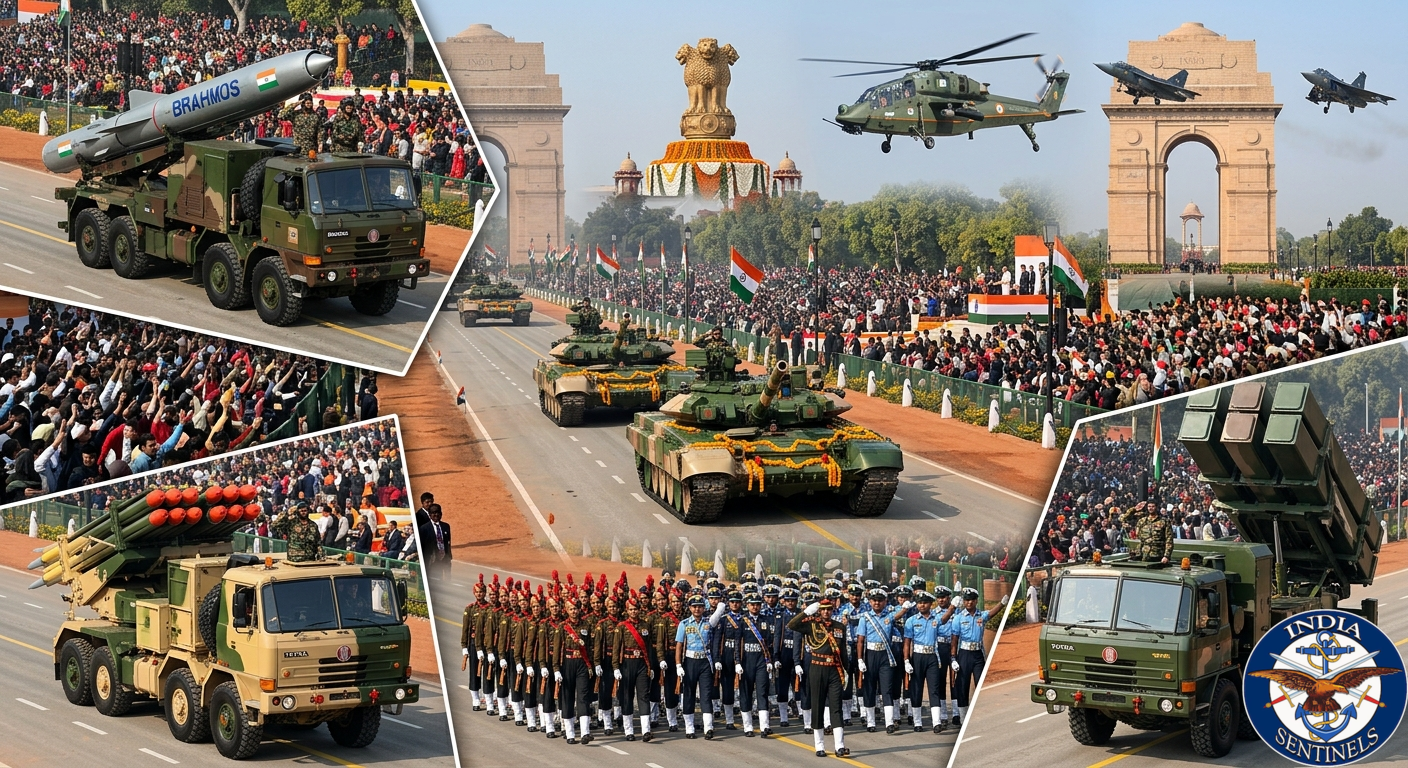
New Delhi: India’s military expenditure rose sharply by 8.9 per cent in 2025 to reach $92.1 billion, cementing the country’s position as the fifth-largest defence spender in the world, according to the latest data [archived link] published by the Stockholm International Peace Research Institute (Sipri) on Monday. The spike was significantly influenced by Operation Sindoor against with Pakistan in May 2025, which involved the use of combat aircraft, drones, and missiles – and triggered a cascade of emergency budgetary revisions that pushed spending well beyond original estimates.
The conflict’s financial footprint was substantial. Revised capital outlays for military aircraft systems came in 50 per cent higher than originally budgeted, while operations and personnel costs for the Indian Air Force were revised upwards by 18 per cent from the initial budget. The figures underscore how quickly actual military expenditure can diverge from planned allocations when active hostilities erupt – a reality India’s defence planners will be accounting for as they prepare future budgets amid continuing tensions on two fronts.
Pakistan, which ranked 31st globally, saw its own military spending grow by 11 per cent to $11.9 billion in 2025. Sipri noted that Islamabad placed new orders for aircraft and missiles with China following the May confrontation, in addition to meeting payments on earlier procurement contracts nearing completion – suggesting that the financial and military consequences of the conflict are still reverberating across the border.
India’s military burden – defence spending as a share of gross domestic product – stood at 2.3 per cent in 2025, slightly below its 2016 level of 2.5 per cent of GDP, even as the absolute outlay has grown by 39 per cent over the decade 2016–25. This signals that India’s economic growth has, in general, outpaced the pace of defence spending increases over the long term, though the 2025 spike interrupted that trend. New Delhi’s challenge in the years ahead will be to sustain the modernization of its armed forces while managing competing demands on the national budget.
A world on a war footing
The broader global picture provides critical context for India’s trajectory. World military expenditure rose by 2.9 per cent in real terms to reach $2,887 billion in 2025 – the highest level ever recorded by Sipri and the eleventh consecutive year of growth. Global defence spending has surged by 41 per cent over the past decade. Military expenditure now accounts for 2.5 per cent of global GDP, up from 2.4 per cent in 2024, reaching its highest level since 2009.
The five biggest spenders in 2025 were the United States, China, Russia, Germany, and India, which together accounted for 58 per cent of world military spending. For the first time in the post-Cold War era, a European power – Germany – has broken into the top five, a development with profound implications for the global balance of defence capabilities.
The United States remained the world’s largest military spender, albeit with a notable contraction. US military expenditure fell by 7.5 per cent to $954 billion in 2025, largely because supplemental Congressional appropriations for military assistance to Ukraine and Israel – which had inflated US spending figures in prior years – were not renewed. Sipri counts financial military aid as part of the donor country’s expenditure, so the absence of those supplemental allocations mechanically reduced the American total.
Even so, the US accounted for a third of all military spending globally. Washington continued to prioritize nuclear modernization and advanced conventional weapons, allocating $9.9 billion to the Columbia-class nuclear submarine programme and $13.9 billion to the Virginia-class submarine programme.
China, the world’s second-largest spender, allocated an estimated $336 billion to its military in 2025 – a 7.4 per cent increase and the largest year-on-year rise in a decade. Chinese military expenditure has now grown for 31 consecutive years, the longest unbroken streak of any country in the Sipri database. Beijing’s spending was 62 per cent higher than in 2016, reflecting the People’s Liberation Army’s ambitious modernization agenda aimed at achieving comprehensive capability across all domains by 2035.
Milestones in 2025 included prototype testing of the J-36 and J-50 sixth-generation combat aircraft and the H-20 strategic bomber achieving initial operational capability – developments that will continue to inform India’s long-range defence planning.
The US–China military spending gap is narrowing. In 2025, the US spent 2.8 times as much as China, down from 3.2 times in 2024 – a trend that analysts expect will shape strategic calculations in the Indo-Pacific for years to come.
Europe’s historic rearmament
Nowhere is the global security shift more dramatic than in Europe. Total military expenditure on the continent reached $864 billion in 2025 – the highest level ever recorded by Sipri – representing a 14 per cent increase over 2024 and a doubling of European defence spending over the decade 2016–25. The primary drivers were the ongoing Russia-Ukraine war and growing uncertainty over American security commitments to Nato’s European members.
Germany’s rise to fourth place globally was among the most striking developments of the year. Berlin’s military expenditure reached $114 billion – a 24 per cent year-on-year increase and the third consecutive year of double-digit growth. Germany’s military burden crossed the 2.0 per cent of GDP threshold for the first time since 1990, and Berlin has pledged to reach 3.5 per cent of GDP by 2029. To fund this, the German government reformed its constitutional "debt brake" to exclude military spending above 1.0 per cent of GDP from deficit limits – a fiscal restructuring with far-reaching domestic and European consequences.
Ukraine’s expenditure grew by 20 per cent to an estimated $84.1 billion, representing a staggering 40 per cent of its GDP and 63 per cent of government spending – the highest ratios in the world for the fourth consecutive year. Despite the absence of new US aid commitments, Ukraine received $52.2 billion from international partners in 2025, including $37.9 billion in G7 Extraordinary Revenue Acceleration loans backed by frozen Russian assets.
Russia’s military spending reached an estimated $190 billion – a 5.9 per cent increase and 7.5 per cent of GDP. Notably, an estimated 79 per cent of Russia’s National Defence budget was classified in 2025, reflecting continued opacity as Moscow sustains its war of attrition in Ukraine.
Nato’s new spending ambitions
In June 2025, Nato member states agreed to raise the alliance’s military spending target dramatically – from 2.0 per cent of GDP by 2024 to 5.0 per cent by 2035, with a minimum of 3.5 per cent for core military outlays. Of the 32 Nato members, 23 met the 2.0 per cent threshold in 2025; Poland led with 4.5 per cent. Combined Nato spending reached $1,581 billion – 55 per cent of global military expenditure.
Sipri raised concerns about the blurring of definitions between "core military" and "defence-related" spending under the new framework. Italy reportedly attempted to include the costs of building a bridge to Sicily in its military-related expenditure, illustrating how politicized targets can incentivize creative accounting. Sipri also flagged a $5 billion discrepancy between its figure and Nato’s figure for Canada’s 2025 military expenditure – with Nato declining to disclose the breakdown.
Asia accelerates
Across Asia and Oceania, military expenditure rose by 8.1 per cent to $681 billion – the biggest annual increase since 2009. Japan’s spending climbed 9.7 per cent to $62.2 billion, its highest military burden since 1958. Taiwan saw the largest year-on-year increase in the region, with expenditure rising 14 per cent to $18.2 billion amid intensifying Chinese military pressure and a US demand that Taipei raise defence spending to 10 per cent of GDP.
South Korea allocated $47.8 billion to defence, with investment focused on missile defence and pre-emptive strike capabilities against North Korean threats.
What it means for India
The Sipri data arrives at a pivotal moment for India’s strategic calculus. New Delhi faces a two-front security environment – a nuclear-armed China pursuing rapid military modernization to its north and east, and a Pakistan that has responded to the May 2025 conflict by deepening its procurement ties with Beijing. India’s 8.9 per cent spending increase, while significant, will need to be sustained and strategically directed if it is to keep pace with the accelerating military buildups on both sides.
With global military expenditure at a record high and every major region except the Americas increasing spending, the security environment in which India operates is becoming more contested. The Sipri data, sourced from the Military Expenditure Database updated on April 27, 2026, will form a critical baseline for India’s defence policy reviews in the months ahead.
Follow us on social media for quick updates, new photos, videos, and more.
X: https://x.com/indiasentinels
Facebook: https://facebook.com/indiasentinels
Instagram: https://instagram.com/indiasentinels
YouTube: https://youtube.com/indiasentinels
© India Sentinels 2026-27