 Representational image
At first glance, India's energy strategy looks like a diversification success story. But the geopolitical turmoil of 2026 has exposed a deeper flaw in that story: having more suppliers is not the same as having less risk. For decades, India's energy security has been framed around a single question – can the country secure enough affordable oil? That question still matters, but it no longer captures the scale of the problem.
India's economy runs on imported hydrocarbons that move through maritime corridors it does not control, even as the country's energy transition creates fresh dependence on technology, minerals and global supply chains.
The real challenge, then, is not just securing supply. It is building an energy system that can absorb geopolitical shocks without passing them on to the wider economy – a capacity that has been tested directly this year. After the United States and Israel launched military strikes on Iran on February 28, 2026, Iranian forces declared the Strait of Hormuz closed, attacked merchant vessels and laid sea mines to enforce the blockade. Shipping through the strait, which normally carries about a fifth to a quarter of the world's seaborne oil trade, collapsed within days. Qatar Energy, Kuwait Petroleum Corporation and Bahrain's Bapco Energies all declared force majeure, and Iraqi crude output fell sharply.
India, which imports close to 88% of its crude oil, around 51% of its natural gas and nearly 60% of its LPG, was hit hard. The Indian crude oil basket price, which had been trading between $62 and $70 a barrel earlier in the financial year, jumped to $113.57 a barrel by March 11, while Brent crude briefly crossed $120 a barrel. India's Strategic Petroleum Reserve, holding just 5.33 million tonnes, offered only about nine to ten days of cover – far short of the 180 to 254 days held by Japan and South Korea, and well below International Energy Agency benchmarks. New Delhi leaned on Russian crude, which is largely insulated from the Hormuz chokepoint, to fill the gap, while the navy and the Ministry of External Affairs worked to secure safe passage for Indian-flagged vessels caught near the strait.
From supplier diversification to spread-out vulnerability
Over the past decade, India has widened its energy partnerships considerably. Russian crude has cut the country's dependence on Gulf suppliers, while American LNG and LPG have joined the import basket. Indian refiners have also become adept at processing different grades of crude. Yet none of this has removed India's geopolitical exposure – it has simply spread it around.
Russian energy comes with exposure to sanctions and to the strategic rivalry between Russia, the United States, China and Europe. Gulf supplies remain vulnerable to instability around the Persian Gulf, the Strait of Hormuz and now the Bab-el-Mandeb strait. Greater reliance on American energy, in turn, exposes India to shifts in US trade and foreign policy – a risk that materialised in February 2026, when President Donald Trump signed an executive order aimed at penalising India over its Russian oil purchases, before the US Supreme Court curtailed his administration's leverage by ruling that tariff authority under the International Emergency Economic Powers Act rests with Congress, not the president.
The pattern is clear. India is less dependent on any single supplier, but its energy system remains highly dependent on stability across several external theatres, each shaped by variables New Delhi cannot control. Energy security, then, has to be judged not just by the volumes available, but by the political, financial and logistical conditions under which those volumes reach India.
The geography of risk keeps expanding
The Strait of Hormuz is a symptom of the problem, not the whole of it. A full closure, as India saw between February and March this year, is an extreme case. But energy insecurity shows up well before that point – in higher freight and insurance costs, longer shipping routes, diverted cargoes and sharper competition among importers.
Alternative routes do not automatically mean resilience either. Pipelines, ports, refineries and export terminals are all physical infrastructure, and all remain exposed to conflict and disruption. India's vulnerability, in other words, is increasingly systemic rather than geographical. The relevant question is not whether one chokepoint stays open, but whether enough alternative routes, suppliers and infrastructure exist to absorb several disruptions at once – a question that matters even more once gas and fertiliser are factored in, not just crude oil.
Gas, LPG and fertiliser: the routes shocks travel through
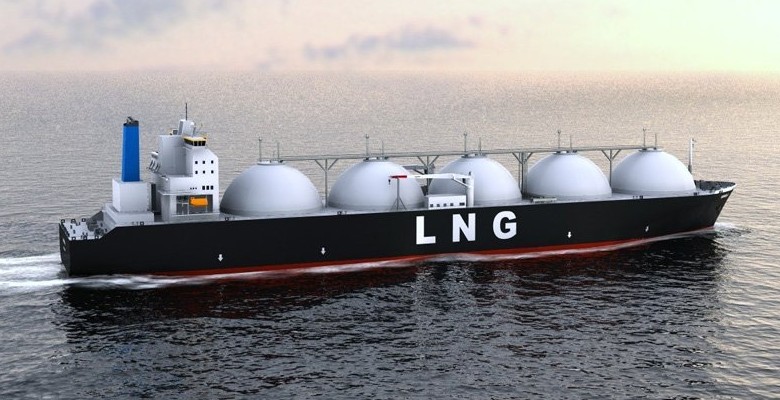
Natural gas shows how an external shock can spread through the wider economy. India's growing industrial base, its fertiliser sector and rising urban energy demand all need more gas than domestic production can supply. LNG imports have consequently become a bigger part of India's energy mix. Unlike oil, gas cannot easily be stockpiled at scale, which makes LNG supply unusually sensitive to geopolitical disruption and rigid contract terms.
The knock-on effects go beyond the energy sector itself. Gas is a key input in fertiliser production, and fertiliser availability affects both farm output and food prices. LPG is another transmission channel, linking international energy markets directly to household budgets. Energy security, in that sense, cannot be separated from macroeconomic security.
The energy transition is reshaping dependence, not ending it
India's shift towards renewable energy offers a real opportunity to cut reliance on imported fossil fuels. But it should not be mistaken for an automatic fix to energy insecurity – it is creating a new geography of dependence instead.
Solar and battery technologies depend on critical minerals, specialised components and manufacturing know-how that India does not fully possess. Electricity-based systems need heavy investment in transmission, storage and grid management. The centre of gravity for energy strategy is therefore shifting from oilfields and shipping lanes towards minerals, manufacturing networks and electricity systems. That creates a real policy dilemma: India could cut its dependence on imported hydrocarbons while building up a new dependence on imported technology and critical materials instead.
The goal, then, should not be to swap one external dependency for another, but to diversify the entire energy value chain. Domestic manufacturing, critical-mineral partnerships, recycling, technology development and resilient supply chains need to be treated as core parts of energy-security policy, not as separate industrial concerns.
The grid becomes a strategic asset
India's energy security will increasingly depend on how well it can integrate different sources of power.
Renewables cut fossil-fuel dependence, but their variability creates its own demands on storage, transmission and flexible generation capacity. Nuclear power can supply steady, low-carbon electricity, while batteries and other storage technologies add flexibility to the system. The strategic petroleum reserve is therefore only one piece of future resilience – as the events of early 2026 made plain. India will need a broader architecture that combines adequate oil reserves, LNG flexibility, electricity storage, transmission capacity, access to critical minerals and domestic manufacturing capability. The energy transition does not make energy security less strategic – it makes it more infrastructural.
From diversification to resilience
This calls for a shift in how India thinks about energy strategy. It needs larger strategic petroleum reserves, stronger LNG and gas infrastructure, flexible import contracts, diversified shipping routes and refineries capable of handling a wide range of crude grades. At the same time, it needs domestic capacity in renewable technology, batteries, critical minerals and grid infrastructure, along with the ability to switch between energy sources quickly during a crisis.
Energy security, on this view, should be measured against five criteria: availability, affordability, accessibility, substitutability and strategic autonomy. The goal is not self-sufficiency – for an economy of India's size, integration with global energy markets is unavoidable. The goal is ensuring that no single geopolitical disruption can dictate India's economic choices.
India has traditionally framed strategic autonomy in terms of foreign policy alone. But energy increasingly sets the boundaries within which that autonomy can be exercised. A country cannot keep its diplomatic options open if its energy system becomes critically dependent on the decisions of one other state. That does not mean India has to choose between Russia, the Gulf and the United States. It means India's strategic autonomy will depend, more and more, on keeping real alternatives among all of them open.
(The author is a Senior Assistant Professor at the Amity Institute of Defence and Strategic Studies, Amity University, Noida.)
Disclaimer: The views expressed in the article are the author’s own and don’t necessarily reflect the views of India Sentinels.
Follow us on social media for quick updates, new photos, videos, and more.
X: https://x.com/indiasentinels
Facebook: https://facebook.com/indiasentinels
Instagram: https://instagram.com/indiasentinels
YouTube: https://youtube.com/indiasentinels
© India Sentinels 2026-27