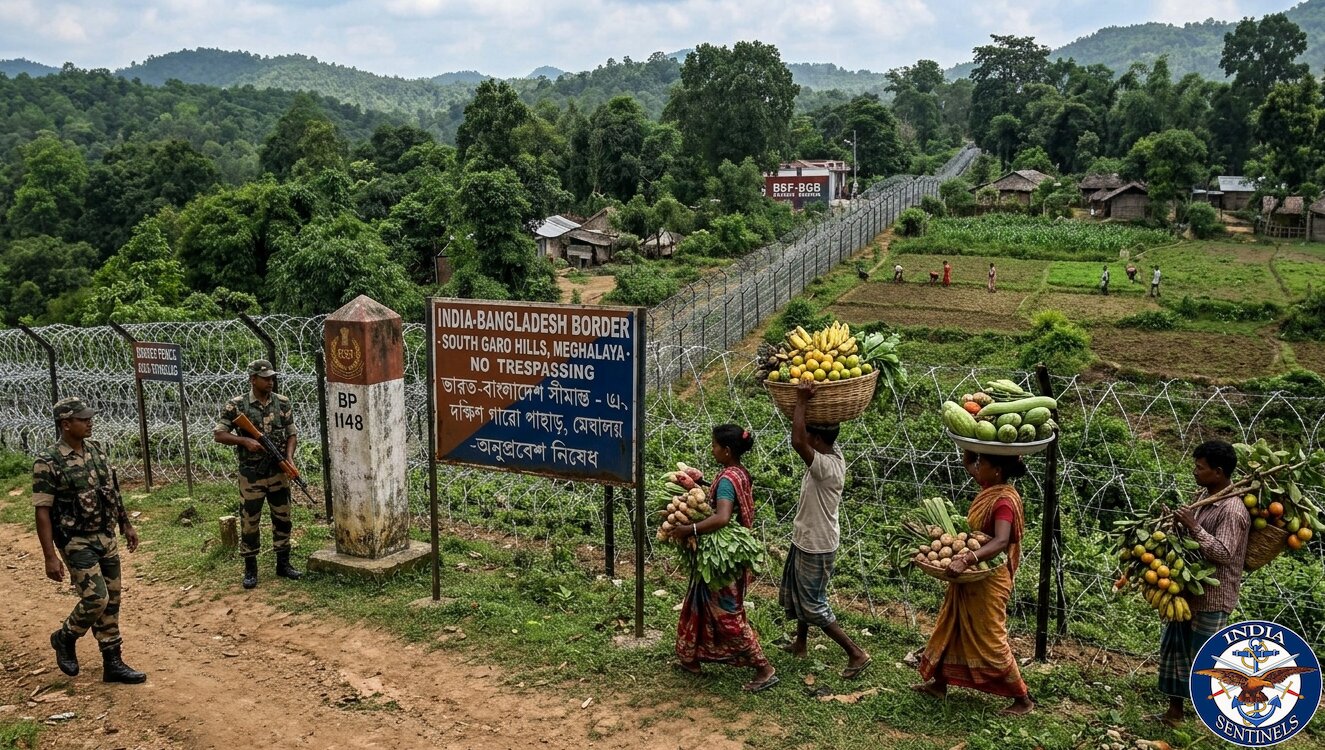
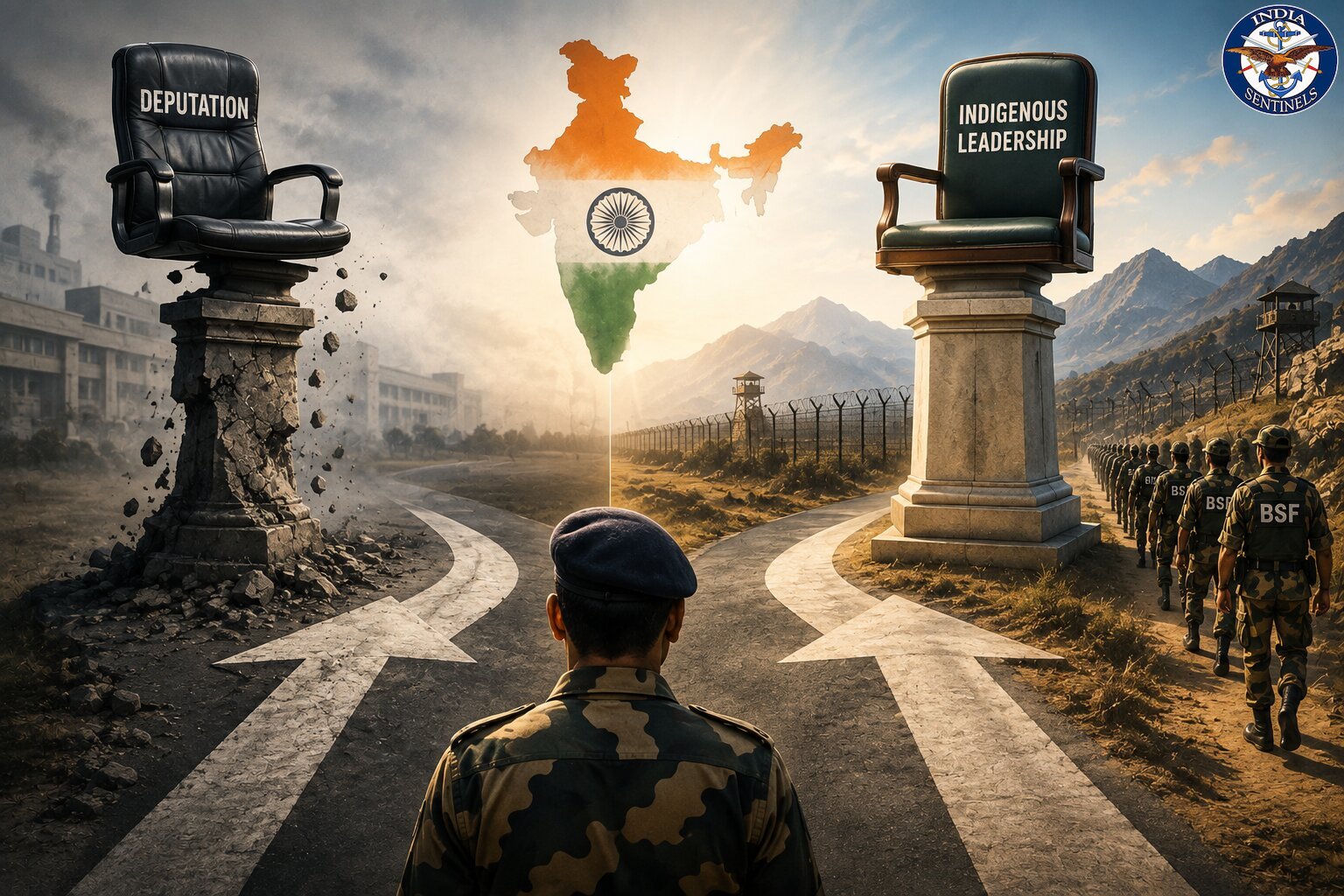
 Illustration for representation. (© India Sentinels 2026–27)
Few would imagine an air force commanded by commercial airline pilots, a navy led by merchant seafarers, or an army headed by career police officers. Such arrangements would be dismissed outright because professional military organizations demand leaders who have risen through their own ranks, mastered their own operational environments, and earned the confidence of the men and women they command.
Yet India continues to follow a comparable model in its central armed police forces (CAPFs), where senior leadership positions are routinely filled by officers on deputation from the Indian Police Service. It is an arrangement that has generated decades of debate, repeated litigation, and growing discontent within the CAPFs themselves.
The issue is no longer merely an administrative dispute over cadre management. It raises a larger question – should forces entrusted with guarding India’s borders, combating insurgency and terrorism, and protecting critical national interests be led by officers who have spent their professional lives within those organizations, or by officers whose expertise lies primarily in civilian policing?
That debate has become sharper after the Supreme Court’s May 23, 2025 judgment concerning the career progression and command structure of CAPF cadre officers, followed by the enactment of the CAPF (General Administration) Act, 2026. The legal and institutional developments have once again brought into focus the future leadership model of these strategically important forces.
Read also: Illegal Immigration – India’s unfenced fault line on the eastern border
CAPFs Are Not Conventional Police
Despite their name, the “central armed police forces” perform duties that extend far beyond conventional policing.
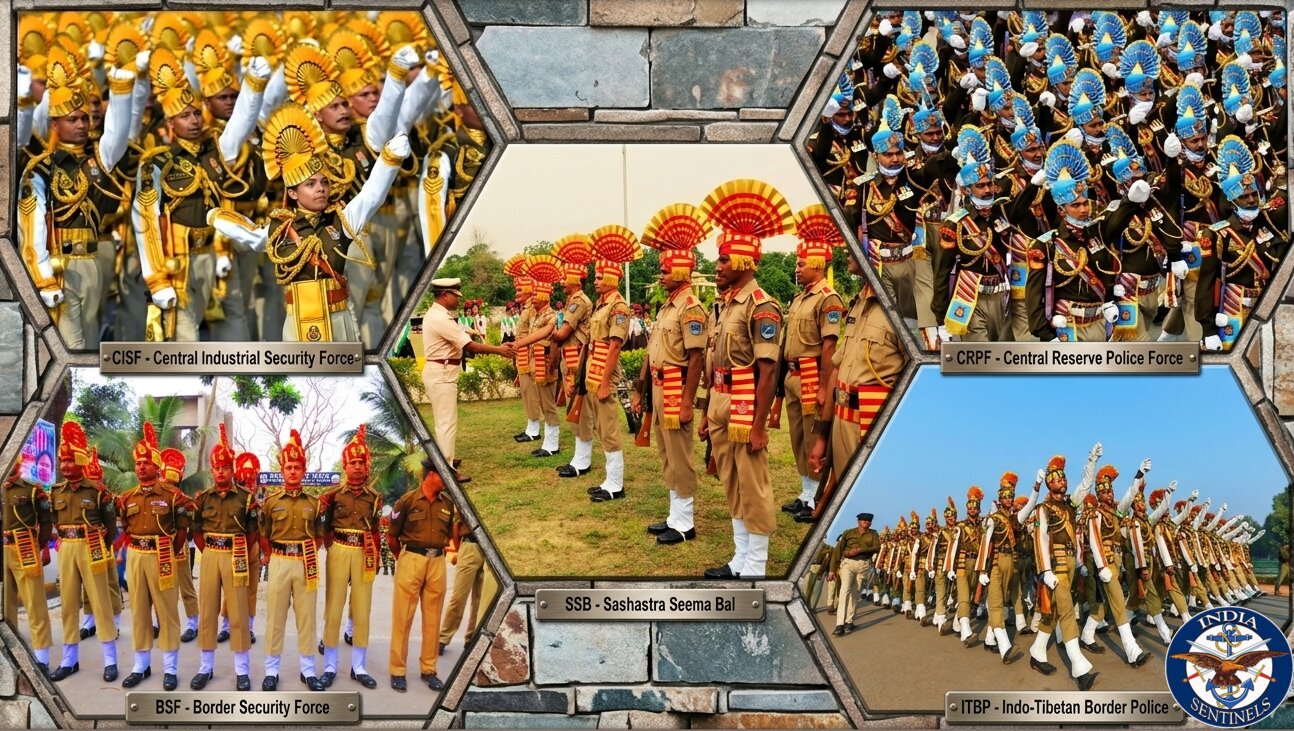
The Border Security Force guards thousands of kilometres of India’s borders with Pakistan and Bangladesh under challenging operational conditions. The Indo-Tibetan Border Police secures one of the world’s longest and most difficult high-altitude frontiers with China. The Central Reserve Police Force has borne the brunt of counterinsurgency and counterterrorism operations across several theatres, while the Central Industrial Security Force protects airports, ports, nuclear facilities, space establishments and other strategic national assets.
These organizations operate in environments that demand military-style discipline, operational planning, logistical resilience and battlefield leadership. Their responsibilities frequently involve sustained deployment in hostile terrain, where command decisions directly affect operational success and the lives of personnel.
This distinguishes them fundamentally from civilian policing, whose principal responsibilities revolve around maintaining law and order, criminal investigation and public administration. Although both domains contribute to national security, they require different institutional cultures, training philosophies and leadership experience.
The distinction is not about the competence of IPS officers. It is about the differing professional ecosystems in which officers of the two services are trained and developed.
Read also: Tadmetla Operation 2010 – Supreme sacrifice that demands answers
Command Experience Paramount
Every professional armed force develops its leadership through a carefully structured process. Young officers begin by leading small units before gradually assuming larger responsibilities. They command companies, staff appointments, battalions, formations and higher headquarters over decades of service. Each stage builds operational judgement, administrative experience and credibility with the troops.
Leadership is therefore not simply conferred by rank. It is earned through years of field service, operational exposure and institutional learning.
Within the CAPFs, cadre officers spend their entire careers understanding the unique operational demands of border management, counter-insurgency, logistics, training, personnel welfare and force modernization. They acquire intimate knowledge of their organizations’ strengths, weaknesses and institutional culture through repeated field tenures.
Critics of the present system argue that frequent deputation of IPS officers into senior command appointments interrupts this natural progression. Officers who have not served within the CAPFs throughout their careers are expected to lead organizations whose operational ethos differs significantly from state police forces.
This, they contend, weakens institutional continuity and prevents the emergence of an indigenous leadership pipeline extending from company commander to director general.
Read also: Op Sindoor – Testimony to BSF’s grit and fighting spirit
Longstanding Structural Debate
The debate over deputation is hardly new. For years, CAPF veteran associations have argued that the existing arrangement contributes to stagnation in career progression, reduces opportunities for deserving officers and adversely affects morale. Almost all officers believe that despite decades of operational service in some of India’s most dangerous theatres, they remain unable to reach the highest leadership positions within their own organizations.
Supporters of the current system offer a different perspective. They argue that IPS officers bring valuable administrative experience, coordination with state police organizations and broader exposure to internal security management.
The continuing disagreement illustrates that the issue extends beyond personnel policy. It concerns competing visions of how India’s internal security architecture should be organized.
Regardless of which side one supports, there is little doubt that leadership structures have a direct bearing on organizational culture, professional development and operational effectiveness.
Read also: CAPFs Act undermines the very forces it claims to strengthen
Lessons from Professional Military
Professional military and border security organizations across the world generally follow a simple principle: leaders rise through the organizations they eventually command.
The rationale is straightforward. Operational credibility cannot be acquired overnight. It develops through years of experience in the same institution, working alongside the personnel one is ultimately expected to lead.
This continuity creates institutional memory, strengthens professional standards and ensures that senior leaders understand the practical realities faced by units on the ground.
Advocates of reform argue that India’s CAPFs should progressively move towards such a model, allowing their own cadre officers to occupy leadership positions all the way to the top. In their view, this would align command responsibility with professional expertise while reinforcing morale across the forces.
Read also: Trampling of Trust – The nightmare of a ‘deshbhakt’
Lessons from Overseas Models
Supporters of a professionally indigenous command structure often point to the practices followed by comparable organizations overseas. While no two countries have identical security challenges or institutional frameworks, one common thread is evident: operational forces are generally led by officers who have spent their careers within those organizations.
The United States Border Patrol (USBP) is one such example.
The USBP is headed by a chief of the Border Patrol, who is responsible for national strategy, operational priorities, budgetary oversight, resource allocation and professional standards. The position is traditionally filled by a career Border Patrol officer who has progressed through the organization’s operational hierarchy.
Rosario “Pete” Vasquez, who became chief of the United States Border Patrol in June this year, served for more than 26 years in the agency before assuming its highest office. Before his appointment, he led the Blaine Sector in Washington state, overseeing operations along the United States-Canada border. His predecessor likewise spent nearly four decades within the US Border Patrol before taking charge.
The significance lies less in the individual appointments than in the institutional philosophy behind them. Leadership is viewed as the culmination of a career spent acquiring operational knowledge, leading field formations and understanding the organization’s evolving challenges.
The USBP’s command structure reflects this philosophy.
At the national level, headquarters formulates strategy, doctrine and policy. Operational responsibility is delegated to sector chiefs, who adapt national priorities to local conditions, terrain and threat assessments. Beneath them, the US Border Patrol stations function as the tactical backbone of the organization, each led by officers who have themselves advanced through the operational ranks.
The progression is deliberate and continuous. Leadership grows organically from within the institution rather than through lateral induction at senior levels.
Advocates of CAPF reforms argue that India should aspire to a similar principle, allowing professional experience within the force to become the primary qualification for its highest command appointments.
Read also: Address the deformities in CAPF structure
Neighbouring Examples
A similar pattern can be observed in several neighbouring countries, albeit through different institutional arrangements.
Pakistan Rangers and Border Guards Bangladesh have command structures that broadly resemble that of India’s Assam Rifles, where military officers occupy senior operational appointments. However, those officers typically reach command after progressing through the hierarchical structure of their parent service and acquiring extensive operational experience before assuming higher responsibilities.
The underlying principle remains consistent: organizations entrusted with national security functions are led by officers whose careers have been shaped by the operational environment they are expected to command.
Supporters of reform argue that this continuity strengthens institutional memory, improves professional standards and enhances operational effectiveness.
Whether India should adopt a similar approach is ultimately a matter of public policy. Nevertheless, the international examples demonstrate that career progression and command experience remain central features of most professional security organizations.
Read also: Are elections compromising our border and national security?
Supreme Court Intervention
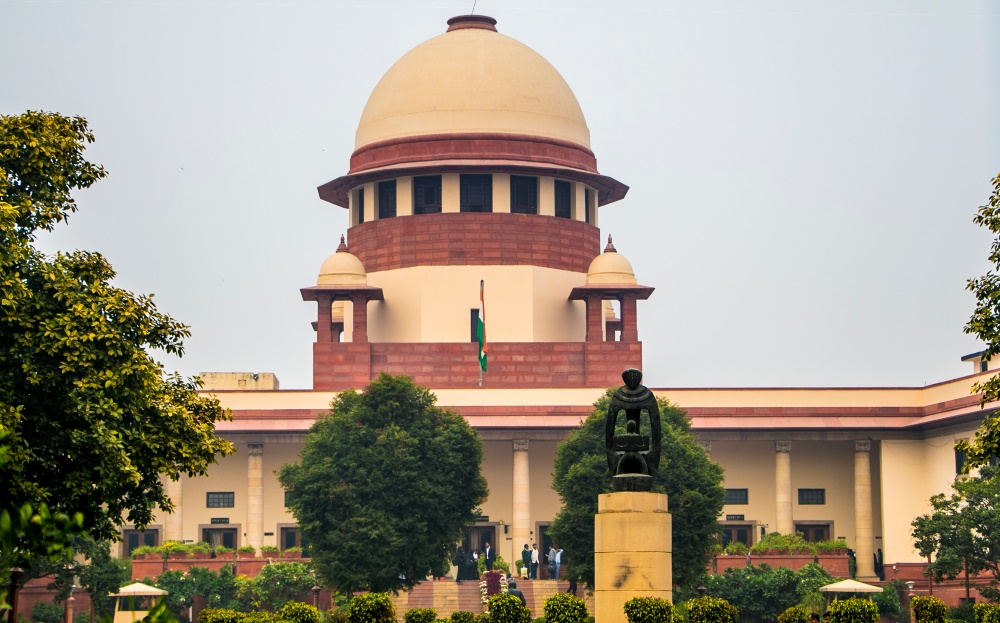
The debate over CAPF leadership acquired a new dimension after the Supreme Court’s judgment of May 23, 2025, in the case titled Sanjay Prakash and Others versus Union of India and Others.
The judgment was widely viewed by CAPF cadre officers as recognition of their long-standing concerns regarding career progression, promotional avenues and the command structure of the forces.
For many officers, it represented more than a service matter. It was seen as judicial acknowledgement that organizations entrusted with complex operational responsibilities require leadership structures that adequately recognize professional expertise developed within those institutions.
The Union government, however, subsequently enacted the CAPF (General Administration) Act, 2026, a legislative measure that critics argue preserves many features of the existing system.
This divergence between the judicial interpretation and the executive’s legislative response has ensured that the debate remains very much alive.
The disagreement is no longer confined to administrative policy. It now encompasses constitutional questions relating to judicial directions, legislative authority and the future structure of India’s internal security institutions.
Read also: Commanded into Crisis – Systematic wrecking of CAPFs’ moral fabric
Continuing Legal Battle
The matter has not reached its conclusion. According to me, the Supreme Court has continued to monitor the implementation of its earlier judgment. In subsequent proceedings, the court directed the secretaries of the Ministry of Home Affairs and the Department of Personnel and Training to submit individual affidavits detailing the steps taken to implement its May 23, 2025 judgment, including the number of IPS officers brought into various CAPFs on deputation after the judgment.
The court’s directions indicate that it seeks a clear account of the government’s compliance with its earlier orders. They do not, by themselves, predetermine the final outcome of the continuing proceedings.
At the same time, nearly 3,000 CAPF cadre officers have challenged provisions of the CAPF (General Administration) Act, 2026. According to the petitioners, the legislation neither addresses long-standing stagnation in promotional opportunities nor fully reflects the spirit of the Supreme Court’s judgment. The petitioners reportedly include several recipients of gallantry awards, underscoring the significance they attach to the issue.
The litigation illustrates that the controversy extends well beyond service conditions. It has become a debate over institutional identity, professional recognition and the future leadership of India’s largest uniformed organizations.
Read also: Stagnant Ranks, Broken Morale – The cost of CAPF’s skewed HR policies
Why Morale Matters
Leadership structures inevitably influence organizational morale. Personnel who spend decades serving in difficult operational environments expect that merit, experience and professional competence will be reflected in career advancement. When those expectations remain unfulfilled over long periods, dissatisfaction can grow.
CAPF officers have repeatedly argued that limited opportunities to reach the highest ranks affect not only individual careers but also the institutional confidence of the forces.
Whether one agrees with that assessment or not, morale is a strategic resource. High-performing security organizations depend not only on modern equipment and effective training but also on confidence that professional excellence will be recognized and rewarded.
For forces that operate continuously on hostile borders, conduct counter-insurgency operations, fight terrorism and respond to national emergencies, sustaining morale is every bit as important as maintaining operational readiness.
Read also: Chanakya’s Warning and India’s Shame – How the state fails its CAPFs
Question of National Security, Not Service Conditions
The central issue is therefore much larger than cadre management or promotional opportunities. At its heart lies a fundamental question of institutional design: how should India organize the leadership of forces that shoulder some of the country’s most demanding national security responsibilities?
The CAPFs are no longer auxiliary organizations operating on the margins of India’s security architecture. They are integral to safeguarding the nation’s sovereignty and territorial integrity. From manning high-altitude posts along the Line of Actual Control and the Line of Control to combating Left-Wing Extremism, countering terrorism in Jammu and Kashmir, protecting strategic infrastructure and supporting election security, their operational responsibilities have expanded significantly over the past three decades.
These evolving challenges demand not only modern equipment and technology but also leadership that possesses a deep understanding of the organizations they command.
I argue argue that this understanding can best be acquired only through years of service within the force itself. Officers who have progressed from company command to battalion leadership and higher appointments develop an institutional memory that cannot easily be replicated through lateral induction at senior levels. They understand the force’s operational culture, personnel management, training requirements and logistical realities because they have experienced them firsthand.
Whether policymakers ultimately accept this proposition is a matter for the government and Parliament. Nevertheless, the argument deserves serious consideration because it touches upon the long-term professionalization of institutions that remain at the forefront of India’s internal and border security.
Read also: Unfenced Borders – Why prioritize jurisdiction over infrastructure?
Reform Should Strengthen Institutions
Institutional reform should be guided by one overarching principle: improving operational effectiveness. Any leadership model must inspire confidence among the rank and file, create clear avenues for career progression and ensure that the most competent officers are available to lead the organization at every level. Equally, it must preserve coordination between the CAPFs, state police forces and the broader internal security establishment.
The challenge before policymakers is to reconcile these objectives without allowing institutional rivalries to overshadow national interests.
Supporters of an indigenous command structure contend that opening the highest appointments to career CAPF officers would create a more coherent leadership pipeline, reduce stagnation and reinforce professionalism across the forces. They believe such a system would encourage officers to invest their careers in long-term institutional development, knowing that merit and experience could ultimately lead to the highest command.
Critics of the proposal caution that IPS officers bring valuable experience in policing, administration and inter-agency coordination that should not be discounted. They argue that India’s internal security ecosystem is complex and benefits from officers who have worked across multiple domains.
Both perspectives merit careful examination. However, any final policy should be guided primarily by what best serves the operational effectiveness of the CAPFs rather than the interests of competing cadres.
Read also: Give CAPF officers what Supreme Court ordered – and what they earned
Human Dimension
Often lost in the legal and administrative debate are the officers and personnel who serve in these forces every day. CAPF personnel routinely spend long periods away from their families, operating in inhospitable terrain under demanding conditions. They guard remote borders, fight insurgencies, respond to terrorist attacks, protect vital national assets and assist civil authorities during natural disasters and major elections.
Their contribution to India’s security is both extensive and continuous. Against this backdrop, prolonged uncertainty over career progression inevitably affects morale.
I would like to the growing number of legal challenges filed by CAPF officers as evidence of unresolved institutional grievances. Whether or not litigation is the ideal avenue for addressing such concerns, its persistence suggests that many officers believe existing mechanisms have failed to provide satisfactory solutions.
Stable institutions thrive when their personnel have confidence that legitimate grievances will be heard and addressed through transparent and credible processes.
Read also: Why 8th pay panel must recognize CAPF personnel as true soldiers
Time for Long-Term Perspective
India’s security environment is becoming more complex, not less. Persistent tensions along the northern borders, continuing cross-border terrorism, the evolving nature of internal security threats and the increasing protection requirements for critical infrastructure all underscore the importance of capable, professionally led security institutions.
As these challenges evolve, leadership structures must also be periodically reviewed to ensure they remain aligned with operational realities.
The ongoing judicial proceedings and policy debate provide an opportunity for such a review. Whatever model eventually emerges should strengthen institutional professionalism, improve operational preparedness and reinforce confidence among the personnel who serve in these forces.
Ultimately, the objective should not be to advance the interests of one service over another. It should be to ensure that India’s Central Armed Police Forces are organized and led in a manner that best equips them to fulfil their constitutional responsibilities.
Read also: Bangladesh in Turmoil: Why BSF must abandon non-lethal tactics now
Way Forward
The debate over the CAPFs’ command structure has continued for decades because it sits at the intersection of law, administration, institutional identity and national security.
My central contention is clear: forces entrusted with protecting India’s borders and confronting some of its gravest security challenges should, over time, be led by officers who have risen through their own ranks and acquired the professional experience necessary to command them. He believes such a model would strengthen institutional continuity, improve morale and enhance operational effectiveness.
Whether India ultimately adopts that approach remains a policy decision for the political executive, informed by judicial scrutiny and professional advice. What should not be in dispute, however, is the need to place institutional effectiveness and national security above all other considerations.
The CAPFs have evolved into one of the principal pillars of India’s security architecture. As the country confronts an increasingly challenging strategic environment, the question is no longer whether these forces deserve the highest standards of professionalism – they unquestionably do. The real question is whether their leadership framework is evolving at the same pace as the responsibilities they are expected to shoulder.
Disclaimer: The views expressed in the article are the author’s own and don’t necessarily reflect the views of India Sentinels.
Follow us on social media for quick updates, new photos, videos, and more.
X: https://x.com/indiasentinels
Facebook: https://facebook.com/indiasentinels
Instagram: https://instagram.com/indiasentinels
YouTube: https://youtube.com/indiasentinels
© India Sentinels 2026-27