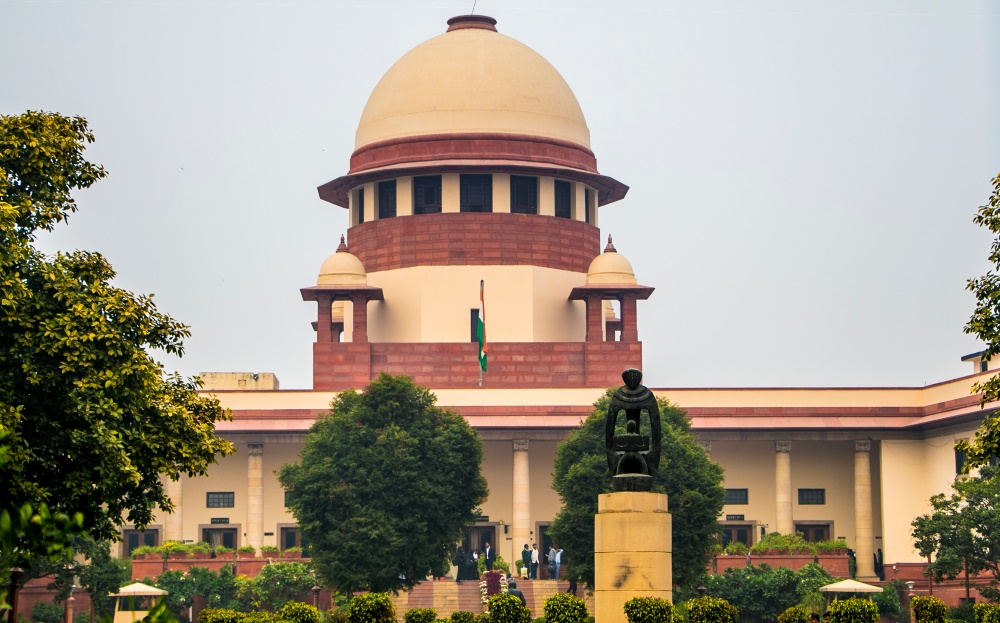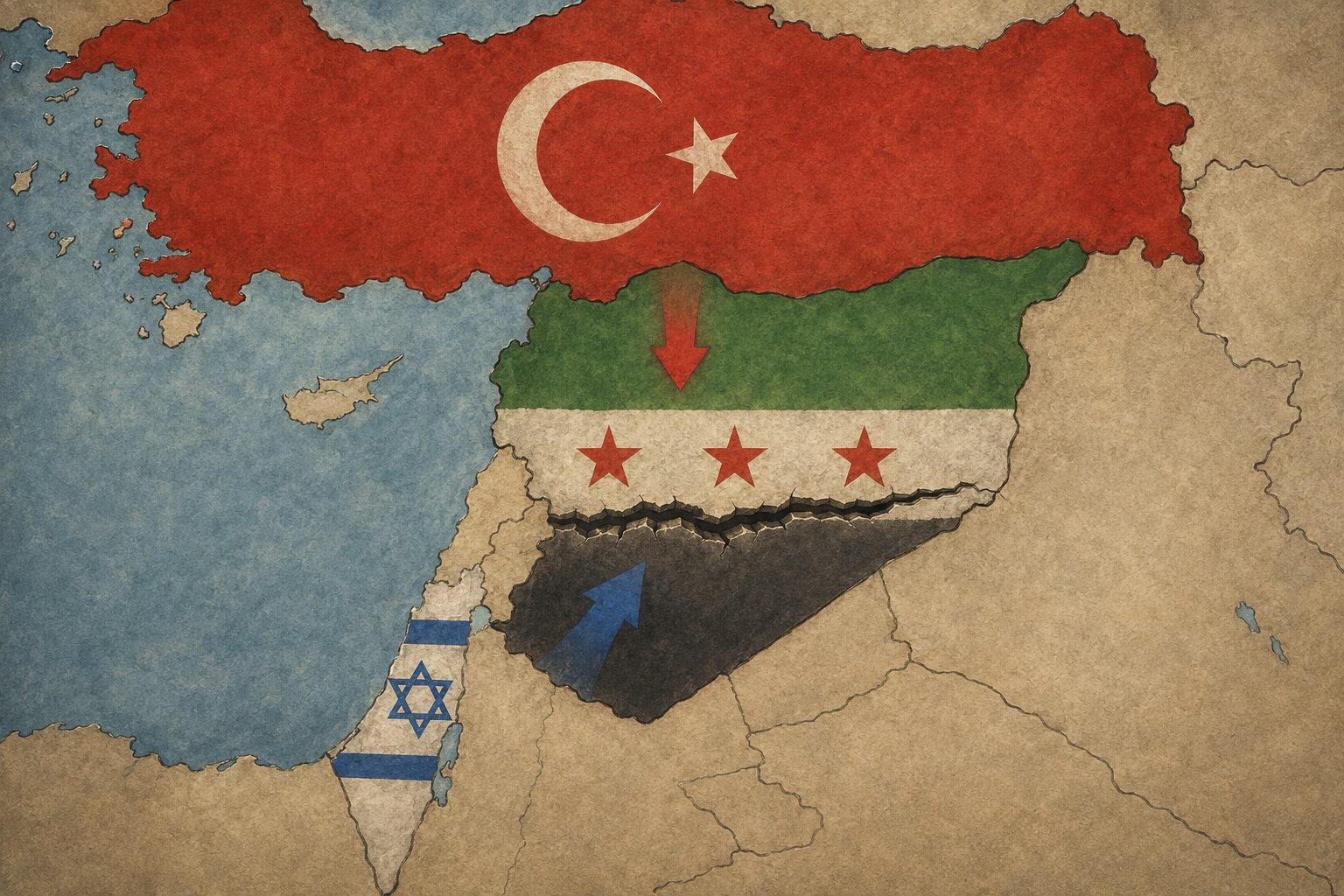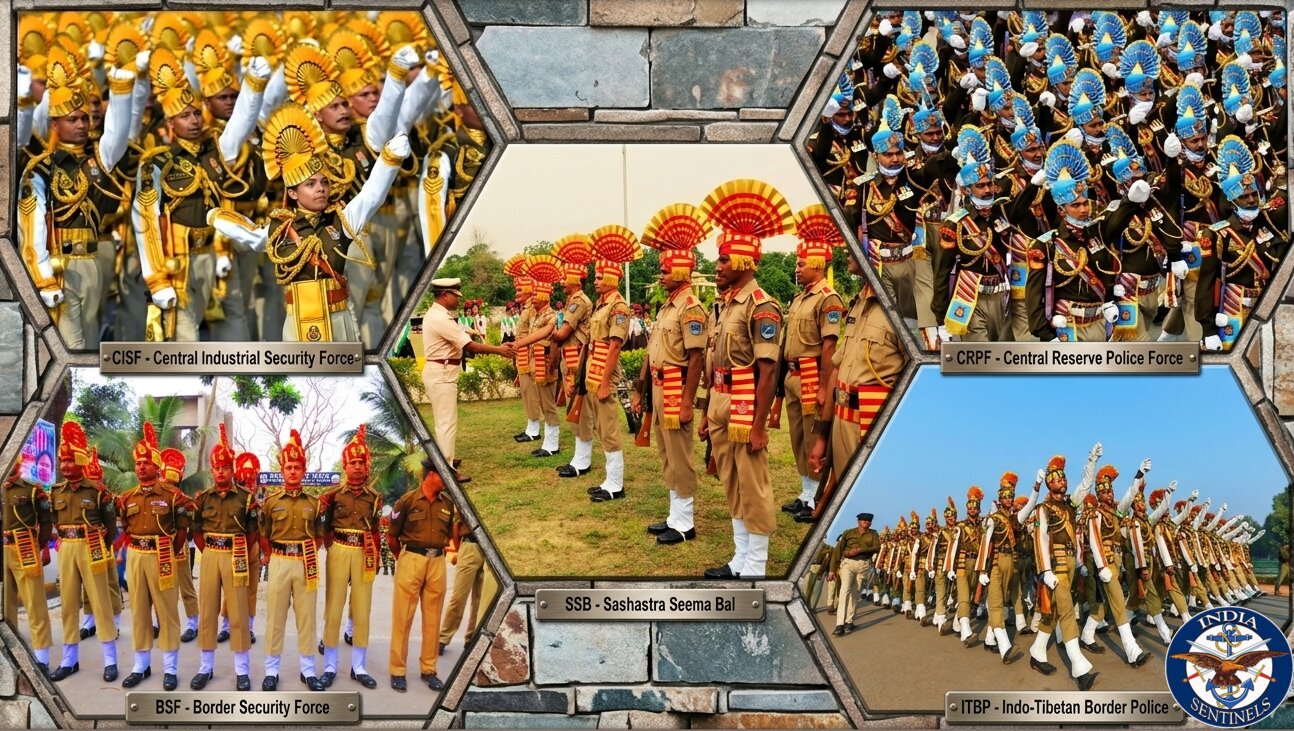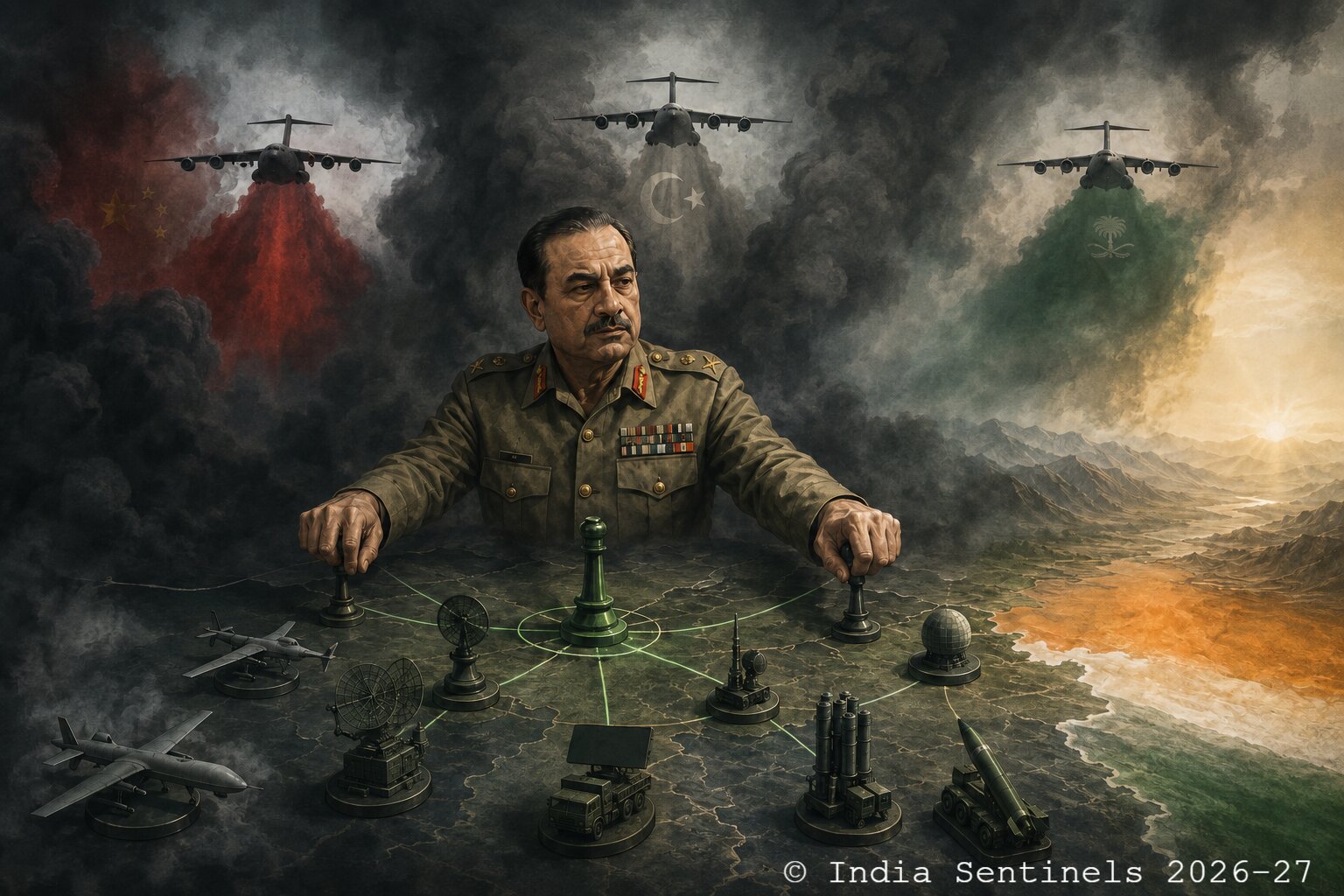
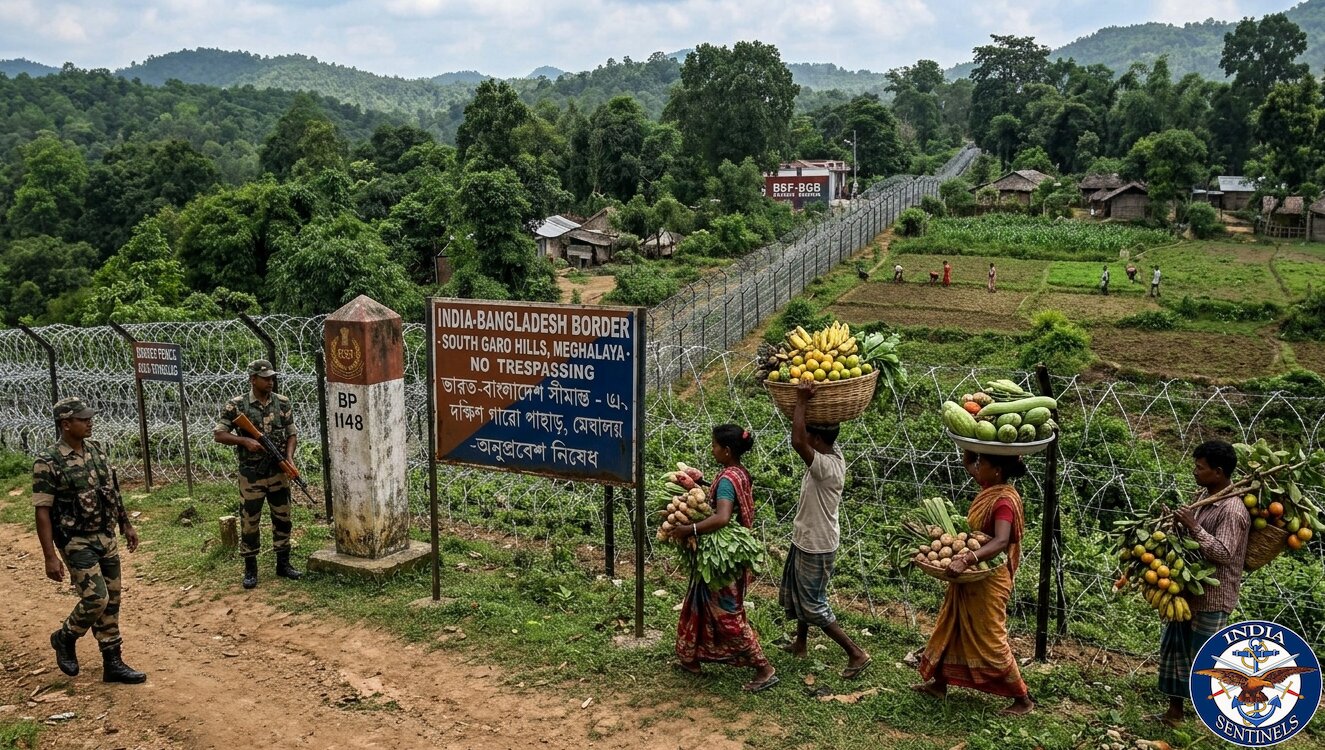
 Illustration for representation. (© India Sentinels 2026–27)
I joined the Border Security Force in 1991 as a company commander on the India-Bangladesh border in Meghalaya’s West Garo Hills district, based at Baghmara – a subdivisional town that is today the headquarters of South Garo Hills district. My battalion’s area of responsibility ran to roughly 100 kilometres of border, open in places and fenced in patches.
Illegal cross-border movement was rampant then; it is now largely under control, thanks to the fence.
One memory has stayed with me. Smuggling of perishable goods – vegetables carried across as head loads – was the norm in those days, feeding local demand right up to Siju. When effective surveillance choked off that smuggling, it caused a scarcity in the local market. I was summoned by an executive magistrate who questioned whether my actions might trigger tension and a law-and-order problem. I flagged the matter to my superiors; the response was ambivalent at best. I stood my professional ground, and it cost me a fair amount of mental strain.
I recount this not for sympathy but to make a point: the eastern border has, since time immemorial, been treated as safe, secure and unremarkable. That complacency – diluted border security protocols applied to a frontier nobody took seriously – has landed the nation in its present predicament, where demographic change in the east has become a genuine national security concern.
Read also: Tadmetla Operation 2010 – Supreme sacrifice that demands answers
Every administrator has long known that illegal immigrants work as labourers and domestic help across the region. Everyone maintains a dignified silence about it. This is an issue with both a human face and a national security dimension, and it demands a balanced approach rather than a reflexive one. I recall the-then BSF inspector general, Chaman Lal, who was decorated with the Padma Shri, raising this repeatedly in internal discussions years ago.
Diluted protocols, a porous frontier and political patronage extended to illegal immigrants as a captive vote bank – together, these explain the glut of non-Indians settled in border districts. Fencing has helped the BSF check the inflow considerably, but the underlying problem remains, and it needs humane handling even as it is treated with the seriousness it deserves.
Dhaka’s new government, old dilemmas
Let me turn to the present. Bangladesh’s new government, led by the Bangladesh Nationalist Party under the new prime minister, Tarique Rahman, was sworn in on February 17, following a landslide BNP victory in that month’s general election. New Delhi extended an invitation for Rahman to visit India almost as soon as he took office. He chose otherwise: his first foreign trips were to Malaysia and China, a clear early signal of where his government’s priorities lie – Bangladeshi workers and students in Malaysia, and trade with Beijing, ahead of the relationship with India.
Read also: Op Sindoor – Testimony to BSF’s grit and fighting spirit
Chinese involvement in the Teesta river management and restoration project is a standing worry for New Delhi, as is Chinese activity near the Siliguri Corridor in defence-linked projects. A further irritant followed soon after: a diplomatic row over India stopping Zahed Ur Rahman, an advisor to the Bangladeshi prime minister, after his name surfaced on an immigration watch list.
A bigger complication may yet be in store. The ousted prime minister of Bangladesh, Sheikh Hasina, has signalled her intention to return to the country this year. India is sitting on Dhaka’s pending extradition request for her. Should she return, her arrest and the enforcement of standing judicial verdicts against her could strain ties between the two countries considerably.
Too many imponderables hang over the Indo-Bangladesh relationship right now, and each has a direct bearing on the border situation, with implications for both external and internal security.
Read also: CAPFs Act undermines the very forces it claims to strengthen
A calm surface, a deep undercurrent
On the surface, the India-Bangladesh border looks calm, even peaceful, bound by shared culture and ethnicity on both sides. Illegal immigration remains a persistent bone of contention beneath that calm, with a deep undercurrent of distrust between the two border guarding forces, who see the problem through very different lenses. That distrust is perennial – it outlasts whichever party is in power in Dhaka or Delhi – and simply flares up or subsides depending on the ideological disposition of the government of the day.
Neither the Congress-led governments of the past nor the present BJP government has given illegal immigration the sustained priority a national security issue warrants. It has been treated as a political football rather than a strategic problem, and that lack of resolve shows. The issue deserves the government’s highest priority, and it needs the home and external affairs ministries of both countries working together on a memorandum of understanding – not being exploited as rhetoric to harvest votes at election time.
Bangladesh’s new geopolitical playground
Bangladesh has become fresh geopolitical terrain, with Pakistan and China steadily eating into India’s diplomatic space there. The ripple effects of this emerging trilateral dynamic are felt directly along the India-Bangladesh border and across the northeast.
Read also: Trampling of Trust – The nightmare of a ‘deshbhakt’
To be fair, the Indian establishment has signalled a desire to normalise ties. India’s high commissioner to Bangladesh, Dinesh Chaturvedi – a ruling-party politician from West Bengal given cabinet rank for the posting – announced, soon after taking up the role, the resumption of tourist visas for Bangladeshi citizens, ending a two-year suspension.
Three developments offer a sense of how seriously the government now views the national security implications of demographic change along the border and its hinterland. As a belated step towards fulfilling the prime minister’s announcement of August 15, 2025, the Union home ministry has constituted a high-level committee on demographic change. Its brief: a realistic assessment of population shifts in border regions, urban centres and tribal areas, and recommendations on identifying, detecting and deporting illegal immigrants.
The committee has a year to report, extendable by six months. It would have strengthened the exercise considerably had it included the BSF’s inspector generals for West Bengal, Assam, Meghalaya and Tripura.
Read also: Address the deformities in CAPF structure
DG-level talks and push-back row
Illegal immigration was very much the backdrop when the 57th Border Security Force-Border Guard Bangladesh Director General-level talks were held in New Delhi from June 8–11. The Indian side was led by the DG BSF, Praveen Kumar, and the Bangladesh delegation by the DG BGB, Major General Mohammad Ashrafuzzaman Siddiqui. Illegal and forced border crossings and human trafficking topped the agenda, alongside trans-border crimes such as narcotics, counterfeit currency and gold smuggling.
Both sides also discussed inadvertent crossings, border infrastructure and the India-Bangladesh Coordinated Border Management Plan (CBMP).
The real fault line, though – one that could yet spill into a violent confrontation between the two forces – is illegal immigration itself. The BSF is under considerable pressure on this front: the issue dominated the recent assembly election campaigns in West Bengal and Assam, where the “ghuspathiya” narrative struck a chord with voters. Social media has been awash with videos of BSF and BGB ground commanders squaring off – the BSF attempting to push back a person it holds to be Bangladeshi, the BGB insisting the same person is an Indian national, and BGB company commanders demanding that the BSF follow proper deportation procedure instead.
Read also: Are elections compromising our border and national security?
Bangladesh, for its part, has refused to accept undocumented people whose nationality it disputes, even as the BSF maintains that these individuals entered India illegally and were found carrying documents indicating Bangladeshi nationality. The BGB has termed such push-backs a violation of the joint India-Bangladesh guidelines for border authorities, the CBMP, and understandings reached at earlier DG-level talks. Dhaka wants New Delhi to follow the established bilateral repatriation mechanism instead.
Push-back as a deportation mechanism lacks legal sanctity. It functions more as political optics – a way for the government to be seen doing something – than as a genuine fix. It is a sticking plaster on a wound that needs surgery, and it cannot resolve the repatriation of a very large illegal immigrant population. Left unchecked, it risks escalating into confrontation between the two border forces, pushing the substantive issue of illegal immigration further into the background.
Numbers nobody can agree on
A large number of illegal Bangladeshi immigrants have made India their home, particularly in West Bengal, Assam, Meghalaya, Tripura and major urban centres elsewhere. The-then minister of state for home affairs in the UPA government, Sriprakash Jaiswal, told Parliament that 1.2 crore (12 million) illegal Bangladeshis were living in India – a figure he later retracted under political pressure.
Read also: Commanded into Crisis – Systematic wrecking of CAPFs’ moral fabric
Years later, the minister of state for home affairs in the BJP government, Kiren Rijiju, put the number at 2 crore (20 million), while conceding that no authenticated record supports the figure. Given that children born in India to such settlers automatically acquire Indian citizenship, the real figure could well be higher still.
What needs to change
The scale of the problem is no longer in dispute, even if the numbers are. Illegal immigrants place a burden on scarce national resources, add pressure on land, worsen unemployment, and generate friction between local communities and new arrivals that can spill into law-and-order problems. Some may also be drawn into activities that threaten national security.
They are, in short, a threat to both the economic and territorial security of the country, and need to be identified, detected, verified, detained and deported through a properly laid-down mechanism.
This requires broad mutual understanding between India and Bangladesh on the procedural aspects of deportation – agreed at the highest political level on both sides – so the exercise is not left hostage to bureaucratic drift. Those verified as illegal immigrants must be deported; those who clear verification must be accepted as genuine citizens without further harassment.
Read also: Stagnant Ranks, Broken Morale – The cost of CAPF’s skewed HR policies
State governments need to launch a sustained campaign to identify, detect, verify, detain and deport illegal immigrants through due process of law, with humanitarian considerations built in from the start. This cannot be a blunt exercise of picking up anyone on suspicion and detaining them indefinitely, in violation of the basic right to live with dignity. It has to be exhaustive, drawing in grassroots institutions – panchayats, municipal councils, corporations, and revenue and police authorities – to do the detection work with the seriousness it demands.
A second remedy worth reviving is the free movement regime, permitting local trade and movement up to five to ten kilometres on either side of the border, alongside the revival and strengthening of border haats (open marketplaces) for trade in local produce. Such movement should be routed through specific entry points manned by the BSF. Both governments would need to work out the modalities, but it could meaningfully reduce the incentive for illegal crossings.
The sanctity of a border is what underwrites territorial sovereignty. Every violation chips away at that sovereignty and places border security under strain. The stricter protocols that govern the western border with Pakistan are conspicuously absent along the Indo-Bangladesh border – largely because the BSF is repeatedly pulled off border duty for other assignments, leaving the frontier porous and giving cross-border handlers room to exploit the gaps.
Read also: Chanakya’s Warning and India’s Shame – How the state fails its CAPFs
The BSF needs to apply the same uncompromising protocols here that it applies in the west, treating any violation of the border’s sanctity as a hostile act. A genuinely strict approach could bring illegal crossings close to zero.
The government and the BSF need a no-nonsense approach to illegal immigration. That means strict border security protocols, coupled with a real strengthening of the BSF's deployment along the entire Indo-Bangladesh border. This calls for additional battalions, a reduction in each unit's area of responsibility, and greater integration of technology with human surveillance.
It also means completing the fence, plugging the gaps that remain feasible to close, providing situational security where fencing is not feasible, relocating population settled ahead of the fence to depth areas, and replacing old, rusted fencing on a priority basis.
Read also: Unfenced Borders – Why prioritize jurisdiction over infrastructure?
The Centre needs to accept that push-backs are a stopgap, not a solution. What is actually required is a mutually agreed deportation protocol that allows both countries to repatriate illegal immigrants humanely, without political noise. Above all, this means empowering the BSF with the strict border security protocols and the additional battalions – for both forward and depth deployment – it needs to prevent illegal immigration and smuggling along this border.
Until that deployment is strengthened, ending illegal immigration and infiltration will remain little more than a political slogan.
Disclaimer: The views expressed in the article are the author’s own and don’t necessarily reflect the views of India Sentinels.
Follow us on social media for quick updates, new photos, videos, and more.
X: https://x.com/indiasentinels
Facebook: https://facebook.com/indiasentinels
Instagram: https://instagram.com/indiasentinels
YouTube: https://youtube.com/indiasentinels
© India Sentinels 2026-27