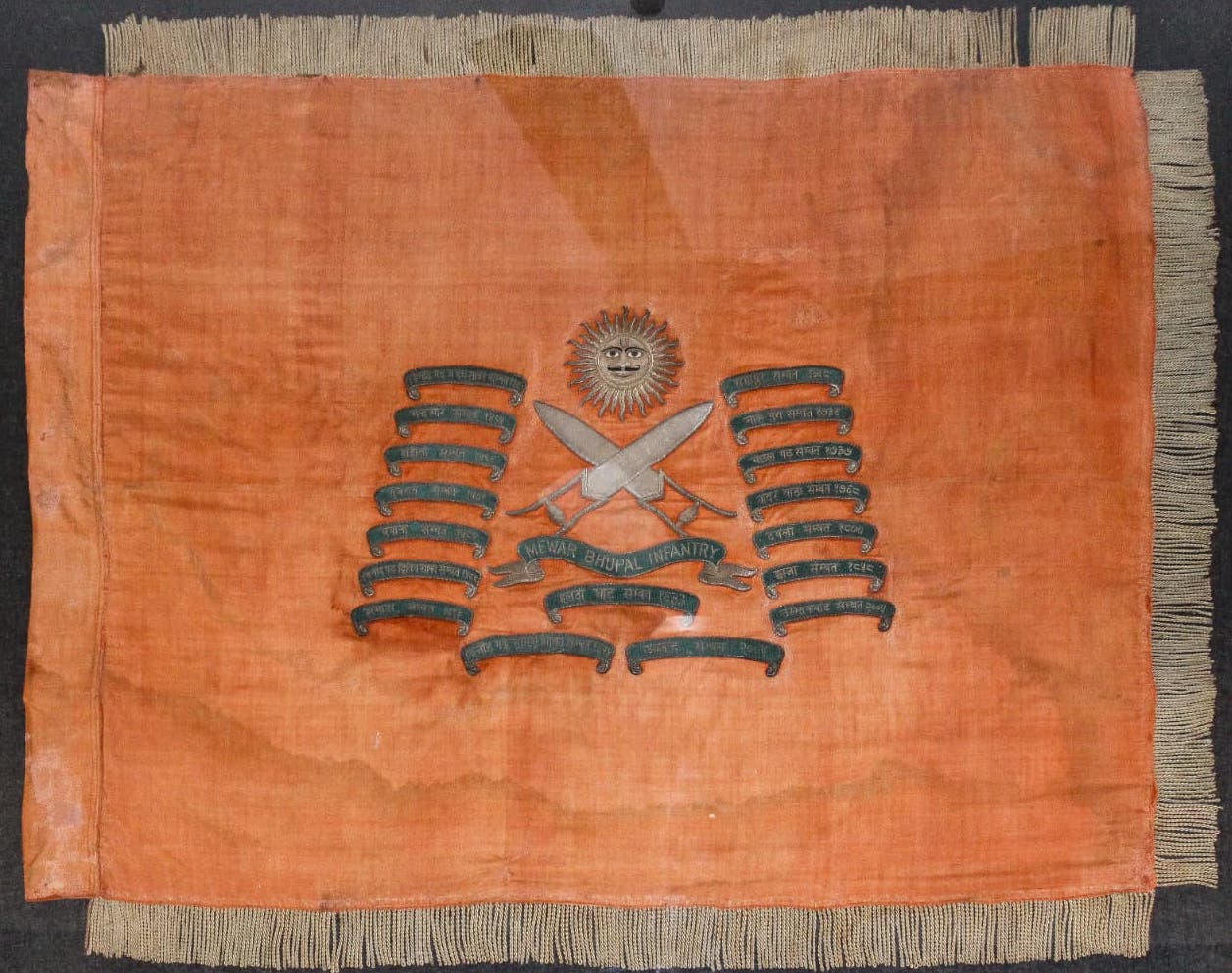
 Mewar Infantry battle honours flag. (Photo: Jai Samota)
After centuries of fighting in the north and the west, Mewar was called out once more – this time to the south. Having fought Arabs, Mughals and Marathas, the state’s infantry now faced the razakars.
The task was the liberation of Hyderabad from the Nizam and its unification with independent India.
Training at Kirkee and Move to Sholapur
In July 1948, the Mewar Infantry went through a rigorous operational transition while stationed at Kirkee, opening the month with fresh drafts from its depot and training centre at Udaipur. A board of officers inspected the unit’s training standards on July 3, 1948, and issued warning orders for Exercise Tusker.
The board comprised Brigadier Gurbachan Singh, commander of 7 Infantry Brigade; Lieutenant Colonel Pisal, commanding officer of 14/7 Rajput; Major MR Budhwar, MC, the deputy assistant adjutant and quartermaster general; Major KD Singh of 2 Royal Sikh; and Captain Sowani, the brigade signals officer. A reconnaissance party under Major Sardar Singh, with Jemadar Sajjan Singh and 17 other ranks, was sent ahead to report to 7 Brigade.
On July 5, the battalion deployed under Lieutenant Colonel Rao Dileep Sinha with 10 officers, 18 junior commissioned officers (JCOs), 504 other ranks and 17 non-combatants enrolled. It returned to Dighi Camp by July 10 after multi-day tactical offensive exercises with 7 Infantry Brigade and 1 Armoured Division, moving via Palve Camp and the Ahmednagar-Sholapur road.
The move towards Sholapur began soon after, with an advance party under Major Hanwant Singh on July 14 and A, B, C and D Companies following in staggered rail contingents on July 17 and 18. By the end of the month the unit had established its staging camp at Sholapur, hosted visits by the general officer commanding-in-chief, held tactical exercises without troops at Shethpal and Aran, drawn 2-inch and 3-inch mortars from Udaipur, and collected transport vehicles from Bombay.
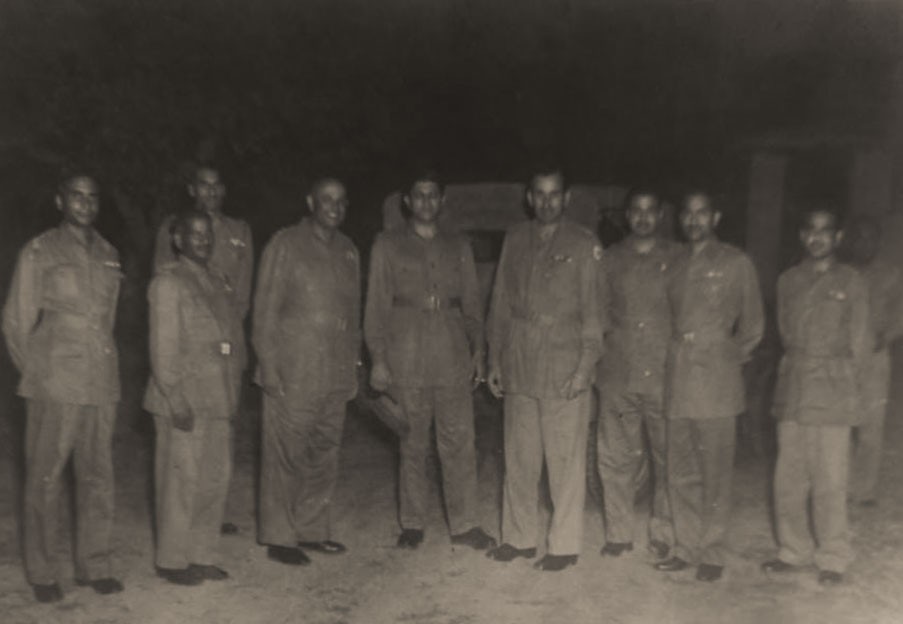 Mewar Infantry officers in 1948 during Operation Polo. (Photo collected by Jai Samota.)
Nanaj and Wait on Border
Through August and early September 1948, the battalion raised its operational readiness and began pre-planned moves near the Sholapur border. Captain Kesri Singh collected jeeps from Bombay and carrier trucks from Kirkee early in the month.
Lieutenant Shardul Singh was attached to 7 Infantry Brigade, and Lieutenant General Jiwaji Rao Scindia inspected the battalion on August 10. The next day the commanding officer received warning orders for two companies and tactical headquarters to relieve 14/7 Rajput at Nanaj village, placing them under the direct command of 7 Infantry Brigade.
Major Hanwant Singh led the advance party to Nanaj on August 12, with the main body arriving immediately behind. Lt Gen Rajendra Sinhji and Major General JN Chaudhuri reviewed the unit during its rotational duty at the volatile Nanaj camp, where A and D Companies relieved B and C Companies on August 23.
September opened with further tactical exercises without troops and sand-model exercises. On September 7 the battalion was placed under command of 9 Infantry Brigade for Operation Polo.
The RRK battalion relieved the Nanaj detachment on September 11, after field firing at the Chikli range and an inspection by the 9 Infantry Brigade commander. That allowed the whole battalion to concentrate at Sholapur before moving to its tactical assembly area at Ule village on September 12.
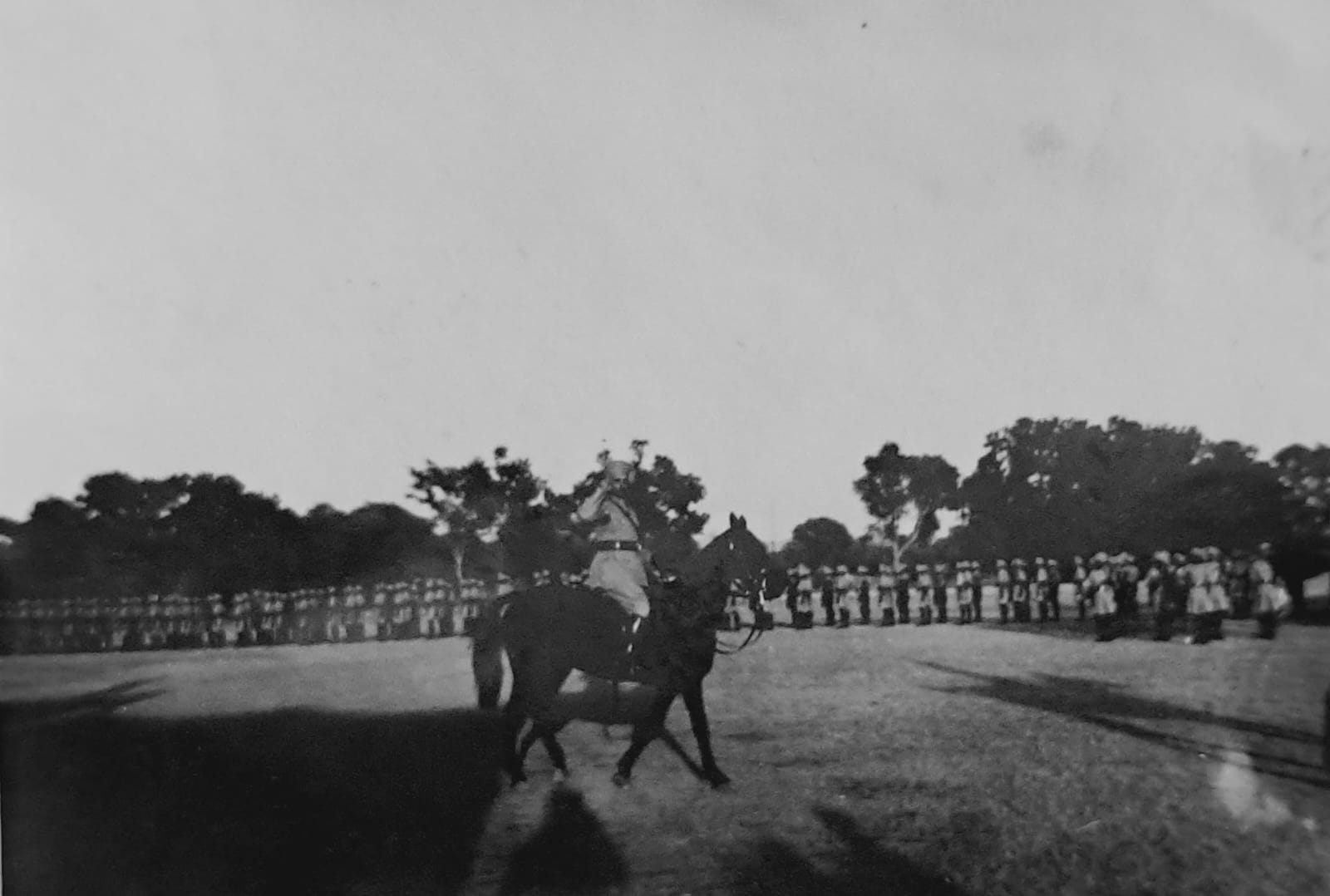 Lt Col Rao Dileep Singh inspecting a guard of honour in 1948. (Photo collected by Jai Samota.)
Officers Who Took Battalion In
The battalion was commanded by Lt Col Rao Dileep, with Major Jaswant Singh as second in command, Captain Than Singh as adjutant and Captain Bakhtawar Singh as quartermaster. Lieutenant ENBK Nair was the intelligence officer and Lieutenant Laxman Singh the signals officer.
Lieutenant Baloo Puri commanded the 3-inch mortar platoon, Lieutenant Bhawani Singh was the mechanical transport officer and Captain OK Shankaran the regimental medical officer. The companies were led by Maj Hanwant Singh, Maj Sardar Singh, Major Parbat Singh, Major Ram Singh and Capt Kesri Singh.
Operating as part of “Dupcol” – the Mewar Infantry with attached troops, a battery of 9 Para Field Regiment and tanks of 18 Cavalry – the battalion crossed the start line on September 13, 1948, and pushed on to Tuljapur.
Tuljapur: The First Contact
A Company met early opposition en route at Tundulwadi bridge, killing four hostiles without loss. It then cleared Suratgaon village, killing 25 more.
The battalion reached the outskirts of Tuljapur at about 4pm, debussed on the orders of 9 Infantry Brigade, moved on foot to clear the hillsides and entered the town at 4.40pm. Four light machine guns and 75 rifles were recovered during the search, and Maj Hanwant Singh suffered minor gunpowder injuries during the clearing operation.
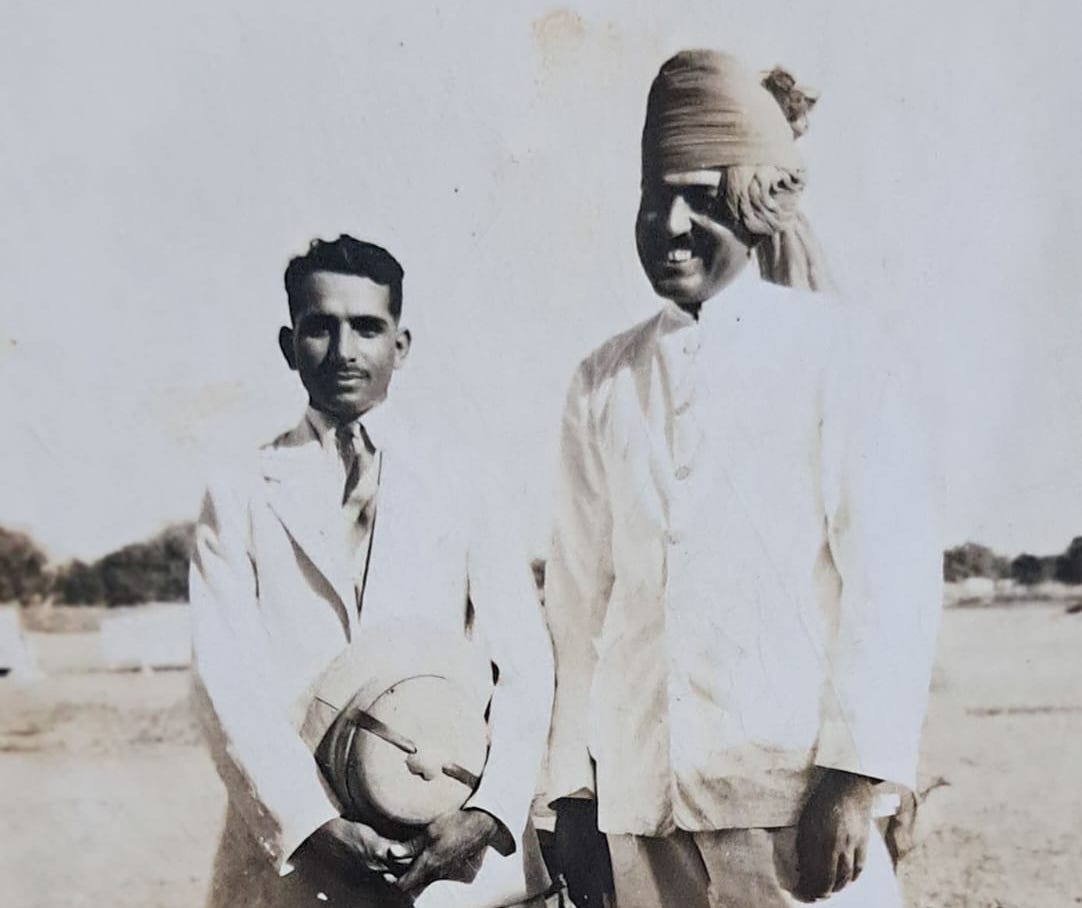 An undated photo of Major Jaswant Singh (L) and Major Hanwant Singh. (Photo collected by Jai Samota.)
Osmanabad: Three Days of House-to-House Fighting
The unit formed up with armour and artillery support the next morning, September 14, and advanced on Osmanabad. At 11.20am, leading troops of D Company were within half a mile of the town when they came under heavy small-arms fire from the village and its surrounding defences, which included a two-storey building and a prominent mosque.
Both companies ran into well-established resistance from fortified houses used as pillboxes as tactical headquarters moved up and deployed C Company from the east. Despite support from armoured carriers and the capture of an enemy truck, the weight of fire forced a temporary withdrawal order at 3.25pm, during which a grenade was thrown at a unit carrier.
Harassing artillery fire was brought down on the position, and a joint clearing effort with elements of 18 Cavalry coming in from the north began at 6pm before nightfall halted the advance. That evening, when gunners at the 5-mile stone reported being surrounded, D Company sent troops who engaged and killed five razakars.
A final coordinated sweep with 18 Cavalry and 8 Cavalry between 7am and 10.50am on September 15 cleared Osmanabad completely. The action cost the razakars 75 dead and 184 captured, and yielded a large haul of weapons and military vehicles, including 31 Tommy guns, 41 rifles, several hundred muzzleloaders and administrative papers taken from the collector’s house.
The battalion earned the battle honour Osmanabad.
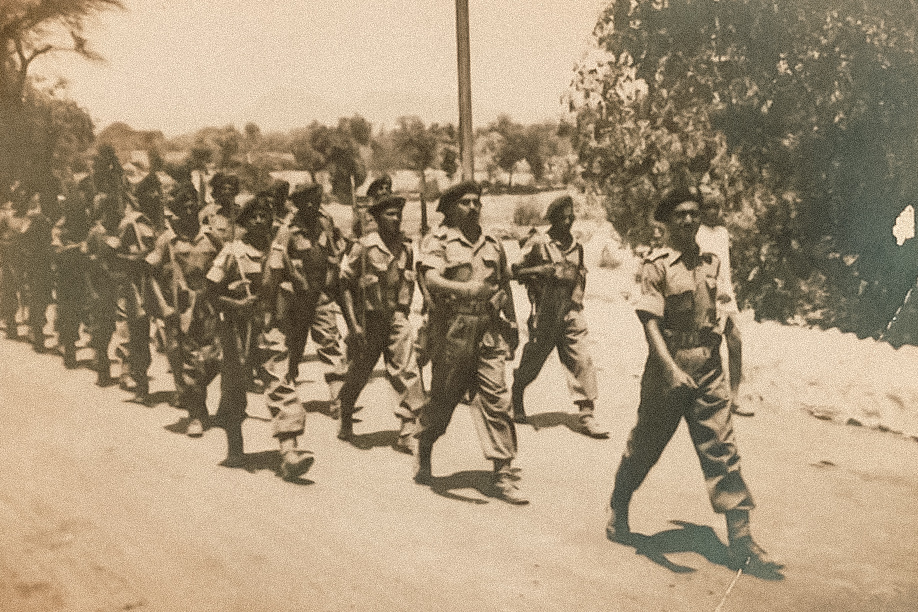 Mewar Infantry troops marching through Hyderabad during Operation Polo, in 1948. (Photo collected by Jai Samota.)
Lohara and Line of Communication
After Osmanabad, the Mewar Infantry was redeployed along the line of communication between Naldurg, Umerga and Dalim, with C Company at Umerga and Dalim, D Company and battalion headquarters at Naldurg, and B Company at Tuljapur. On September 17, elements began planning the capture of Lohara, starting a foot advance at 3am on September 18 with a troop of 18 Cavalry.
Heavy resistance was broken with coordinated mortar and tank fire, and Lohara was completely overrun by 4pm, with 62 razakars killed and a considerable quantity of weapons recovered. On September 19, patrols from A Company in the Dalim, Karol and Jaoli sectors killed further razakar leaders and seized more arms.
Aland: March Through Monsoon
On the afternoon of September 19, the battalion was ordered to march on Aland in a convoy of tactical headquarters, A Company, the 3-inch mortars, B Echelon, elements of 18 Cavalry and 9 QVO Madras Field Company. Heavy monsoon rain made roads and nalas impassable, stranding vehicles at Wagdri, Gogaon and Parsawali between September 19 and 21.
Destroyed bridges and 20-foot-deep swollen streams at Nala Hubli and Khanapur forced the troops to abandon heavy transport, load ammunition onto dismantled bullock carts and march on foot through continuous downpours without shelter or supplies. Even so, the battalion crossed Nala Khanapur and Nala Jiroli on September 23 and set up a tactical camp three miles from Aland.
In the early hours of September 24, A Company led a night march to cut the Gulbarga road, C Company cut the Umerga road, B Company secured the ridge near the Idgah and D Company was held in reserve. Sweeping operations began at 6.30am against heavy fire from the village and the dargah positions.
When B Company’s advance on the dargah was halted, 3-inch mortar fire was brought down, allowing A and D Companies to close to within 200 yards by 9.45am. Facing relentless sniping from the minars and defended structures inside the dargah, demolition squads of the Royal Indian Engineers moved up under covering fire to blow up the fortified minars.
Two JCOs were wounded during an attempt to clear an adjacent house, and anti-tank guns were brought forward at 1.40pm to breach the structure, with the stronghold fully cleared by 4.30pm. Further sweeping on September 25 eliminated snipers firing from the dargah minarets with anti-tank gun fire, secured the town, killed dozens of the enemy and took 133 regular, police and razakar prisoners.
That action brought the battalion its second battle honour, Aland.
Mahbubnagar: Disarmament and Internal Security
At a formal gathering at sub-area headquarters in Sholapur on September 30, the sub-area commander commended the Mewar Infantry for its conduct during the operation. Across Operation Polo the battalion captured a substantial quantity of military equipment, including 59 .303 rifles, 34 Mk V rifles, 9 Bren guns, 32 Italian Beretta submachine guns, 3 Sten guns, 1 V/B gun, 3 flare pistols, 403 muzzleloaders, 5 single-shot pistols, 563 swords, 112 spears, 33 daggers and knives, and 36 boxes of ammunition and gunpowder, besides arresting a number of insurgent commanders and recovering looted civilian property.
With combat operations over in late September 1948, the battalion moved to Secunderabad under 9 Infantry Brigade and was reassigned to Mahbubnagar district in October to restore order. Leaving a rear party under Lt Baloo Puri at Sholapur, it departed on October 1, halted at Sadaseopet and reached Mahbubnagar on October 4, where it relieved 2nd Grenadiers and the Mysore Lancers.
The battalion was then split into five groups across the district’s key administrative sectors. A Company under Capt Hanwant Singh took Pargi, B Company under Capt Kesri Singh took Wanaparti, C Company under Capt Sardar Singh took Amrabad and Achampet, D Company under Capt Parbat Singh took Marikal and Makhtal, and HQ Company held the Mahbubnagar base under Maj Jaswant Singh and the adjutant, Capt Than Singh.
Their brief was intensive local patrolling to suppress post-war lawlessness, disarm hostile razakars and neutralize armed communist bands in the countryside. Companies searched villages, wells and hidden caches, recovering hundreds of muzzle-loading rifles, swords, daggers, spears, pistols and .303 rifles from places such as Shahabad, Devarkonda and Timajipet between October and November 1948.
The infantry simultaneously targeted local armed gangs responsible for looting and arson, pursued fleeing razakar leaders, secured the Krishna river crossing and countered ambushes and bus burnings near Ibrahimpet and Srirangapur. Alongside these security measures, the troops returned looted property to villagers in places such as Bajapur and assisted police investigations by handing over arrested insurgents.
The unit’s performance drew praise during formal inspections by senior officers, including Maj Gen Chaudhuri. Through sustained patrolling, the Mewar Infantry held law and order across Mahbubnagar until December 1948.
Last Battle of Mewar State Forces
Operation Polo was the final active combat deployment of the Mewar Infantry before its absorption into the Indian Army. Serving under 9 Infantry Brigade, the battalion restored law and order, disarmed hostile insurgent groups and secured critical infrastructure across Hyderabad state in 1948.
The campaign remains the last engagement fought under the banner of the Mewar State Forces. Not long after, the unit was formally merged into the Army, becoming the 9th Battalion, The Grenadiers, on June 26, 1954.
Disclaimer: The views expressed in this article are author’s own and the authenticity of the events mentioned are his own findings. His views don’t necessarily reflect the views of India Sentinels and India Sentinels can’t vouch for the authenticity of the events mentioned. If any reader has any dispute with the veracity of certain facts and/or have additional information, kindly write to us at [email protected].
Follow us on social media for quick updates, new photos, videos, and more.
X: https://x.com/indiasentinels
Facebook: https://facebook.com/indiasentinels
Instagram: https://instagram.com/indiasentinels
YouTube: https://youtube.com/indiasentinels
© India Sentinels 2026-27