— By Aayushi Pandey and Dr Aparaajita Pandey
A democracy is not judged by how it behaves when all is calm. Its real character shows when citizens take to the streets to question those who govern them. Elections exist precisely to channel that friction into something orderly – to let grievances play out through representation instead of confrontation.
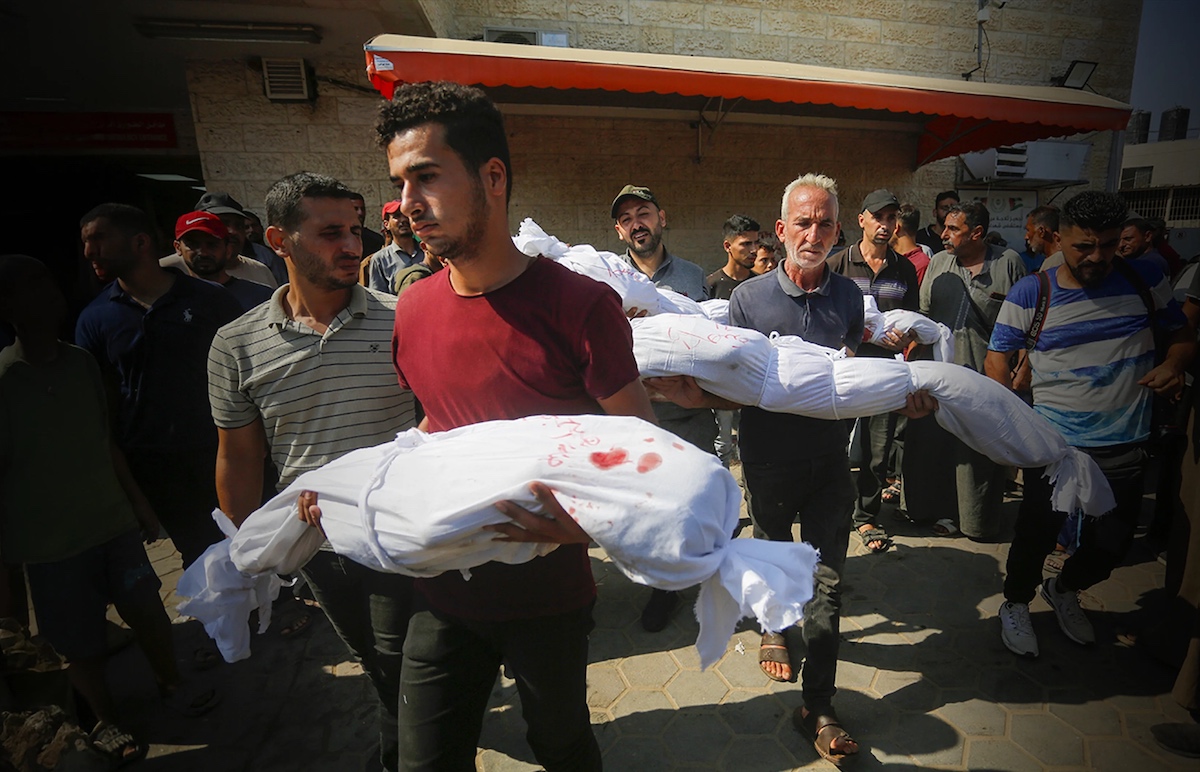
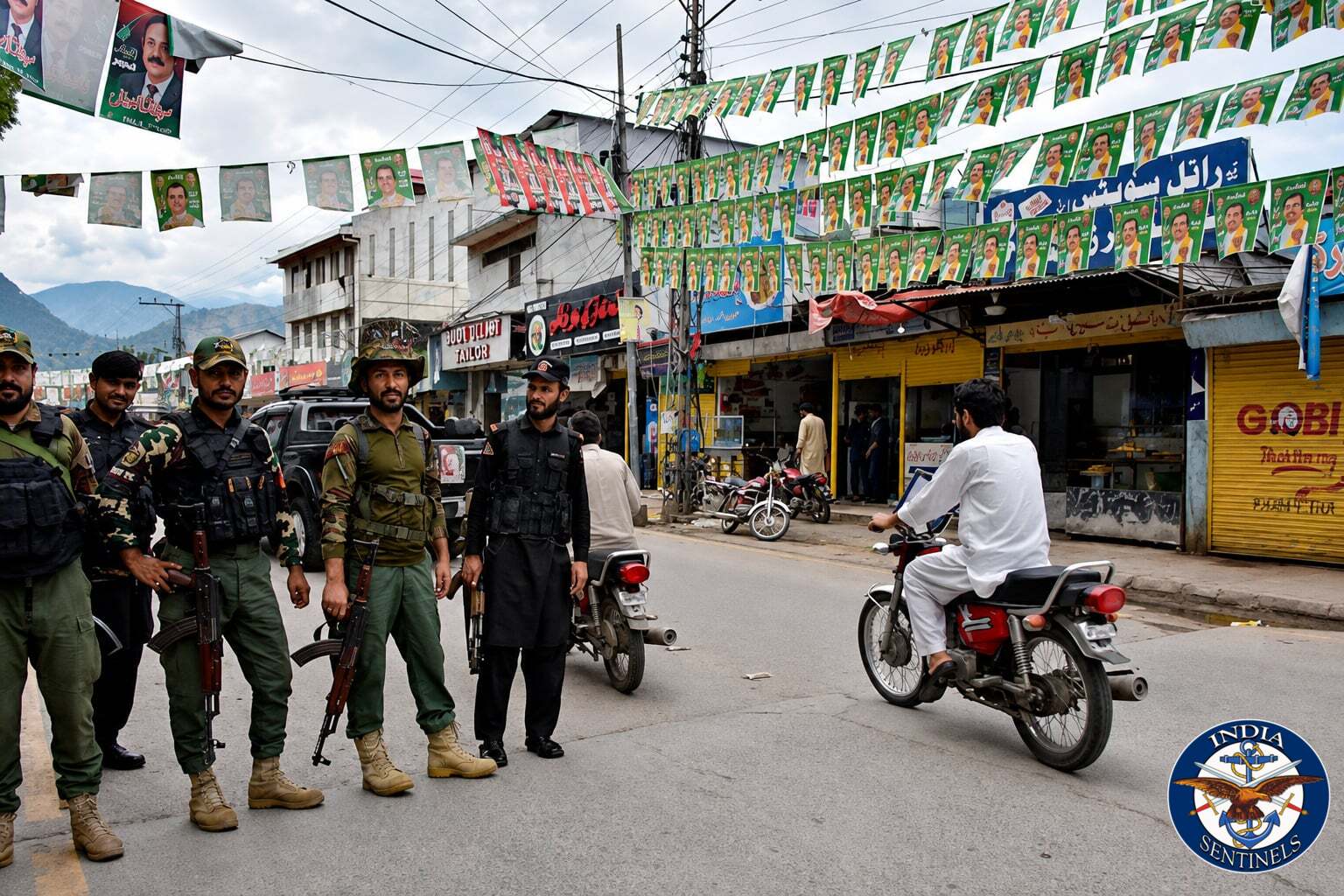
In Pakistan-occupied Kashmir, however, election season has come to mean something else: tighter security, narrower civil liberties and, all too often, violence. The latest bloodshed there is not simply one more flare-up in a restive region. It points to a larger question about how the Pakistani state deals with political dissent.
The protests that have spread across Pakistan-occupied Kashmir in recent weeks began the way such movements usually do – with a familiar list of complaints: soaring electricity bills, inflation, shortages of basic goods, calls for greater political representation, and objections to parts of the region’s electoral set-up.
Driving the mobilization was the Jammu Kashmir Joint Awami Action Committee (JAAC), a coalition of traders, civil society groups and local residents pressing for reforms that better reflect what people in the territory actually want.
Read also: What Chinese investors actually weigh when they look at Gwadar
It was the state’s response that turned a dispute over governance into a full-blown crisis. As the protests gathered pace ahead of the elections, the authorities imposed restrictions, arrested activists, cut communications in several areas and sent in security forces to restore order.
Local groups and international media have alleged excessive use of force during the crackdown; the government, for its part, has said the measures were necessary to preserve public order and protect the electoral process. How many people were actually killed or hurt is still disputed. What is not in dispute is that the episode has laid bare a serious breakdown of trust between citizens and the institutions meant to represent them.
What makes the present unrest significant is not only the violence but what it reveals about a pattern that keeps recurring in Pakistan’s approach to governance. The trouble is not just that violence happens – it is how routine, almost expected, these episodes have become.
Look across Pakistan’s recent political history and a pattern emerges: periods of heightened dissent tend to be met with the language and tools of national security. The insurgency in Balochistan, the mobilization led by the Pashtun Tahafuz Movement, the unrest that followed former prime minister Imran Khan’s arrest, the protests in Pakistan-occupied Kashmir – each has its own origins, demands and legal context. What links them is that political grievances are handled through coercion rather than political engagement.
Political scientists have a name for this: the securitization of politics. Disputes that are essentially political or economic in nature get reframed as threats to national security, which opens the door to extraordinary measures in place of ordinary democratic give-and-take.
Protesters get treated as suspects, civil society groups as security risks, and elections themselves start to look like operations requiring military oversight rather than exercises in civic participation. Governments often argue such steps are justified by extraordinary circumstances, but when coercion becomes the default response, it stops being an exception and starts becoming an institutional habit.
Pakistan-occupied Kashmir illustrates this problem clearly. The original demands were about governance, plain and simple: seats reserved for refugees in the Legislative Assembly, economic hardship, and accountability in administration. None of that, at least at the outset, amounted to a rejection of the state. But as talks gave way to confrontation, the character of the movement shifted. People who had initially wanted institutional solutions began to see the institutions themselves as unable, or unwilling, to address their concerns. That is the point at which elections turn dangerous.
In settled democracies, elections tend to absorb political pressure – they give people a peaceful route to change. In less stable environments, elections can instead become the moment when accumulated frustration boils over all at once. People go into elections expecting institutional answers to grievances that have built up over years. When that expectation collides with a sense of exclusion, elections stop being instruments of resolution and start becoming triggers for conflict.
Pakistan-occupied Kashmir looks increasingly caught in that cycle. Perhaps the most telling development in the recent crisis was not the violence itself but reports that protest leaders chose to appeal directly to Pakistan's military leadership rather than rely on civilian political institutions. Whether that was tactical or born of necessity, it reflected a widely held view that real authority over major political questions sits somewhere beyond elected government. That perception feeds into a much older debate in Pakistan about civil-military relations, and it raises uncomfortable questions about how much autonomy democratic institutions actually have.
Political crises tend to get measured in numbers – turnout, casualties, arrests, days of unrest. But the real cost of governing through coercion cannot be captured that way. It shows up in schooling interrupted, businesses shut during prolonged unrest, families searching for relatives who have gone missing, and communities living under repeated communication blackouts. Long after the elections are over and the world's attention has moved on, these are the consequences that remain.
Children who grow up associating elections with curfews, rather than with civic life, come away with a very different idea of what democracy is. Young people who watch political disagreement resolved mainly through force gradually stop believing in institutional politics altogether and trust, once lost that way, is hard to rebuild.
The consequences reach well beyond Pakistan-occupied Kashmir. South Asia remains one of the least economically integrated regions in the world, despite its size and potential. Instability in disputed territories does not stay contained within local politics; it feeds into diplomatic tension, incidents along borders, economic uncertainty and renewed international scrutiny of one of the region's longest-running disputes. Even unrest that is entirely domestic in origin rarely stays confined to administrative boundaries in its effects.
For Pakistan, the underlying question is one of legitimacy rather than law and order. Every state has the authority to maintain public order, and governments everywhere face hard calls when protests turn disruptive or violent. But democratic legitimacy does not rest only on the ability to restore order – it depends on the willingness to tell the difference between a genuine security threat and peaceful political dissent. When every significant mobilization gets treated primarily as a security problem, governments risk shrinking the space in which grievances can be aired peacefully.
What is unfolding in Pakistan-occupied Kashmir, ultimately, is about more than one territory or one election. It reflects a governance problem shared by states that lean increasingly on coercion to manage political disagreement. Security measures can silence protest for a while, but they rarely address what caused it and repeated recourse to force risks turning ordinary political disputes into lasting crises of legitimacy.
The deeper tragedy is not that violence has once again accompanied an election – political violence has, sadly, been part of South Asia’s history for a long time. The greater tragedy is that such outcomes are increasingly seen as expected rather than exceptional. A democracy’s strength comes not from the absence of dissent but from its ability to accommodate it.
Pakistan-occupied Kashmir is a warning that goes well beyond its own borders. Elections cannot sustain democracy if they become occasions for coercion rather than participation. A state can hold order through force for a while, but lasting political stability rests not on managing fear but on convincing every citizen that they have a genuine stake in the political process.
Aayushi Pandey is an independent political analyst, who specializes in South Asia and the Indo-Pacific. Dr Aparaajita Pandey is a senior assistant professor at the Amity Institute of Defence and Strategic Studies, Amity University, Noida.
Disclaimer: The views expressed in the article are the authors' own and don’t necessarily reflect the views of India Sentinels.
Follow us on social media for quick updates, new photos, videos, and more.
X: https://x.com/indiasentinels
Facebook: https://facebook.com/indiasentinels
Instagram: https://instagram.com/indiasentinels
YouTube: https://youtube.com/indiasentinels
© India Sentinels 2026-27