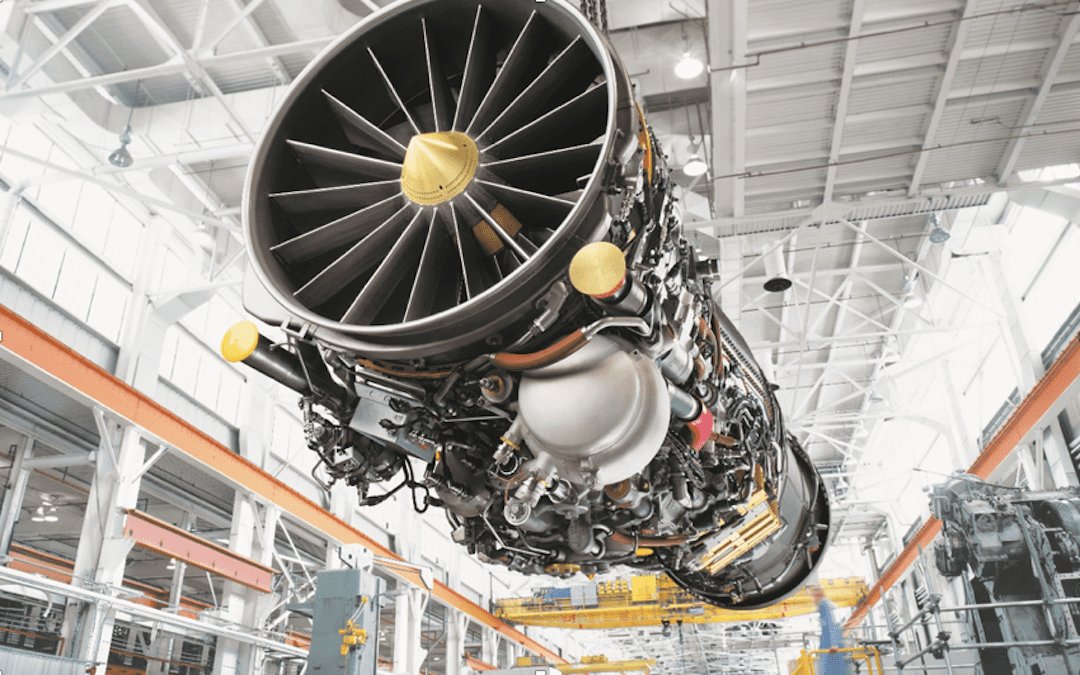
 GE F-414 jet engine (Photo: X)
Two GE Aerospace engines – two programmes, two separate crises – have placed India’s indigenous fighter aviation ambitions under a degree of stress that is difficult to explain purely by market forces or manufacturing hiccups. The F404-IN20, which powers the Tejas-Mk1A, has been trickling in at a pace that has already pushed deliveries more than two years past the original schedule. And now the F414-INS6, earmarked as the interim engine for the advanced medium combat aircraft (AMCA), has reportedly seen its unit cost nearly triple during ongoing negotiations with the Aeronautical Development Agency (ADA).
The coincidence of timing has not gone unnoticed in New Delhi’s defence establishment, where a quiet but pointed question is being asked: is the United States making it quietly, commercially difficult for India to build its own combat aircraft?
Read also: India rethinks GE F414 engine dependence for AMCA stealth fighter
The evidence falls short of proof. But the pattern is suggestive enough to warrant examination.
Two engines, one problem
The more immediate crisis is the Tejas-Mk1A. The Ministry of Defence has issued a formal warning to Hindustan Aeronautics Limited (HAL) directing it to make up lost time on the ₹46,000 crore contract for 83 aircraft signed in 2021, with deliveries originally due from February 2024. A follow-up review chaired by the defence minister, Rajnath Singh, with the Indian Air Force chief, Air Chief Marshal Amar Preet Singh, and HAL’s chairman and managing director, Ravi Kota, has been scheduled for September 2026. Penalty clauses have reportedly been formally flagged.
HAL has received a total of six F404-IN20 engines from GE Aerospace since April 2025, the most recent in May 2026. The sixth engine arrived with a technical defect that, according to a senior HAL official, was subsequently rectified. The official described the fault as likely stemming from a transshipment issue and characterized it as “routine”.
That may well be accurate. But six engines delivered in over a year, against a contract for 99 units, is not routine. It is a supply rate that structurally prevents HAL from achieving the 12-aircraft-per-year delivery tempo it has committed to.
Read also: Rolls-Royce offers India new engine for AMCA project, pitches full tech transfer
The IAF is not in a position to absorb further delay philosophically. It currently operates 30 fighter squadrons against a sanctioned strength of 42 – the minimum considered necessary for credible simultaneous operations on both the China and Pakistan fronts. The Tejas-Mk1A was conceived as the most direct remedy, replacing MiG-21s and other platforms that are being retired. ACM Singh has expressed his frustration publicly on multiple occasions. Every lost year compounds the force’s structural vulnerability.
The AMCA price shock
While the F404 supply chain drags on, a separate and arguably more consequential rupture has opened on the AMCA front. The ADA – the DRDO body responsible for the fifth-generation stealth fighter programme – is now actively re-evaluating its engine options after the per-unit cost of the F414-INS6 turbofan surged to close to three times its originally projected level, according to people familiar with the negotiations. The engine had been pegged at ₹70–80 crore per unit; the revised pricing in ongoing commercial talks has placed that figure dramatically higher.
The F414-INS6 was not merely the prototype engine for the AMCA; it was also planned as the powerplant for the first production variant, the AMCA-Mk1, for an initial two to four squadrons – roughly 60 to 70 aircraft – before an indigenous successor powerplant took over. A collapse or indefinite suspension of the F414 deal would therefore affect not just the prototype schedule but the AMCA-Mk1 production sequence in its entirety.
Read also: MoD issues proposal requests to three private parties bypassing HAL for AMCA project
GE Aerospace has separately proposed establishing an F414 assembly and manufacturing line at HAL’s Bengaluru facility under a licensed production arrangement, for which it has sought in excess of $800 million – roughly ₹6,000 crore. The proposal is being processed in the current financial year, with HAL targeting the first indigenously assembled F414 by mid-2029, primarily for the Tejas-Mk2.
The deliberate-delay question
The possibility that these difficulties reflect deliberate US policy rather than market dysfunction cannot be entirely ruled out, even if it must be stated carefully. American strategic ambivalence towards India’s indigenous defence industrial base is not a novel thesis. Washington has historically been more comfortable selling India weapons than enabling India to manufacture equivalent ones. The technology-transfer conditions attached to US defence exports have consistently been among the most restrictive of any major arms supplier, far behind what France, Israel, and now Russia have offered on comparable platforms.
The F404 delay originated partly in GE’s post-pandemic supply chain disruption and a wider shortage of aerospace-grade materials – pressures that are real and well documented. GE Aerospace announced an investment of nearly $1 billion in its US manufacturing ecosystem in 2025 to address these. However, the question that defence planners in India are asking, not necessarily in writing, is whether prioritization decisions within GE’s production queue reflect something other than pure commercial logic.
A state-owned Indian aerospace manufacturer with a fixed delivery contract is not, by any measure, GE’s most commercially significant customer.
The F414 pricing trajectory is harder to explain on supply-chain grounds alone. A near-tripling of unit costs in the span of a few years, during negotiations specifically with India for a programme that Washington is aware would underpin the country’s future combat aviation independence, carries a quality that is difficult to attribute wholly to raw material inflation or wage pressures. It may reflect GE’s commercial calculation that India has no credible alternative. That calculation, if accurate, is itself a form of leverage.
Read also: GE Aerospace signs deal with IAF to set up domestic overhaul facility for Tejas engines
It is also relevant that the US has form in this area. India’s long-running effort to develop a domestic engine – the Kaveri programme under DRDO’s Gas Turbine Research Establishment (GTRE) – was effectively left without a clear path to maturity, in part because the technology partnerships needed to bridge critical gaps in high-temperature materials and turbine blade manufacturing were never forthcoming from western suppliers, including American ones.
The Kaveri never powered a production fighter. India is still without an indigenous engine capable of flying a combat aircraft.
Europe steps into the gap
Whatever the intent behind GE’s pricing, the practical effect has been to accelerate India’s engagement with European suppliers who have long been waiting for precisely this kind of opening. France’s Safran and Britain’s Rolls-Royce have both submitted formal proposals to DRDO, each offering terms that go considerably further than anything GE has put on the table.
Safran – which already has institutional familiarity with IAF operations through its M88 engines on the Rafale – has offered 100 per cent technology transfer, including full intellectual property rights and no export restrictions and a pitch to co-develop a 120kN-class engine for the AMCA-Mk2 in collaboration with GTRE. Rolls-Royce has matched those terms and added a commitment, backed by the UK government, to build a dedicated aero gas-turbine complex on Indian soil.
The proposed engine – targeting 110kN to 130kN of thrust, a new design rather than a derivative – is aimed at the AMCA-Mk2 timeline, with ground testing targeted for 2032 and first flight by 2034. The potential for propulsion commonality with the Indian Navy’s twin-engine deck-based fighter (TEDBF) adds further strategic weight to both European offers.
Read also: GE Aerospace and HAL sign MoU for manufacturing F414 engines for fighter planes in India
Rolls-Royce’s chief executive, Tufan Erginbilgic, has separately held discussions with the prime minister, Narendra Modi, on a strategic roadmap that envisions India as the company’s third home market. Safran’s pitch builds on GTRE’s accumulated knowledge base from the Kaveri programme – which, despite never producing a production engine, gave Indian scientists and engineers substantive experience in gas turbine design, materials science, and high-temperature component testing.
The reckoning
There is an uncomfortable structural argument that runs through both crises. India’s two most important indigenous combat aircraft programmes – the Tejas-Mk1A at the production end and the AMCA at the development end – are both contingent, at this stage, on a single foreign supplier. That supplier has, across two separate programmes in roughly the same period, either failed to deliver on schedule or repriced its product to a point of near-unaffordability.
Whether this reflects incompetence, commercial opportunism, or something more calibrated, the result for India is the same: the timelines of its most strategically significant defence industrial projects are hostage to decisions made in Cincinnati.
Modi said on Independence Day 2025 that India’s own fighters must fly on Indian engines. DRDO’s GTRE has been making measurable progress on materials for a 120kN-class engine, with MIDHANI – the Hyderabad-based defence metals company – reported to have completed around half of the required high-temperature alloys, of which 80 per cent are already certified.
The National Aero Engine Mission, launched in February 2026, formalizes the coordination structure needed to translate that materials progress into a flying powerplant. None of this, however, resolves the immediate crisis facing the Tejas-Mk1A production line or the AMCA prototype schedule.
For now, the MoD has its hands full managing two simultaneous engine emergencies on two separate American turbofans. Whether GE’s difficulties are self-inflicted, externally managed, or simply the product of a company that has overextended its production commitments globally, the effect on India’s combat aviation programmes is identical – and the lesson, one that New Delhi has been slow to internalize across decades of procurement, is the same as it has always been: strategic autonomy in defence cannot be contracted out.
Follow us on social media for quick updates, new photos, videos, and more.
X: https://x.com/indiasentinels
Facebook: https://facebook.com/indiasentinels
Instagram: https://instagram.com/indiasentinels
YouTube: https://youtube.com/indiasentinels
© India Sentinels 2026-27