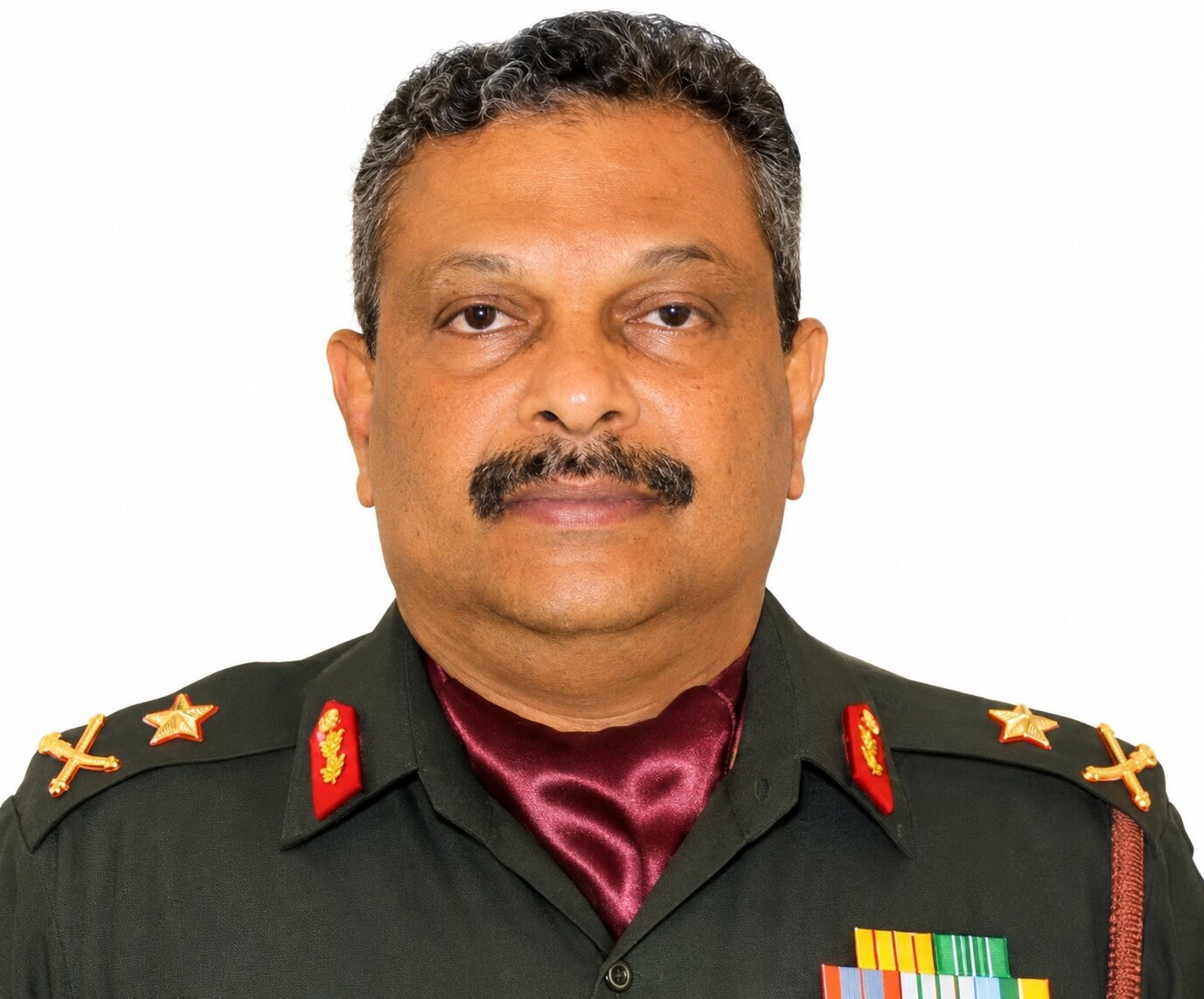
 Maj Gen Binoy Poonnen, AVSM, VSM (R)
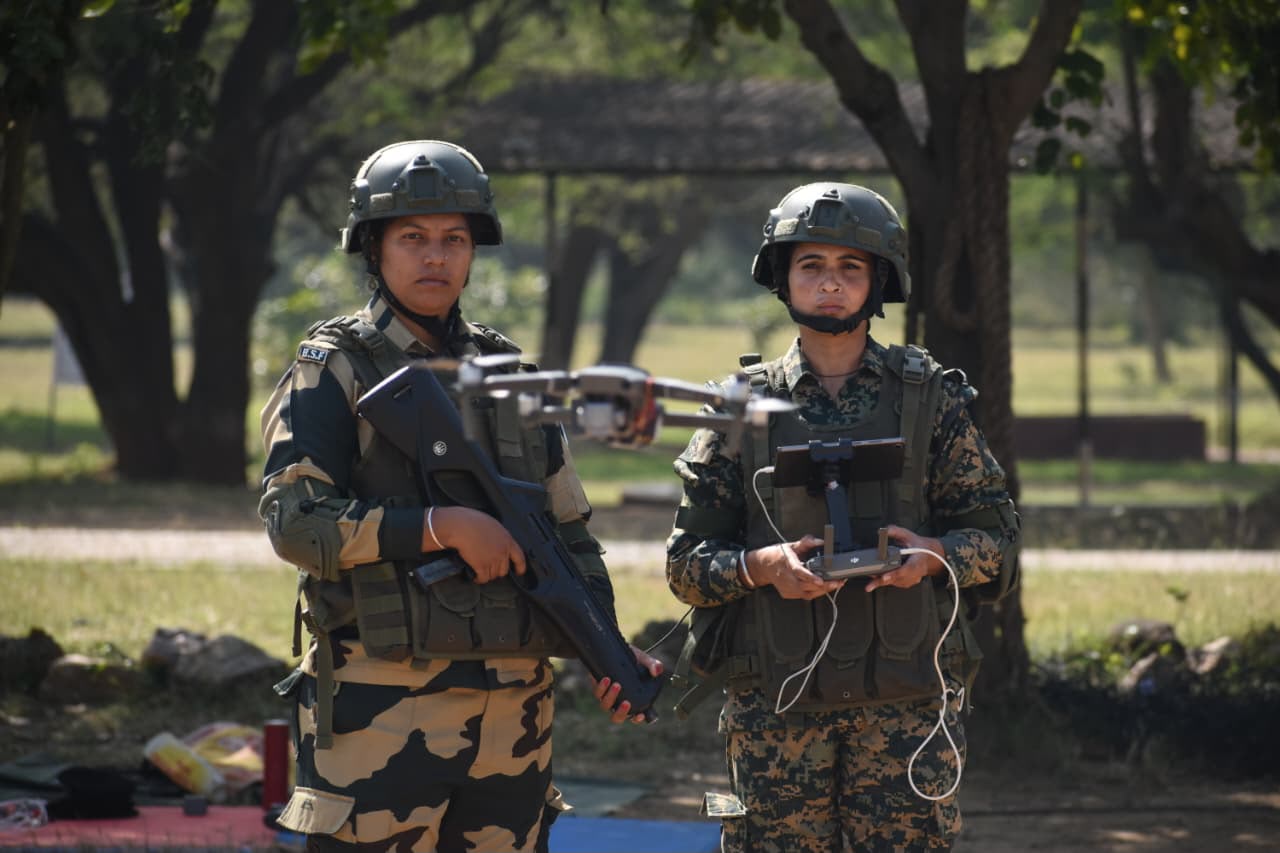
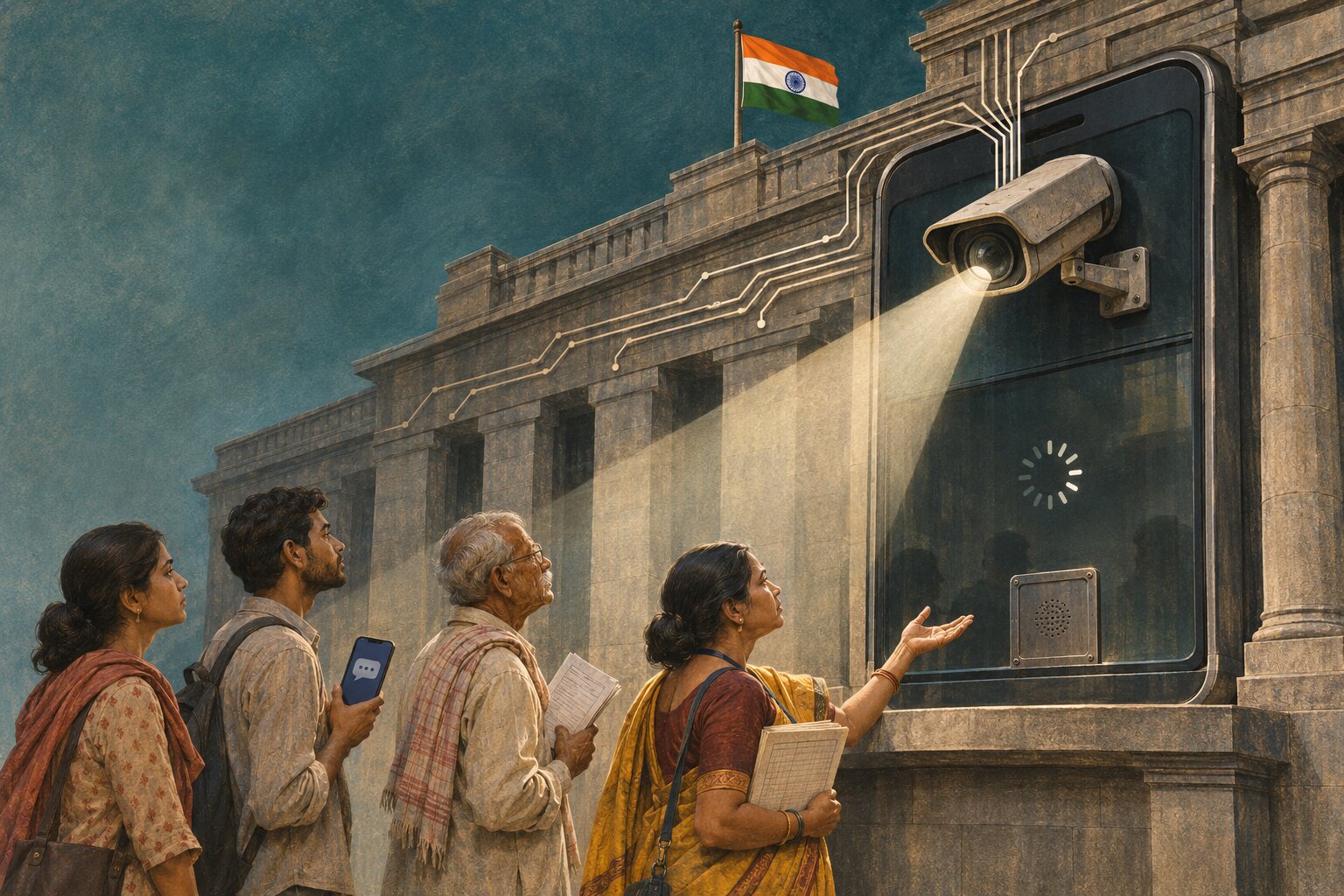
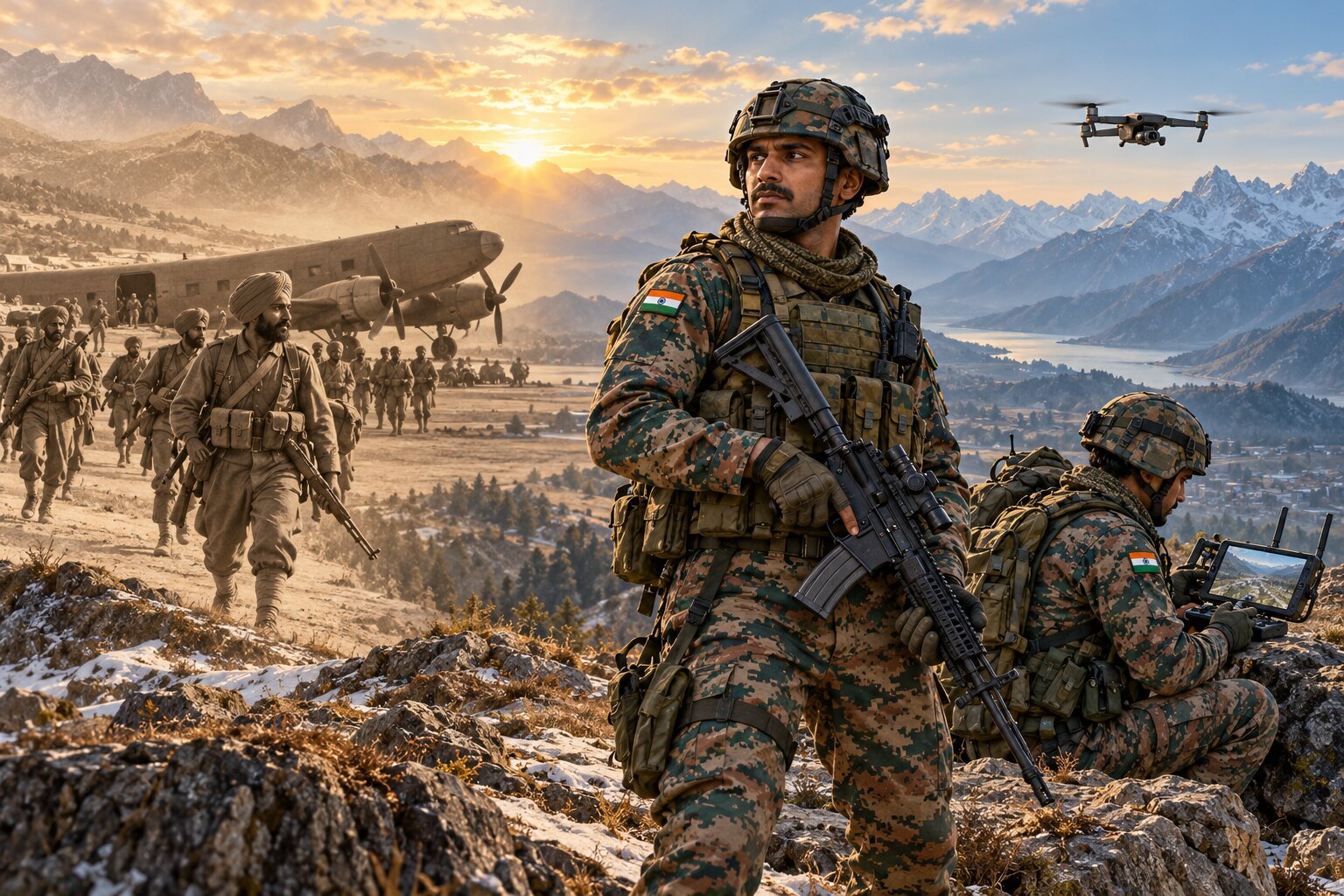
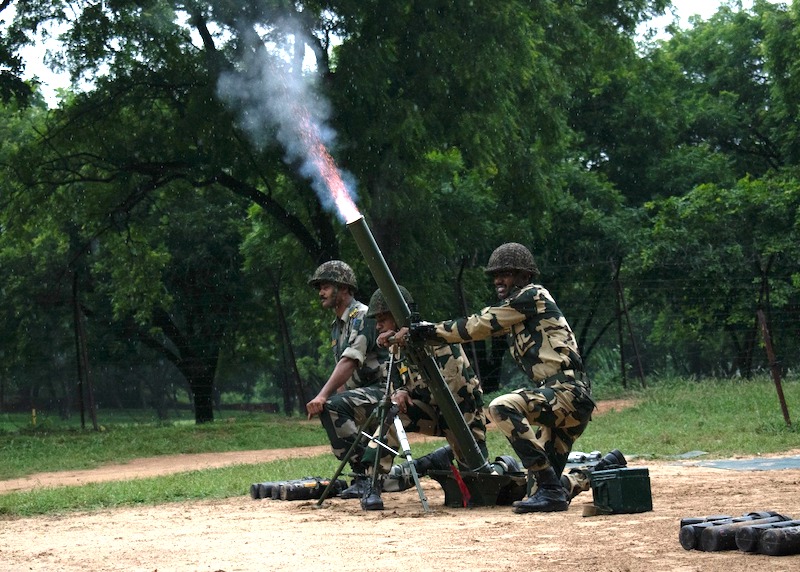
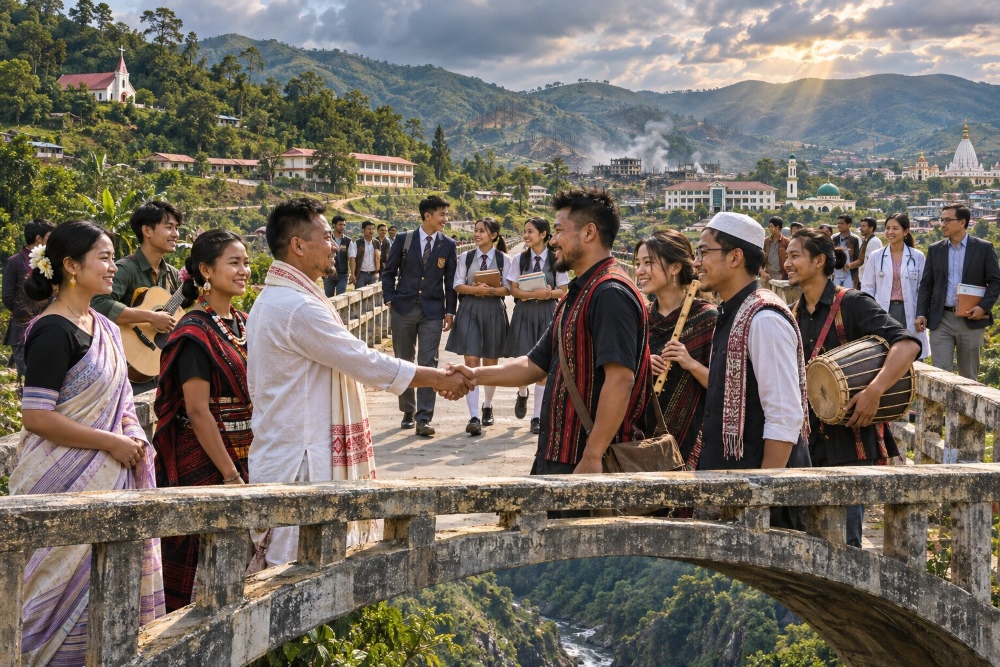 Illustration for representation. (© India Sentinels – 2026–2027)
Manipur holds a distinctive place in India’s social and cultural landscape – a land of breathtaking natural beauty, proud traditions and a plural society where communities, languages and faiths have lived side by side for generations. Yet it is also a place where questions of identity, land, representation, autonomy and security have, time and again, hardened into deep divisions and violence.
The ethnic violence that erupted on May 3, 2023, brought those divisions into sharp focus. It began with a Tribal Solidarity March against scheduled tribe status for the Meitei community and grew into a prolonged cycle of violence, displacement, destruction of property and a severe breakdown of trust.
The human cost was immense. International reporting put the displacement at more than 60,000 people in the first few months alone, besides the casualties reported by the state according to the Union home ministry and US state department’s 2023 human rights report).
The challenge before Manipur is not merely to restore normalcy or prevent the next outbreak. It is to rebuild relationships, restore confidence in institutions and create conditions in which people can once again imagine a shared future.
Political agreements and security operations are essential, but peace must eventually become a social condition – something ordinary citizens value and protect. That is where music, faith, culture, education, youth engagement and equitable governance come in.
What follows draws substantially on my own experience of two tenures in the state – first as a company commander at Kachai Post in Ukhrul district, and later as general officer commanding (GOC) of 57 Mountain Division, headquartered at Leimakhong. I offer it as one soldier’s contribution to the larger conversation on peace and reconciliation.
A plural society, not a simple one
Any serious discussion on peace must begin with Manipur’s geography and demography. A central valley, roughly 9 per cent of the state’s area, is ringed by extensive hill ranges, and the 2011 Census recorded Scheduled Tribes at about 40.9 per cent of the population, living overwhelmingly in the hills.
The Meiteis live mainly in the valley, while the hills are home to numerous tribal communities, notably the Naga and Kuki-Zo groups. Pangals and others complete the plural fabric, and each community’s history, customary rights, landholding and political aspirations shape how it deals with the rest.
The Naga-Kuki clashes of the 1990s showed how territorial and identity disputes can fuel prolonged hostility even among people who share a faith. So let us be clear-eyed: cultural programmes and shared spaces cannot wish away fundamental political disagreements. What they can do is create enough common ground for cooperation while the larger political questions are deliberated.
During my first tenure at Kachai Post and later as GOC, I tried to watch the state’s social and religious life closely – not from the saddle, so to speak, but from the pew. My wife and I became members of the Manipur Baptist Church in Imphal while I was GOC.
Believers from different Naga tribes, Kuki communities and Meitei Christians worshipped together there. I was keen to understand what the church means in the life of a Christian.
Gospel music was the natural meeting ground. Young people sang and worshipped together in an atmosphere not defined by ethnic origin, and a melody or a hymn can do what a hundred speeches cannot – reach across linguistic and social divides.
Shared worship, however, does not automatically dissolve political or territorial differences. Elders told me that while many Nagas and Kukis are Baptists, church structures are tied to distinct community institutions rather than to a single, centralized hierarchy.
The 1990s proved the point. Religious commonality alone could not overcome disputes over territory and identity, and pastors were often caught between theological mandates and community anxieties – sometimes rendered powerless once ethnic confrontation gathered momentum, with land disputes and drug networks complicating matters further. Even so, church leaders retain critical moral authority.
I also visited some of the prominent temples in Imphal, where the Meitei Hindu community worships. Its defining feature is religious syncretism – a seamless blending of Gaudiya Vaishnavism, a Hindu tradition centred on the worship of Radha and Krishna, with the ancient indigenous faith of Sanamahism.
When Vaishnavism became the state religion in the 18th century under King Pamheiba, the Meiteis did not discard their pre-Hindu heritage. They wove both traditions into a single, cohesive cultural and spiritual identity.
I came away convinced that faith matters deeply to every Manipuri, whether Meitei, Kuki, Kuki-Zo, Naga or Pangal, as the state’s Muslims are called. A permanent inter-community forum of clergy could keep channels of communication open, discourage retaliation, uphold humanitarian principles and provide a platform for dialogue.
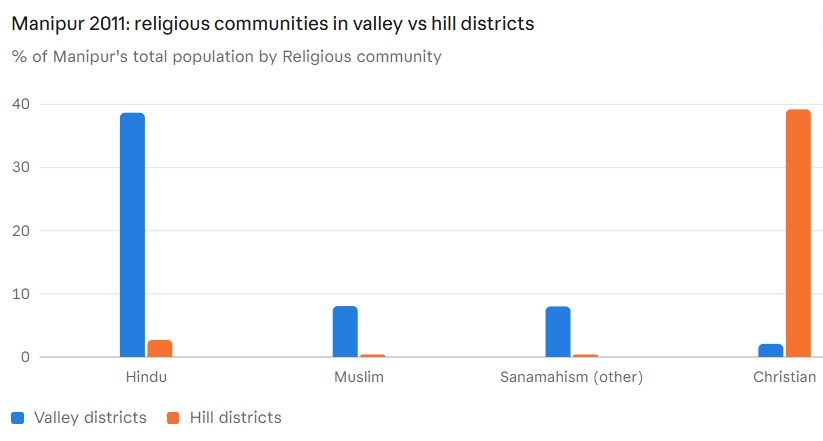 Source: Census of India, 2011
Taking Manipur’s tribal culture to the rest of India
At the Hornbill Festival in neighbouring Nagaland, I saw how powerfully cultural expression can work. Traditional performances, music and crafts from many communities shared one stage, showing that cultural exchange can foster appreciation without forcing political consensus.
Yet a troubling paradox remains. How do young people drawn together by artistic enthusiasm so quickly fall prey to ethnic polarization?
Culture alone cannot resolve structural issues, but it does prove that communities can appreciate one another’s heritage. The challenge is to carry that experience beyond the annual festival into continuous youth engagement through music, dance, theatre, sports and literature.
Collaborative projects require participants to listen, rehearse and work together. That builds relationships that endure when tensions rise.
Before my first posting to Manipur, my own exposure to the tribal culture of the northeast was limited. I suspect that is true of many Indians, and it is a gap worth closing, because Manipur’s cultural diversity deserves to be celebrated as a national asset.
A sustained state programme, run together with the Union ministry of culture, could take tribal music, dance and craftsmanship to other state capitals. It would serve three purposes:
- Promote cultural awareness and challenge the stereotyped lenses through which the region is viewed.
- Encourage interaction among young performers from different communities through collaborative productions.
- Provide employment and livelihoods by training young talent as cultural ambassadors.
The uniform as a common identity: Sainik School, Imphal
One of my most meaningful institutional experiences came through my association with Sainik School, Imphal, where I was chief patron. The school brings together boys from diverse backgrounds and gives them a common identity built on discipline, shared responsibility and collective achievement – one that overrides ethnic distinctions in everyday interaction.
A parallel can be seen in the mixed fixed-class composition of Assam Regiment battalions, which bring together soldiers from across the northeast – Ahoms, Bodos, Nagas, Khasis, Mizos, Kukis, Meiteis and Gorkhas. Under a disciplined, non-partisan ethos, ethnic rivalry never became a defining feature of regimental life.
Multi-faith accommodation, such as a pandit and a pastor occasionally assisting with services, reflects mutual respect and practical comradeship. Institutions do not erase differences; they give people a higher shared purpose and identity.
Equitable infrastructure development matters too. The funds I helped channel to Sainik School through the chief minister are one example of how public investment can benefit all citizens fairly and strengthen trust in the state.
The workplace, the classroom and the student body
My visits to the chief minister’s office revealed a professional environment in which employees from diverse backgrounds worked together seamlessly, their institutional roles taking precedence over ethnic differences. Shared responsibility and professional interdependence are practical foundations for trust.
Student organizations, meanwhile, wield immense influence in Manipur and frequently engage with larger questions of identity and autonomy. A 2011 discussion titled “What Ails Manipur?” organized by Headquarters 57 Mountain Division for school students, showed me that young people are deeply observant, thoughtful and well aware of systemic challenges such as corruption and drugs.
Student bodies must remain free to voice legitimate grievances, but they must also be protected from partisan political or ethnic exploitation. Inter-community exchanges, joint sports and leadership workshops can help nurture a generation of leaders who respect diverse viewpoints.
Civic discipline and civil society
One of the intriguing paradoxes of daily life in Manipur is the high degree of civic discipline in public spaces – orderly queues, respect for traffic rules, clean neighbourhoods. How, then, do such disciplined citizens get swept up in collective violence?
The answer lies in separating civic discipline, which is public behaviour, from social cohesion, which is deep trust and mutual security. Under intense fear and misinformation, everyday norms can be overwhelmed, but these civic virtues remain a valuable foundation on which wider cohesion can be rebuilt.
Non-governmental organizations (NGOs), civil society organizations (CSOs) and church bodies play complex roles. Many provide vital humanitarian assistance, yet they operate in a polarized environment where even their interventions are viewed through an ethnic lens (Jangkhopao Kipgen, Asian Affairs, 2025). To be effective, they must prioritize transparency, inclusiveness and cross-ethnic collaboration.
The state’s duty: security, justice and political dialogue
Social initiatives alone cannot resolve this conflict. The state carries fundamental responsibilities of its own:
- Security and justice: Impartial law enforcement, recovery of illegal weapons, protection of settlements and due process for accountability are prerequisites for normalcy.
- Humanitarian support: Safe accommodation, healthcare and livelihood support for displaced families must go well beyond temporary relief.
- Political engagement: Issues of land rights, autonomy and political representation require constitutional processes, informed dialogue and legislative accommodation.
Security forces create the conditions for peace, but political leadership gives it legitimacy.
A practical roadmap for rebuilding trust
To move beyond good intentions, integrated peacebuilding efforts should include:
- Permanent inter-community clergy forum: For regular dialogue and grassroots tension intervention.
- Sustained cultural and music collaborations: Bringing youth together through shared artistic projects.
- National cultural outreach: Taking Manipur’s heritage to other Indian states.
- Student exchanges and protected educational autonomy: Fostering cross-regional friendships.
- Youth employment and vocational engagement: Giving young people an economic stake in stability.
- Equitable, transparent development: Ensuring needs-based distribution of resources.
- Civil society coordination: Bridging community divides through joint civic action.
- Countering misinformation: Establishing trusted channels for factual verification.
- Humanitarian cooperation: Impartial joint initiatives in health and education.
- Social indicators of progress: Measuring success through community interaction and rehabilitation confidence.
Peace as a shared social responsibility
What I witnessed in Manipur – young people pursuing their faith with passion, boys at Sainik School finding a common identity, professionals collaborating seamlessly in government offices – tells me that common ground exists, even when political turmoil obscures it.
Goodwill has its limits and cannot instantly resolve deep-seated territorial disputes. But it supplies the building blocks of reconciliation: art gives us a language of emotion, faith offers moral guidance, institutions forge shared identities and equitable governance strengthens trust in the state.
The ultimate objective is not merely the absence of violence. It is the restoration of a society where people of every community live with dignity, confidence and mutual respect, and where the bonds that unite them are stronger than the forces that divide them.
Manipur’s diversity is not a problem to be managed but a strength to be nurtured. By connecting the scattered spaces of everyday common ground, its people and the state can turn them into a sustained movement for lasting peace.
Disclaimer: The views expressed in the article are the author’s own and don’t necessarily reflect the views of India Sentinels.
Follow us on social media for quick updates, new photos, videos, and more.
X: https://x.com/indiasentinels
Facebook: https://facebook.com/indiasentinels
Instagram: https://instagram.com/indiasentinels
YouTube: https://youtube.com/indiasentinels
© India Sentinels 2026-27