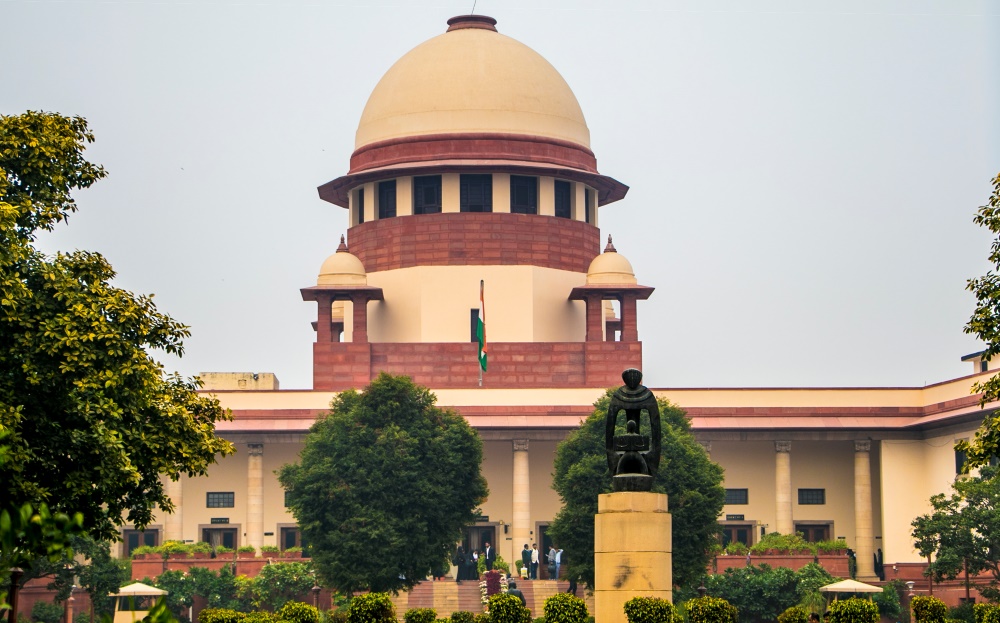
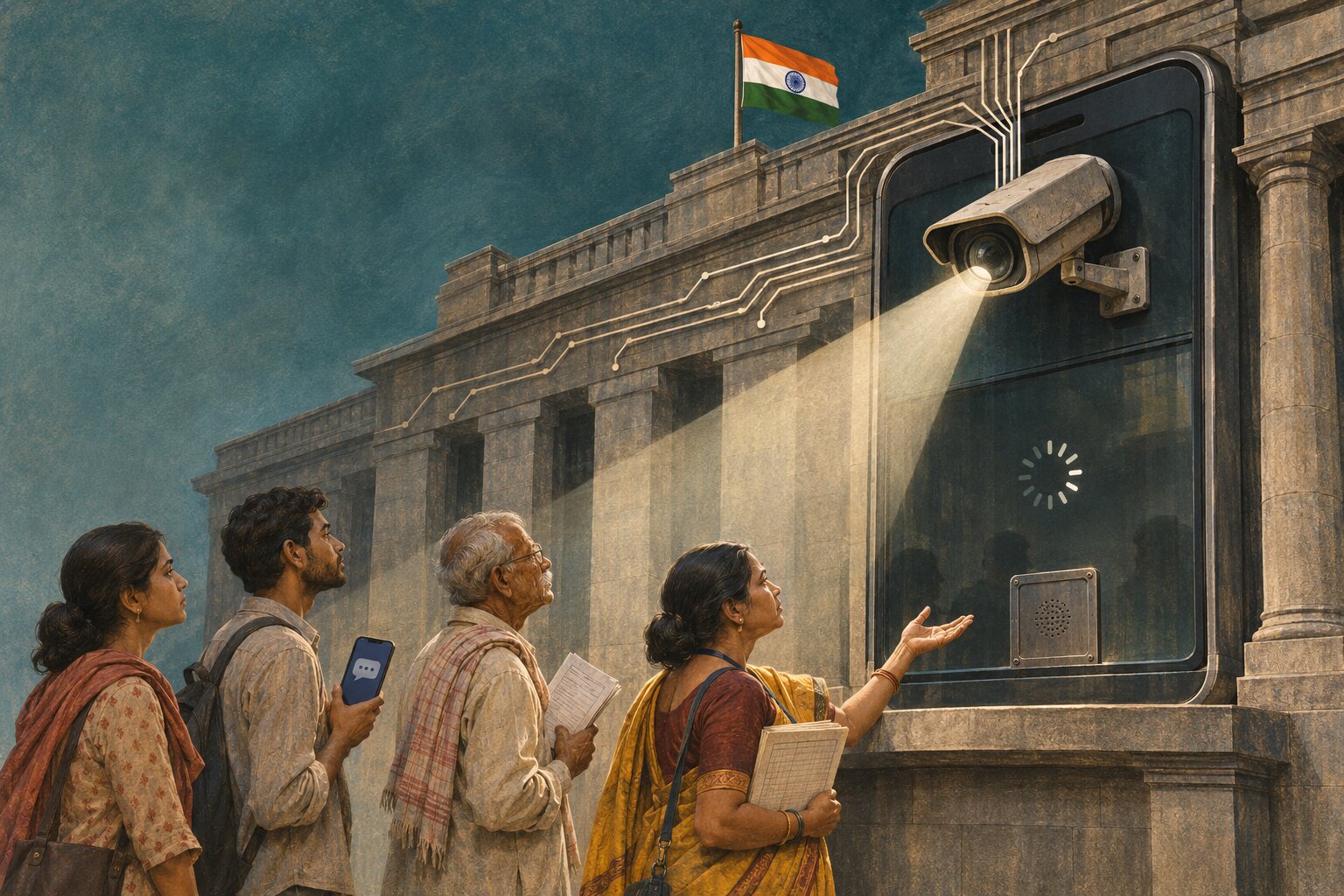
 Illustration for representation. (© India Sentinels 2026)
A camera can record a crime, an app can register a grievance and a digital campaign can shape public opinion. But who ensures that technology serves citizens rather than merely expanding the power of those who control it?
A stolen phone. CCTV cameras across the city.
An online complaint lodged, but no meaningful follow-up. An Anganwadi worker expected to operate a government app without a compatible smartphone or reliable internet.
A transgender person unable to access welfare benefits because a portal fails them. A social media account suspended within minutes, while getting an explanation or challenging the decision can take months.
These are different faces of the same question confronting Digital India: Is technology making governance more responsive to citizens, or merely making citizens more visible to the state?
Technology has transformed policing, public administration, welfare delivery and political communication. It has expanded access to information and enabled services and public participation across geographical boundaries.
Yet technological capacity does not automatically translate into institutional effectiveness, just as the ability to reach millions does not guarantee informed citizens or accountable governance. The real test is whether technology improves citizens’ lives and strengthens their rights, not simply whether institutions deploy it.
Technology without accountability
Consider the ordinary citizen whose phone is stolen. India has systems such as the Central Equipment Identity Register (CEIR), which helps block and trace lost or stolen handsets.
CCTV networks and digital investigative tools can assist law enforcement. But their existence does not, by itself, show how often they lead to recovered devices, identified offenders or real outcomes for complainants.
A camera is useful only if its footage is retrieved, examined and acted upon. A tracking system matters only if it contributes to an effective investigation.
An online complaint mechanism serves little purpose if citizens receive neither a timely response nor an effective remedy. The point is not that these technologies are ineffective, but that their success must be demonstrated through outcomes rather than deployment figures.
The same principle applies to public services. When Anganwadi workers are expected to use apps without adequate devices, connectivity, training or technical support, digitization can add to their workload instead of improving delivery.
When a transgender person or another marginalized citizen cannot access welfare because a portal is unreliable or inaccessible, technology becomes another barrier between the individual and a public service. Moving a service online does not automatically make it citizen-centric.
Accessibility, assisted access and alternatives for those excluded by technology must be built into implementation. Technology can streamline administration, but it cannot independently remedy institutional indifference, flawed policy or inadequate grievance redressal.
Read also: Mount Everest – The pathway to inner summit
From monitoring citizens to shaping their perceptions
Digital technology has transformed not only how the state gathers information but also how political narratives are created and circulated. Political persuasion is not new.
Governments and political parties have always highlighted achievements, defended decisions and sought public support through rallies, speeches and direct engagement. Such communication could be one-sided, but its sources and speakers were generally more visible.
Today, a narrative can be amplified to millions through a few clicks. Coordinated messaging can create an impression of overwhelming consensus, while competing perspectives struggle for visibility.
Citizens may encounter carefully curated versions of events without knowing who is shaping the narrative, how it is being amplified or which voices are missing. Governments, of course, have a legitimate responsibility to inform citizens about policies and achievements.
The concern arises when public communication becomes indistinguishable from propaganda, official messaging overwhelms independent scrutiny, or institutional power is used to marginalize inconvenient questions and counternarratives. The ability to communicate with citizens must not become the ability to control what they get to hear.
This imbalance is particularly worrying when the government is both a powerful participant in the information environment and an authority that can restrict access to it. Amplifying official narratives while disproportionately restricting dissent can undermine citizens’ ability to weigh political claims and make informed democratic choices.
Nor is the problem confined to governments, as private digital platforms also shape visibility through recommendation systems, content moderation and distribution policies. Their legal obligations differ from the state’s, but consequential decisions by either require appropriate transparency and avenues for review.
Digital influence becomes harder to scrutinize when responsibility is diffused across automated systems, anonymous accounts and opaque distribution mechanisms. Messages can travel widely without clear disclosure of who funded, coordinated or benefited from their amplification.
Democratic participation requires more than access to information. It requires the freedom to question it, encounter competing perspectives and scrutinize those who exercise power.
When restrictions travel faster than remedies
These concerns become particularly acute during protests and other forms of democratic dissent. Social media allows someone in a small town to follow a protest in Delhi, amplify participants’ concerns and question government policy without physically joining a gathering.
It lets citizens join public debate beyond the reach of traditional channels. Yet the same digital ecosystem can facilitate surveillance, disrupt communication and restrict the circulation of information.
Internet shutdowns can affect education, commerce and essential services. Content restrictions and account suspensions can disrupt the work and livelihoods of journalists, independent creators and political voices.
The Supreme Court’s judgment in Anuradha Bhasin vs Union of India (2020)* established important safeguards against restrictions on internet-based freedoms. It recognized constitutional protection for freedom of speech and expression through the internet under Article 19(1)(a), subject to constitutionally permissible restrictions and the test of proportionality.
The court also directed authorities to publish orders under Section 144 of the Code of Criminal Procedure and orders suspending telecom services, including internet access, so that affected persons could challenge them before the appropriate forum. It held that indefinite internet suspensions were impermissible under the applicable 2017 rules and that suspension orders were subject to judicial review.
Not every restriction is unjustified. Public authorities may have legitimate grounds to intervene, and platforms valid reasons to moderate content.
But the grounds, process and consequences must be examined rather than accepted at face value. Why can technological intervention appear swift and decisive when expression is restricted, while ordinary citizens struggle to obtain timely assistance, explanations and remedies?
The asymmetry matters. An account restored months later cannot necessarily recover its lost audience or opportunities.
Connectivity restored after a prolonged shutdown cannot undo every disruption to education, commerce or communication. Effective remedies must therefore be practical, not merely theoretical.
Where required by law, affected individuals should receive reasons for consequential decisions, access to review and a meaningful opportunity to challenge them. Public authorities must remain accountable for restrictions they impose, while platforms should provide accessible mechanisms for reconsidering decisions that substantially affect users.
The issue is not simply how much power technology gives institutions, but what limits govern that power and what recourse citizens have when those limits are breached.
Read also: When women scale Everest, societies rise with them
Measuring progress by public outcomes
The answer is not to reject technology but to evaluate it against clearly defined public objectives.
Technology-enabled policing should be assessed through transparent, verifiable indicators, including complaints resolved, devices recovered, investigations advanced and response times improved. The distinction between a device being blocked, traced and physically recovered must remain clear.
Digital welfare systems should be designed around the people expected to use them. Adequate devices, reliable connectivity, training, accessible interfaces and assisted or offline alternatives should be integral to implementation.
Restrictions affecting expression and access to information should be lawful, necessary and proportionate, with appropriate transparency and effective review. Public communication should remain open to independent scrutiny, and public resources must not become instruments for suppressing criticism or manufacturing a one-sided discourse.
Every digital public service needs an accountable institution behind it. Citizens should know where to take a grievance, how quickly it will be addressed and what remedy is available when the system fails.
Security, administrative efficiency and civil liberties are not mutually exclusive objectives. Effective policing, accessible welfare, informed public debate and constitutional freedoms are all public interests.
Technology should advance them together, with safeguards to ensure that efficiency does not come at the cost of citizens’ rights. Ultimately, Digital India must be judged not by the number of cameras installed, apps launched, databases created or messages amplified, but by the outcomes citizens experience and the accountability of those who exercise technological power.
A camera cannot replace an investigation. An app cannot replace an accessible public service.
An algorithm cannot replace procedural fairness. And the ability to broadcast a message cannot replace the democratic right to question it.
Technology should strengthen the relationship between citizens and the state, not make citizens increasingly visible to the state while making the state increasingly difficult to question.
* Editor’s note: The Anuradha Bhasin summary describes the 2020 judgment accurately as written. Since then, Section 144 CrPC has been replaced by Section 163 of the Bharatiya Nagarik Suraksha Sanhita (effective July 2024), and the 2017 telecom suspension rules by newer 2024 rules.
Disclaimer: The views expressed in the article are the author’s own and don’t necessarily reflect the views of India Sentinels.
Follow us on social media for quick updates, new photos, videos, and more.
X: https://x.com/indiasentinels
Facebook: https://facebook.com/indiasentinels
Instagram: https://instagram.com/indiasentinels
YouTube: https://youtube.com/indiasentinels
© India Sentinels 2026-27