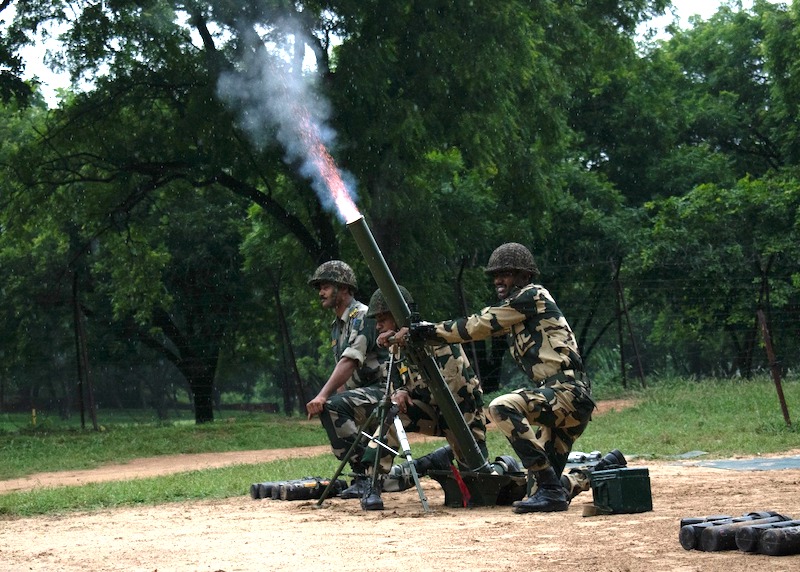
 Border Security Force soldiers firing a mortar somewhere in the western front. (Photo for representation via X/@BSF_Rajasthan)
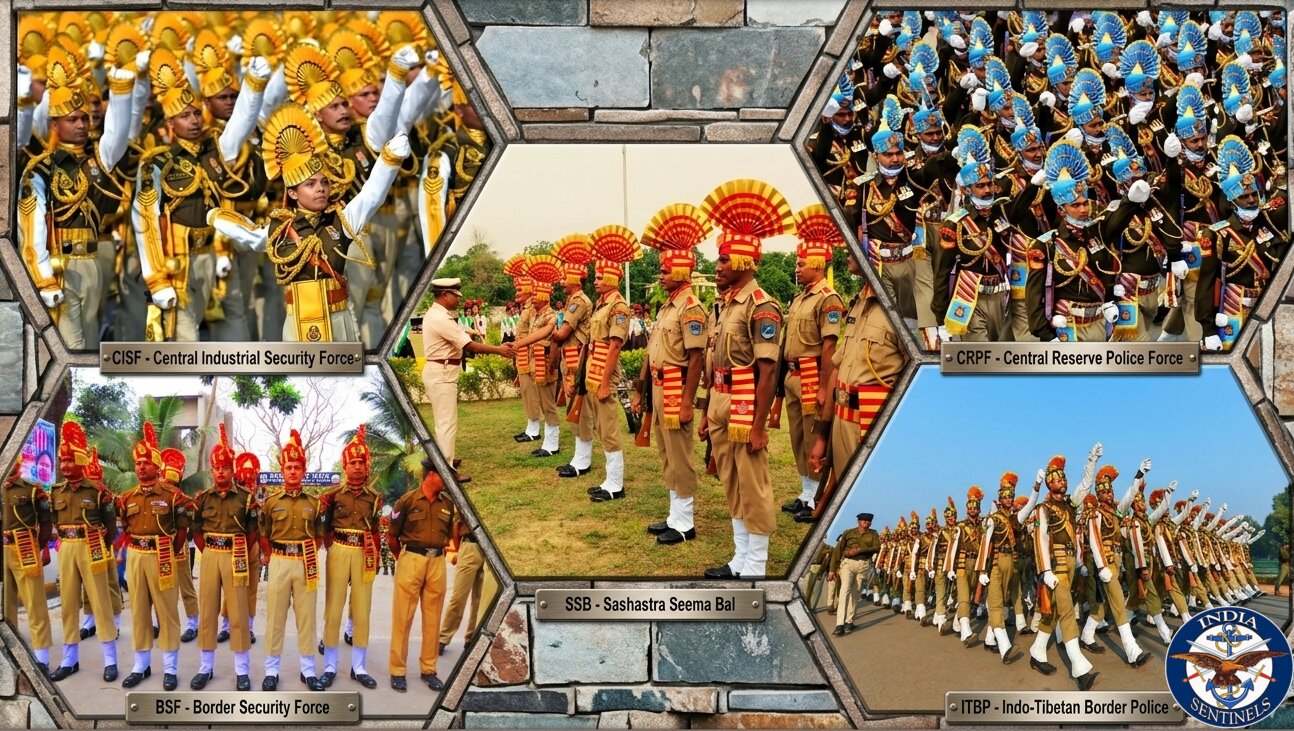
The Border Security Force guards half of India’s land frontier, yet the structure that produces its leaders has not kept pace with the threats it faces, conventional and unconventional alike. Meeting them demands a swift, professional leadership response, and that is impossible without urgent human resource and structural reforms.
Who, then, must drive those reforms? The onus rests squarely with the top command, which must put in place a policy framework that nurtures leaders through sustained training and realistic, personnel-friendly human resource policies.
The force’s responsibilities demand more than vigilance against infiltration and smuggling. They require commanders who can manage a tense frontier, protect civilians and work with the Indian Army when hostilities escalate.
Operation Sindoor brought that combat role into sharp focus. Addressing BSF personnel on May 30, 2025, the Union home minister, Amit Shah, said the force had destroyed or damaged more than 118 Pakistani posts in the Jammu frontier during the operation.
Such recognition should be followed by a searching examination of preparedness. The question for the government and the BSF’s senior leadership is whether the force’s institutional arrangements adequately support the responsibilities placed on its personnel.
Read also: Supreme Court Nudge – Implement judgment on CAPF cadre officers
The case for reform begins with its mandate
The Border Security Force Act, 1968, provides a clear starting point: the BSF is an armed force of the Union constituted to ensure the security of India’s borders. Its organization must therefore reflect the particular demands of border defence, including the possibility of combat.
The force is administratively grouped among the central armed police forces, but that classification should not obscure its distinctive operational requirements. Its professional culture and career structure should be shaped by that mission, with sufficient scope for military training and specialist border expertise.
What matters is whether recruitment, training, equipment and command arrangements serve the mission. A force expected to withstand the opening pressure of a confrontation must be prepared for that responsibility well before the shooting begins.
Leadership is central to this preparation. Higher leadership must have substantial border experience, operational judgment and an understanding of the BSF’s professional culture, which will provide meaningful opportunities for cadre officers to rise.
An officer’s parent service alone neither guarantees nor disqualifies professional competence. The test is whether the officer understands the force, treats its personnel professionally, fairly and can make sound decisions under intense combat pressure.
The government must hold the higher command accountable for developing those qualities throughout the organization. Leadership development cannot be left to short-cut initiatives, individual initiative or occasional training opportunities.
Read also: CAPFs need government empathy, not institutional apathy
Turn operational experience into institutional learning
Operation Sindoor should lead to a proper review, drawing on field commanders, junior leaders and the personnel who were in the fighting. It should establish what worked, where coordination broke down, and which equipment or procedures need fixing. A successful outcome should not be taken to mean there were no shortcomings. The structured review must also cover the role of higher command consisting of deputy inspectors general, inspectors general and additional directors general.
Its findings must lead to fixing accountability, revised training, rehearsed contingency plans and clear responsibilities for implementation. Reviews have little operational value if their conclusions remain in files while units continue with familiar routines.
Joint exercises with the Army should test the transition from routine border management to military operations. Command relationships, communications, logistics and casualty evacuation need to be understood before a crisis puts them under strain.
This is also a question of trust within the institution. Officers who have trained and worked together understand each other’s strengths, limits and expectations far better when time is short than those who have little or no experience and connection with combat.
Read also: Who Should Lead CAPFs? A national security debate beyond cadre politics
Make professional education a career requirement
A structured six-month attachment of BSF company commanders to Army units, which was discontinued, needs to be reintroduced. It would provide sustained exposure to military planning and field leadership while helping officers build relationships with the formations alongside which they may operate.
Such attachments should have defined learning objectives and formal assessments. Their value should be measured by the skills officers bring back to their units and subsequently pass on to junior leaders.
The ministries of home affairs and defence should also agree on a predictable allocation of places for BSF officers on relevant military courses. Access to junior command, senior command and staff courses should form part of a planned career progression.
An ambitious negotiating proposal would be to earmark 10–15 per cent of places on appropriate junior and senior command courses for eligible BSF officers, alongside a defined allocation for staff training. A smaller allocation, around five per cent, could be considered on higher command courses for commandants who have completed battalion command, with the final numbers settled against training capacity and service requirements.
The BSF should similarly seek at least five places for eligible cadre deputy inspectors general at the National Defence College. Suitable commandants and deputy inspectors general should also have greater access to the higher defence orientation and higher defence management courses.
These are proposals for negotiation, not existing entitlements. Expansion must be accompanied by rigorous selection and postings that allow the organization to benefit from the officers’ education.
Short joint programmes with the Army, Indian Air Force, Indian Navy and the civil services would broaden understanding of national security responsibilities. For senior BSF officers, professional development should include the ability to work across institutions as well as competence within their own force.
Training reform must extend below the officer cadre. Subordinate officers, under-officers and other ranks need regular access to relevant Army courses in small-unit leadership, fieldcraft, communications, weapons safety and battlefield procedures.
A proposed allocation of 10–15 per cent of places on selected courses could provide a starting point for discussion. The priority should be instructors and frontline leaders who can spread those skills across their units, rather than accumulate qualifications without an opportunity to apply them.
Read also: Illegal Immigration – India’s unfenced fault line on the eastern border
Cooperation with states is an operational necessity
The BSF’s relationship with state police forces deserves the same institutional attention as its relationship with the military. Border crime connects activity along the frontier with networks operating farther inland, making cooperation essential to effective enforcement.
The October 11, 2021, notification extended the territorial reach of specified BSF powers from 15 kilometres to 50 kilometres in Punjab, West Bengal and Assam. It reduced the corresponding limit in Gujarat from 80 kilometres to 50 kilometres, while Rajasthan’s 50 kilometres limit remained unchanged.
That change did not confer a general combat mandate upon BSF or displace the responsibilities of state police forces. The distinction matters because greater geographical reach requires clearer coordination, not competing claims to authority.
In consonance with enhanced area of responsibility, structured deputation of BSF deputy commandants, seconds in command, commandants, deputy inspectors general and inspectors general to state police organizations could improve coordination and mutual understanding.
Read also: Tadmetla Operation 2010 – Supreme sacrifice that demands answers
Rebuild the battalion around its tasks
Organizational reform must begin with an honest assessment of how battalions actually function. Deployment commitments, administrative burdens and specialist duties must be examined together to establish how much trained manpower is available for frontline work.
One option is to move from the seven-company structure described in the existing establishment to six companies, reallocating personnel from the seventh to headquarters and support elements. This should be tested through a pilot rather than imposed as a force-wide arithmetic exercise.
The decisive question is whether the arrangement improves operational capability while preserving adequate border coverage, reserves and rest. A smaller establishment on paper would be a poor reform if it merely transferred more work to already stretched companies.
The same discipline should guide changes to the rank structure. Restoring lance naik and naik ranks, alongside a review of the assistant sub-inspector rank in the general duty cadre, deserves examination as a means of strengthening junior leadership and reducing stagnation.
Any transition must protect legitimate pay and service interests while creating clear responsibilities at each level. Changing rank titles without addressing vacancies, promotion rules and training requirements would accomplish little.
Minimum service requirements for promotion should be reviewed wherever they unnecessarily delay the advancement of capable personnel. Faster progression must remain linked to competence, fitness and readiness to assume greater responsibility.
Age alone is not a reliable measure of judgement or professional ability. Nevertheless, a system that routinely delays promotions until late in a person’s career needs scrutiny, particularly where the duties involve sustained physical hardship.
Experience should be retained through suitable instructional, supervisory and specialist roles. Personnel policy must match people to demanding appointments while preserving the knowledge acquired over years of service.
Leave, predictable rotations and adequate relief are also operational concerns. A force cannot sustain alertness indefinitely by treating exhaustion as evidence of commitment.
Read also: Op Sindoor – Testimony to BSF’s grit and fighting spirit
Modernize fire support and build drone expertise
Weapons modernization should follow a clear assessment of the BSF’s missions and its relationship with Army formations. Support weapons, communications and fire-control systems must be compatible with the forces alongside which BSF units may operate.
Digitizing mortar fire control and improving communications deserve attention, supported by realistic training and dependable maintenance. New equipment delivers little lasting advantage if units lack trained operators, technical support or opportunities to practise together.
The BSF’s artillery requires a similarly focused review of equipment, organization and employment. Its role should be aligned with joint operational plans, with unambiguous command arrangements and authorization for the use of force.
Neither equipment ownership nor proximity to a confrontation should leave room for confusion over who may authorize its employment. Clear procedures are essential both for effective support and for controlling escalation.
Drone and counterdrone capabilities should become a permanent part of force development. The Army’s introduction of dedicated Ashni drone platoons offers a relevant example of how unmanned systems are being incorporated into unit structures.
The BSF should assess a dedicated drone and counterdrone element within each artillery regiment, with an initial planning proposal of about 100 additional personnel per regiment. That number and the proposed organizational location should be tested against workload, training needs and the requirements of the units being supported.
There is also a case for distributing some capabilities more widely across frontline formations. A specialist element is useful only if the information and support it provides reach the commanders who need them in time.
The western and eastern borders should not receive identical solutions by default. Terrain, civilian activity and the nature of the threat must determine the balance of surveillance, protection and specialist support.
Procurement must include maintenance, spare parts, operator training and provision for technological change. There is an urgent need to introduce and deploy counterdrone measures en masse all along the western front, and it must assume the centrepiece of procurement policy.
Read also: CAPFs Act undermines the very forces it claims to strengthen
Give reform an owner and a deadline
The Union government should commission a time-bound review involving serving BSF cadre officers, experienced veterans and the armed forces. Its mandate should cover higher leadership, leadership development, battalion organization, promotion pathways, specialist capabilities and the welfare arrangements that sustain readiness.
Recommendations should be costed, tested where necessary and assigned to officials responsible for delivery. Progress should be measured through operational outcomes, including training availability, promotion delays, equipment serviceability and the ability of units to maintain effective relief cycles.
The BSF’s personnel deserve a command system that gives them clear direction, credible career prospects and the means to carry out their duties. India should honour their service by ensuring that institutional reform keeps pace with the responsibilities it places upon them.
Disclaimer: The views expressed in the article are the author’s own and don’t necessarily reflect the views of India Sentinels.
Follow us on social media for quick updates, new photos, videos, and more.
X: https://x.com/indiasentinels
Facebook: https://facebook.com/indiasentinels
Instagram: https://instagram.com/indiasentinels
YouTube: https://youtube.com/indiasentinels
© India Sentinels 2026-27