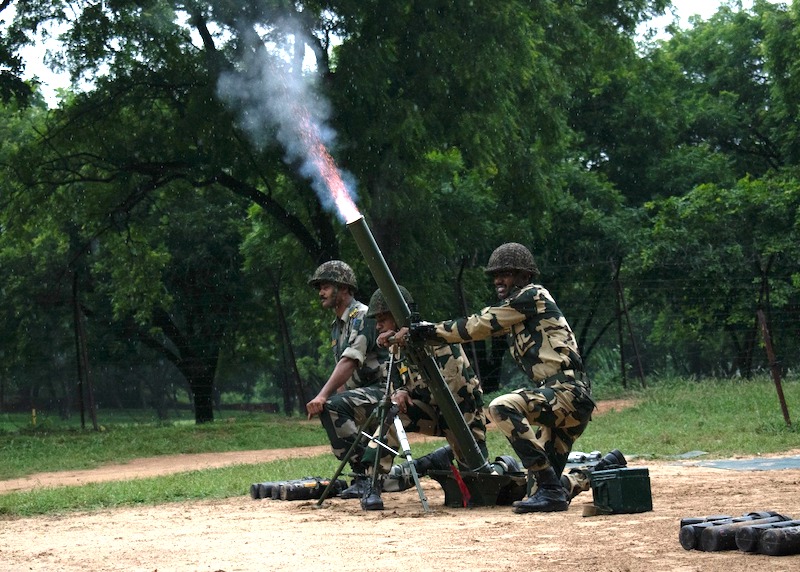
 Illustration for representation. (Copyright India Sentinels – © 2026-27)
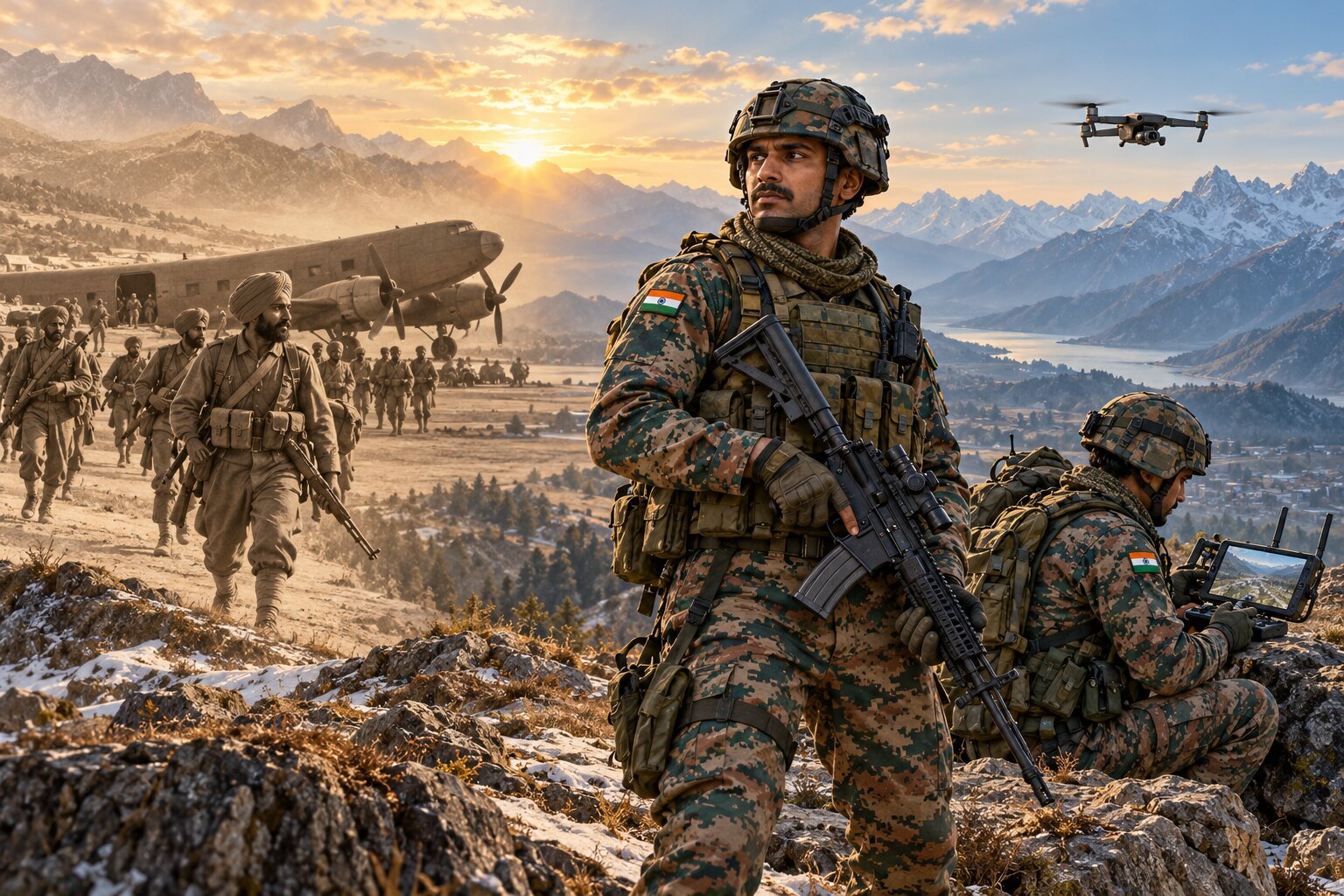
Every October 27, the Army pauses to remember the morning in 1947 when a handful of soldiers stepped off aircraft at Srinagar and altered the course of the subcontinent's history. This author, who has marked many an Infantry Day in uniform, believes it deserves more than parades and wreath-laying – an honest look at who the Indian foot soldier has become.
The then ruler of Jammu & Kashmir, Hari Singh, signed the Instrument of Accession on October 26, 1947, and the 1st Battalion of the Sikh Regiment, led by Lieutenant Colonel Dewan Ranjit Rai, was airlifted into Srinagar the next morning. Tribesmen-led raiders from Pakistan had already reached Baramulla, and the rifleman held them until reinforcements arrived.
Read also: From Sierra Leone to Gaza – A former peacekeeper’s reckoning with silence
The Infantryman of Yesterday
When this author was commissioned into the Mahar Regiment in June 1983, the infantry soldier was defined by what he could carry and how far he could walk. His world was a rifle, a map, a compass and a radio set that behaved like a temperamental relative – silent precisely when needed most.
He fought conventional wars in 1947-48, 1962, 1965, 1971 and 1999, then spent decades in counterinsurgency in Jammu & Kashmir and the northeast, with a toolkit improved at the margins but never transformed. The change began only when the battlefield turned digital.
Even during Operation Vijay in 1999, when this author led his company on the Siachen Glacier at 19,000 to 22,000 feet, victory came down to grit, acclimatization and fieldcraft. Courage was never in short supply, but information reached the soldier late, if at all.
Read also: Ukraine has crossed the Rubicon putting Kyiv at Russia’s crosshairs
The Infantryman of Today
Walk into an infantry battalion in 2026 and you will find the soldier is no longer just a rifleman – he is a sensor, a shooter and a node on a network. The Army has raised about 380 specialist drone platoons, called Ashni, and integrated them with infantry battalions to give the foot soldier surveillance, precision-strike and counter-drone capability.
The three hours this author once spent coordinating a night patrol with an artillery unit eight kilometres away can now shrink to minutes, as a drone feed reaches a tablet and then a gun.
Every regular infantry battalion retains its Ghatak platoon, the preserve of its toughest men for localized spearhead assaults. The Bhairav light commando battalions, each about 250 strong and drawn from infantry, artillery, signals and air defence units, go further, operating as scaled-up, independent, multi-domain formations that fill the void between standard infantry and deep-penetration special forces.
The Bhairavs relieve the Para (SF) of tactical missions that do not need strategic assets. Assigned to corps and divisions, they handle rapid border strikes, bunker busting, reconnaissance, cross-border interdiction, and raids on enemy artillery or logistics.
Above them sit the Rudra brigades, announced in July 2025 as permanently integrated, self-contained all-arms formations. Each brings together infantry, mechanized infantry, armour, artillery (including K9 Vajra and M777 guns and the Shaktiban regiments), special forces, engineers, signals and tailored logistics – so a brigade commander no longer waits for someone else's assets to turn up.
The drone and air-defence layer is organic too, with dedicated drone squadrons and platoons for real-time surveillance and precision strikes, backed by air-defence and counterdrone units. Divyastra batteries are meant to add indigenous loitering munitions and swarm drones to the mix, strengthening the multilayered shield that proved its worth during Operation Sindoor.
Weapons have moved on too: the AK-203 is rolling out of Korwa in Amethi, the SIG 716 is being inducted, and thermal sights and encrypted radios are fast becoming standard issue. The real change, however, is inside the soldier's head – he must read a drone feed as comfortably as he once read a contour map and know when to switch off his own radio so that the enemy cannot find him.
Read also: Petrodollar’s last rites, yuan’s quiet rise and India’s self-inflicted wounds
Drones change the rules
Operation Sindoor in May 2025, the Russia-Ukraine war and the Armenia-Azerbaijan conflict teach the same lesson – the battlefield is now transparent, and the sky above the infantryman is contested at every level. A section commander today may face a loitering munition at 4pm and an enemy quadcopter adjusting artillery fire at 4.05pm, and he cannot wait to be told what to do.
This is why the modern infantry soldier must be taught three things together: to fly a drone, to kill an enemy drone and to hide from both. Camouflage now covers thermal and electromagnetic signatures, and a soldier who forgets that can be found and killed from kilometres away by a machine costing less than a smartphone.
This is also a generational shift. Young recruits have grown up with smartphones and gaming consoles, and the Army would be foolish not to harness that instinct. A 22-year-old who can pilot a first-person-view (FPV) drone through a bunker window is as valuable as one who can shoot a tight group at 300 metres, and training must prize both.
There is a darker side to this dependence too. Components from adversary supply chains, jammed satellite navigation, spoofed signals and hacked drones can turn a force multiplier into a liability overnight. This author has long argued that indigenous drones, secure communications and resilient navigation are battlefield necessities, and the infantry is where that argument is first tested.
Read also: Iran is winning the war – and Washington knows it
What must not change
For all the talk of algorithms, this author would do the infantry a disservice by suggesting that technology replaces the soldier. The ground from Siachen to the Thar desert, and from the jungles of Arunachal Pradesh to the line of control, still has to be held by a human being who is cold, tired and frightened, and yet carries on.
Drones can find an enemy bunker, but only the infantry can clear it and stay there. That is the old truth of the queen of battle, and automation will not repeal it. Junior leaders – the naib subedar, the havildar, the young captain – remain the glue when the network fails, as it surely will.
Every new gadget must come with a doctrine, a repair chain and enough training time for the soldier to trust it. The soldier, equally, deserves better protection, lighter loads and the assurance that the nation will look after his family if he falls.
Read also: Netanyahu’s War, America’s Blood – The trap being set in the Persian Gulf
A salute, and a caution
The 1st Sikh landed at Srinagar with rifles, grit and little else, and the nation's hold on Kashmir began with that audacity. Today's infantryman lands on the same battlefield with a drone in his pack and a data link on his shoulder, but the audacity is unchanged.
The Army's reforms – Rudra, Bhairav, Ashni and the rest – are moving in the right direction, and the leadership deserves credit for acting faster than expected. The real test is consistency, because an elegant organization chart is worth little if the soldier at the end of the chain lacks the kit, training and confidence to use it.
As this veteran soldier salutes the infantry on its day, he has one wish – that India never forgets the machine serves the man, and not the other way round. The queen of battle has gone digital, but she still marches on the courage of her soldiers.
Disclaimer: The views expressed in the article are the author’s own and don’t necessarily reflect the views of India Sentinels.
Follow us on social media for quick updates, new photos, videos, and more.
X: https://x.com/indiasentinels
Facebook: https://facebook.com/indiasentinels
Instagram: https://instagram.com/indiasentinels
YouTube: https://youtube.com/indiasentinels
© India Sentinels 2026-27