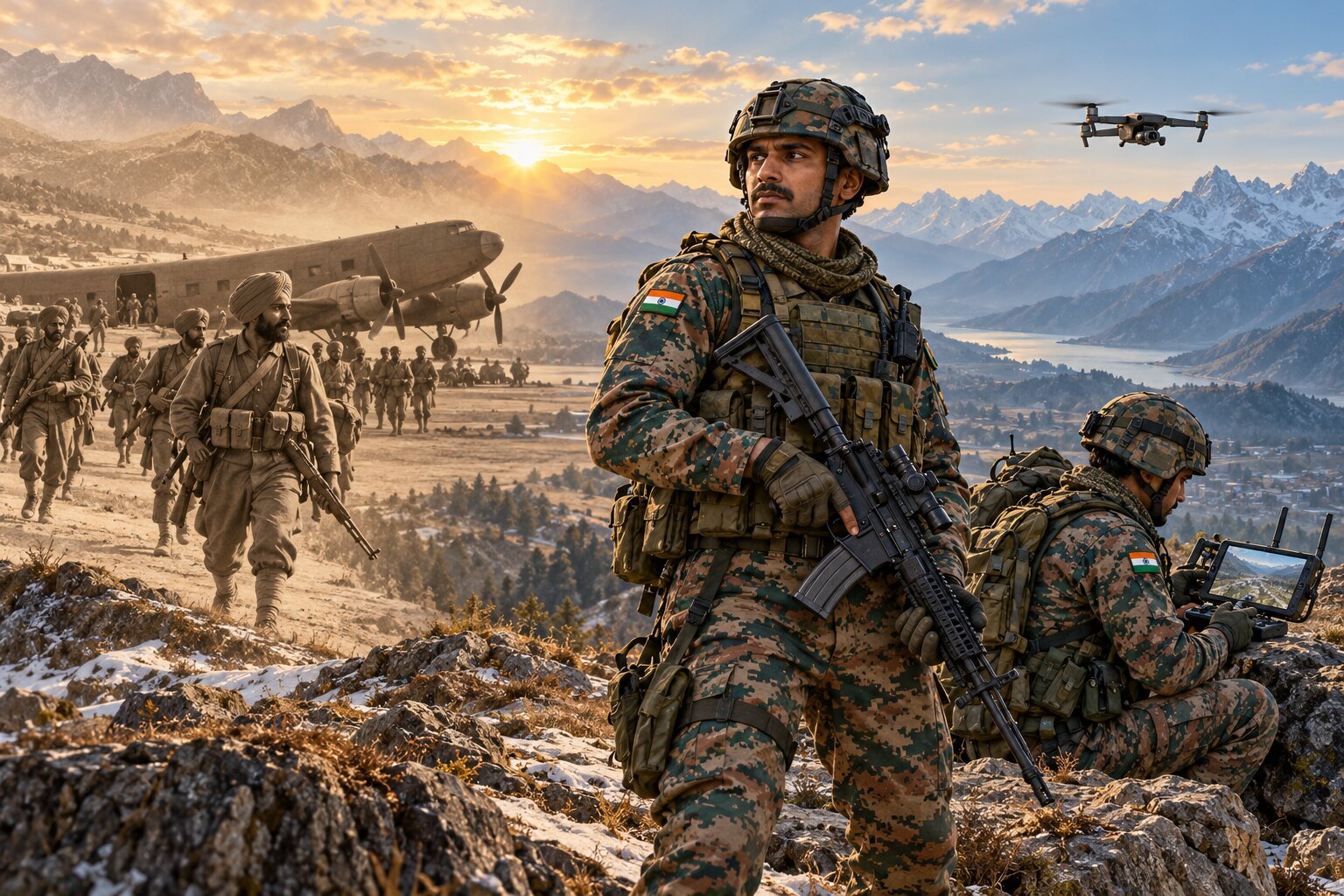
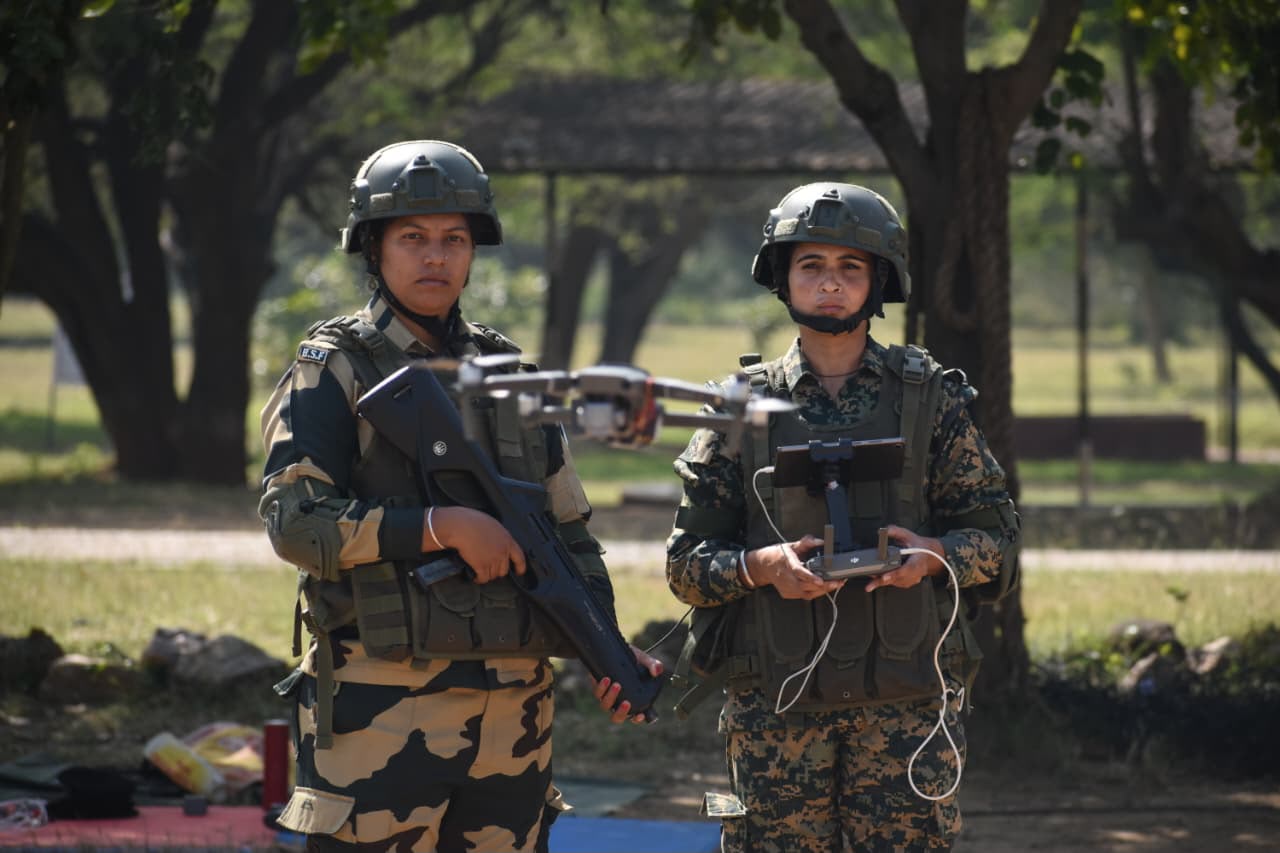
 BSF personnel operate drone. (Photo: X/BSF_India)
The Border Security Force was raised as an armed force on the infantry pattern to guard the India-Pakistan border, after the disastrous experience of the 1965 war, in which state armed police units were found ill-prepared to fight. It proved its worth within six years, in the 1971 war, fighting under Army command with emergency commissioned officers forefront.
Pakistan was decisively defeated and the new nation of Bangladesh was born. The BSF was now guarding a trimmed India-Pakistan border and a new India-Bangladesh border.
In the BSF’s training philosophy, Pakistan was the enemy, with a hawk’s eye on Kashmir and an agenda to avenge 1971 through a military and intelligence doctrine of bleeding India with a thousand cuts. In the initial years, and till 1984, training in the force was a religion, with a comprehensive focus on professional proficiency, leadership development, regimentation and man-management at section, platoon, company and battalion levels.
That devotion to individual and collective training shaped soldierly behaviour. Soldiering was integral to the personal and professional faith of men and cadre officers alike. Over time, that commitment diminished.
India’s political and diplomatic establishment treated Bangladesh as a kid brother, an all-weather friend, small fry that could be managed – without appreciating its sovereign character. The security establishment, too, saw Bangladesh as manageable, especially during Sheikh Hasina’s governments. Enemy and adversary analysis went missing from its assessments and strategy.
Both the India-Pakistan and India-Bangladesh borders were once open, with thin deployment and large gaps that made cross-border movement and illegal immigration easy. Along the India-Pakistan border, however, there was no such phenomenon as illegal immigration.
BSF personnel were physically and mentally tuned and ingrained with the philosophy that Pakistan was a hostile country. This training mantra made them see Pakistan as an enemy country, and any unwanted activity from across was met with aggression.
That aggressiveness and ferocity in the BSF jawans’ soldierly character can still be seen along the line of control (LoC), on the international border with Pakistan, in insurgency operations in Jammu & Kashmir and in anti-Naxalite operations. The tempo, though, has declined, owing to systemic and structural flaws: missing individual and collective training, leadership gaps and unprofessionalism at the junior, middle, higher and conceptual levels, unprofessional HR and man-management policies, and non-mandatory tasks unconnected to security.
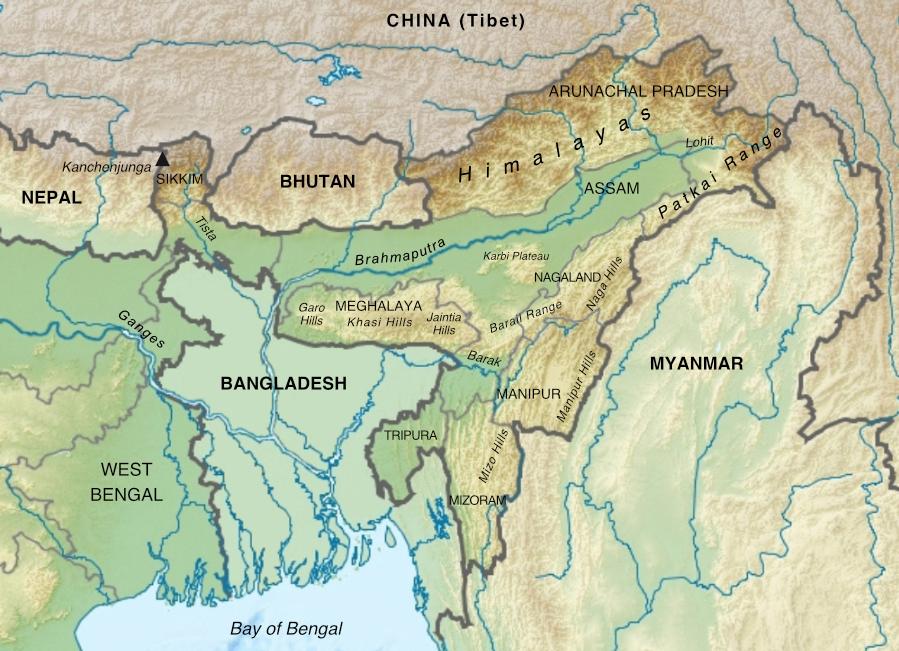
Along the eastern border, there is a lack of aggressiveness, owing to a confused and undecided leadership: some call Bangladesh a friend, some an enemy, some an adversary and some a mix of both. This confuses the men on the ground, breeding indecisiveness, hesitation and fear in dealing with their own citizens on the border, Border Guard Bangladesh (BGB), Bangladeshi citizens and smugglers.
The political executive, the bureaucracy and an IPS-led top command have burdened the force with policies that have wreaked havoc on its functional system and structure. Non-mandatory tasking has compounded the damage, diluting the soldierly character of the organization and turning it into a civilian police force.
This project began with the Fifth Pay Commission. The commission recommended abolishing the rank of lance naik and merging it with naik, a blow to the force’s infantry character and to junior leadership development.
The Union home ministry then abolished both ranks in 1997. This brought the BSF on a par with the police, without appreciating that its functional and structural need as an armed force is to guard hostile borders and fight wars – not to police.
Turning the BSF into a police force is professional hara-kiri. The force’s leadership must worry, and raise the alarm, that frequent tinkering with the rank structure of both officers and men dilutes and diminishes battle-worthiness.
The force needs a functional overhaul, reprioritizing its ethos along the western and eastern fronts, to bring back the battle-worthiness and the mental and physical toughness of the 1970s and 1980s. The BSF leadership must stop the policization of the organization. It is high time the force’s character, as envisioned by Parliament at the time of its raising, was restored.
The BSF has suffered periodic setbacks on the eastern border. Let us analyse them from the political and operational perspectives.
In 2004, the then minister of state for home affairs, Sriprakash Jaiswal, told Parliament that there were 12 million illegal Bangladeshi immigrants in India – a statement he later retracted. In 2016, Kiren Rijiju, who held the same portfolio, told Parliament that the number stood at 20 million, an increase of 8 million in 12 years.
On November 2, the Union home minister, Amit Shah, claimed at a rally in Hyderabad that 3 crore (30 million) of the 13 crore names removed in the Election Commission’s Special Intensive Revision (SIR) of electoral rolls were Bangladeshis. By that count, the figure has risen by a further 10 million between 2016 and 2026.
Supreme Court Nudge: Implement judgment on CAPF cadre officers
Why India must reform the BSF for a changing border battlefield
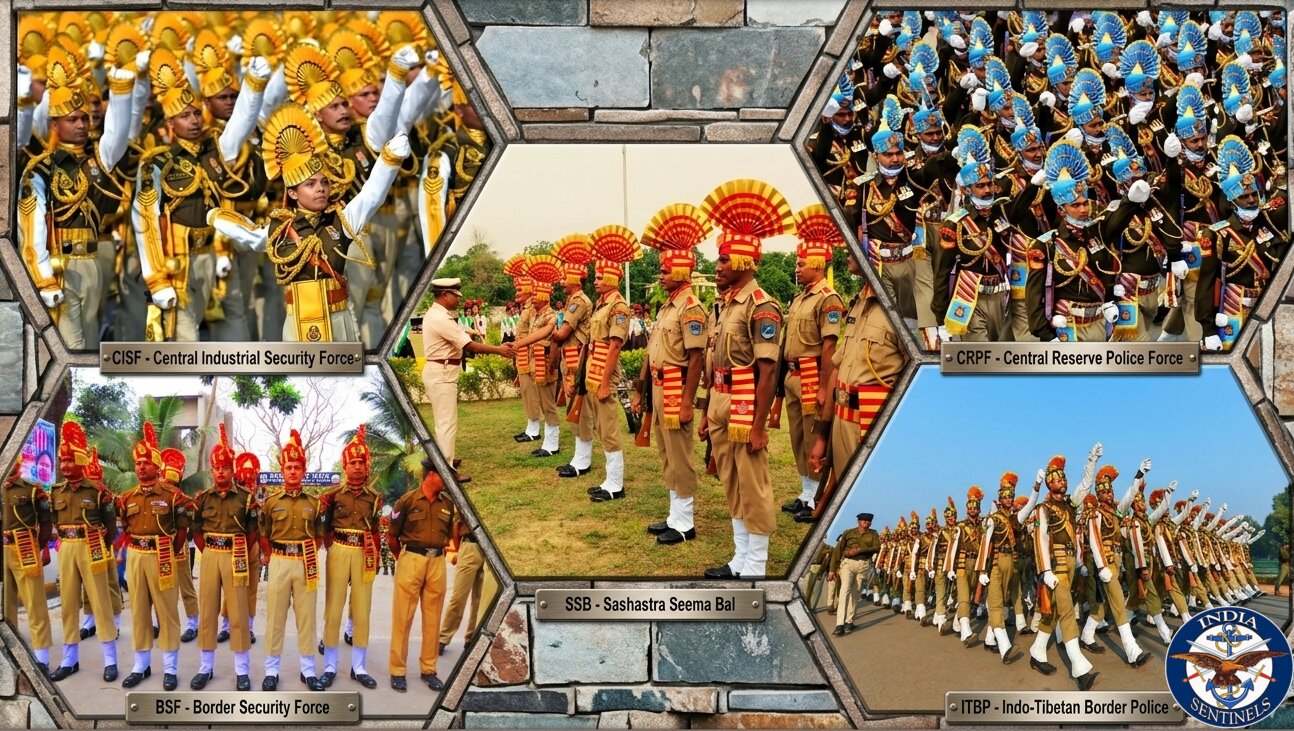
CAPFs need government empathy, not institutional apathy
Bangladesh in Turmoil: Why BSF must abandon non-lethal tactics now
Who Should Lead CAPFs? A national security debate beyond cadre politics

Op Sindoor: How BSF’s ‘offensive defence’ thwarted Pakistan’s designs
These figures point to continuous, heavy illegal immigration from Bangladesh. They raise questions over the border deployment and the security strategy meant to ensure the sanctity of the eastern boundary.
Now to the operational setbacks, suffered owing to an unprofessional top command, missing training and ad hoc deployment. In 2001, it was Boraibari in Bangladesh’s Kurigram district, where 16 BSF personnel were martyred in an ill-planned and ill-executed operation.
The men were thrust into the operation ill-prepared, owing to the unprofessional approach of the higher and top command. No accountability has been fixed to date.
Boraibari was followed by Mirapara in June 2004, where two BSF officers were beaten up and thrown into Bangladesh by smugglers, and by Lankamura in 2005, where a BSF company commander was killed in cold blood in Bangladesh. In the Lankamura case, the middle and higher command faced only minor accountability despite unprofessional conduct during and after the incident.
The most recent is Ashawari, where a company commander and two of his colleagues were beaten up by smugglers. The BSF also needs to look into institutional corruption along the eastern border, which tarnishes the organization’s image.
Despite these setbacks, and the decline in soldierly aggressiveness and ferocity, there has been no course correction or organizational overhaul. This points to an unprofessional higher and top command, unconcerned about the force’s professional decline.
The urgent need is a systemic and structural overhaul to restore the ethos and soldierly character of the 1970s and 1980s – and to make the BSF a lethal combination of manpower, weaponry and technology.
The systemic and structural overhaul BSF needs
The BSF urgently requires a systemic overhaul that tailors its functional needs, in operations and administration, to the role and tasks envisioned in the preamble of the BSF Act. The preamble speaks of “the constitution and regulation of an armed force of the Union for ensuring the security of the borders of India and for matters connected therewith.”
The Union government and the BSF need to appreciate that border security duties constitute the primary domain and internal security duties the secondary domain. Both demand a high degree of physical and mental fitness and professional proficiency, from bottom to top, to plan and execute at the strategic, operational and tactical levels.
The preamble prescribes no third domain, yet one has lately emerged in the form of non-mandatory tasks unconnected to national security. These tasks affect the primary and secondary domains, and man-management.
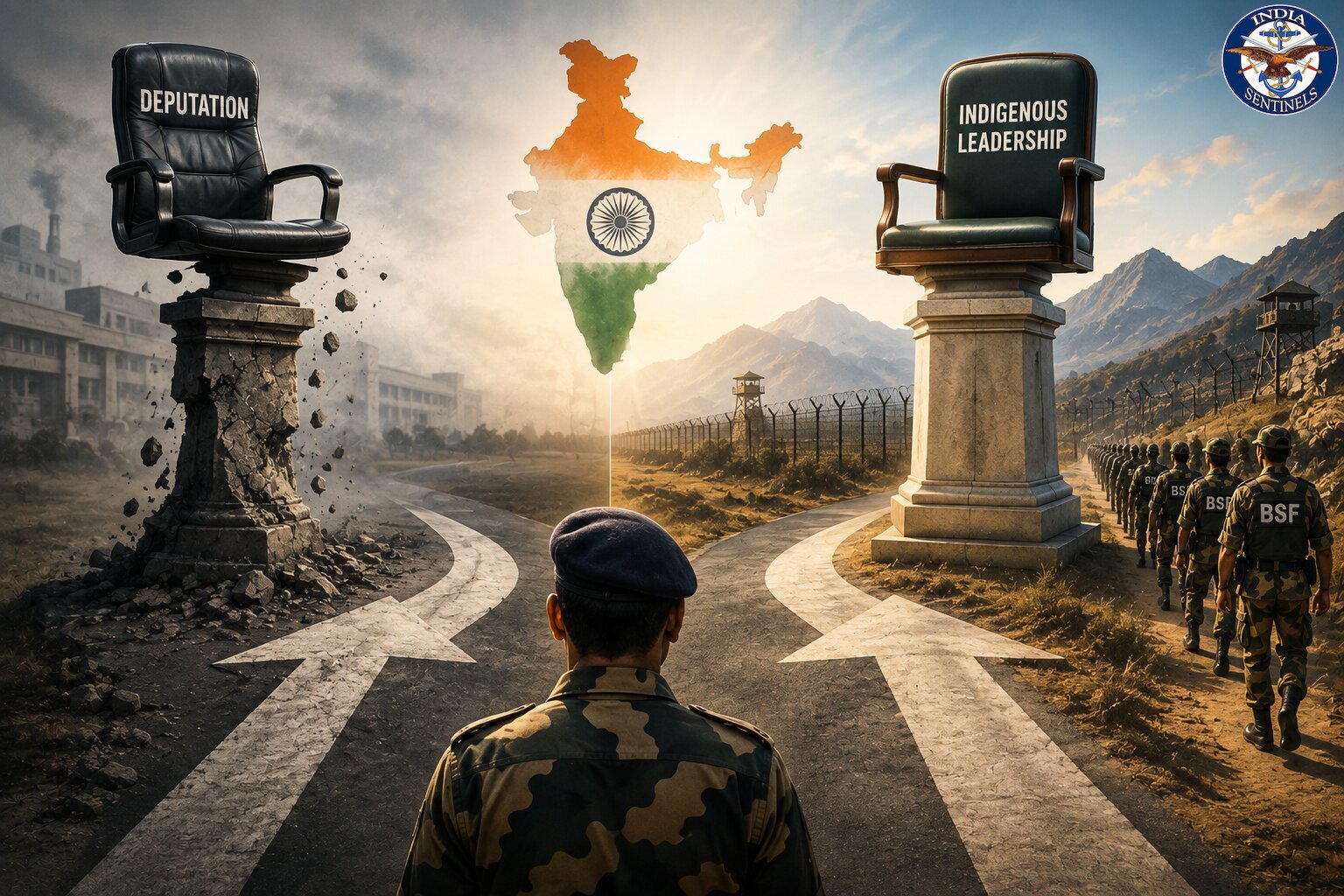
The first systemic need is a hierarchical rise through the professional chain of command, for both officers and men, from the entry level, with no deputation at any level. That is not the practice today, with IPS officers inducted as deputy inspectors general, inspectors general and above.
This reform will ensure professionalism and professional operational planning. It will require the Union government to consider repealing the Central Armed Police Forces (General Administration) Act, 2026.
The next need is young and energetic leadership at the junior and middle levels – section, platoon, company and battalion command – in keeping with the role and tasks. Higher and top command must be experienced and professional, not novices.
As a systemic reform, mandate that junior leadership – section, platoon and company commanders – be below 45 years of age. The old system of young section, platoon and company commanders was in keeping with the physical fitness demands of the profession.
In the national security interest, restore the head constable as section commander; given the present acute stagnation, he will in all likelihood be 40–42 years old. Bring back the sub-inspector as platoon commander, with mandatory posting of direct-entry sub-inspectors in the role, so that most platoon commanders are below 35.
Also make the inspector the company second in command, instead of platoon commander, and have direct-entry inspectors in that role. Assistant sub-inspectors (ASIs) serving as section commanders are generally 50–55 years old and unfit for physically and mentally taxing border and internal security duties.
The same goes for sub-inspectors and inspectors in the higher age groups. At the present speed of promotions, most of those rising from constable retire on superannuation as ASIs or take voluntary retirement because they cannot bear the physical and mental rigours of service. A few may be promoted as sub-inspectors.
The endeavour must be to make junior leadership young. Company commanders who are direct entry are young, which suits the job.
Battalion command at the middle level must be below 45 years of age. For that, reduce the age of entry into service and mandatorily promote officers completing 13 years of service as second in command or commandant.
Thereafter, follow a rigorous selection process and give battalion command only to those below 45. For active command of sectors and frontiers, consider only those who have commanded battalions.
The aim should be a professional, young and agile force, not an old and lethargic one. Collective training must be ensured with religious devotion, and it must be the top command’s responsibility to tailor commitments so that manpower is available for training – and training is not merely shown on paper but made real on the ground.
The old organizational rank structure of the BSF was in keeping with the needs of the primary and secondary domains, and it was not tinkered with unprofessionally. As a first step towards restoring the force’s health and fitness, restore the ranks of lance naik and naik, and abolish the rank of ASI (GD).
This will infuse a fresh air of agility and positivity into the force structure. With the head constable as section commander and the naik as section second in command, the section will be younger and more agile.
Do away with the concept of two seconds in command in a battalion, and with sub-inspectors as company havildar major, with the terminology polished to “line officer”.
The BSF must realize that frequent tinkering with the rank structure, and frequent ill-considered systemic changes, are not only destroying the force’s ethos, culture and regimentation but also hurting its fighting capability. Training has become the main casualty of excessive commitments.
Frequent pull-outs from the borders are affecting the primary domain. Continuous, unhindered drug smuggling from Pakistan and illegal immigration from Bangladesh are by-products of those pull-outs, missing collective training and unprofessional man-management.
What is needed is a realistic assessment of the systemic and structural deficiencies plaguing the organization and affecting the primary and secondary domains, with both short- and long-term security implications. It is time to rise above political and lobby interests, keep the national security interest supreme, and implement the suggested reforms.
Positive results will surely follow a professional approach.
Disclaimer: The views expressed in the article are the author’s own and don’t necessarily reflect the views of India Sentinels.
Follow us on social media for quick updates, new photos, videos, and more.
X: https://x.com/indiasentinels
Facebook: https://facebook.com/indiasentinels
Instagram: https://instagram.com/indiasentinels
YouTube: https://youtube.com/indiasentinels
© India Sentinels 2026-27