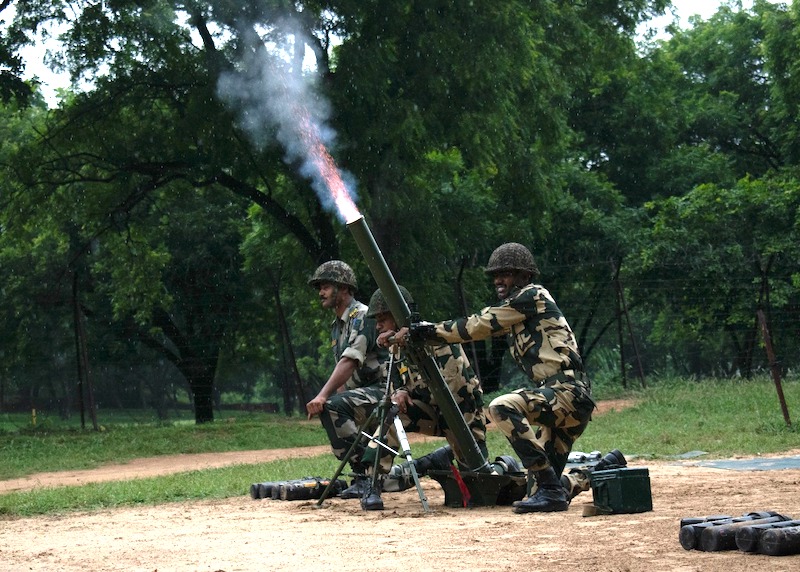
 Border Security Force soldiers firing a mortar somewhere in the western front. (Photo for representation via X/@BSF_Rajasthan)
When the-then prime minister, Indira Gandhi, wrote to KF Rustamji, the director general of the Border Security Force (BSF), after the success of Operation Cactus Lilly in the 1971 Bangladesh Liberation War, her words carried the full weight of a grateful nation. “As first line of defence, the Border Security Force has to bear the brunt of the enemy onslaught,” she wrote. “The manner in which they faced enemy onslaught and the support they gave to the (Indian) Army has played a crucial role in our ultimate success. I would like to express the gratitude of the government and people of India to you and your officers and men.”
These words, penned to an organization barely five and a half years old, captured something enduring: that the BSF, from its very birth, has risen to every challenge the nation has placed before it. Whether it was Operation Cactus Lily, Operation Green Hunt in the insurgency-scarred heartland, the Kargil conflict of 1999, or the most recent and most resonant of all – Operation Sindoor – the BSF has never once let the tricolour dip.
Operation Sindoor was, in all probability, the BSF’s first truly standalone battle – and a wholly warranted one. It was India’s answer to the Pakistan-sponsored massacre of unarmed tourists in Pahalgam on April 22, 2025, one of the most brazen acts of cross-border terrorism in recent memory. Twenty-six civilians, most of them Hindu men, were singled out and shot dead by militants in the bucolic meadows of Baisaran valley. The killings were not random; they were choreographed, calculated, and carried out with the cold precision of a state-sponsored proxy war.
Read also: CAPFs Act – A law that undermines the very forces it claims to strengthen
India’s response could not be limited to diplomatic protest or economic pressure alone. The nation struck back. Operation Sindoor, launched in the intervening night of May 6–7, 2025, was that response – a coordinated, multi-force effort in which the BSF stood as a full and equal partner alongside the Army, the Navy, and the Air Force. What followed was a display of professionalism, grit, and fighting spirit that will remain etched in national memory. It was a demonstration not merely of firepower, but of the courage, discipline, and regimental pride of BSF cadre officers and men, who rained physical and psychological havoc on the Pakistan Army and Rangers’ positions across the Samba, Kathua, and Jammu borders, all the way south of the Chenab.
Operation Sindoor threw into sharp relief the BSF’s true capabilities as a fighting force. The preparation was meticulous. Coordinated fire plans were crafted by cadre officers – deputy inspectors general, commandants, and support company commanders – whose professional competence in planning and executing grey-zone and below-threshold battles proved exemplary. These are the kinds of engagements that will define future warfare along India’s borders: sub-conventional, deniable, and relentless. The BSF showed it is ready for them.
The operational successes of the BSF were the product of daring, precisely executed fire – both observed and unobserved – by mortar detachments whose accuracy and aggression left Pakistani positions in ruin. The men who manned those positions did so around the clock, stretching the limits of human endurance, often under retaliatory fire. BSF cadre officers and men were not merely fighting the battle in front of them; they were simultaneously manoeuvring with speed and ingenuity to stay one step ahead of a well-armed and motivated adversary.
Read also: Trampling of Trust – The nightmare of a ‘deshbhakt’
It was also, in the most poignant sense, a tribute – to those who had sacrificed their lives for the nation in earlier operations, to those who had lost their limbs in the line of duty, and to all those who, day after day, guard an often invisible line so that a vast, sleeping nation may rest in peace.
The battle was fought in the period spanning the intervening night of May 6–7, 2025, through May 10, 2025. In those three days, the BSF inflicted massive damage on Pakistani defensive infrastructure – the very sinews of an army’s ability to hold ground – and dealt a severe blow to the morale and fighting spirit of the forces arrayed against it.
Consider, for a moment, the scale of what the BSF is responsible for: approximately 190 kilometres of international border along the Jammu front. It is here that the ground battle unfolded, fought with both direct and indirect weapons in a pitched engagement of offensive defence. BSF inflicted extensive damage to Pakistan’s terror infrastructure in the early hours of May 7, 2025.
Read also: Address the deformities in CAPF structure
But it was May 8, 2025, that brought out the finest in BSF battle-fighting. On that day, the BSF conducted pre-emptive strikes on Pakistani border outposts (BOPs) and terrorist launch pads, targeting the hybrid terrorism model that Pakistan has long cultivated: border action teams (BATs) comprising Pakistani Rangers, regular army personnel, and terrorists operating in concert. These BATs are among the most dangerous instruments of Pakistan’s proxy war. The BSF’s lightning response eliminated a large number of uniformed men and militants, and, critically, choked off their infiltration routes.
Jitendra Singh, the Union minister and member of Parliament from Udhampur, posted on X that the Dhandar post had suffered extensive damage. Had the BSF not acted with such speed and lethality, the targeted BAT groups would almost certainly have attempted infiltration and localised cross-border actions designed to demoralise the local population and seed despair amid the clouds of war.
BSF troops successfully destroyed enemy surveillance equipment and as many as 118 Pakistani Ranger posts in the Jammu region. They held key positions for 48 hours under sustained and heavy shelling – a feat that speaks as much to their morale as to their combat readiness. The BSF then carried its aggression further, extending its operations into the Sialkot sector across the border. Its mortar fire caused widespread damage to Pakistani posts and defensive assets, catching the enemy off-guard in a sector it may not have anticipated as a front.
Read also: Are elections compromising our border and national security?
Operation Sindoor is, above all, testimony to the quality of BSF cadre officer leadership – and most especially of its junior leaders, who guided and motivated their men in the most demanding of circumstances. There is a principle at the heart of BSF soldiering that sets it apart: regimentation. Officers and men live together, train together, and fight together. They know each other in the way that only proximity and shared hardship can forge. This bond is what enabled seamless coordination between junior leadership and their men across the chaos and noise of battle.
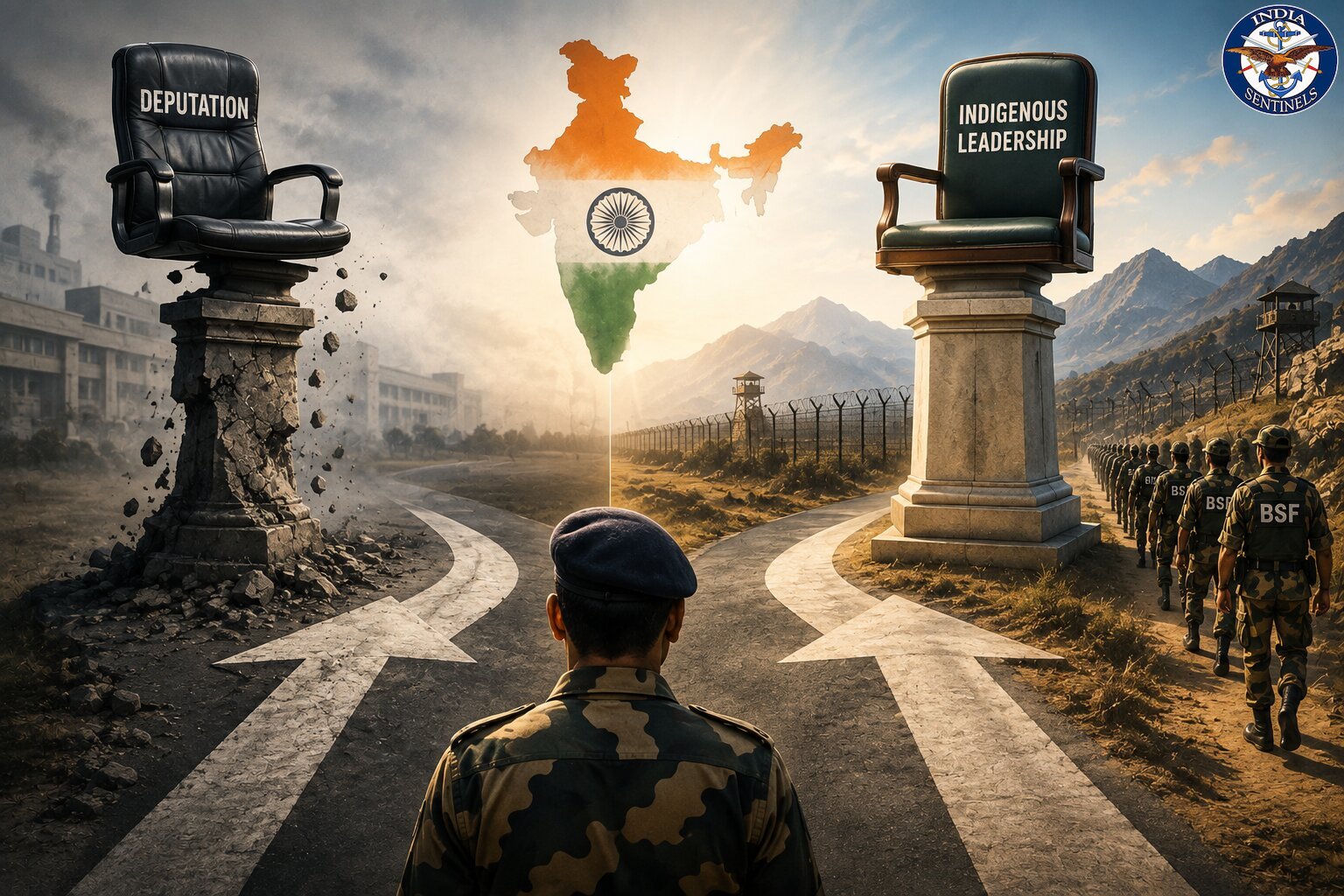
It was regimentation that made them endure the battle environment and fight with a fierce collective pride – for the honour of their platoon, their company, and their battalion. Operation Sindoor established, beyond any doubt, that regimentation holds the key to success. This is worth stating plainly, for there have been numerous attempts in the past, by leadership alien to the BSF’s institutional ethos, to dilute or dismantle this very principle. Those attempts have been misguided. This operation demonstrates why.
The cost of victory was real and human. In the operation, the BSF lost two bravehearts: Sub Inspector Mohammad Imtiyaz and Constable Deepak Ching Kham, who made the supreme sacrifice in the service of the motherland. Many other personnel sustained injuries in retaliatory fire. The nation honoured its fallen and its wounded. Mohammad Imtiyaz, sub-inspector, and Deepak Ching Kham, constable, were posthumously awarded the Vir Chakra – one of India’s highest wartime gallantry decorations.
Read also: Commanded into Crisis – Systematic wrecking of CAPFs’ moral fabric
Sixteen other BSF personnel were honoured with gallantry medals for demonstrating conspicuous bravery and unmatched valour during Operation Sindoor. Those decorated included a deputy commandant, two assistant commandants, an inspector, a sub-inspector, and an assistant sub-inspector – ranks that form the indispensable core of junior leadership – as well as other ranks. As the BSF stated on its official social media: “The medals are a testament to the nation’s faith and trust reposed in India’s first line of defence.”
The recognition extended beyond the force’s own walls. In his address to the nation, the prime minister, Narendra Modi, acknowledged the role of the BSF in Operation Sindoor. The director general of military operations, too, appreciated the effective part played by the BSF in taming Pakistan along the entire Jammu frontier – a rare and significant tribute from the Army to the BSF that had, in this operation, fought as its equal.
In operational terms, the BSF’s achievements in Operation Sindoor were comprehensive. It destroyed defensive infrastructure and terrorist launch pads across the Jammu frontier. It ensured that the counter-infiltration grid remained on high alert throughout the operation, successfully preventing any infiltration attempt from succeeding. It degraded Pakistani surveillance capability and struck at the morale of the forces arrayed against it. And it did all of this while absorbing retaliatory fire and continuing to hold its positions.
Read also: Stagnant Ranks, Broken Morale – The cost of CAPF’s skewed HR policies
As we mark the anniversary of Operation Sindoor, it is a moment to pause and salute. To salute the cadre officers and men who were in the thick of battle; who took fire and returned it; who planned in the dark and executed in the heat; who pushed their bodies past the point of ordinary endurance. It is a moment to remember all those who made the success possible, in ways seen and unseen.
It is, above all, a moment to honour those who did not walk home – those carried on the shoulders of their colleagues, wrapped in the tricolour they had died to defend.
The BSF – India’s first line of defence – has lived up to its motto, Jeevan Paryant Kartavya: duty unto life. It has done so in the past, it has done so now, and it will do so again – with its blood, its courage, and its unbreakable resolve to protect the sovereignty and territorial integrity of the nation.
Disclaimer: The views expressed in the article are the author’s own and don’t necessarily reflect the views of India Sentinels.
Follow us on social media for quick updates, new photos, videos, and more.
X: https://x.com/indiasentinels
Facebook: https://facebook.com/indiasentinels
Instagram: https://instagram.com/indiasentinels
YouTube: https://youtube.com/indiasentinels
© India Sentinels 2026-27